
Will a Sit in Kayak Sink? Buoyancy, Swamping, and Safety for 2026
Will a sit in kayak sink after swamping? Learn about hull buoyancy, bulkheads, foam pillars, and critical paddle safety tips for October 2026.
 By Brooke Hess
Updated October 5, 2026
By Brooke Hess
Updated October 5, 2026
Taking an unexpected roll into deep water or taking a steep wake over the coaming is a sudden shock for any recreational paddler. When water floods the open cockpit rim, paddlers naturally panic and wonder: will a sit in kayak sink completely to the bottom? The reassuring reality is that modern sit-inside recreational kayaks rarely plunge into the abyss like a stone, but a swamped boat loses almost all lateral stability and becomes virtually impossible to paddle without proper intervention. Cold water immersion creates immediate physiological hazards, which is why preparing with reliable flotation and wearing proper insulating paddling wetsuits remains a foundational safeguard when paddling outside sheltered summer shallows.
Understanding how your specific boat maintains buoyancy depends heavily on its internal architecture, whether it relies on sealed dry bulkheads, closed-cell foam pillars, or aftermarket float bags. High-density polyethylene hulls offer natural material buoyancy, yet dense fishing tackle, anchor systems, and loose gear can pull a flooded craft downward if its reserve displacement is compromised. By respecting manufacturer payload thresholds and maintaining structural flotation blocks, you can ensure that an accidental capsize remains a manageable recovery scenario rather than a catastrophic gear loss. Knowing exactly how cockpit swamping works empowers you to plan safe outings across flatwater lakes, slow rivers, and coastal estuaries with confidence.
| Award | Product | WSG Score About WSG ScoreThe WSG Score is our own rating from 0 to 10, based on performance, design and build, ease of use, and value. It reflects independent research and is never influenced by manufacturers, retailers, or affiliate commissions. Learn more › | |
|---|---|---|---|
| Best Overall |
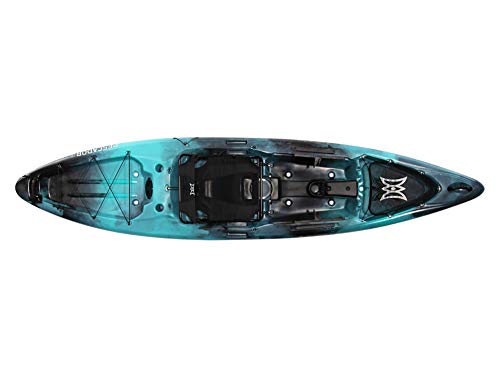
Perception Pescador Pro 12 Fishing Kayak
|
9.2/10 | Buy |
| Best Budget |
 Lifetime Muskie Angler 10-Foot Sit-On-Top Fishing
|
9.1/10 | Buy |
 Lifetime Guster 10-Foot Sit-in Kayak
|
8.9/10 | Buy | |
| Best Value |
 Pelican Catch Classic 100 Angler 10-Foot
|
8.9/10 | Buy |
 Pelican Sentinel 80X Sit-on-Top Recreational Kayak
|
8.8/10 | Buy | |
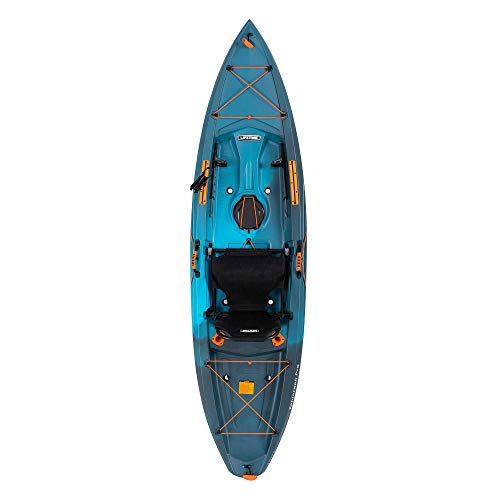 Lifetime Tamarack Pro 103 Fishing Kayak
|
8.6/10 | Buy | |
| Best Premium |
 Lifetime Yukon Angler 11'6" Fishing Kayak
|
8.6/10 | Buy |
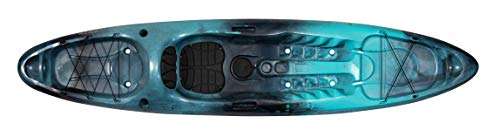 Perception Access 11.5 Sit-on-Top Kayak
|
8.6/10 | Buy | |
 Lifetime Lockport 94 Modular Sit-on-Top Fishing
|
8.3/10 | Buy | |
 VEVOR 2-Person Inflatable Kayak 14.3 Ft
|
8.1/10 | Buy |
Perception Pescador Pro 12 Fishing Kayak
Designed for recreational anglers, this 12-foot sit-on-top kayak balances generous front and rear storage with an upright, lawn-chair style seat. Its stable 32.5-inch beam and 375-pound capacity make it a solid platform for calm lakes and slow-moving rivers.
Pros
- Supportive, adjustable lawn chair seating
- Generous front and rear gear storage
- High 375-pound load capacity
- Stable hull suited for recreational angling
Cons
- Weighs 64 pounds, making solo car-topping cumbersome
- Twelve-foot hull requires ample transport and storage space
- Intended primarily for calm waters rather than rough surf
Lifetime Muskie Angler 10-Foot Sit-On-Top Fishing
The Lifetime Muskie Angler is an accessible 10-foot sit-on-top fishing kayak featuring a stable 31-inch beam, UV-protected polyethylene hull, and an integrated tracking skeg. Weighing an easily car-topped 51 pounds and supplied with an included paddle and multiple rod holders, it is an ideal entry-level craft for calm lakes, ponds, and slow rivers.
Pros
- Manageable 51-pound bare hull weight simplifies solo loading onto rooftop crossbars or into pickup beds
- Built-in tracking skeg and deep hull channels assist with straight-line paddling on flatwater
- Includes essential outfitting out of the box: paddle, padded seating, and three rod holders
- Durable high-density polyethylene construction resists standard launch-ramp abrasions and UV degradation
Cons
- Basic sit-on-top seat pad sits directly on the deck and offers less elevation than stadium-style kayak frames
- Compact 6-inch storage compartments are sized for small gear rather than bulky dry bags or tackle boxes
- Flat-bottom recreational hull is engineered for calm waters and may feel sluggish in choppy coastal conditions
Lifetime Guster 10-Foot Sit-in Kayak
Built for recreational paddling, this 10-foot sit-in kayak pairs a stable tracking hull with high-density polyethylene construction. An adjustable padded seat and under-deck hatch make it a practical option for day trips on calm waters.
Pros
- Adjustable padded seat back and bottom cushion
- Dedicated oval hatch for enclosed under-deck storage
- Integrated paddle keeper holds gear securely
- Built-in foam blocks provide extra flotation safety
Cons
- At 48 pounds, it can be heavy to carry alone
- Compact 10-foot cockpit limits legroom for taller paddlers
Pelican Catch Classic 100 Angler 10-Foot
The Pelican Catch Classic 100 Angler is a 10-foot sit-on-top fishing kayak featuring a steady tunnel hull and an adjustable dual-position Ergocast frame seat. Weighing just 57 pounds with a 350-pound maximum capacity, it is a reliable, easily transportable platform for kayak anglers navigating lakes, ponds, and slow rivers.
Pros
- Tunnel hull provides exceptional initial flatwater stability for confident casting and gear access
- Ergocast frame seat keeps paddlers elevated off the deck with high and low position adjustments
- Relatively light 57-pound bare hull weight makes solo roof rack loading and transport practical
- Dual 4-inch rigging tracks allow seamless attachment of fish finders and accessories without drilling
- Adjustable footrests and paddle tie-downs ensure a comfortable, hands-free fishing experience
Cons
- Compact 10-foot waterline prioritizes close-quarters turning agility over long-distance straight tracking
- Paddle is not included in the base package and must be purchased separately
- Paddlers approaching the 350-pound maximum capacity ceiling may notice reduced freeboard and deck wash
Pelican Sentinel 80X Sit-on-Top Recreational Kayak
At just 34 pounds with an 8-foot RAM-X multi-chine hull, the Pelican Sentinel 80X delivers dependable flatwater stability and effortless solo car-topping for casual lake and slow river outings. It is an accessible sit-on-top option best suited for beginners, youth, and lightweight solo paddlers seeking an easy-to-manage hard shell.
Pros
- Ultralight 34-pound unladen weight makes solo transport and roof-rack loading manageable for a single individual
- Twin-arched multi-chine hull geometry delivers dependable initial flatwater balance for beginners and casual paddlers
- Durable RAM-X polyethylene shell absorbs shoreline abrasions and routine launch impacts without cracking
- Compact 8-foot footprint stores easily in standard residential garages, sheds, or pickup truck beds
Cons
- Modest 225-pound maximum weight capacity restricts usable gear payload for larger paddlers under the 70-80% operational rule
- Short 8-foot displacement waterline limits straight-line tracking efficiency and glide speed across breezy open water
- Base watercraft package does not include a paddle, requiring a separate purchase before hitting the water
Lifetime Tamarack Pro 103 Fishing Kayak
Tailored for recreational anglers, this 10-foot-3 sit-on-top platform pairs three rod holders and tackle storage with an adjustable framed seat. Deep hull channels and chine rails promote steady tracking and reliable stability on the water.
Pros
- Three integrated rod holders accommodate multiple rod setups
- Adjustable framed seat enhances on-water paddling comfort
- Hull chine rails deliver solid primary and secondary stability
- Generous storage options include center hatch and deep well
Cons
- At 57.5 pounds, it can be heavy for solo transport
- Compact 10-foot hull limits top cruising speed
Lifetime Yukon Angler 11'6" Fishing Kayak
Built for anglers who prioritize stability, this sit-on-top kayak features an assist strap for stand-up casting, an adjustable dual-position frame seat, and integrated gear mounts. It comes equipped with a paddle and dedicated rod storage, though its substantial hull weight requires extra effort to transport solo.
Pros
- Very stable hull design for stand-up fishing
- Adjustable mesh seat offers upright and reclining positions
- Comes ready to fish with paddle and rod holders
- Integrated skeg wheel assists with ground transport
Cons
- Heavy 78.5-pound hull makes solo car-topping difficult
- Rudder and sonar transducer hardware not included
Perception Access 11.5 Sit-on-Top Kayak
Designed for calm-water recreation and light angling, this 11.5-foot boat pairs a stable 31-inch hull with molded-in rod holders and a supportive high seat back. A replaceable skid plate and perimeter handles make launching and shoreline dragging straightforward for recreational paddlers.
Pros
- Built-in rod holders and center console for gear
- Replaceable skid plate extends hull longevity on landings
- Molded carry handles on all four sides
- High seat back provides reliable upright paddling support
- Broad 31-inch beam offers reassuring flatwater stability
Cons
- Modest 300-pound weight capacity limits heavy gear loads
- At 55 pounds, solo car-topping requires noticeable effort
- Not designed for whitewater or heavy ocean chop
Lifetime Lockport 94 Modular Sit-on-Top Fishing
The Lifetime Lockport 94 is a 9-foot-4-inch modular sit-on-top kayak that splits into two nesting sections for effortless transport and compact storage. Weighing just 40 pounds and equipped with rod holders and an included paddle, it is a practical hard-shell craft for apartment dwellers and solo lake anglers.
Pros
- Two-piece modular construction nests together neatly for transport in small vehicle trunks without a roof rack
- Rigid high-density polyethylene shell offers dependable abrasion resistance without the risk of punctures associated with inflatables
- Ready to launch right out of the box with an included paddle, two flush-mount rod holders, and an adjustable seat back
- Weighs only 40 pounds total, allowing solo paddlers to handle and assemble individual lightweight sections easily
Cons
- Compact 9-foot-4-inch hull length favors turning agility over rapid forward cruising speed or extended coastal touring glide
- Stock seat is an adjustable padded backrest on the deck floor rather than an elevated, quick-drying stadium-style frame
- SlideLock connecting channels require regular rinsing to keep sand, mud, and grit from fouling the locking mechanism
VEVOR 2-Person Inflatable Kayak 14.3 Ft
The VEVOR 2-Person Inflatable Kayak features a spacious 14-foot-4-inch hull with a rigid drop-stitch floor and a 700-pound capacity, offering rock-solid primary stability for tandem touring and calm-water fishing. It packs down neatly into an included duffel bag, making it a dependable choice for apartment dwellers, families, and dog owners seeking easy vehicle transport without a roof rack.
Pros
- Expansive cockpit with a generous 700-lb payload rating fits two adults and a dog comfortably
- Rigid drop-stitch PVC floor provides superior structural stiffness compared to basic inflatable floors
- Seven reinforced mounting points offer flexible rigging for rod holders and fish finders
- Complete package includes two paddles, a dual-action pump, a 9-inch fin, and a carry bag
Cons
- Overall package weight of approximately 60 pounds makes the packed duffel relatively heavy for solo carrying over long distances
- Wide 42.9-inch beam requires wider paddle strokes and prioritizes stability over aggressive forward glide
- Inflatable PVC material requires thorough rinsing and drying before packing to prevent mold and mildew during storage
The Hydrodynamics of Swamping: Flotation, Buoyancy, and Sit-In Kayak Recovery
A standard sit-inside kayak will generally not sink all the way to the lakebed or ocean floor under normal conditions because modern plastic hulls and built-in foam provide positive buoyancy. However, when an open cockpit takes on massive volumes of water, the kayak reaches a state known as swamping, where the boat floats flush with the water line like a waterlogged timber. In this submerged condition, the boat loses all primary stability and secondary stability, rendering it incapable of supporting a seated paddler. Complete submersion to the bottom only occurs if the hull suffers structural hull breaches or carries heavy, dense gear without adequate displacement chambers.
Archimedes’ Principle and Flooded Cockpit Physics
Buoyancy in any watercraft is governed directly by Archimedes’ principle, which dictates that an object is buoyed upward by a physical force equal to the weight of the water it displaces. When a sit-in kayak floats upright and dry, its hollow enclosed hull displaces a substantial volume of water relative to its own bare-hull weight. The moment water breaches the cockpit coaming, incoming water replaces the trapped air inside the cabin, dramatically reducing the boat’s net buoyant force. As the internal volume fills, the upward buoyant force drops until it matches only the physical volume of the kayak’s solid construction materials and whatever trapped air pockets remain.
Rotomolded high-density polyethylene has a specific gravity slightly below that of water, meaning raw polyethylene can barely float on its own. Thermoformed plastic and fiberglass composites have slightly different densities, but none of these hard-shell materials can support the additional weight of seats, foot braces, metal hardware, and paddling gear once filled with hundreds of pounds of water. A fully flooded ten-foot cockpit can easily hold over forty gallons of water, adding more than three hundred pounds of liquid ballast. Without dedicated air chambers or buoyant foam inserts, that massive liquid load completely neutralizes the hull’s ability to stay high above the surface.
Internal Flotation Systems: Bulkheads vs Foam Pillars
Kayaks utilize distinct structural flotation systems depending on whether they are designed for recreational day trips or extended open-water touring. High-end touring kayaks incorporate sealed internal bulkheads, which are rigid transverse vertical walls that separate the paddler’s cockpit from watertight bow and stern storage compartments. If the central cockpit of a bulkhead-equipped kayak floods completely, the sealed end compartments remain full of air and provide immense reserve buoyancy. This trapped air keeps the bow and stern riding high in the water, allowing the paddler to perform self-rescue maneuvers and pump the flooded cockpit dry.
Recreational sit-inside kayaks, such as the Lifetime Guster Sit-in Kayak, 10′, take a different approach by integrating factory-installed closed-cell foam blocks inside the bow and stern cavities. These dense expanded polystyrene or polyethylene foam pillars are strategically wedged beneath the deck to ensure the kayak maintains positive buoyancy even if the cockpit takes on standing water. While these foam blocks prevent the boat from descending to the bottom, they do not create airtight compartments like sealed bulkheads. Consequently, a swamped recreational kayak will float in a neutral, waterlogged state, commonly called a floating bathtub, requiring shore assistance or a companion rescue to empty.
A widespread and dangerous beginner mistake involves removing factory foam blocks to create additional interior space for dry bags, tackle boxes, or camping gear. Stripping away structural flotation removes the primary safety net engineered into recreational sit-in hulls. Without those foam inserts, a swamped recreational boat will roll uncontrollably and can easily sink beneath the waterline under the sheer downward weight of its deck rigging, battery packs, or fishing gear. Paddlers should inspect these foam blocks regularly to confirm they remain firmly wedged in their factory positions and have not shifted or sustained damage.
Sit-Inside Cockpits Compared to Self-Bailing Sit-On-Top Hulls
Comparing sit-inside models with open-deck sit-on-top kayaks highlights fundamentally different safety and drainage mechanisms. Sit-on-top fishing boats, including models like the perception Pescador Pro 12 and the Lifetime Muskie Angler Sit-On-Top Kayak, feature a double-walled hollow hull perforated by vertical scupper holes. Water that splashes onto the deck simply drains downward through the scupper channels under the pull of gravity. Because the cockpit deck sits above the surrounding waterline, the paddler’s seating area automatically drains without requiring manual bilge pumping.
Sit-on-top hulls are also engineered with internal flotation foam blocks to meet rigorous ABYC buoyancy standards, as seen on designs like the Pelican Catch Classic 100 Angler and the Pelican Sentinel 80x – Sit-on-top Kayak. Even if a sit-on-top hull develops a hairline crack or an unsealed hatch leaks during rough weather, the trapped internal air and foam blocks keep the craft buoyant. By contrast, a sit-in kayak positions the paddler lower inside a hollow tub, maximizing primary stability and wind resistance while simultaneously leaving the cockpit vulnerable to pooling water if large waves breach the coaming rim.
Safe Payload Thresholds and the One-Third Buoyancy Buffer
Exceeding a kayak’s safe payload capacity is one of the most frequent triggers of catastrophic cockpit flooding. Manufacturers specify a maximum weight rating on every hull, such as the 375-pound limit on larger fishing platforms or the 225-pound capacity on compact recreational craft. However, treating that maximum rating as a daily operating payload leaves virtually zero freeboard between the water’s surface and the cockpit coaming. Experienced paddlers follow the One-Third Buoyancy Buffer, maintaining their combined body weight, clothing, and gear at roughly seventy to seventy-five percent of the manufacturer’s stated maximum capacity.
When an overloaded sit-in kayak rides too low in the water, the lack of reserve freeboard means even gentle wind-driven boat wakes can wash over the sides. As water enters, the added weight pushes the hull deeper, initiating a rapid cycle where each incoming ripple dumps greater water volume into the floor. A kayak operating within its safe seventy percent capacity maintains sufficient freeboard to deflect passing rollers and resist swamping. Distributing heavy dry bags low and centered along the keel line also prevents asymmetrical listing that could dip the cockpit rim beneath the surface during sharp turns.
Outfitting Recreational Sit-Ins with Supplemental Float Bags
Paddlers navigating open water in recreational sit-inside kayaks without sealed bulkheads can dramatically enhance safety by installing aftermarket bow and stern float bags. Float bags are durable urethane-coated nylon or synthetic air bladders that inflate inside the tapered nose and stern cavities of the kayak. By occupying the empty space on either side of the paddler’s legs and behind the seat, float bags prevent hundreds of pounds of water from entering the hull during a capsize. The less water that enters the cockpit, the higher the boat rides when overturned, making deep-water rescue far easier.
Securing float bags requires anchoring them to interior deck loops or structural cordage so they do not pop out of the flooded cockpit. When fully inflated, these bags exert gentle outward pressure against the interior polyethylene walls, effectively transforming an open recreational hull into a highly buoyant vessel. In the event of a capsize, a boat outfitted with dual float bags will float high enough for the paddler to kick the bow toward shallow water or execute a deep-water pump recovery. Investing in fitted float bags remains one of the most practical upgrades for any paddler taking an open sit-in boat onto wide lakes or coastal bays.
Deep-Water Rescue Protocols: Wet Exits, T-Rescues, and Bilge Pumping
Overcoming the fear of cockpit entrapment begins with mastering the standard wet exit. Many beginners falsely believe that if a sit-in kayak capsizes, they will remain trapped upside down under the surface. In reality, gravity causes the paddler to fall naturally out of the open cockpit the moment the boat overturns. By keeping calm, tucking forward toward the deck, and placing both hands on the coaming rim, you can smoothly slide your knees and hips free of the cockpit opening within seconds. Practicing this maneuver in calm, shallow water builds instinctive muscle memory that eliminates panic during an accidental capsize.
Once out of the boat, never abandon the hull, because a flooded plastic kayak remains a major flotation platform that is far easier for rescue vessels to spot than a solo swimmer. If paddling with a partner, executing an assisted T-rescue is the fastest way to clear the water from a swamped sit-in kayak. The rescuer pulls the flooded kayak’s bow across their own deck, tilting the swamped craft upside down to dump the trapped water out through the cockpit opening before sliding it back into the water right-side up. This collaborative maneuver drains virtually all standing water in under a minute without requiring shore access.
Solo paddlers face a more technical challenge when clearing a swamped sit-in kayak in deep water. A manual hand bilge pump and an inflatable paddle float are mandatory recovery tools for solo open-water journeys. By attaching the inflated paddle float to one blade of your paddle and bracing the shaft across the rear deck, you create an outrigger pontoon that stabilizes the flooded hull. This temporary outrigger provides the secondary stability needed for you to scramble back into the flooded cockpit and pump out the trapped water stroke by stroke using your hand bilge pump.
Buoyancy Mechanics: Inflatables and Modular Designs vs Hard-Shell Plastics
Exploring alternative hull designs reveals different structural approaches to buoyancy and flood resistance. Inflatable sit-in models, such as the VEVOR 2-Person Inflatable Kayak, 14’4″ x 3’7″, utilize multiple independent high-pressure drop-stitch air chambers rather than a single open cavity. If one air chamber suffers a puncture from a sharp submerged branch, the remaining separate chambers keep the entire watercraft floating high above the waterline. Paddlers seeking extreme stability and multi-chamber security often explore rugged inflatable kayak construction to combine generous payload capacities with built-in unsinkability across inland waterways.
Modular hard-shell designs, exemplified by the Lifetime Lockport 94 Modular Sit-on-Top Kayak, approach flotation through segmented engineering. Each interlocking hull section is molded as an individual, self-contained buoyant pod that locks securely into place via integrated mechanical connection systems. Because each segment functions as a sealed hollow compartment, water cannot transfer between sections if an individual module takes on spray. Modular and multi-chamber systems demonstrate that maintaining partitioned air spaces is the ultimate engineering principle for preventing total watercraft submersion.
Essential Safety Equipment and United States Coast Guard Standards
Paddling safety requires strict compliance with federal marine safety standards established under United States Coast Guard Title 33 CFR § 175 regulations. Under federal law, every paddlecraft operator must carry a properly sized, USCG-approved wearable Type III or Type V personal flotation device (PFD) for every person on board. A high-back paddling life jacket provides vital chest and torso buoyancy, ensuring your head stays well above the surface even if you are fatigued or shocked by cold water following a capsize. In addition to a life vest, paddlers must carry an audible sound-producing device, such as a pea-less whistle attached directly to the PFD shoulder strap.
Equipping your sit-in kayak with a perimeter deck safety line, a waterproof flashlight for low-light conditions, and a reliable hand bilge pump is essential before launching onto open waters. In cold weather or remote locations, immersion hypothermia represents a far greater threat than the kayak itself sinking to the bottom. Even a fully buoyant swamped kayak cannot keep you warm if you are stranded in water below sixty degrees Fahrenheit. Dressing appropriately in synthetic thermal layers, neoprene apparel, or drysuits ensures that you retain bodily control while executing self-rescue protocols or awaiting assistance.
Transport Rigging, Storage Care, and Preventing Hull Deformation
Maintaining the structural integrity of your kayak’s hull plays an indirect yet vital role in on-water buoyancy and seaworthiness. Storing a rotomolded plastic boat on narrow bars or leaving it strapped tightly under direct summer sun can cause permanent bottom-hull indentations known as oil-canning. An oil-canned hull suffers distorted hydrodynamics, creating severe tracking wander and lowering the boat’s effective freeboard on flatwater. Utilizing wide padded wall cradles or suspended webbing straps distributes hull weight evenly and preserves the original hydrodynamic contours engineered by the manufacturer.
Proper vehicle transport is equally critical for preventing structural fractures that could admit water during an outing. Never secure a plastic kayak to your car roof using mechanical ratchet straps, which generate thousands of pounds of crushing force that can crack deck seams and compress internal foam bulkheads. Instead, secure your boat with non-stretch cam buckle straps and install dedicated bow and stern safety tie-downs connected directly to structural vehicle recovery points. Investing in secure kayak roof rack systems ensures your boat arrives at the boat launch without stress cracks, keeping the hull watertight and seaworthy for every paddle adventure.
Practical Verification Protocol Before Launching a Sit-In Hull
Conducting a brief onshore inspection before pushing off the launch bank guarantees that your sit-in kayak will perform reliably if challenged by choppy water. Begin by checking the hull exterior for deep gouges, spider cracks, or loose drain plug fittings that could slowly admit water into sealed areas. Next, reach inside the cockpit to verify that bow and stern foam pillars or bulkheads are intact, tightly seated, and completely dry. If your model includes oval storage hatches or deck cords, confirm that hatch gaskets are supple and securely latched against their coaming rims.
Finally, verify that your safety gear is organized and easily accessible from the seated paddling position before you leave shallow water. Your hand bilge pump should be secured under deck bungees or along the cockpit floor where it can be reached in seconds without opening dry hatches. Keep your paddle float clipped nearby, verify your USCG-approved PFD fits snugly around your torso, and test your pea-less signaling whistle. Taking three minutes to complete these basic verification steps transforms an unexpected splash or swamping into a minor inconvenience rather than an emergency.
A sit-in kayak is engineered with sufficient positive buoyancy and structural foam to remain afloat even when the cockpit fills to the brim with water. The real danger on the water is not the physical hull sinking to the ocean floor, but rather the severe loss of stability and hypothermia risks associated with swamping. By respecting safe weight thresholds, preserving internal foam blocks, and carrying mandatory USCG safety gear, you can paddle with complete peace of mind. Preparation and situational awareness ensure that your kayak remains a safe, dependable craft on every waterway you choose to explore.
About the author
Brooke Hess is an accomplished whitewater kayaker and outdoor writer with years of experience paddling rivers around the world. He has competed internationally in freestyle kayaking and extreme races and has represented the United States in competitive kayaking. His deep understanding of river conditions and paddling performance gives her valuable insight into technical kayaking gear.