
Best Wetsuit for Kayaking of 2026 for Core Warmth
Stay warm on cold water with the best wetsuit for kayaking in November 2026, balancing flexible shoulder mobility with vital torso insulation.
 By Marius Fox
Updated October 2, 2026
Cold lake spray splashing over the cockpit coaming quickly drains your stamina if you wear regular athletic clothing. Chilly winds combined with persistent dampness can turn an easy morning paddle into a shivering battle against mild hypothermia. Equipping yourself with the best wetsuit for kayaking creates a vital thermal barrier that traps a thin layer of moisture against your skin to warm it up. Paddlers frequently weigh different cockpit setups and compare paddle board vs kayak gear choices to balance cockpit splash protection with core temperature control. Analyzing user feedback and neoprene specifications shows that proper fit around the chest and underarms prevents cold water from flushing through during repetitive forward strokes.
Standard surfing suits often concentrate on full immersion, whereas paddle apparel requires unhindered shoulder mobility and continuous torso ventilation. High-grade neoprene thickness between 2mm and 3mm provides the sweet spot for cool weather touring without creating painful armpit chafing. Flexible cuts featuring durable flatlock seams and smooth front zippers make transitions effortless when launching from rocky shorelines. Evaluating stretch ratings, panel layouts, and entry styles ensures you secure reliable core thermal insulation that performs reliably across extended touring sessions.
| Award | Product | WSG Score About WSG ScoreThe WSG Score is our own rating from 0 to 10, based on performance, design and build, ease of use, and value. It reflects independent research and is never influenced by manufacturers, retailers, or affiliate commissions. Learn more › | |
|---|---|---|---|
| Best Overall |
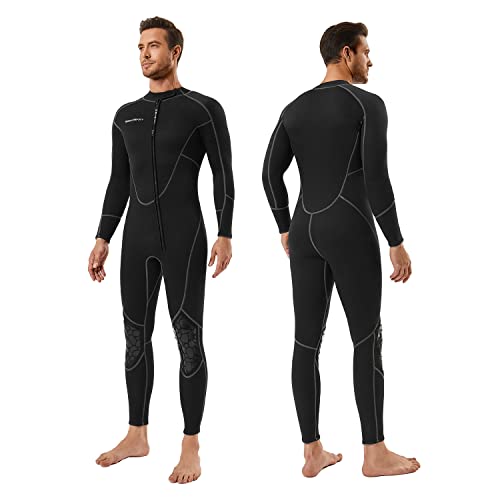
Seaskin Men's 3mm Front Zip Neoprene Wetsuit
|
9.2/10 | Buy |
| Best Budget |
 GoldFin Women's 2mm Neoprene Wetsuit Top |
9.1/10 | Buy |
 Hevto Men's 3/2mm Neoprene Full Wetsuit |
8.8/10 | Buy | |
 Hevto Men's 3/2mm Neoprene Full Wetsuit |
8.1/10 | Buy |
Seaskin Men's 3mm Front Zip Neoprene Wetsuit
Featuring a 3mm neoprene core with breathable flatlock stitching and a heavy-duty YKK front zipper, this Seaskin wetsuit provides practical thermal insulation for kayaking, snorkeling, and temperate water sports. It is an accessible, easy-entry option for recreational water enthusiasts seeking core warmth without the shoulder strain of back-zip suits.
Pros
- Front-entry heavy-duty YKK zipper makes getting in and out remarkably fast without shoulder strain.
- Three-layer 3mm neoprene composite provides dependable core warmth and surface wind protection.
- Flatlock stitching sits flush to reduce underarm and torso chafing during paddling or swimming.
- Accessible price point for entry-level snorkelers, kayakers, and seasonal water sports enthusiasts.
Cons
- Flatlock stitched seams are inherently water-permeable, making the suit unsuitable for cold-water immersion below 62°F (17°C).
- Initial dry try-on feels quite snug and compressive before softening with water use.
- Lacks external smoothskin wind-blocking panels or internal liquid-sealed seam tape for heavy open-ocean surf.
GoldFin Women's 2mm Neoprene Wetsuit Top
The GoldFin Women's 2mm Wetsuit Top delivers lightweight core warmth and smoothskin seals to keep recreational paddlers and water sports enthusiasts comfortable in cooler water. It is an ideal pick for paddle boarders, kayakers, and water aerobics participants wanting flexible upper-body insulation without the bulk of a full suit.
Pros
- 2mm neoprene profile balances reliable torso warmth with full paddle stroke range of motion
- Smoothskin rubber seals along the collar, hem, and cuffs help block chilly water seepage
- Front zipper design makes putting on and taking off the jacket quick and effortless
- Adds light buoyancy and protects skin during lake, river, and ocean activities
Cons
- Neoprene rubber has a temporary factory scent out of the package that requires initial ventilation
- Top-only coverage leaves the lower body exposed, requiring separate neoprene pants or shorts in cold water
- Requires hand rinsing in cold water and air drying rather than machine washing
Hevto Men's 3/2mm Neoprene Full Wetsuit
The Hevto Men's 3/2mm Full Wetsuit delivers practical full-body thermal protection and mobility with a user-friendly front-zip entry. It is an accessible choice for recreational surfers, paddleboarders, and ocean enthusiasts navigating cool to temperate waters.
Pros
- Front-zip closure with upgraded puller allows quick and independent dressing without back-reach straining
- 3/2mm neoprene construction provides a balanced compromise between thermal warmth and paddling articulation
- Multi-sport versatility covers paddleboarding, surfing, snorkeling, lake swimming, and personal watercraft use
- Full-coverage cut protects the skin from wind, surface scratches, and direct sun exposure
Cons
- Front-zip track can experience minor water entry during heavy wave impacts or deep duck dives compared to specialized surfing chest zips
- Requires exact adherence to body measurements because dry try-on feels quite snug before entering the water
- Not intended for extreme cold conditions below typical temperate water thresholds
Hevto Men's 3/2mm Neoprene Full Wetsuit
The Hevto Men's 3/2mm Full Wetsuit delivers practical core warmth and flexible mobility through a zoned 3mm torso and 2mm limb layout with smooth flatlock seams. Featuring an accessible back zip with an extended pull leash and reinforced knee panels, it is a dependable, budget-friendly choice for beginners and multi-sport water enthusiasts in cool-to-temperate conditions.
Pros
- Zoned 3/2mm neoprene layout keeps the core insulated while offering 2mm stretch for easy paddling and kicking
- Rear back-zip design with an extended pull cord provides straightforward, self-sufficient entry and exit
- Flatlock stitching lays smooth against bare skin to minimize friction and seam irritation during extended wear
- Durable reinforced knee panels add extra longevity in high-contact abrasion zones
Cons
- Flatlock seams are inherently breathable and permeable, making the suit less suitable for cold water below 60°F (15°C)
- Rear zip closures can be more susceptible to cold water flushes during aggressive duck dives compared to sealed chest zips
- Requires careful attention to sizing charts, as dry neoprene feels quite snug before breaking in upon water entry
Frequently Asked Questions
What neoprene thickness works best for kayaking?
A thickness of 2mm to 3/2mm delivers the optimal balance of warmth and rotational flexibility for most paddlers. Using 3mm neoprene over the chest and back maintains vital core temperature against wind chill and cockpit spray. Thinner 2mm panels under the arms and across the shoulders prevent friction and reduce paddle fatigue during long paddling sessions. Heavy suits above 4mm often create too much resistance around the rotator cuff unless you paddle in sub-freezing waters.
Is a front zip or back zip wetsuit better for paddling?
Front zip wetsuits are generally more convenient and comfortable for seated paddlers. A front zipper allows you to ventilate your chest easily if you overheat while exerting energy against a headwind. Back zippers can press uncomfortably against kayak backrests and lumbar supports during prolonged seated tours. Rear zippers also create a stiffer spine panel, whereas front entry designs preserve natural torso rotation.
Should a kayaking wetsuit fit tightly on dry land?
Yes, your wetsuit should fit snug like a second skin without cutting off circulation or pinching the armpits. Neoprene naturally loosens slightly once wet, so a loose dry fit will sag and allow excess cold water to flush through the collar. However, the chest and shoulders must allow full forward reach so your stroke remains unrestricted. Checking manufacturer size charts carefully prevents buying a cut that bunches under the arms.
Can you wear a wetsuit top instead of a fullsuit for kayaking?
Yes, a 2mm neoprene jacket or wetsuit top offers excellent versatility for mild to moderate paddling conditions. Long sleeve neoprene tops protect your arms and torso from wind-chill and spray while pairing easily with splash pants or boardshorts. They provide lightweight upper-body flexibility, which works seamlessly with an efficient stroke much like having suitable paddle board paddles for smooth cadence. Tops also eliminate the seated hip restriction sometimes felt in full-length suits.
Why are flatlock seams common in kayaking wetsuits?
Flatlock seams provide smooth interior comfort and durable stretch that minimizes chafing against bare skin. The stitching lies completely flat against your body, reducing painful abrasion caused by repetitive paddling movements. While flatlock stitching allows microscopic seepage, the constant movement in a kayak cockpit generates adequate body heat to keep that minimal moisture warm. For extreme winter conditions, glued and blind-stitched seams offer superior watertight protection.
How do you care for a kayaking wetsuit after saltwater outings?
Rinse the suit thoroughly in cool, clean freshwater immediately after every outing to dissolve salt crystals and sand. Hang the garment on a wide plastic hanger out of direct sunlight to prevent ultraviolet breakdown of the neoprene rubber. Never wash your wetsuit with harsh detergents, and never put it in a mechanical dryer or iron it. Proper rinsing maintains neoprene elasticity and prevents zipper corrosion over time.
About the author
Marius Fox brings extensive hands-on experience from both above and below the water. A PADI Master Scuba Diver Trainer and AIDA freediver, she has worked as a scuba instructor, managed diving operations, participated in shark research, and contributed to marine conservation projects. His expertise provides a practical perspective on diving, snorkeling, water safety, and adventure gear.