
What Size Anchor for Kayak Fishing: Practical Sizing Guide for 2026
Determine what size anchor for kayak fishing you need based on hull displacement, bottom composition, wind, and water conditions for October 2026.
 By Sara James
Updated October 5, 2026
By Sara James
Updated October 5, 2026
Wind drift, tidal movement, and swirling river currents can pull an angler away from productive honey holes within seconds of casting a lure. Figuring out what size anchor for kayak fishing keeps your boat pinned in position without overloading your deck or compromising hull stability. A typical fishing setup requires an anchor that balances holding power with manageable retrieval weight, especially when you are managing rods, tackle crates, and tight cockpit space. Choosing an incorrect anchor weight can cause your kayak to drag across the bottom in moderate breezes or pull your bow beneath chop if the line snags.
Most kayak anglers rely on anchors weighing between 1.5 and 5 pounds, depending on total displacement, wind profile, and water depth. While rigid rotomolded craft often need heavier claw or grapnel designs, anglers paddling heavy-duty inflatable kayaks must also account for high pontoon freeboard catching crosswinds. Beyond standard metal weights, alternative holding devices like brush clamps secure your boat to shoreline cover without disturbing fish. Pairing the proper anchor mass with a dedicated track-mounted lock or trolley line turns an exhausting paddling workout into a controlled, stationary angling session.
| Award | Product | WSG Score About WSG ScoreThe WSG Score is our own rating from 0 to 10, based on performance, design and build, ease of use, and value. It reflects independent research and is never influenced by manufacturers, retailers, or affiliate commissions. Learn more › | |
|---|---|---|---|
| Best Overall |
Omoojee Kayak Brush Gripper with 16.4ft Paracord
|
8.8/10 | Buy |
 Brocraft Kayak Track Anchor Lock System
|
8.4/10 | Buy | |
 EDSRDPLT Kayak Anchor Lock System with Side Deck
|
7.8/10 | Buy |
Omoojee Kayak Brush Gripper with 16.4ft Paracord
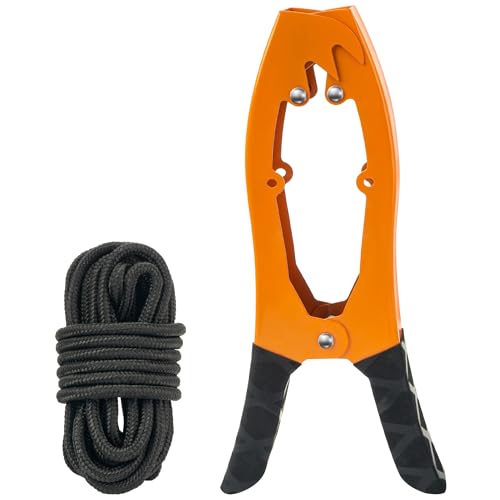
The Omoojee Kayak Anchor Grip is a spring-tensioned brush clamp crafted from painted 304 stainless steel and rigged with 16.4 feet of paracord. It offers silent, dependable station-keeping along tree-lined banks and dock pilings without the weight or bottom disturbance of heavy claw anchors, making it a great pick for shallow-water kayak anglers.
Pros
- Corrosion-resistant 304 stainless steel construction with an anti-rust painted finish
- Aggressive jaw teeth secure a firm hold on branches, limbs, and dock pilings under wind drift
- Stealthy alternative to heavy bottom anchors that avoids stirring up silt or spooking fish
- Lightweight and compact footprint saves valuable deck and hatch space on smaller kayaks
Cons
- Only functions where solid shoreline vegetation, fallen timber, or dock posts are present
- Not rated for holding heavy watercraft in fast-moving river currents or heavy wind swells
- Lacks a built-in line float, so securing the cord to the craft before deploying is critical
Brocraft Kayak Track Anchor Lock System
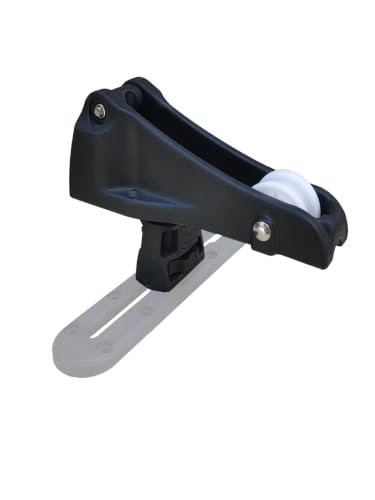
The Brocraft Anchor Lock System secures to standard kayak gear tracks to provide controlled, 360-degree anchor line management using rope up to 1/2 inch in diameter. Built from fiberglass-injected nylon with a quick-release base, it offers kayak anglers an easy way to hold position on lakes and slow-moving rivers without permanent hull drilling.
Pros
- Quick-release base detaches smoothly for hassle-free vehicle transport and off-season storage
- Full 360-degree rotation simplifies line alignment in changing winds and gentle currents
- Fiberglass-injected nylon body provides dependable structural toughness against line tension
- Fits most brand kayak track systems without drilling permanent holes into the hull
- Accommodates standard kayak anchor ropes up to 1/2 inch in diameter
Cons
- Does not include anchor rope, anchor weight, or gear tracks in the package
- Gunwale track placement requires caution in heavy currents to avoid sideways hull tipping
- Line capacity is limited to ropes under 1/2 inch in diameter
EDSRDPLT Kayak Anchor Lock System with Side Deck
The EDSRDPLT Kayak Anchor Lock System is a side deck mount rope-locking mechanism designed to simplify station-keeping for kayak anglers and recreational paddlers on calm waters. Supporting 3-5 lb anchors and rope up to 1/2 inch in diameter, it is ideal for small boaters who want quick, one-handed anchor adjustments without fumbling with traditional cleats.
Pros
- Intuitive one-handed rope locking frees hands for casting or maneuvering
- Internal ball-bearing design promotes smooth, quiet line feeding
- Side deck mounting base adapts to flat gunwale surfaces or vertical hull walls
- Handles anchor ropes up to 1/2 inch in diameter
Cons
- Weight capacity is limited to small 3-5 lb anchors and is not suitable for heavy offshore ground tackle
- Requires drilling and surface mounting hardware into the watercraft deck or gunwale
- Best suited for sheltered flatwater lakes and slow streams rather than swift coastal currents or heavy chop
How to Select the Right Anchor Size and Rigging System for Kayak Fishing
Selecting the right anchor size for kayak angling comes down to matching weight and fluke geometry to your boat displacement and water conditions. For the vast majority of paddlecraft, an anchor between 1.5 and 5 pounds provides adequate holding power without adding excessive bulk to your deck. An anchor that is too light will continuously drag over sand and gravel, forcing you to reposition after every couple of casts. Conversely, an oversized anchor can quickly become an unmovable hazard if it wedges tightly into bottom structure or overtaxes your back during deep-water retrieval.
The Standard Weight Range: Choosing Between 1.5, 3, and 5-Pound Anchors
A 1.5-pound anchor works best for small, lightweight kayaks operating in protected, low-energy environments. Recreational sit-inside kayaks and compact sit-on-top hulls under 10 feet generally produce minimal hydrodynamic drag and low wind resistance. On calm ponds, sheltered farm reservoirs, and slow creek pools, a 1.5-pound folding grapnel holds position reliably without weighing down the bow. However, this lighter mass quickly loses its grip if winds exceed 10 knots or if you fish in water with noticeable tidal movement.
The 3-pound anchor represents the universal sweet spot for modern 10 to 12-foot fishing kayaks. This weight provides enough downward force for the flukes to dig into sand, silt, and gravel without creating an unmanageable burden during retrieval. Anglers dealing with moderate winds, light river flows, and small boat wakes find that a 3-pound unit holds steady throughout a long morning of casting. It stows easily inside a tankwell milk crate or dedicated anchor hatch without altering the trim of your boat.
Stepping up to a 3.5 to 5-pound anchor becomes necessary when you operate heavy 12 to 14-foot platforms, pedal-drive craft, or fully rigged motorized paddlecraft. These larger boats have significantly higher surface areas that catch incoming wind and tidal currents, multiplying the pull against your rode. Hardware such as the EDSRDPLT Kayak Anchor Lock System Durable is designed specifically to handle anchors in the 3 to 5-pound category, ensuring the locking teeth firmly hold heavier loads. While hauling a 5-pound weight from 25 feet of water requires some arm effort, it prevents slow, frustrating drifting when anchoring on open bays or coastal flats.
Kayak Hull Displacement, Windage, and the Safe Payload Buffer
Understanding anchor resistance requires looking beyond the bare weight of your kayak to consider your boat windage profile. Modern angling kayaks frequently feature wide 32 to 36-inch beams, elevated mesh stadium seats, standing casting decks, and vertical rod holders. When you sit high above the waterline, your torso and gear act as a sail, catching breezes that push the hull across the water surface. A wide, stable hull requires more holding bite from an anchor than a narrow, low-profile touring kayak that sits flush with the surface.
Paddlers must also account for total payload limits and preserve a safe reserve buoyancy buffer. A standard safety guideline in paddle sports is the 70 to 75 percent capacity threshold, meaning your combined weight of paddler, tackle, battery, crate, and anchoring gear should never exceed three-quarters of the hull certified limit. Adding a heavy 5-pound iron anchor, chain leads, and 100 feet of soaked nylon rope eats into this usable displacement. Maintaining adequate freeboard ensures your bow rises over oncoming chop rather than plunging beneath waves when pinned tightly to an anchor line.
Anchor Styles and Substrate Mechanics: Flukes, Claws, and Grippers
Anchor geometry matters just as much as raw weight when evaluating how well your kayak stays pinned to the bottom. The folding grapnel anchor remains the most popular design because its four curved tines fold inward against the shank for compact, safe deck storage. Grapnels excel in coarse gravel, broken rock, and submerged structure where the sharp tines can wedge into crevices. In contrast, they struggle in loose, powdery silt or soft mud because the narrow tines lack the surface area to create suction.
Claw and Bruce-style anchors deliver superior holding power in mud, sand, and loose silt substrates. The wide, scoop-shaped spade sets quickly under tension and rotates downward into the seabed rather than skittering across the surface. If wind or current shifts 180 degrees, a claw anchor tends to break free and reset itself automatically instead of dragging indefinitely. While claw anchors do not fold flat and require more deliberate storage planning on open decks, their holding efficiency per pound outperforms traditional grapnel designs in soft-bottom lakes and tidal estuaries.
When fishing shallow timber, mangrove shorelines, or flooded brush, traditional bottom anchors can snag permanently or stir up clouding silt. The Omoojee Kayak Anchor Grip solves this problem by clamping directly onto overhanging branches, shoreline logs, or dock pilings. Constructed from 304 stainless steel with antirust paint, this brush gripper uses serrated spring-tensioned teeth to hold your craft silently against water flow without disturbing bottom-dwelling fish. Supplied with 16.4 feet of tough paracord, it eliminates the need to haul heavy iron out of the mud when working backwater cover.
Scope Ratio, Line Diameter, and Chain Lead Physics
Anchor holding strength depends heavily on the angle of the line connecting your boat to the bottom, known in marine navigation as scope. A minimum scope ratio of 5:1 is recommended for calm waters, meaning you need 50 feet of line deployed for every 10 feet of water depth. In choppy conditions or brisk winds, extending your scope to 7:1 keeps the pull parallel to the substrate, preventing the anchor shank from lifting upward. Dropping an anchor straight down on a short 1:1 or 2:1 line will pull the flukes out of the bottom the moment a wave lifts your kayak bow.
Selecting the proper line diameter ensures smooth feeding through cleating systems without sacrificing tensile durability. Braided nylon rope between 3/16 inch and 3/8 inch is ideal for kayak fishing, offering slight elastic shock absorption to cushion wave surges. Lock units such as the Brocraft and EDSRDPLT mechanisms accommodate rope up to 1/2 inch in diameter, giving anglers flexibility in line thickness. Adding a 2 to 3-foot length of vinyl-coated or galvanized chain between the anchor eye and the rope keeps the pull horizontal and protects the rope from abrasive bottom rocks.
Anchor Trolley Systems and Point of Attachment Safety
Tying an anchor line directly to the side cockpit rail or center handle of a kayak is one of the most hazardous mistakes an angler can make. When current or crosswinds push against the hull, a side-tied anchor exerts lateral torque that can pull the gunwale beneath the waterline in seconds. Water quickly pools across the deck, destroying primary stability and causing an immediate capsize. Anchoring forces must always be routed to either the bow or the stern, allowing the boat to slice naturally through wind and current.
An anchor trolley system provides the safest method for controlling your boat angle on the water. Consisting of a continuous loop of paracord running through pulleys mounted at the bow and stern, the trolley carries an attachment ring along the length of your hull. You pass your anchor line through the ring and shuttle it forward to point your bow into oncoming swells, or backward to face downwind for relaxed casting. This simple adjustment keeps your kayak aligned with water flow, stabilizing the craft and eliminating dangerous broadside roll.
Lock Mechanisms and Deck Mounting Configurations
Managing anchor line manually while fighting a fish or navigating tight structure can quickly create dangerous clutter in your footwells. Piles of loose nylon line on the deck create entanglement hazards for boots, landing nets, and treble hooks. Dedicated anchor locks mount securely to your gunwales, providing an integrated jam cleat or roller mechanism that holds line firmly without requiring complex knot tying. These locks allow anglers to adjust line depth instantly and secure position with a quick flick of the wrist.
Track-mounted hardware offers great flexibility for modern fishing kayaks equipped with accessory rails. The Brocraft Anchor Lock System with Fishing Kayak track adapter utilizes fiberglass-injected nylon construction to mount directly into standard factory gear tracks without drilling into the hull. It features a quick-release removable base and 360-degree rotation, enabling you to align the roller pulley directly with your anchor trolley line. Designed to accept rope up to 1/2 inch in diameter, this system keeps line retrieval quiet and smooth during active fishing sessions.
Anglers who prefer a permanent setup often select deck-mounted units with internal bearing systems. The EDSRDPLT Kayak Anchor Lock System Durable installs onto flat or vertical surfaces via a side deck mount, making it versatile for canoes and small craft as well as kayaks. Its intuitive single-handed lock-and-release mechanism lets you lower or secure a 3 to 5-pound anchor with one hand while holding your fishing rod with the other. The smooth ball-bearing design minimizes friction and operates quietly, preventing sudden metallic clatter from spooking skittish game fish in shallow flats.
Essential Breakaway Rigging and Quick-Release Safety Protocols
Fishing around jagged rock piles, sunken boulders, and submerged timber creates a high risk of wedging your anchor permanently in the bottom. If you pull straight up on a jammed grapnel shank, the flukes simply dig deeper, leaving you anchored to an immovable obstacle in open water. Experienced kayak anglers bypass this hazard by rigging their anchor in a breakaway configuration. This simple rigging setup reverses the pulling angle when the anchor gets trapped, allowing you to salvage your gear safely without risking a capsize.
To rig a breakaway system, you shackle your anchor line directly to the bottom crown of the anchor rather than the top eyelet. You then run the line snug along the shank and fasten it to the top eyelet using a low-test plastic zip-tie or light monofilament loop. Under normal anchoring tension, the zip-tie holds the pull at the top of the shank so the flukes bite correctly into the substrate. If the tines wedge tightly into rocks, a firm upward pull snaps the zip-tie, transferring the load directly to the bottom crown and pulling the anchor out backward.
Safety regulations under US Coast Guard Title 33 CFR part 175 require every paddler to carry a wearable Type III or Type V PFD and an audible sound-producing whistle. When anchored in navigable channels or open bays, sudden boat wakes or changing weather can create fast-moving emergencies where you must detach immediately. Connecting your anchor line to a quick-release clip and a high-visibility foam float allows you to dump the line in seconds and paddle away to safety. If you fish in frigid seasons, taking paddler wetsuit considerations seriously provides vital thermal protection against cold-water shock should unexpected anchor snags compromise hull balance.
Adapting Anchor Sizing to Diverse Waterway Environments
Water conditions dictate your anchoring strategy just as much as the physical displacement of your kayak. On sheltered inland lakes, weed-choked reservoirs, and small retention ponds, a 1.5 to 3-pound grapnel anchor is generally all you need to stay in place. Water movement in these settings is primarily driven by surface wind rather than strong hydraulic current. With minimal scope deployed, an angler can hold over offshore brush piles or drop-offs with very little physical effort or deck clutter.
Flowing rivers and winding creeks introduce strong hydrodynamic drag that completely alters anchor mechanics. River currents exert immense continuous pressure against the hull, multiplying the effective pull against your anchor line far beyond what wind creates. Dropping a heavy 5-pound bottom anchor in swift water is extremely dangerous because a sudden snag can suck the stern or bow underwater before you can cut the rope. In fast river environments, using brush grippers on shoreline branches or employing shallow-water stake-out poles in soft sand bars is significantly safer than dropping heavy iron into the riverbed.
Coastal bays, saltwater flats, and tidal estuaries present a combination of shifting currents, persistent wind chop, and fluctuating water depths. Tidal cycles constantly change your scope ratio, requiring you to let out additional line as the water level rises to prevent the anchor from dragging. Shifting sand and soft marl require a 3.5 to 5-pound claw or scoop anchor that can dig in deeply and reset itself when the tide turns. Anglers fishing coastal waters must also monitor weather changes, as incoming ocean swells can place severe shock loads on small anchoring systems.
Gear Maintenance, Deck Organization, and Transport Logistics
Proper deck organization keeps heavy anchoring equipment from damaging your kayak hull or interfering with fishing tackle. An uncontained metal anchor rolling around in a plastic tankwell can gouge rotomolded polyethylene or crack delicate gel coats on composite boats. Storing your grapnel anchor inside a rubberized mesh bag, thick utility pouch, or cut-down section of foam pipe insulation protects your deck from scratches. Coiling your anchor rode neatly around an H-frame line winder or storing it inside an anchor locker prevents tangles and keeps your standing deck clear.
Routine maintenance keeps mechanical anchor locks and metal gripping components operating reliably over several seasons of use. After fishing in saltwater, brackish bays, or muddy rivers, thoroughly rinse anchor locks, ball bearings, and stainless steel hardware with clean freshwater. Spraying moving springs and line rollers with a marine-grade silicone lubricant prevents corrosion and eliminates squeaking that could alert fish. Inspecting your anchor rode regularly for fraying, chafing near the chain lead, and sun degradation ensures you never lose an anchor to rope failure.
When preparing to transport your boat on the highway, always remove heavy anchors, metal locks, and excess rigging from the kayak deck. Transporting an overloaded kayak on heavy-duty kayak roof racks creates unnecessary strain on crossbars and can cause localized hull denting or oil-canning under tie-down straps. Stowing your anchor weights securely inside your vehicle trunk preserves your boat balance during loading and extends the lifespan of your vehicle transport setup. Matching a well-sized 1.5 to 5-pound anchor to your fishing craft ensures reliable positioning, effortless retrieval, and a safer day on the water.
About the author
Sara James is an experienced paddler and outdoor gear reviewer with more than two decades of involvement in paddle sports. Her background spans touring kayaking, Class V whitewater, stand-up paddleboarding, and international kayaking events. She brings a practical, experience-driven perspective to evaluating kayaks, paddles, life jackets, dry bags, and other essential water gear.