
What Size Kayak Paddle for My Height: Sizing Chart and Fit Guide for 2026
Learn what size kayak paddle for my height works best using hull width, seated torso height, and blade geometry for safe paddling in October 2026.
 By Maggie Nichols
Updated October 5, 2026
By Maggie Nichols
Updated October 5, 2026

Gliding smoothly across open water requires harmony between your physical posture, your boat’s hull geometry, and the length of your paddle shaft. Many paddlers discover that an improperly matched paddle turns an enjoyable morning into an exhausting struggle against sore shoulders, aching wrists, and bruised knuckles. When trying to determine what size kayak paddle for my height, relying on body stature alone often leads to frustrating sizing mistakes. The overall width of your kayak beam and your seated torso elevation dictate blade reach just as much as your standing stature. Modern watercraft, from sleek touring designs to wider heavy-duty inflatable kayaks, demand specific shaft clearances so the blades enter the water cleanly without grazing the gunwales.
A properly sized paddle provides crisp forward propulsion, confident steering braces, and balanced leverage without forcing you to lean sideways on every stroke. Adjustable models from brands like Overmont, OCEANBROAD, and Pelican make fine-tuning easier across different deck configurations and seating heights. Matching your shaft length to both your body frame and hull dimensions keeps your stroke cadence efficient and prevents chronic fatigue over long outings. Whether you navigate calm recreational lakes, fish from a wide platform, or explore coastal estuaries, finding the correct shaft dimensions ensures your hours on the water remain safe and comfortable.
| Award | Product | WSG Score About WSG ScoreThe WSG Score is our own rating from 0 to 10, based on performance, design and build, ease of use, and value. It reflects independent research and is never influenced by manufacturers, retailers, or affiliate commissions. Learn more › | |
|---|---|---|---|
| Best Overall |
iTAOSTAR GP05B Adjustable Kayak Paddle
|
9.2/10 | Buy |
| Best Premium |
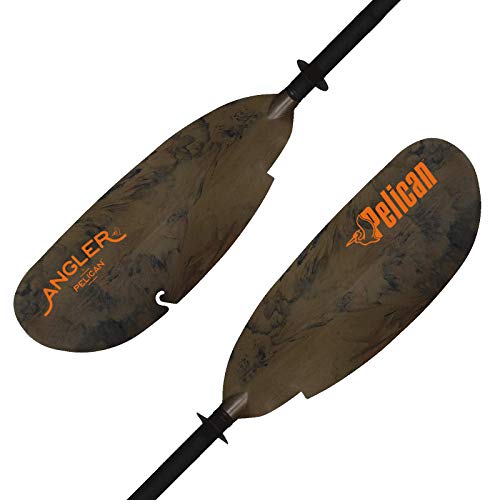 Pelican Poseidon Angler 98.5-Inch Kayak Paddle
|
9.1/10 | Buy |
| Best Budget |
 Quynhni 62-87 Inch Adjustable Kayak Paddle
|
8.9/10 | Buy |
 Overmont 230cm Aluminum Kayak Paddle
|
8.9/10 | Buy | |
 Abahub 210-230cm Adjustable Kayak Paddle
|
8.9/10 | Buy | |
| Best Value |
 OCEANBROAD 4-Piece 230cm Kayak Paddle
|
8.9/10 | Buy |
 WONITAGO Adjustable Fiberglass Kayak Paddle
|
8.9/10 | Buy | |
 OCEANBROAD Adjustable Fishing Kayak Paddle
|
8.8/10 | Buy | |
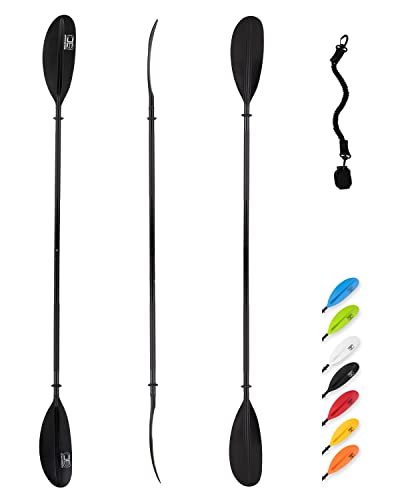 OCEANBROAD 230cm Kayak Paddle with Alloy Shaft
|
8.4/10 | Buy | |
 Abahub 210-230cm Adjustable Kayak Paddle
|
8.4/10 | Buy |
iTAOSTAR GP05B Adjustable Kayak Paddle
The iTAOSTAR GP05B is a versatile two-piece adjustable kayak paddle featuring a durable aluminum shaft, cold-insulating grips, and fiberglass-reinforced blades. It is a practical, buoyant choice for recreational paddlers and kayak anglers navigating calm lakes, slow rivers, and sheltered bays.
Pros
- Adjustable length range of 225 to 235 cm adapts cleanly to wide recreational hulls and raised stadium seats
- Shrink-fit PE tubing provides comfortable thermal insulation and dependable grip in wet conditions
- Fiberglass-reinforced polypropylene blades resist abrasion when pushing off rocky shallows or boat ramps
- Buoyant shaft assembly floats on the water surface if dropped during gear management or casting
Cons
- Aluminum shaft construction carries more swing weight than premium composite or full carbon fiber paddles
- Push-button ferrule joints may develop slight tolerance play over extended seasons of heavy use
- Blade profile is tuned for low-angle recreational cruising rather than high-cadence sprint paddling
Pelican Poseidon Angler 98.5-Inch Kayak Paddle
Engineered specifically for wide-beam fishing kayaks over 34 inches, the Pelican Poseidon Angler features an extended 98.5-inch two-piece aluminum shaft with an integrated line hook notch and ruler. It is an affordable, functional choice for kayak anglers seeking proper reach and reduced wrist fatigue without spending a fortune on high-end carbon.
Pros
- Generous 98.5-inch reach eliminates knuckle scraping against wide-beam fishing kayak gunwales
- Integrated line retrieval notch and shaft ruler add practical convenience directly from the kayak seat
- Three-position push-button ferrule allows quick feathering adjustments to minimize wind resistance
- Ovalized right-side shaft indexing promotes consistent grip orientation and helps lessen forearm fatigue
Cons
- At 2.6 pounds, the aluminum shaft is heavier over all-day distance paddling than composite alternatives
- Push-button ferrule offers fixed feathering angles rather than continuous infinite angle adjustment
- Bare aluminum shaft can feel cold to unprotected hands during early-spring or late-autumn paddling
Quynhni 62-87 Inch Adjustable Kayak Paddle
Designed for versatile family use, this telescopic paddle adjusts from 62 to 87 inches and combines a rigid stainless steel shaft with fiberglass-reinforced blades. It breaks down easily into an included storage bag, making it a dependable option for recreational paddlers seeking shared gear.
Pros
- Wide 62 to 87 inch adjustment range
- Sturdy stainless steel shaft resists bending
- Fiberglass blades provide smooth power transfer
- Matte finish maintains traction when wet
- Includes dedicated storage bag for transport
Cons
- Stainless steel shaft is heavier than aluminum options
- Multi-piece breakdown requires assembly before each outing
Overmont 230cm Aluminum Kayak Paddle
Built for recreational outings and inflatable boats, this Overmont paddle pairs a lightweight two-piece aluminum shaft with feather-shaped blades and an adjustable feathering angle. A hollow floating build and bundled leash provide peace of mind against accidental loss on the water.
Pros
- Hollow shaft floats in water
- Includes tethering paddle leash
- Three adjustable blade feathering angles
- Breaks down into two pieces for transport
- Built-in drip rings reduce water runoff
Cons
- Aluminum shaft offers basic rigidity compared to carbon
- Fixed 230cm length is not length-adjustable
Abahub 210-230cm Adjustable Kayak Paddle
The Abahub Adjustable Kayak Paddle provides customizable 210 to 230 cm sizing with a durable three-piece aluminum shaft and lightweight asymmetrical polypropylene blades. Weighing 2.35 pounds with built-in 60-degree feathering, it is an accessible, highly portable choice for recreational lake paddlers and families sharing watercraft.
Pros
- Length adjusts between 210 and 230 cm to accommodate varying paddler heights and kayak beam widths
- Detachable three-piece construction makes storage and trunk transport exceptionally straightforward
- Asymmetrical blade shape with 60-degree feathering helps streamline recovery strokes in breezy open water
- Tough polypropylene blades handle incidental contact with rocks, ramps, and sand without damage
Cons
- Aluminum shaft can feel cold against bare hands in early spring or late fall water conditions
- Multi-piece breakdown joints may exhibit minor flex under heavy power strokes compared to solid one-piece shafts
- At 2.35 pounds, it is heavier than premium carbon fiber touring paddles intended for high-mileage expeditions
OCEANBROAD 4-Piece 230cm Kayak Paddle
Built for easy transport, this 230cm paddle breaks down into four 25-inch sections that fit neatly into travel packs or gear bags. The anodized aluminum shaft resists saltwater corrosion, while adjustable blade feathering helps cut wind drag during longer tours.
Pros
- Breaks down into compact sections for travel
- Corrosion-resistant anodized aluminum construction
- Dual feathering angles for customizable paddle strokes
- Drip rings prevent water pooling on grips
Cons
- Relatively heavy at 3.17 pounds
- Overall length is fixed at 230cm without height adjustment
WONITAGO Adjustable Fiberglass Kayak Paddle
Constructed with a flexible fiberglass shaft and reinforced polypropylene blades, this paddle provides balanced power and buoyancy across freshwater and saltwater. Its three-piece breakdown frame and 20 cm extension range offer practical adjustability for recreational touring.
Pros
- Lightweight 2.2-pound design reduces paddler fatigue
- Buoyant construction prevents sinking in open water
- Three-piece breakdown build enables compact transport
- 20 cm length adjustability suits wider touring kayaks
Cons
- Preset 60-degree pin lock restricts feathering angle options
- Long 240 cm minimum length limits compact kayak use
OCEANBROAD Adjustable Fishing Kayak Paddle
Built for kayak anglers, this adjustable aluminum paddle extends from 240cm to 260cm and features an integrated hook retrieval notch on the blade. Its three-piece breakdown, drip rings, and included leash offer dependable utility for recreational outings.
Pros
- Hook retrieval notch aids kayak anglers
- Length adjusts in five-centimeter increments
- Three-piece breakdown simplifies transport
- Comes with bungee leash and drip rings
Cons
- Aluminum shaft is heavier than composite alternatives
- Longest section measures 51 inches when disassembled
OCEANBROAD 230cm Kayak Paddle with Alloy Shaft
The OCEANBROAD 230cm Kayak Paddle provides dependable flatwater propulsion with its durable 2.5-pound aluminum alloy shaft and stiff, fiberglass-reinforced blades. Equipped with insulated non-slip grip sleeves, three-position feathering, and an included bungee leash, it is a practical choice for recreational paddlers and kayak anglers.
Pros
- Complete outfitting bundle includes pre-fitted drip rings and a bungee paddle leash right out of the box
- Protective PE shaft sleeves offer non-slip control and thermal comfort during cool-weather paddling
- Three-hole push-button ferrule allows straightforward left- or right-hand blade feathering
- Resilient fiberglass-reinforced PP blades withstand gravel launches and shallow-water contact without chipping
Cons
- At 2.5 pounds, the aluminum shaft is heavier than premium carbon-fiber or fiberglass composite touring paddles
- Push-button ferrule mechanism may develop slight rotational play over seasons of heavy use
- Fixed 230cm length cannot be telescopically adjusted for extra-wide fishing rigs or elevated stadium seats
Abahub 210-230cm Adjustable Kayak Paddle
Built for recreational kayakers and families sharing gear, this Abahub paddle offers length adjustments from 210 to 230 centimeters alongside a packable three-piece breakdown. Its aluminum shaft and asymmetrical polypropylene blades provide a dependable balance of durability and wind-reducing feathering for casual touring.
Pros
- Adjustable length easily accommodates different family members
- Three-piece design breaks down easily for compact transport
- Asymmetrical blade shape supports smooth and uniform strokes
- Rugged aluminum shaft withstands frequent recreational wear
- Manageable overall weight at 2.35 pounds
Cons
- Heavier than premium composite or carbon fiber alternatives
- Polypropylene blades flex more under powerful forward strokes
- Multi-piece joints offer less rigidity than one-piece shafts
Kayak Paddle Sizing Mechanics: Height, Torso, and Hull Width Dynamics
Choosing the correct kayak paddle requires looking beyond your standing height to understand how your body position interacts with your watercraft on the water. When paddlers ask what size paddle matches their stature, they often overlook the critical role of boat beam width, seat elevation, and blade angle. A paddle that feels comfortable on land can quickly cause shoulder fatigue, blistered palms, or bruised knuckles if it fails to account for how high you sit above the waterline. By examining anatomical measurements alongside hull geometry, you can select a paddle length that maximizes forward propulsion while protecting your joints from repetitive strain.
The Sizing Matrix: Balancing Paddler Stature and Hull Beam Width
Standing height provides an initial starting point for paddle sizing, but it represents only half of the mechanical equation. A paddler who stands five feet eight inches tall paddling a narrow, twenty-three-inch touring hull requires a dramatically shorter paddle than the same person sitting inside a thirty-four-inch wide recreational boat. If your boat features a wide beam, a short paddle forces you to lean your torso aggressively across the cockpit rim on every forward stroke just to immerse the blade. Conversely, using an excessively long paddle on a slender hull creates unnecessary leverage, forcing your upper body to work harder while lifting redundant shaft weight through the air.
Standard paddle sizing guidelines typically establish clear length brackets based on hull width. Narrow touring kayaks under twenty-three inches wide generally pair best with lengths between 210 and 220 centimeters for average-height adults. Mid-sized recreational hulls measuring twenty-four to twenty-eight inches wide normally perform best with paddles spanning 220 to 230 centimeters. Wide recreational and fishing platforms measuring twenty-nine to thirty-four inches wide demand lengths between 230 and 240 centimeters, while modern fishing craft over thirty-four inches wide require extended reaches of 240 to 260 centimeters such as the Pelican Poseidon Angler or WONITAGO adjustable paddle.
Torso Height Measurement: The Accurate Anatomical Metric
Standing stature can often mislead paddlers because human leg-to-torso proportions vary significantly from person to person. Two individuals who both measure five feet ten inches tall may have torso heights that differ by four inches or more. When you sit in a kayak cockpit, your legs remain extended forward inside the hull or along the foot braces, meaning leg length has zero impact on your vertical distance above the water. Your seated torso height, measured from the base of your hips to your nose, actually determines where your shoulder joints pivot relative to the boat gunwales.
To obtain an accurate seated torso measurement, sit upright on a flat floor with your back placed squarely against a wall. Use a tape measure to record the vertical distance from the floor surface up to your chin or nose level. A torso measurement under twenty-six inches indicates a shorter seated profile, which generally calls for a shorter shaft within your boat beam bracket. Torso measurements between twenty-six and thirty inches represent average profiles, whereas measurements exceeding thirty inches require moving up one paddle length bracket to maintain an efficient stroke entry without hunching forward.
Stroke Angle Mechanics: High-Angle vs Low-Angle Paddling Styles
Your personal paddling technique directly influences the optimal shaft length needed for comfortable navigation. Kayak strokes fall into two primary mechanical categories known as high-angle and low-angle paddling styles. High-angle paddling is an athletic, performance-oriented technique where the shaft remains relatively vertical throughout the power phase, usually between sixty and eighty degrees relative to the water surface. This style generates immediate acceleration, powerful maneuvering turns, and strong forward thrust, making it popular among whitewater boaters, fitness paddlers, and coastal surf kayakers.
Because a high-angle stroke keeps the paddle close to the boat centerline, it functions most efficiently with shorter overall shafts, typically between 205 and 220 centimeters. Conversely, low-angle paddling represents a relaxed, energy-conserving technique well suited for long-distance touring, recreational flatwater outings, and day trips. In a low-angle stroke, the shaft maintains a flatter angle around thirty to forty-five degrees relative to the water. This relaxed motion requires a longer shaft, often between 225 and 240 centimeters, so the blade can submerge completely without forcing the paddler to lean sideways.
Seat Elevation and Deck Height: Sit-Inside vs Elevated Sit-On-Top Cockpits
The physical distance between your seating position and the water line represents another crucial variable in calculating paddle length. Traditional sit-inside kayaks place the paddler directly on or slightly above the hull floor, creating a very low center of gravity. In this low seated position, your hips sit close to the water surface, meaning a standard 220 to 230 centimeter paddle easily reaches past the cockpit rim. Enclosed sit-inside decks also allow closer proximity to the water, which reduces the total shaft reach required for complete blade immersion.
Modern sit-on-top kayaks, particularly models designed for recreational fishing, feature raised aluminum-frame stadium seats that position paddlers four to ten inches above the deck floor. This elevated seating delivers outstanding visibility, sight-casting vantage, and comfortable hip angles, but it substantially increases the distance from your shoulders to the water. A paddler who comfortably uses a 220-centimeter paddle in a sit-inside boat will find that exact same paddle frustratingly short when seated in an elevated frame. Long-reach paddles like the OCEANBROAD Adjustable Fishing Kayak Paddle extend from 240 to 260 centimeters, providing the extra reach needed for high-riding seat frames.
Recognizing the Warning Signs of an Incorrectly Sized Paddle
Identifying whether your current paddle fits your body and kayak requires observing specific physical cues during a paddling session. When a paddle is too short, your knuckles or the paddle shaft will repeatedly strike the plastic deck or gunwales as you complete each stroke. You may also notice that the blade fails to submerge fully, creating loud splashing, blade flutter, and minimal forward propulsion. To compensate for the lack of reach, paddlers with undersized paddles frequently lean their upper bodies from side to side, which destabilizes the hull and causes severe lower back stiffness.
Using a paddle that is excessively long produces a different set of physical warning signs. An overly long shaft creates an elongated lever arm that places enormous torque on your shoulders, rotator cuffs, and upper back muscles. As the top blade travels high through the air during recovery, it catches crosswinds easily, a phenomenon known as windage that can steer your kayak off course. Furthermore, an unnecessarily long paddle forces a flatter stroke angle that pushes the boat nose back and forth in an inefficient zigzag pattern, wasting valuable forward momentum.
Shaft Materials, Blade Contours, and Offset Feathering Angles
Paddle performance depends heavily on the materials used in shaft construction and the hydrodynamic contouring of the blades. Aluminum alloy shafts, featured on models like the Overmont 230cm and OCEANBROAD paddles, offer outstanding durability, dent resistance, and affordability for casual weekend boaters. To counter cold transfer and reduce blisters, quality aluminum designs incorporate shrink-fit polyethylene tube covers, as seen on the iTAOSTAR GP05B, ensuring a comfortable, non-slip grip during autumn outings. Fiberglass shafts, such as the one on the WONITAGO paddle, reduce overall weight down to approximately 2.2 pounds while providing a joint-friendly flex that softens stroke impact.
Blade design and feathering adjustments also play a pivotal role in paddling efficiency and fatigue reduction. Asymmetrical dihedral blade shaping channels water evenly across both faces, eliminating blade flutter and ensuring stable power delivery on every stroke. Feathering mechanisms allow paddlers to offset the angle between the two blades, typically by sixty or sixty-five degrees. When paddling directly into a stiff headwind, an offset blade slices through the air with minimal drag while the opposite blade pulls through the water. Ergonomic indexing on paddles like the Pelican Poseidon Angler incorporates an ovalized grip section, helping you align your control hand intuitively without looking down.
Adjustable-Length Paddles: Versatility and Storage Logistics
For paddlers who own multiple watercraft or share gear among family members, fixed-length paddles can create frustrating compromises. An adjustable paddle solves this issue by incorporating a telescopic internal locking ferrule or multi-pin extension system. Models such as the Abahub adjustable paddle adjust smoothly between 210 and 230 centimeters, accommodating teenagers, adult women, and taller men on the same outing. Multi-piece breakdown designs also transform transportation logistics, allowing four-piece models like the OCEANBROAD travel paddle to break down into twenty-five-inch sections that slide easily into backpacks, trunk compartments, or closets.
When you finish your trip and return home, storing your paddling gear and watercraft properly preserves equipment longevity and maintains structural integrity. Kayaks stored improperly on uneven ground can suffer from hull deformation or oil-canning, which alters the boat beam profile and changes your required paddle reach. Suspending your hull evenly on a dedicated heavy-duty kayak storage rack protects the bottom contour from pressure dents while keeping your paddles organized and clean. Reliable off-water storage ensures your hull maintains its designed hydrodynamics and tracking characteristics season after season.
Rigging Accessories, Immersion Preparation, and Water Safety Protocols
Outfitting your paddle with practical accessories dramatically improves your comfort, dryness, and safety while on open water. Molded rubber drip rings positioned near each blade collar stop water droplets from running down the shaft into your lap. Setting these rings approximately six inches from the blade ferrule ensures runoff sheds back into the water rather than soaking your cockpit floor. Bungee paddle leashes, included with models like the Overmont and OCEANBROAD paddles, tether the shaft securely to your deck rigging, preventing your paddle from drifting away if you drop it while handling tackle.
Paddling in cooler seasons demands careful preparation to guard against rapid heat loss from wind exposure and cold spray. Pairing an insulated paddle grip with specialized wetsuits for cold-water kayaking provides essential thermal insulation against unexpected capsizes or hypothermic immersion shock. Water safety regulations established under United States Coast Guard Title 33 CFR part 175 require every paddler to carry a properly fitted, USCG-approved wearable Type III or Type V life jacket and an audible whistle. Always observe the safe payload threshold by keeping total paddler and gear weight within seventy to seventy-five percent of your boat manufacturer capacity rating.
Matching your paddle length precisely to your torso height and boat beam width transforms your time on the water from an exhausting chore into effortless recreation. Taking time to assess your boat width, seating height, and preferred paddling cadence ensures every stroke delivers clean, balanced propulsion. Reliable adjustable paddles from trusted makers allow you to adapt your setup as your technique develops or as you transition between different hulls. By combining accurate sizing measurements with USCG-compliant safety gear, you can paddle with complete confidence across every lake, river, and coastal waterway you explore.
About the author
Maggie Nichols is an experienced paddler, adventure guide, and gear reviewer with more than 25 years around paddle sports. Her background includes canoe touring, whitewater rafting and kayaking, ocean kayak guiding, and extensive outdoor education. She approaches water gear with a strong focus on real-world usability, durability, comfort, and practical performance.