
What Is the Lightest Fishing Kayak? Practical Guide for 2026
Find out what is the lightest fishing kayak in October 2026, comparing ultralight hulls, modular designs, safe payloads, and solo car-top transport.
 By Maggie Nichols
Updated October 5, 2026
By Maggie Nichols
Updated October 5, 2026

Lifting a cumbersome plastic boat onto a vehicle crossbar after an exhausting day on the water quickly drains the joy out of kayak fishing. Many solo anglers search for what is the lightest fishing kayak because manageable hull weight transforms launch logistics, highway transport, and off-water storage. Traditional rotomolded angling platforms often sacrifice portability for stability, leaving solo boaters struggling with awkward carries across rocky shorelines. Modern hull engineering now provides compact options that reduce physical fatigue without abandoning essential rod holders, gear tracks, or comfortable seating. Pairing a lightweight boat with heavy-duty kayak roof racks makes solo vehicle loading remarkably straightforward for quick morning launches.
Evaluating lightweight craft requires looking closely at bare hull weight versus fully rigged weight, alongside the critical safe payload threshold. Stripping down a boat to its basic shell helps with solo car-topping, but anglers must still account for the combined weight of tackle crates, electronics, anchors, and personal flotation devices. Keeping your total load within seventy to seventy-five percent of the certified maximum capacity preserves essential freeboard and prevents swampings in unexpected chop. Understanding how compact sit-inside cockpits, thermoformed materials, and innovative two-piece modular hulls perform on the water ensures you select a craft that is both easy to carry and genuinely seaworthy.
| Award | Product | WSG Score About WSG ScoreThe WSG Score is our own rating from 0 to 10, based on performance, design and build, ease of use, and value. It reflects independent research and is never influenced by manufacturers, retailers, or affiliate commissions. Learn more › | |
|---|---|---|---|
| Best Overall |
Reel Yaks Rapido 10.8-Foot Modular Kayak
|
9.2/10 | Buy |
| Best Budget |
 Pelican Sentinel 100X Angler Fishing Kayak
|
8.9/10 | Buy |
 Pelican Catch Classic 100 Angler 10-Foot
|
8.9/10 | Buy | |
| Best Premium |
 Reel Yaks Raider 9.5ft Modular Pedal Fishing Kayak
|
8.9/10 | Buy |
| Best Value |
 Pelican Catch Mode 110 Fishing Kayak
|
8.4/10 | Buy |
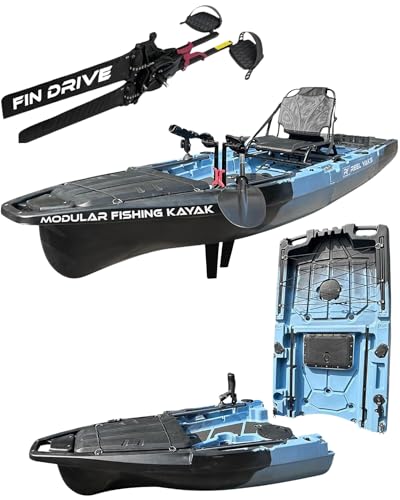 Reel Yaks Recon 10.5-Foot Modular Kayak
|
8.4/10 | Buy | |
 LUCKY Portable Kayak Fish Finder and Handheld
|
8.3/10 | Buy | |
 Pelican Catch Mode 110 TR Fishing Kayak
|
8.3/10 | Buy | |
 Pelican Catch Mode 110 Fishing Kayak
|
8.3/10 | Buy | |
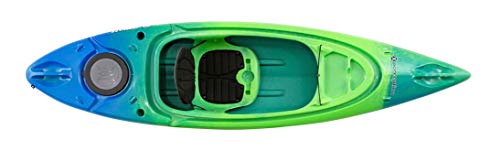 Perception Flash 9.5 Sit-Inside Kayak
|
8.0/10 | Buy |
Reel Yaks Rapido 10.8-Foot Modular Kayak
Designed for anglers lacking a trailer or roof rack, this modular kayak separates into two sections for easier transport and storage. A responsive pedal propeller drive, stable W-hull profile, and 440-pound capacity make it a capable platform for hands-free fishing.
Pros
- Modular two-piece hull fits inside standard vehicle trunks
- Responsive propeller drive enables agile hands-free navigation
- Generous 440-pound weight capacity accommodates heavy gear
- Wide hull design provides dependable water stability
- Factory-equipped with rod holders and accessory track rails
Cons
- Total 72-pound weight requires effort when fully assembled
- Requires manual section alignment and latching before launching
- Wide beam prioritizes stability over maximum paddling speed
Pelican Sentinel 100X Angler Fishing Kayak
Anglers seeking a manageable solo craft will appreciate this compact sit-on-top kayak. Weighing under 45 pounds at nine and a half feet, it combines easy transportation with four rod holders and an Ergolounge padded seat.
Pros
- Lightweight 44.6-pound frame makes solo handling simple
- Ergolounge seat offers thick cushioning and high back support
- Removable ExoPak crate holds two vertical fishing rods
- Two built-in flush-mount rod holders keep gear ready
- Molded-in side handles provide secure lifting points
Pelican Catch Classic 100 Angler 10-Foot
The Pelican Catch Classic 100 Angler is a 10-foot sit-on-top fishing kayak featuring a steady tunnel hull and an adjustable dual-position Ergocast frame seat. Weighing just 57 pounds with a 350-pound maximum capacity, it is a reliable, easily transportable platform for kayak anglers navigating lakes, ponds, and slow rivers.
Pros
- Tunnel hull provides exceptional initial flatwater stability for confident casting and gear access
- Ergocast frame seat keeps paddlers elevated off the deck with high and low position adjustments
- Relatively light 57-pound bare hull weight makes solo roof rack loading and transport practical
- Dual 4-inch rigging tracks allow seamless attachment of fish finders and accessories without drilling
- Adjustable footrests and paddle tie-downs ensure a comfortable, hands-free fishing experience
Cons
- Compact 10-foot waterline prioritizes close-quarters turning agility over long-distance straight tracking
- Paddle is not included in the base package and must be purchased separately
- Paddlers approaching the 350-pound maximum capacity ceiling may notice reduced freeboard and deck wash
Reel Yaks Raider 9.5ft Modular Pedal Fishing Kayak
The Reel Yaks Raider is a 9.5-foot modular sit-on-top fishing kayak featuring a hands-free propeller drive, stable W-hull architecture, and a 380-pound capacity that breaks down into portable 31-pound sections. It is a practical choice for apartment dwellers, compact vehicle owners, and solo anglers seeking pedal propulsion without roof rack hassles.
Pros
- Breaks down into two 31-pound sections that easily fit in car trunks or closets without needing a roof rack
- Propeller pedal drive delivers hands-free propulsion, freeing up hands for casting and fish handling
- Wide 35.4-inch beam and W-hull geometry offer solid initial balance on calm lakes and slow rivers
- Four-step tool-free modular assembly makes solo setup and breakdown straightforward at the launch ramp
Cons
- At 9.5 feet in length, forward tracking on open water may require active steering corrections compared to longer touring hulls
- The modular joint architecture requires regular inspection and sand clearance at the latch points before locking
- Propeller drive requires adequate draft clearance and must be retracted or raised when entering very shallow shoals
Pelican Catch Mode 110 Fishing Kayak
The Pelican Catch Mode 110 is a 10.5-foot sit-on-top fishing kayak featuring a stable tunnel hull, a multi-position ERGOBOOST elevated seat, and a 375-pound maximum capacity. Weighing approximately 63 pounds, it is an ideal choice for kayak anglers seeking an easy-to-car-top platform for calm lakes, ponds, and slow rivers.
Pros
- Tunnel hull provides outstanding primary stability for confident boarding and stand-up casting
- ERGOBOOST seat folds upward to offer an extra 6 inches of height and convenient under-seat tackle storage
- At 63 pounds, the bare hull is notably lighter than many comparable hard-shell angler kayaks
- Includes three integrated flush-mount rod holders for convenient rod staging
- Meets or surpasses ABYC flotation safety standards through dedicated internal hull flotation
Cons
- Paddle and scupper plugs are not included in the package and must be purchased separately
- Wide 34.5-inch beam prioritizes primary stability over straight-line tracking speed and long-distance glide
- Requires a longer paddle shaft to comfortably clear the wide gunwales without knuckle strikes
Reel Yaks Recon 10.5-Foot Modular Kayak
Breaking down into two separate sections, this modular pedal kayak pairs a hands-free fin drive with a stable 400-pound capacity W-hull. It gives anglers a fully outfitted fishing platform that fits inside vehicle trunks without requiring a roof rack.
Pros
- Separates into two pieces for compact vehicle transport
- Quiet hands-free fin pedal drive system
- Stable W-hull supports up to 400 pounds
- Factory-installed rod holders and accessory track rails
- Eliminates the need for a roof rack or trailer
Cons
- Total assembled weight of 88 pounds is fairly heavy
- Wide 35.4-inch beam can feel sluggish when paddling manually
- Requires assembly and latching at the water's edge
LUCKY Portable Kayak Fish Finder and Handheld
The LUCKY Handheld Fish Finder is a compact, battery-operated depth sounder and sonar accessory designed for kayak anglers and small-craft paddlers. It provides instant water depth readings from 3 to 328 feet without requiring complex hull drilling or heavy marine battery systems.
Pros
- Eliminates the need for permanent through-hull drilling or wiring heavy 12V marine batteries into your kayak
- Included neck strap keeps the compact 4.8-inch display secure and easily accessible in crowded cockpits
- Broad detection range from 3 to 328 feet covers shallow lake bays, slow rivers, and deep reservoirs
- Shows bottom terrain details like weeds and rocks alongside depth in either feet or meters
Cons
- Segmented monochrome LCD display lacks advanced topographic contour mapping and GPS navigation
- Requires managing a wired transducer cable along the kayak gunwale to prevent paddle stroke interference
- Operating duration is limited to 4-5 hours on fresh batteries, requiring spares for full-day fishing trips
Pelican Catch Mode 110 TR Fishing Kayak
Equipped with an elevated Ergoboost seat, deck traction pads, and an outboard transom, this 10.5-foot kayak is built for anglers who value stand-up stability and gear customization. Integrated tracks and flush rod holders provide a functional platform for calm-water fishing.
Pros
- Elevated adjustable seat with convenient under-seat storage
- Integrated stern transom accepts small outboard engines
- Sound-dampening non-slip traction pads for secure standing
- Equipped with three built-in flush rod holders
Cons
- Stern transom is limited to 2.5 HP motors
- Rigging tracks measure only 4 inches in length
Pelican Catch Mode 110 Fishing Kayak
Anglers seeking a secure casting platform will appreciate the wide tunnel hull and elevated ERGOBOOST seating on this 10.5-foot craft. Outfitted with integrated rigging tracks, flush rod holders, and dual tank wells, it delivers solid utility for flatwater fishing trips.
Pros
- Wide tunnel hull allows stable stand-up casting
- Adjustable padded seat offers improved sightlines
- Multiple integrated rod holders and accessory tracks
- Ample open deck storage in front and rear wells
- Internal hull flotation meets ABYC safety standards
Cons
- Weight of 67 pounds makes solo roof-loading demanding
- Wide 34.5-inch beam trades paddling speed for stability
- 375-pound weight limit restricts heavy multi-day camping gear
Perception Flash 9.5 Sit-Inside Kayak
The Perception Flash 9.5 is a compact 9-foot-6-inch sit-inside kayak combining a lightweight 41-pound hull with dual integrated rod holders and a generous 325-pound capacity. It is an ideal pick for solo car-toppers, recreational flatwater paddlers, and casual anglers seeking nimble handling on calm lakes and slow rivers.
Pros
- Lightweight 41-pound design allows effortless solo loading onto vehicle J-cradles or truck beds
- Substantial 325-pound maximum capacity provides ample buoyancy for a compact 9-foot-6-inch hull
- Factory-molded dashboard console and dual rear rod holders support spontaneous fishing trips
- Adjustable foot pegs allow fast legroom customization to maintain proper paddling posture
- Quality American manufacturing ensures resilient hull longevity across varied inland waters
Cons
- Sit-inside cockpit lacks self-bailing scupper holes, making a hand bilge pump or sponge advisable in choppy conditions
- Short 9-foot-6-inch waterline prioritizes agile turning over long-distance straight-line tracking speed
- Paddle and cockpit spray skirt are not included and must be purchased separately
Understanding Lightweight Fishing Kayak Design and Performance
When answering what is the lightest fishing kayak, the exact weight depends on whether you select an enclosed sit-inside hull, an open sit-on-top deck, or a modular pedal-driven boat. Standard hard-shell fishing kayaks often weigh anywhere from forty pounds to over one hundred pounds once fully rigged. The lightest dedicated hard-shell fishing kayaks currently register between 41 and 44 pounds in bare-hull condition. Choosing an ultralight craft eliminates the physical strain of solo car-topping and lets you launch from shorelines lacking boat ramps. However, reducing carrying weight requires balancing hull thickness, primary casting stability, and practical gear capacity.
Identifying the Lightest Fishing Kayaks by Category
In the sit-inside category, the Perception Flash 9.5 | Sit Inside Kayak is the lightest hard-shell craft in this guide at just 41 pounds. Its compact nine-foot-six-inch length and molded construction make solo roof-loading manageable for almost any solo paddler. The enclosed cockpit positions the paddler low in the hull, which aids overall balance while carrying and paddling. Built-in flush-mount rod holders and a rear storage compartment provide genuine angling utility without adding dead weight.
For anglers preferring an open deck, the Pelican Sentinel 100X – Angler Sit on top Fishing represents the lightest sit-on-top option at 44 pounds. Pelican builds this craft using high molecular weight polyethylene, allowing thinner, lighter hull walls that retain structural stiffness. The boat features molded-in side handles, two flush rod holders, and an ExoPak removable storage compartment with two additional vertical rod tubes. For those seeking pedal power, the Reel Yaks Raider Modular Fishing Kayak – 9.5ft totals 82 pounds assembled, but breaks down into individual 31-pound sections for effortless solo handling.
Bare Hull Weight Versus Fully Rigged Operating Weight
Published kayak specifications often confuse buyers because manufacturers list bare hull weight rather than fully rigged weight. A bare hull specification includes only the stripped plastic shell, excluding the framed seat, pedal drive, tackle boxes, and mounting hardware. While an empty hull might weigh forty-four pounds, adding an aluminum-frame seat, anchor kit, and tackle crate easily adds fifteen to twenty pounds. Understanding this distinction prevents unpleasant surprises when lifting the boat after a tiring day on the water.
Pedal drive systems and electronics also add significant weight that anglers must plan for during transport and portage. A mechanical propeller or oscillating-fin drive console typically weighs fifteen to twenty pounds on its own. Modular boats like the Reel Yaks Rapido Modular Fishing Kayak and Reel Yaks Recon Modular Fishing Kayak – Fin Drive let you detach both the seat and drive before lifting. Carrying accessories like the LUCKY Kayak Portable Fish Depth Finder Water in a separate dry bag keeps your lifted hull weight as light as possible.
Hull Materials and Manufacturing Techniques
Hull materials determine both physical durability and total boat weight. Many entry-level kayaks use rotomolded linear polyethylene, which involves heating powdered plastic inside a rotating mold. Rotomolding produces exceptionally tough hulls that resist impacts, but it requires thick walls that often push hull weights above sixty pounds. That extra plastic adds impact resistance against rocks, but it makes solo car-topping considerably harder.
Pelican uses a twin-sheet thermoforming process with high molecular weight polyethylene for models like the Pelican Catch Classic 100 Angler and Pelican Catch Mode 110 – Angler Fishing Kayak. Thermoforming bonds two distinct plastic sheets under heat and pressure, producing a rigid, lightweight structure. Because this material provides higher tensile strength, the hull requires less plastic, keeping a ten-foot-eight-inch boat around 63 pounds. This approach creates a durable hull that handles submerged obstacles while remaining manageable for solo loading.
Sit-Inside Versus Sit-On-Top Cockpit Dynamics
Choosing between a sit-inside and a sit-on-top hull directly affects both carrying weight and fishing ergonomics. A sit-inside design like the Perception Flash 9.5 uses less material because it lacks molded deck structures, deep footwells, and scupper drainage holes. This simplified deck architecture allows the Flash 9.5 to hit its 41-pound weight mark. The paddler sits lower in the hull, creating a low center of gravity that aids stability without requiring an extra-wide beam.
Sit-on-top kayaks like the Pelican Sentinel 100X Angler feature open, self-bailing decks with scupper holes that drain water automatically. The open layout allows easy leg repositioning, simple water exits, and abundant room for accessory gear tracks. The additional plastic required for molded footwells and scupper tubes adds slightly more weight. However, at 44 pounds, the Sentinel 100X demonstrates that sit-on-top platforms can remain lightweight and easily manageable on land.
Modular Hull Architecture for Solo Logistics
Modular kayaks solve transport challenges by breaking down a full-sized fishing platform into distinct, manageable segments. Traditional pedal kayaks with integrated drives often weigh 80 to 110 pounds, presenting major hurdles for solo anglers without trailers. The Reel Yaks modular series addresses this problem by dividing the hull into two sections connected by heavy-duty latches. This design allows anglers to move a full-featured pedal craft without straining their back.
Each 31-pound segment of the Reel Yaks Raider features integrated carry handles for convenient transport. Anglers can slide one piece into a vehicle trunk and place the other in the rear seat, eliminating the need for rooftop racks. Solid hulls like the Pelican Catch Mode 110 Fishing Kayak rely on wide single-piece tunnel designs for standing balance, but modular boats achieve comparable stability through multi-chine pontoons. For solo paddlers facing strict lifting limits, modular engineering provides hands-free pedal capability in a trunk-friendly package.
Primary and Secondary Stability in Lightweight Hulls
Evaluating a lightweight fishing kayak requires understanding how hull geometry influences on-water stability. Primary stability refers to how steady the boat feels when resting flat on calm water. Kayaks with wide, flat bottoms or tunnel hulls, such as the Pelican Catch Classic 100, offer strong primary stability that feels secure when casting. This wide surface allows anglers to adjust their seating position without feeling nervous about tipping.
Secondary stability describes how well a kayak resists flipping when tilted onto its side by waves, wind, or sudden movement. Narrower sit-inside craft like the Perception Flash 9.5 have softer chines that allow smooth forward glide but less initial resistance to leaning. As the hull tilts into chop, its secondary stability helps prevent a rollover. Anglers should remember that lightweight hulls react more quickly to sudden body shifts than heavy, wide watercraft.
Safe Payload Limits and Buoyancy Buffers
A common safety mistake among new kayak anglers is loading a boat up to its maximum certified weight capacity. A kayak rated for 325 pounds, such as the Perception Flash 9.5, should never carry 325 pounds of paddler and gear on open water. Operating near maximum capacity lowers your freeboard, bringing the deck dangerously close to the waterline. Passing boat wakes or sudden wind chop can easily splash over the gunwales and swamp the cockpit.
Paddlers should follow the seventy-five percent rule, reserving twenty-five to thirty percent of the manufacturer rating as a safety buffer. On a kayak with a 350-pound limit like the Pelican Catch Classic 100, total paddler and gear weight should remain below 260 pounds. Heavier paddlers needing more capacity should consider craft rated near 400 pounds, such as the Reel Yaks Recon or the Pelican Catch Mode 110 TR Fishing Kayak rated at 375 pounds. Maintaining this reserve buoyancy ensures the boat rides over waves smoothly rather than plowing through them.
Propulsion Choices: Lightweight Paddles vs Pedal Drives
Your chosen propulsion method plays a large role in your total carrying weight and daily launch routine. Traditional double-bladed paddle setups offer the lightest configuration, requiring no mechanical consoles or hull wells. A quality paddle adds less than two pounds to your total gear, keeping transport simple. Paddles also operate smoothly in shallow flats and thick vegetation where mechanical drive units might catch on weeds.
Pedal drive systems, like the propeller drive on the Reel Yaks Raider or the fin drive on the Recon, provide hands-free control for active casting. You can hold your fishing rod and adjust boat position against wind while pedaling steadily. However, a pedal drive unit adds fifteen to twenty pounds of mechanical hardware to your overall load. If your primary goal is the lightest possible boat to carry, a traditional paddle model like the Pelican Sentinel 100X remains the simpler option.
Transport Logistics and Solo Roof-Rack Loading
Loading a 41 to 44-pound kayak onto a vehicle roof is entirely manageable for a solo paddler using correct lifting technique. Place a thick rubber mat over your vehicle rear roof edge to protect the vehicle finish. Lift the bow of the kayak and set it onto the mat while keeping the stern on the ground. Then move to the stern, lift the rear of the boat, and slide the hull forward into your roof cradles.
Securing your boat properly prevents hull deformation and guarantees safe highway travel. Always use cam buckle straps instead of ratchet straps to tie down plastic kayaks. Ratchet straps create intense mechanical pressure that can easily dent, crush, or warp polyethylene hulls. Front and rear safety lines attached to chassis tow points keep the boat stable during highway travel, though paddlers seeking alternative portable transport can also consider heavy-duty inflatable kayaks that pack down inside a vehicle trunk.
USCG Safety Standards and Cold Water Immersion
Paddling a lightweight craft requires following established water safety rules to prepare for changing weather or unexpected spills. Under US Coast Guard Title 33 CFR § 175 regulations, every paddler must carry a wearable, USCG-approved personal flotation device. Kayak anglers should select a Type III or Type V vest with a high-back foam cut that clears raised kayak seats. Federal rules also mandate an audible sound signaling device, such as a pea-less whistle attached to your vest.
Cold water safety requires extra caution when fishing in early spring or late autumn. Cold water shock can quickly disable a swimmer, regardless of their swimming experience. Paddlers should dress for water temperature rather than air temperature, wearing a drysuit or a reliable wetsuit for kayaking when water temperatures dip below sixty degrees. Practicing self-rescue in shallow water ensures you can safely re-enter your kayak if an accidental capsize occurs.
Preventing Hull Oil-Canning and Seasonal Storage Care
Lightweight plastic kayaks require proper storage to avoid permanent hull indentations known as oil-canning. Oil-canning happens when a plastic hull rests on narrow crossbars or uneven surfaces, especially in hot storage areas. Under continuous pressure and heat, the bottom plastic indents inward, creating a hollow that ruins straight-line tracking and increases drag. Proper storage methods preserve your hull shape and maintain optimal glide.
The safest storage method suspends the kayak using wide webbing straps placed near the structural bulkheads. You can also store the boat resting on its side in padded wall cradles, distributing weight along the stiffer gunwales. Routine maintenance extends the operational life of your lightweight kayak. Rinse the entire hull, seat hardware, and scupper holes with fresh water after every outing, and apply a UV protectant spray twice a year to keep the polymer flexible.
Practical Selection Summary for Lightweight Kayak Anglers
Selecting the best lightweight fishing kayak depends on your typical waterways, physical needs, and vehicle setup. If your priority is the absolute lightest boat for calm ponds and creeks, the Perception Flash 9.5 provides excellent 41-pound portability. If you prefer an open sit-on-top layout with self-bailing scuppers for easy fishing movement, the Pelican Sentinel 100X Angler offers solid capability at 44 pounds. Anglers wanting hands-free pedal propulsion without lifting an eighty-pound single hull will appreciate modular options like the Reel Yaks Raider. By matching your body weight and tackle to the seventy-five percent payload rule, you can find a lightweight fishing kayak that delivers easy solo loading and safe, rewarding days on the water.
About the author
Maggie Nichols is an experienced paddler, adventure guide, and gear reviewer with more than 25 years around paddle sports. Her background includes canoe touring, whitewater rafting and kayaking, ocean kayak guiding, and extensive outdoor education. She approaches water gear with a strong focus on real-world usability, durability, comfort, and practical performance.