
Who Steers a Tandem Kayak: Stern vs Bow Roles Explained for 2026
Understanding who steers a tandem kayak ensures smooth paddling and teamwork on the water. Master stern controls and bow pacing for October 2026.
 By Marius Fox
Updated October 5, 2026
By Marius Fox
Updated October 5, 2026

Launching a two-person craft onto flatwater often leads to immediate confusion over boat control and seating positions. Knowing who steers a tandem kayak transforms an awkward, zig-zagging outing into a synchronized and efficient voyage across open bays or calm lakes. The paddler seated in the rear stern position carries primary responsibility for directional control, course corrections, and executing rudder strokes. Meanwhile, the front bow paddler dictates stroke cadence, maintains a steady rhythm, and scouts for surface hazards such as submerged logs or shallow sandbars.
Balancing physical weight and paddling experience between both cockpits directly influences hull trim and overall tracking efficiency. Placing the heavier or more skilled paddler in the stern keeps the boat balanced and prevents the bow from burying into head chop. For those exploring durable options like heavy-duty inflatable kayak models or rotomolded plastic sit-on-tops, understanding these distinct positions avoids paddle clashing and reduces fatigue. Practicing coordinated turns and clear communication allows both partners to enjoy effortless glide across every journey.
| Award | Product | WSG Score About WSG ScoreThe WSG Score is our own rating from 0 to 10, based on performance, design and build, ease of use, and value. It reflects independent research and is never influenced by manufacturers, retailers, or affiliate commissions. Learn more › | |
|---|---|---|---|
| Best Overall |
Brone 2-Person Inflatable Tandem Kayak Set
|
8.8/10 | Buy |
| Best Premium |
 BKC Brooklyn 13.0 Pro Tandem Fishing Kayak
|
8.8/10 | Buy |
 BKC Brooklyn 13.0 Pro Tandem Fishing Kayak
|
8.6/10 | Buy | |
| Best Budget |
 Starcity 12'2" Inflatable Tandem Kayak
|
8.4/10 | Buy |
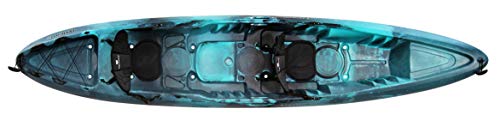 Perception Rambler 13.5 Sit-on-Top Tandem Kayak
|
8.4/10 | Buy | |
| Best Value |
 BKC Brooklyn 12.5 Tandem Fishing Kayak
|
8.4/10 | Buy |
 Pelican Argo 136XP 13-Foot Tandem Kayak
|
8.4/10 | Buy | |
 BKC Brooklyn 12.5 Tandem Fishing Kayak
|
8.3/10 | Buy | |
 Goplus 12.5-Foot Tandem Inflatable Kayak
|
8.1/10 | Buy | |
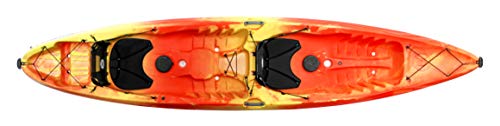 Perception Tribe 13.5 Tandem Kayak
|
8.0/10 | Buy |
Brone 2-Person Inflatable Tandem Kayak Set
Weighing just over 25 pounds, this two-person inflatable kayak packs down into a carry bag for easy transport to calm lakes and gentle rivers. It arrives ready for the water with two seats, dual paddles, an inflation pump, and a 400-pound load capacity.
Pros
- Includes full accessory kit with paddles and pump
- Lightweight 25.2-pound design simplifies transport
- Generous 122-inch length offers good tandem space
- 400-pound capacity handles two adult riders
Cons
- Intended only for calm lakes and flat waters
- 400-pound maximum limit restricts heavy cargo
BKC Brooklyn 13.0 Pro Tandem Fishing Kayak
The BKC Brooklyn 13.0 Pro is an expansive sit-on-top kayak offering an impressive 800-pound capacity, adjustable aluminum frame seats, and a versatile layout that converts smoothly from tandem to center solo paddling. It delivers strong primary stability and dedicated fishing outfitting, making it a reliable option for angling pairs, small families, or gear-heavy solo paddlers on calm lakes and slow rivers.
Pros
- Generous 800-pound capacity easily supports two adults and a child or substantial camping and angling payloads
- Flexible seat configuration allows one seat to mount in the center position for balanced solo outings
- Height-adjustable aluminum frame seats deliver superior upright comfort compared to basic foam backrests
- Comes pre-rigged with accessory mounting rails, flush rod holders, and dual dry storage compartments
- Flat-bottomed 34-inch hull provides reassuring initial flatwater balance for casting and landing fish
Cons
- Unladen bare-boat weight of 85 pounds makes solo roof-rack car-topping demanding without a load-assist system
- Wide flat-bottom profile prioritizes initial stability over fast displacement cruising speed and long-distance glide
- Stock package does not explicitly include paddles, requiring separate purchase of adequately sized tandem paddles
BKC Brooklyn 13.0 Pro Tandem Fishing Kayak
The BKC Brooklyn 13.0 Pro is a 153-inch tandem-to-solo convertible sit-on-top fishing kayak featuring an 800 lb manufacturer-rated weight capacity and a flat-bottomed hull for reassuring flatwater stability. With height-adjustable aluminum frame seats and integrated accessory rails, it is an adaptable watercraft for tandem angling partners, families with a child, or solo paddlers hauling heavy cargo.
Pros
- High 800 lb manufacturer-rated weight capacity accommodates multiple passengers and bulky fishing gear
- Versatile seating design converts easily between tandem, three-person family, and balanced solo paddling positions
- Two-inch height-adjustable aluminum frame seats offer superior ergonomic support compared to basic molded floor seats
- Pre-installed fishing features including accessory tracks, flush rod holders, tackle trays, and dual dry hatches
- Broad flat-bottom profile provides excellent primary stability for confident boarding and casting on flatwater
Cons
- Bare hull weight of approximately 90 pounds makes solo roof-rack car-topping physically demanding without a load-assist system
- Flat-bottom hull architecture trades off tracking efficiency and speed in choppy open water or stiff headwinds
- Substantial 153-inch overall length requires significant garage or rack storage space
Starcity 12'2" Inflatable Tandem Kayak
Built with an abrasion-resistant fabric shell and a 600-pound capacity, this tandem kayak offers a stable platform for calm-water fishing and touring. Its self-bailing floor and floating paddles provide dependable utility for both solo paddlers and pairs.
Pros
- Substantial 600-pound payload for tandem excursions
- Fabric cover protects against scrapes and wear
- Self-bailing design helps clear deck water
- Paddles float on water for easier retrieval
Cons
- Narrow 16-inch interior width limits cockpit room
- Inflatable seats lack rigid back support
Perception Rambler 13.5 Sit-on-Top Tandem Kayak
The Perception Rambler 13.5 is a versatile 13-foot-6-inch sit-on-top tandem kayak featuring a stable 34-inch beam, a 550-pound maximum capacity, and a molded center seat for a child or pet. Weighing 78 pounds, it provides dependable primary stability and relaxed flatwater tracking for families and recreational pairs exploring lakes, ocean bays, and slow rivers.
Pros
- High 550-pound maximum weight capacity easily supports two adults and a child or dog in the molded center seat
- Generous 34-inch width creates reassuring initial stability that helps calm first-time and recreational paddlers
- Removable padded seat bottoms and adjustable backrests provide better lumbar comfort than basic molded plastic
- Tiered molded foot positions accommodate different leg lengths without mechanical sliders that can jam with sand
Cons
- Substantial 78-pound hull weight and 13.6-foot length make solo rooftop loading challenging without a cart or assistance
- Paddles and scupper plugs are not included in the standard package and must be purchased separately
- Open deck layout lacks a sealed watertight dry bulkhead hatch for sensitive electronic gear
BKC Brooklyn 12.5 Tandem Fishing Kayak
Built for pairs or small families seeking versatile angling, this 12.5 foot sit on top kayak provides a 600 pound capacity alongside six integrated rod holders. Its rotomolded hull delivers steady balance for standing casts while supporting an optional trolling motor mount.
Pros
- High 600-pound load capacity accommodates two adults and gear
- Six versatile rod holders support multiple fishing lines
- Includes two padded seats and two paddles right away
- Integrated mounting area allows adding a trolling motor
- Durable rotomolded hull resists impacts and sun damage
Cons
- At 68 pounds, it is heavy for solo transport
- Trolling motor is not included with the package
Pelican Argo 136XP 13-Foot Tandem Kayak
Designed for paired outings, this sit-in tandem kayak pairs a multi-chine flat-bottom hull with an integrated keel extension for dependable stability and tracking. Pelican constructs the hull from durable Ram-X material, complemented by cushioned Ergofit seats and adjustable footrests for customized support.
Pros
- Stable multi-chine hull with tracking keel extension
- Durable, lightweight Ram-X construction
- Padded and adjustable Ergofit seating
- Customizable footrests fit paddlers of varying sizes
Cons
- Weighs 67 pounds, making solo carrying difficult
- Long 162-inch frame requires substantial storage space
BKC Brooklyn 12.5 Tandem Fishing Kayak
The BKC Brooklyn 12.5 is a versatile rotomolded HDPE tandem fishing kayak engineered with a wide 34-inch beam and a 600-pound capacity for two adults plus a child or solo angler. It provides exceptional primary stability, integrated rod holders, and motor-ready capability for flatwater lakes, slow rivers, and calm bays.
Pros
- High 600-pound maximum weight capacity easily handles two adults, extra fishing gear, or a child
- Broad 34-inch beam creates strong primary stability for recreational fishing and beginner confidence
- Factory outfitting includes six rod holders, two seats, two paddles, and a built-in trolling motor mount area
- One-piece rotomolded HDPE hull offers dependable durability against gravel, docks, and rocky shorelines
Cons
- At 70 pounds unladen, solo car-topping onto high vehicle roof racks requires significant physical effort or a load-assist cart
- Soft padded seats sit directly on the deck rather than elevated on a raised stadium-style metal frame, which can result in a damp ride
- Wide beam prioritizes initial stability over rapid cruising speed, requiring more paddle stroke effort on extended tours
Goplus 12.5-Foot Tandem Inflatable Kayak
Built for recreational tandem paddling, this 12.5-foot inflatable kayak features durable reinforced laminate PVC and a solid 507-pound capacity. It includes adjustable EVA high-back seats, dual tracking fins, and modular paddles, making it a convenient setup for calm-water outings.
Pros
- Generous 507-pound weight capacity supports two adults
- Three separate air chambers enhance on-water safety
- Adjustable EVA seating with customizable footrest positions
- Complete package with paddles, pump valve, and repair kit
Cons
- Low inflation pressure offers less rigidity than drop-stitch models
- Wide 37-inch beam limits paddling speed and tracking efficiency
Perception Tribe 13.5 Tandem Kayak
Built for two paddlers, this stable 13.5-foot sit-on-top kayak supports up to 500 pounds and features generous front and rear bungee storage. Adjustable framed seatbacks and molded foot positions make it a solid choice for recreational duos.
Pros
- Generous 500-pound total load capacity
- Comfortable adjustable framed seatbacks
- Ample open and enclosed storage options
- Integrated footrests accommodate multiple rider heights
Cons
- Heavy 79-pound build can complicate solo transport
- Scupper plugs are not included with the hull
Understanding Tandem Kayak Dynamics and Steering Roles
Operating a tandem kayak introduces a shared hydrodynamic balance where every paddle blade in the water directly alters boat trajectory. Steering control on a two-person craft is not an equal split between occupants during forward travel. Clear division of duties between the front and rear seating wells eliminates erratic yawing and blade collisions. By establishing precise responsibilities before pushing off from the launch ramp, paddlers can maintain steady forward speed and track straight across choppy or windy waters.
The Stern Paddler as the Dedicated Helmsman
The occupant in the rear stern seat serves as the boat helmsman, primary rudder, and navigational engine. This position provides maximum mechanical leverage over the kayak stern, which acts as the primary pivot point when the boat is moving forward. Because the stern paddler sits behind the bow partner, they have an unobstructed view of the forward paddler torso and blade angle. This line of sight allows the helmsman to match stroke rhythm perfectly without requiring the front occupant to look backward.
Directional corrections executed from the stern produce immediate turning results with minimal wasted energy. When the bow begins drifting to the left, the stern paddler can apply a light reverse sweep or an extended stern rudder stroke on the left side to pull the stern inward and realign the bow. Forward sweep strokes taken wide away from the hull rotate the craft quickly around its center of lateral resistance. A skilled stern paddler uses trailing pry strokes and low brace turns to correct course without interrupting forward travel momentum.
Placing the more experienced or physically stronger paddler in the stern provides significant handling advantages. The rear paddler absorbs the extra physical effort required to correct wind-induced drift, boat wake deflection, and uneven forward strokes. When navigating through tight river bends, coastal shoals, or busy marina channels, the stern occupant makes split-second adjustments to maintain a safe heading. Controlling the craft from behind ensures smooth transitions through chop while keeping both paddlers working toward a shared destination.
The Bow Paddler: Setting Pace and Navigating Hazards
The front bow paddler acts as the team pace car, dedicated engine, and lookout for hidden water hazards. Seated right at the front of the craft, the bow occupant has an unobstructed panoramic view of the water ahead. This clear vantage point makes the bow paddler responsible for spotting submerged boulders, deadfall branches, floating debris, and shallow sandbars. Communicating these hazards early gives the rear paddler ample time to initiate steering maneuvers without sudden panic.
Maintaining a consistent, metered paddling cadence is the primary mechanical job of the front paddler. Because the bow occupant cannot easily see the person behind them, attempting to match the stern paddler rhythm leads to awkward twisting, lost momentum, and constant blade clashing. Instead, the bow paddler establishes a comfortable forward stroke rate and maintains it steadily through open stretches. The rear paddler then times their own paddle entries to shadow the front blade cadence seamlessly.
The bow paddler should resist the urge to execute active steering strokes during normal forward cruising. When a front paddler attempts sudden corrective sweeps or pry strokes without warning, it counters the stern paddler actions and causes the boat to wobble erratically. The bow paddler should assist with directional control only during intentional, coordinated maneuvers such as executing a sharp bow draw stroke to pull the front around a dock or into an eddy. Clear verbal cues ensure that both paddlers apply turning strokes in harmony rather than working against each other.
Stroke Synchronization: Preventing Paddle Clashing
Tandem kayaks are sometimes jokingly called divorce boats because mismatched stroke timing leads to clattering paddles, splashed cockpits, and rising frustration. When two paddlers strike blades, the disruption halts forward progress and can destabilize a narrow hull. Synchronizing strokes requires both paddlers to enter the water on the exact same side at the exact same instant. When the bow blade enters on the port side, the stern blade must enter on the port side simultaneously.
Paddle length selection plays an important role in preventing cockpit interference and upper-body fatigue. Tandem hulls are wider than standard single craft, frequently sporting beam widths between 32 and 36 inches to provide stable footing. Paddlers using shafts that are too short often strike the gunwales or lean excessively to reach the water, which disrupts synchronization. Matching paddle shaft length to hull beam width and torso height provides clean, vertical blade entries that remain safely outside the partner stroke zone.
Establishing a shared verbal count helps novice teams build muscle memory during their initial outings. Calling out a simple cadence of stroke, stroke, stroke aligns torso rotation and core engagement across both cockpits. If the stern paddler feels fatigue setting in, calling a brief rest allows both paddlers to pause together rather than breaking rhythm. Regular communication transforms tandem paddling into a coordinated rhythm where two bodies move as a unified propulsion system.
Managing Hull Trim and Safe Payload Distribution
Proper weight distribution across the hull length, known as fore-and-aft trim, is critical for straight tracking and overall hull stability. As a standard hydrodynamic rule, placing the heavier occupant in the rear stern seat delivers superior handling characteristics. When the stern sits slightly deeper in the water than the bow, the rear keel line grips the water column to prevent wandering, while the lighter bow rises over incoming chop and surface waves.
Placing an excessively heavy paddler in the front bow seat leads to a condition called bow steering or plowing. When the bow sits too low in the water, it acts as a rigid rudder, causing the kayak to pivot unpredictably in minor crosswinds and lose straight-line glide. If paddlers have similar body weights, heavier gear like coolers, tackle crates, or dry bags should be stowed in the rear cargo tankwell to preserve proper stern trim.
Every tandem kayak features a certified gross weight capacity, but operating at maximum load severely compromises freeboard and reserve buoyancy. Paddlers should strictly observe the safe payload capacity threshold by limiting combined passenger and gear weight to 70 or 75 percent of the manufacturer maximum rating. Maintaining this 25 to 30 percent buoyancy buffer ensures high-sided seaworthiness and prevents cockpits from swamping when encountering powerboat wakes or sudden swell. Hulls like the BKC Brooklyn 13.0 offer substantial capacities, but retaining that buoyancy buffer preserves critical tracking performance and stability.
Rudder and Skeg Systems on Tandem Kayaks
Many recreational and touring tandem kayaks incorporate stern rudders or drop skegs to assist with directional tracking over extended distances. An integrated rudder blade mounts directly to the stern transom and connects via braided steel cables or synthetic lines to foot braces in the cockpit. In tandem configurations, these foot controls are routed specifically to the rear stern seat so the designated helmsman can adjust boat heading without relying solely on fatiguing corrective paddle strokes.
Rudders provide substantial relief when navigating across persistent crosswinds or tidal currents that cause weathercocking. Weathercocking is the natural tendency of a kayak hull to rotate into the oncoming wind due to pressure differentials along the waterplane. By applying gentle foot pressure to the rudder pedal, the stern paddler offsets wind drift and keeps the hull pointed directly toward the destination. This hands-free steering capability frees up both paddlers to focus all forward stroke energy on speed and distance.
Drop skegs and fixed tracking fins operate differently from articulated rudders, relying on a stationary fin deployed beneath the stern hull. Inflatable tandem models such as those from Goplus or Starcity utilize slide-in tracking fins along the keel line to improve straight tracking on calm flatwater. While a fixed skeg cannot actively steer the boat around sharp obstacles, it provides tracking stability that prevents beginner teams from spinning in tight circles during breezy conditions.
Cockpit Architecture and Stability Trade-Offs
Tandem kayaks are built in two distinct cockpit architectures: open-deck sit-on-top configurations and enclosed sit-inside hulls. Open sit-on-top models, such as the Perception Tribe or BKC Brooklyn series, feature self-bailing scupper holes that allow water washing over the deck to drain immediately. These open decks provide easy entry and exit, making them popular choices for casual lake recreation, swim platforms, and warm-weather kayak fishing.
Enclosed sit-inside tandem hulls, like the Pelican Argo 136XP, place occupants lower in the water column beneath molded cockpit coamings. This recessed seating arrangement lowers the overall center of gravity, which enhances secondary stability and delivers a drier ride in cooler weather or breezy chop. While single sit-in kayaks offer intimate hull contact for solo edging and hip rotation, a tandem sit-in hull requires both occupants to coordinate weight shifts carefully to avoid catching a cockpit edge in rolling waves.
Primary flatwater stability versus secondary rough-water stability is a crucial design trade-off in tandem selection. Wide, multi-chine sit-on-top hulls provide exceptional initial stability, allowing paddlers to move around or cast fishing lines without feeling tippy. However, narrower hulls with rounded or V-shaped bottoms track faster through open water and handle rough conditions with greater resilience. Choosing the right deck architecture depends on whether paddlers prioritize warm-water convenience and self-draining decks or cold-weather wind protection and paddling efficiency.
Converting Tandem Hulls for Solo Paddling
Circumstances often arise where a tandem owner needs to paddle alone, requiring strategic adjustments to seating and hull balance. Paddling a tandem solo from the rear seat leaves the bow high in the air, creating a weather vane effect that makes directional control nearly impossible in crosswinds. Conversely, sitting exclusively in the front seat sinks the bow into the water, causing severe plowing and loss of turning agility.
Certain multi-person kayaks, such as the Perception Rambler 13.5 or BKC Brooklyn 12.5, incorporate dedicated center seat moldings or adjustable seat rails. Moving an aluminum-framed seat to the center position centers paddler mass directly over the hull pivot point, replicating the balanced trim of a traditional solo craft. When a center seat option is unavailable, a solo paddler sitting in the rear must load ballast into the front footwell, using dry bags filled with water or gear, to keep the keel line level across the surface.
Safety Regulations, Deep-Water Re-Entry, and Vehicle Transport
Safety on the water begins with strict adherence to United States Coast Guard regulations under Title 33 CFR § 175. Both paddlers must have a properly fitted, USCG-approved Type III or Type V wearable life jacket onboard, with many regional waterways legally requiring them to be worn at all times. In addition, carrying an accessible, pea-less sound-signaling device, such as a marine safety whistle attached to each life vest, is mandatory on federal waters for alerting nearby boat traffic during low-visibility emergencies.
Capsizing in a tandem kayak requires coordinated self-rescue procedures rather than independent scrambles. If an open sit-on-top flips, both paddlers should first verify partner safety before righting the hull by gripping the opposite gunwale and leaning back together. During re-entry, one paddler stabilizes the boat by applying downward chest pressure on the far side while the other scrambles across the center deck using a heel-hook technique. Once the first paddler is securely seated in the cockpit well, they brace the boat firmly while the second paddler climbs aboard.
Transporting tandem kayaks requires reliable vehicle hardware due to their typical 12 to 14-foot lengths and substantial 60 to 80-pound weights. Utilizing dedicated heavy-duty kayak roof racks equipped with J-cradles or padded saddle carriers distributes the hull load evenly and protects composite or rotomolded plastic from denting. Always secure the hull with heavy-duty non-stretch cam buckle straps, and never omit bow and stern tie-down lines anchored directly to structural vehicle recovery points to prevent highway lifting forces.
Practical Communication Protocols for Tandem Teams
Clear, concise verbal communication between the bow and stern positions forms the foundation of effortless tandem kayaking. Because wind, rushing current, and distance between cockpits can muffle normal speaking tones, agreeing on simple standard commands avoids confusion during crucial maneuvers. Simple terms like hold, hard right, easy left, and paddle forward allow the helmsman to direct team actions without lengthy explanations.
Taking time to practice turning sweeps and stopping drills in shallow, sheltered water builds mutual confidence before embarking on extended tours. When the stern paddler respects the forward pace and the bow paddler trusts the rear helmsman directional corrections, the tandem kayak moves with remarkable grace and speed. Understanding these fundamental seating roles transforms every shared paddling excursion into an enjoyable, cohesive adventure on the water.
About the author
Marius Fox brings extensive hands-on experience from both above and below the water. A PADI Master Scuba Diver Trainer and AIDA freediver, she has worked as a scuba instructor, managed diving operations, participated in shark research, and contributed to marine conservation projects. His expertise provides a practical perspective on diving, snorkeling, water safety, and adventure gear.