
What Size Fishing Kayak Do I Need: Sizing Guide for 2026
Determine what size fishing kayak do i need in October 2026 with this practical guide on hull length, beam width, payload limits, and transport logistics.
 By Marius Fox
Updated October 5, 2026
By Marius Fox
Updated October 5, 2026

Choosing an angling kayak requires balancing stability, tracking efficiency, and overall craft portability. Many beginners struggle to determine what size fishing kayak do i need because hull dimensions directly affect how a boat behaves on flatwater and in tight river bends. A boat that is too small risks sitting deep in the water column, creating sluggish glide and compromising essential deck drainage. Conversely, an oversized hull provides tremendous standing stability but can quickly become an exhausting chore to paddle against crosswinds or hoist onto a vehicle.
Your total physical mass, expected tackle payload, and storage constraints define the ideal kayak profile. While anglers heading to open reservoirs often favor longer boats with greater hull speed, creek paddlers frequently look toward compact designs or single sit-in kayak designs for tight navigation. Transporting your rig is another major factor, as loading a heavy hull onto heavy-duty kayak racks demands realistic strength and hardware planning. Finding the ideal match means analyzing hull geometry, weight limits, and water conditions before heading to the launch ramp.
| Award | Product | WSG Score About WSG ScoreThe WSG Score is our own rating from 0 to 10, based on performance, design and build, ease of use, and value. It reflects independent research and is never influenced by manufacturers, retailers, or affiliate commissions. Learn more › | |
|---|---|---|---|
| Best Overall |
YakAttack Kayak Fishing Starter Pack
|
8.9/10 | Buy |
| Best Value |
 Pelican Catch Classic 100 Angler 10-Foot
|
8.9/10 | Buy |
| Best Premium |
 Reel Yaks Raider 9.5ft Modular Pedal Fishing Kayak
|
8.9/10 | Buy |
 Pelican Catch Classic 120 Fishing Kayak
|
8.8/10 | Buy | |
 Pelican Catch Mode 110 Fishing Kayak
|
8.3/10 | Buy | |
| Best Budget |
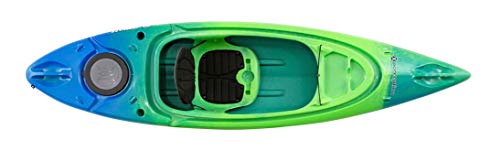 Perception Flash 9.5 Sit-Inside Kayak
|
8.0/10 | Buy |
YakAttack Kayak Fishing Starter Pack
Anglers outfitting a new vessel can quickly establish a functional deck layout with this all-in-one accessory set. Built from UV-stabilized polymers and stainless steel hardware, it delivers essential rod, paddle, and gear management compatible with standard kayak tracks.
Pros
- Quick tool-free mounting on standard kayak tracks
- Marine-grade materials resist freshwater and saltwater corrosion
- Provides essential fishing mounts in a single kit
- Easily expands with additional brand track accessories
Cons
- Requires existing compatible track rails for mounting
- Includes only a single rod holder
- Adds 3.4 pounds to kayak deck setup
Pelican Catch Classic 100 Angler 10-Foot
The Pelican Catch Classic 100 Angler is a 10-foot sit-on-top fishing kayak featuring a steady tunnel hull and an adjustable dual-position Ergocast frame seat. Weighing just 57 pounds with a 350-pound maximum capacity, it is a reliable, easily transportable platform for kayak anglers navigating lakes, ponds, and slow rivers.
Pros
- Tunnel hull provides exceptional initial flatwater stability for confident casting and gear access
- Ergocast frame seat keeps paddlers elevated off the deck with high and low position adjustments
- Relatively light 57-pound bare hull weight makes solo roof rack loading and transport practical
- Dual 4-inch rigging tracks allow seamless attachment of fish finders and accessories without drilling
- Adjustable footrests and paddle tie-downs ensure a comfortable, hands-free fishing experience
Cons
- Compact 10-foot waterline prioritizes close-quarters turning agility over long-distance straight tracking
- Paddle is not included in the base package and must be purchased separately
- Paddlers approaching the 350-pound maximum capacity ceiling may notice reduced freeboard and deck wash
Reel Yaks Raider 9.5ft Modular Pedal Fishing Kayak
The Reel Yaks Raider is a 9.5-foot modular sit-on-top fishing kayak featuring a hands-free propeller drive, stable W-hull architecture, and a 380-pound capacity that breaks down into portable 31-pound sections. It is a practical choice for apartment dwellers, compact vehicle owners, and solo anglers seeking pedal propulsion without roof rack hassles.
Pros
- Breaks down into two 31-pound sections that easily fit in car trunks or closets without needing a roof rack
- Propeller pedal drive delivers hands-free propulsion, freeing up hands for casting and fish handling
- Wide 35.4-inch beam and W-hull geometry offer solid initial balance on calm lakes and slow rivers
- Four-step tool-free modular assembly makes solo setup and breakdown straightforward at the launch ramp
Cons
- At 9.5 feet in length, forward tracking on open water may require active steering corrections compared to longer touring hulls
- The modular joint architecture requires regular inspection and sand clearance at the latch points before locking
- Propeller drive requires adequate draft clearance and must be retracted or raised when entering very shallow shoals
Pelican Catch Classic 120 Fishing Kayak
Anglers seeking a versatile setup will appreciate the Pelican Catch Classic 120, which integrates four flush mount rod holders and dual storage compartments. Its 12-foot platform delivers a dedicated layout with accessory gear tracks for customized fishing trips.
Pros
- Four flush mount rod holders included
- Dedicated 4-inch gear rails for accessories
- Generous storage with front hatch and rear well
- Adjustable footrests for customized legroom
Cons
- Weighs 68 pounds, making solo transport demanding
- Long 140-inch hull requires substantial storage space
Pelican Catch Mode 110 Fishing Kayak
Anglers seeking a secure casting platform will appreciate the wide tunnel hull and elevated ERGOBOOST seating on this 10.5-foot craft. Outfitted with integrated rigging tracks, flush rod holders, and dual tank wells, it delivers solid utility for flatwater fishing trips.
Pros
- Wide tunnel hull allows stable stand-up casting
- Adjustable padded seat offers improved sightlines
- Multiple integrated rod holders and accessory tracks
- Ample open deck storage in front and rear wells
- Internal hull flotation meets ABYC safety standards
Cons
- Weight of 67 pounds makes solo roof-loading demanding
- Wide 34.5-inch beam trades paddling speed for stability
- 375-pound weight limit restricts heavy multi-day camping gear
Perception Flash 9.5 Sit-Inside Kayak
The Perception Flash 9.5 is a compact 9-foot-6-inch sit-inside kayak combining a lightweight 41-pound hull with dual integrated rod holders and a generous 325-pound capacity. It is an ideal pick for solo car-toppers, recreational flatwater paddlers, and casual anglers seeking nimble handling on calm lakes and slow rivers.
Pros
- Lightweight 41-pound design allows effortless solo loading onto vehicle J-cradles or truck beds
- Substantial 325-pound maximum capacity provides ample buoyancy for a compact 9-foot-6-inch hull
- Factory-molded dashboard console and dual rear rod holders support spontaneous fishing trips
- Adjustable foot pegs allow fast legroom customization to maintain proper paddling posture
- Quality American manufacturing ensures resilient hull longevity across varied inland waters
Cons
- Sit-inside cockpit lacks self-bailing scupper holes, making a hand bilge pump or sponge advisable in choppy conditions
- Short 9-foot-6-inch waterline prioritizes agile turning over long-distance straight-line tracking speed
- Paddle and cockpit spray skirt are not included and must be purchased separately
Essential Sizing Dimensions for Fishing Kayaks
Selecting the right craft comes down to matching hull length, beam width, and volume to your fishing environment. Water displacement dictates how safely a kayak supports you, your tackle boxes, and safety equipment above the waterline. A hull that matches your body size and local waterway allows you to cast confidently without constantly fighting sluggish glide or drift.
Every kayak dimension involves a direct hydrodynamic trade-off that influences your daily fishing experience. Lengthening the keel improves straight-line tracking across windy lakes but makes pivoting in tight creeks far more difficult. Widening the deck enhances initial balance for sight casting while demanding a longer paddle shaft and greater stroke effort. Understanding how these measurements interact ensures your boat performs reliably throughout long days on the water.
Kayak Length Categories and Waterway Suitability
Hull length directly dictates speed, straight-line tracking, and tight-quarter turning capability. Boats under ten feet, such as the Perception Flash 9.5 or the Reel Yaks Raider Modular at nine and a half feet, excel in small ponds, protected creeks, and winding backwaters. These short hulls pivot with minimal paddle effort, letting you dodge submerged cypress knees or work tight shorelines. However, their short waterlines tend to wander when paddled hard across wide, wind-swept bays.
The ten to eleven foot range represents the sweet spot for many freshwater anglers seeking versatile performance. Options like the ten-foot Pelican Catch Classic 100 Angler and the ten-foot-eight-inch Pelican Catch Mode 110 offer balanced handling for mid-sized reservoirs and slow rivers. They track reasonably well across open stretches while remaining nimble enough to steer into vegetated coves. Their manageable lengths also keep loading onto standard vehicles realistic for solo anglers.
Craft measuring twelve feet or longer, such as the Pelican Catch Classic 120, deliver superior hull speed and tracking efficiency. A twelve-foot waterline cuts through surface chop cleanly and maintains forward momentum between strokes, reducing paddler fatigue over long distances. Anglers fishing large lakes, tidal estuaries, or open coastal bays benefit significantly from this increased tracking stability. The trade-off lies in reduced agility around tight river bends and a heavier footprint when loading up at the boat ramp.
Beam Width and Primary Stability for Casting
Beam width measures the widest point across the kayak deck and serves as the primary driver of initial stability. Fishing kayaks generally range from twenty-eight inches up to thirty-four inches or wider. A narrow twenty-eight-inch beam cuts water efficiently with minimal drag, allowing for rapid paddling cadences. However, narrower hulls feel tippy when you lean over gunwales to land a fish or shift your weight to grab gear from a rear crate.
Wide fishing platforms exceeding thirty-one inches provide the rock-solid base necessary for sight fishing. The Pelican Catch Classic series utilizes a tunnel hull architecture that pushes volume toward the outer edges, providing dependable primary stability for standing. This catamaran-style design resists lateral tipping, helping anglers maintain balance while setting hooks or casting bulky lures. Standing up also improves your vantage point when scouting submerged structure or grass lines.
Broader beams do require distinct ergonomic adjustments from the paddler. A wide hull increases hull friction, resulting in slower cruising speeds across open water. Anglers must also choose longer paddles, typically between 240 and 260 centimeters, to prevent blade shafts from banging against high gunwales during each stroke. Wider hulls also require a wider reach when paddling, which can increase shoulder fatigue during all-day excursions.
Calculating the Safe Working Payload Capacity
Manufacturer capacity ratings indicate the absolute maximum weight a kayak can hold before sinking, not its optimal operating threshold. Operating a kayak at one hundred percent of its certified weight limit leaves dangerously little freeboard above the waterline. When a boat sits too low, water pushes up through scupper drains, footwells pool with water, and the hull becomes unstable in passing boat wakes. Safe paddling requires maintaining a substantial reserve buoyancy margin at all times.
Experienced paddlers utilize the seventy to seventy-five percent rule to calculate safe operating payload. To determine your target capacity, add your body weight, your fishing tackle, crate, anchor, cooler, and safety gear together. Take that total number and divide it by 0.70 to find the minimum manufacturer capacity your hull requires. For example, a two-hundred-pound angler carrying fifty pounds of gear totals two hundred and fifty pounds, requiring a kayak rated for at least three hundred and fifty-seven pounds.
The models in this category provide clear examples of how payload ratings guide selection. The Pelican Catch Mode 110 offers a three-hundred-and-seventy-five-pound capacity, giving average-sized anglers plenty of spare buoyancy for heavy batteries and tackle. The Reel Yaks Raider accommodates up to three hundred and eighty pounds across its modular sections. Meanwhile, the Perception Flash 9.5 lists a three-hundred-and-twenty-five-pound rating, making it ideal for lighter paddlers carrying minimal gear rather than heavy angling crates.
Sit-On-Top Versatility Versus Sit-Inside Cockpit Designs
The choice between sit-on-top and sit-inside cockpit architectures deeply influences fishing ergonomics and water safety. Sit-on-top hulls dominate modern kayak fishing because their open decks provide total freedom of movement. Anglers can easily swing their legs over the side while drifting, access rear tank wells, or stand without navigating tight coaming rims. Scupper holes run vertically through the deck, allowing splashed water or rain to drain naturally without manual bailing.
Sit-inside kayaks, like the Perception Flash 9.5, position the paddler lower in the water within an enclosed cockpit. This lower center of gravity creates solid secondary stability while paddling through choppy surface conditions. The enclosed deck shields your legs from wind, spray, and cold ambient temperatures, making it a great match for early spring outings. However, recovering from a capsize in deep water requires advanced wet-exit and pumping skills, as sit-inside hulls lack self-bailing scupper drains.
Seating elevation also differentiates these cockpit styles. Modern sit-on-top kayaks feature raised stadium-style chairs, such as the Ergocast seating system on the Pelican Catch Classic 100 or the Ergoboost chair on the Catch Mode 110. Elevated seating positions your hips at an open angle, relieving lower back strain during long fishing sessions. The higher vantage point also improves visibility into the water, whereas low molded sit-inside seats limit sight lines.
Propulsion Mechanics: Paddle Cadence Versus Pedal Drives
Propulsion type influences both hull size requirements and total on-water stamina. Traditional paddle kayaks require clear space around the cockpit for unhindered blade movement. They boast simple mechanics, lightweight hulls, and minimal draft, letting you glide over shallow sandbars and weed beds without snagging. But managing a double-bladed paddle while fighting a hooked fish or maintaining boat position in current can be frustrating.
Pedal-drive mechanisms provide quiet, hands-free propulsion that transforms angling efficiency. The Reel Yaks Raider Modular 9.5ft incorporates a propeller drive system that frees your hands to cast, work bottom structure, and manage bait. Modern pedal units allow anglers to hold position against wind or current using continuous leg power. If you want motorized assistance, you can also explore pedal kayaks with trolling motors for effortless travel between distant waypoints.
Pedal drives introduce specific sizing and draft considerations you must account for before launching. The pedal mechanism and propeller assembly require deeper operating clearance, typically twelve to eighteen inches of water, to avoid striking rocks or submerged timber. Pedal kayaks also feature wider beams and higher freeboards to support the mechanical drive well and the paddler’s pedaling motion. These additions increase bare-hull weight, requiring careful planning for storage and transport.
Gear Rigging Space and Deck Layout Requirements
A fishing kayak must provide dedicated real estate for tackle management without creating dangerous deck clutter. Shorter hulls under ten feet offer compact cockpits that require strict discipline regarding the gear you bring aboard. Longer hulls, like the twelve-foot Pelican Catch Classic 120, provide spacious front storage hatches, molded paddle rests, and expansive rear tank wells. These larger wells easily accommodate standard milk crates, cooler bags, and dry boxes secured with bungee cords.
Rigging tracks allow anglers to customize accessory locations without drilling permanent holes into polyethylene hulls. Bundles like the YakAttack Kayak Fishing Starter Pack demonstrate how modular tracks hold rod holders, cup holders, and paddle clips securely in place. Using adjustable track mounts lets you slide rod holders forward for trolling or back to keep gunwales clear for paddle strokes. Having designated tool slots keeps pliers, fish grips, and line cutters within quick reach when landing active fish.
Organizing your gear correctly preserves hull trim and on-water balance. Heavy items, such as tackle boxes, anchor systems, and batteries, should sit low and centered in the craft to maintain the designated center of gravity. Overloading the stern makes the bow rise, causing the kayak to blow off course in crosswinds. Distributing gear evenly between front hatches and rear tank wells ensures the hull tracks straight and maintains its intended waterline profile.
Vehicle Transport Logistics and Hull Weight Realities
A kayak is only useful if you can transport it safely from your storage area to the water. Bare hull weight varies considerably across sizes and materials. The Perception Flash 9.5 weighs a featherlight forty-one pounds, making it an easy solo lift for almost any paddler loading onto car roof bars. In contrast, fully outfitted sit-on-top hulls often weigh between fifty-eight and sixty-five pounds before you add seats, tackle, or drives.
Lifting a bulky sixty-pound polyethylene boat onto a tall SUV roof requires proper lifting technique or mechanical assistance. Many solo anglers invest in kayak load-assist bars, roller systems, or dedicated wheeled carts to move their hulls across parking lots. Alternatively, modular kayaks like the Reel Yaks Raider split into distinct thirty-one-pound sections. This modularity allows apartment dwellers or drivers without roof racks to stow an entire pedal-drive kayak inside a standard vehicle trunk.
Those with severe space constraints or compact cars can also evaluate heavy-duty inflatable kayaks that fold into compact duffel bags. When tying hard-shell boats to vehicle roofs, always use non-stretch cam straps rather than high-leverage ratchet straps. Ratchet straps can exert excessive crushing force, creating permanent dents or oil-canning along the hull bottom. Always attach bow and stern safety tie-down lines to metal vehicle tow loops to prevent catastrophic shifting at highway speeds.
Matching Kayak Size to Your Primary Target Water
Your primary fishing environment dictates which hull compromises will serve you best. Anglers targeting small local retention ponds, farm ponds, or narrow woodland streams benefit most from hulls between nine and ten feet. A compact hull allows easy launching from steep, overgrown dirt banks where no formal boat ramp exists. Its nimble handling allows you to position casts accurately around fallen logs and brush piles with gentle paddle adjustments.
Mid-sized lakes, wide river systems, and sheltered reservoirs reward boats in the ten-and-a-half to twelve-foot range. A hull like the Pelican Catch Mode 110 at ten feet eight inches balances stable standing platforms with enough length to handle moderate wind chop. Its tunnel hull handles passing motorboat wakes securely, keeping your deck dry and stable while you focus on fishing. This size category delivers dependable all-around versatility for anglers who explore multiple types of water.
Open waters, such as expansive reservoirs, tidal bays, and coastal salt flats, demand hulls of twelve feet or more. Long waterlines provide the forward speed needed to cover several miles between fishing spots without exhausting your upper body. They slice through rolling swell cleanly and resist the drifting effects of strong coastal currents. Selecting a hull designed for your home waters ensures every trip remains efficient, safe, and productive.
Before launching any kayak, verify that all onboard safety gear complies with US Coast Guard Title 33 CFR Part 175 regulations. Always wear a properly fitted, USCG-approved Type III or Type V life jacket designed with a high back to clear your kayak seat frame. Secure an audible sound-signaling whistle to your life vest, and pack a white navigation light if you plan to fish near dusk or dawn. Respecting manufacturer payload buffers and safety rules guarantees your fishing adventures remain safe and enjoyable.
About the author
Marius Fox brings extensive hands-on experience from both above and below the water. A PADI Master Scuba Diver Trainer and AIDA freediver, she has worked as a scuba instructor, managed diving operations, participated in shark research, and contributed to marine conservation projects. His expertise provides a practical perspective on diving, snorkeling, water safety, and adventure gear.