
Should Kayak Be Upside Down on Roof? Practical Car-Top Guide for 2026
Should Kayak Be Upside Down On Roof? Learn whether to transport your boat deck-down or hull-up to prevent plastic oil-canning and highway lift in October 2026.
 By Sara James
Updated October 5, 2026
By Sara James
Updated October 5, 2026
Securing a kayak to a vehicle roof often raises questions about aerodynamics, hull protection, and highway stability. Many paddlers wonder: should kayak be upside down on roof crossbars, or is it better to transport the boat right side up? Transporting a boat incorrectly can result in permanent hull deformation, excessive aerodynamic drag, or dangerous shifting at highway speeds. Investing in quality heavy-duty kayak roof racks creates a solid foundation, but the orientation of the boat itself dictates how wind and strap tension interact with the plastic.
The short answer depends primarily on the mounting hardware you use and the structural profile of the kayak. When strapping a boat directly onto bare crossbars or foam blocks, placing the kayak upside down (deck-down) is generally the safest approach for rotomolded polyethylene hulls. This orientation places the load on the rigid gunwales and cockpit rim rather than the softer bottom hull. However, specialized carriers such as padded saddles or J-cradles change these rules completely by contouring around the hull sides or bottom.
| Award | Product | WSG Score About WSG ScoreThe WSG Score is our own rating from 0 to 10, based on performance, design and build, ease of use, and value. It reflects independent research and is never influenced by manufacturers, retailers, or affiliate commissions. Learn more › | |
|---|---|---|---|
| Best Overall |
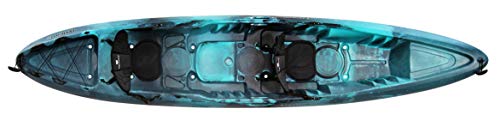
Perception Rambler 13.5 Sit-on-Top Tandem Kayak
|
8.4/10 | Buy |
Perception Rambler 13.5 Sit-on-Top Tandem Kayak
The Perception Rambler 13.5 is a versatile 13-foot-6-inch sit-on-top tandem kayak featuring a stable 34-inch beam, a 550-pound maximum capacity, and a molded center seat for a child or pet. Weighing 78 pounds, it provides dependable primary stability and relaxed flatwater tracking for families and recreational pairs exploring lakes, ocean bays, and slow rivers.
Pros
- High 550-pound maximum weight capacity easily supports two adults and a child or dog in the molded center seat
- Generous 34-inch width creates reassuring initial stability that helps calm first-time and recreational paddlers
- Removable padded seat bottoms and adjustable backrests provide better lumbar comfort than basic molded plastic
- Tiered molded foot positions accommodate different leg lengths without mechanical sliders that can jam with sand
Cons
- Substantial 78-pound hull weight and 13.6-foot length make solo rooftop loading challenging without a cart or assistance
- Paddles and scupper plugs are not included in the standard package and must be purchased separately
- Open deck layout lacks a sealed watertight dry bulkhead hatch for sensitive electronic gear
The Engineering, Aerodynamics, and Safety of Kayak Roof Transport
Transporting a kayak safely at highway speeds requires understanding how vehicle aerodynamics, strap tension, and plastic hull materials interact under pressure. Deciding whether to place your kayak deck-down or hull-down directly influences vehicle handling and the long-term structural integrity of your boat. While resting a boat upside down on flat crossbars protects vulnerable hull sections, improper technique can still cause damage if you neglect critical contact points. Paddlers must evaluate their specific hull architecture, rack hardware, and strap systems to determine the safest mounting configuration.
Direct Assessment: When Loading Upside Down Is the Right Choice
Placing a kayak upside down, commonly referred to as deck-down transport, is the standard recommendation when mounting a boat directly onto flat, padded crossbars or basic foam blocks. The gunwales, which form the upper perimeter rails of the deck, are naturally the most rigid sections of any rotomolded polyethylene or composite watercraft. When you rest this rigid perimeter directly against crossbars, the structural frame absorbs the strap pressure rather than the more flexible bottom skin. This distribution prevents the localized pressure dents that commonly occur when a curved hull rests against narrow crossbars.
Deck-down positioning is especially effective for sit-on-top recreational kayaks and flat-bottomed craft that feature broad, relatively flat deck profiles. These open-deck boats lack an enclosed cockpit opening that could catch wind when inverted, allowing air to flow smoothly over the inverted hull contours. Conversely, paddlers transporting enclosed sit-inside recreational kayaks on bare bars must verify that the cockpit coaming rim clears the vehicle roof without making direct contact with the metal sheet. When set up properly with adequate bar clearance, upside down transport offers exceptional lateral stability and reduces the risk of the boat rolling during sharp turns.
Hull Anatomy and the Physics of Polyethylene Deformation
Most modern recreational kayaks are constructed from linear or high-density cross-linked rotomolded polyethylene. This thermoplastic material provides outstanding impact resistance against submerged rocks and shoreline debris, but it remains susceptible to deformation under sustained static pressure. Known in the paddling community as oil-canning, this condition occurs when a hull bottom forms an inward dent or hollow depression. Transporting a kayak right side up on narrow crossbars concentrates the entire weight of the boat, along with intense strap tension, onto two narrow pressure points on the hull bottom.
Highway driving amplifies this localized pressure through constant road vibrations, vertical vehicle oscillations, and aerodynamic buffeting. When high ambient summer temperatures combine with exhaust heat and direct sunlight, the polyethylene softens significantly, making the hull far more vulnerable to permanent indentation. Inverting the kayak distributes these downward forces across the gunwales, internal bulkheads, and deck pillars. Because the gunwales feature compound curves and thicker molded walls, they resist inward deflection far better than the broad, unsupported panels of a hull bottom.
Aerodynamic Drag, Highway Lift, and Cockpit Rain Management
Aerodynamic performance is another major reason many paddlers choose to transport their boats upside down. A kayak mounted right side up on a bare roof functions much like a hollow scoop, catching air inside the open cockpit and generating significant upward lift and turbulent aerodynamic drag. This air resistance increases fuel consumption, creates loud cabin buffeting, and exerts relentless upward pressure against your roof rack mounting feet. Inverting the kayak presents the smooth, hydrodynamic bottom of the hull to oncoming air, allowing the vehicle to slice through highway headwinds with noticeably less resistance.
Cockpit water accumulation presents a massive safety hazard that inverted roof transport completely eliminates. Driving through a sudden rainstorm with an open cockpit facing upward allows water to pool rapidly inside the hull. Water weighs approximately 8.34 pounds per gallon, meaning a flooded cockpit can easily add over one hundred pounds of fluid deadweight to your vehicle roof within minutes. This unexpected fluid mass drastically exceeds the dynamic weight ratings of many factory roof racks and dramatically raises your vehicle center of gravity. Transporting the kayak deck-down ensures that rainwater sheets off the hull instantly, keeping your dynamic payload light and predictable.
Mounting Alternatives: When You Should Not Transport Upside Down
While upside down transport is ideal for bare crossbars, certain specialized kayak carriers require the boat to be positioned in alternative orientations. J-cradle carriers, for example, are engineered specifically to transport kayaks on their side at a forty-five-degree angle. Side loading utilizes the lateral stiffness of the boat while freeing up valuable horizontal crossbar space for a second kayak, cargo box, or bicycle. Forcing a kayak into an inverted position inside a J-cradle is dangerous because the cradle arms cannot properly grip the deck geometry.
Saddle carriers and felt-lined hydro-gliding cradles also require right side up transport. These flexible, pivoting pads are contoured to match the exact shape of your kayak hull bottom, spreading the load across dozens of square inches rather than narrow bar edges. When using high-quality saddle mounts, transporting your boat hull-down is entirely safe because the broad, padded surface area prevents localized pressure points. However, if you transport a sit-inside boat in saddles during wet weather, you must always install a tight-fitting neoprene or nylon cockpit travel cover to prevent rain collection.
Securing Large Hulls: Practical Realities of Sit-On-Top Tandems
Transporting larger recreational craft, such as the Perception – Rambler 13.5 Recreational Kayak, introduces specific physical handling and roof-loading challenges. At thirteen feet and six inches in length with a broad beam and an open tandem deck, a boat of this scale requires careful weight distribution across vehicle crossbars. With its molded-in seating positions, footrests, and expansive rear tankwell, resting the boat deck-down provides broad, stable contact patches along the side rails. The sturdy gunwales on this model easily support the boat during highway travel without risking indentations to the bottom tracking channels.
Loading a tandem of this size upside down also protects delicate deck accessories and molded features from road gravel and bug splatter. The open seating wells and footbraces remain shielded underneath, while the smooth underside faces outward. Before inverting a tandem kayak, however, always remove any detachable padded backrests, clip-in seats, and loose storage cords from the open cargo well. Leaving padded seats attached upside down can cause them to catch highway wind, fray their adjustment webbing, or tear away from their brass mounting clips at high speeds.
Tie-Down Physics: The Dangers of Ratchet Straps versus Cam Straps
The method you use to secure your kayak is just as critical as the orientation of the hull on your roof. Many beginner paddlers make the catastrophic mistake of using mechanical ratchet straps to tie down their plastic boats. Ratchet straps utilize powerful mechanical leverage that can easily generate hundreds of pounds of crushing force with minimal hand effort. This excessive tension can crack composite layups, crush gunwales, and permanently buckle the internal foam flotation pillars inside rotomolded kayaks.
Experienced paddlers and professional transport guidelines consistently recommend heavy-duty cam straps featuring non-stretch polyester webbing. Cam buckles rely strictly on manual pulling force, which naturally limits the amount of tension you can exert on the plastic structure. A properly tightened cam strap should hold the boat firmly against the padded bars without causing the gunwales or deck plastic to visibly flex inward. Always secure loose strap tails by tying them off with half-hitch knots behind the cam buckle, preventing the buckle from slipping under highway wind flutter.
Bow and Stern Tie-Down Protocols for Highway Safety
Regardless of whether your kayak rests deck-down or hull-down on crossbars, relying solely on two belly straps is never sufficient for highway travel. At sixty to seventy miles per hour, oncoming wind creates powerful aerodynamic forces that can stress roof rack towers beyond their dynamic load ratings. Bow and stern safety tie-downs provide essential fore-aft triangulation, preventing the boat from pitch-rocking, sliding backward during sudden acceleration, or lifting during emergency braking. These safety lines act as a redundant fail-safe in the unlikely event that a primary crossbar or belly strap fails.
Always secure your bow and stern lines to dedicated vehicle recovery hooks or structural chassis frame points beneath your bumpers. If your modern vehicle lacks exposed metal towing eyes, install under-hood anchor straps that bolt into existing chassis holes or secure inside hood jambs. Tension these bow and stern lines with snug, hand-pulled tension using trucker hitches or specialized ratcheting rope pulleys. Never overtighten bow lines, as downward over-tensioning can bend the kayak bow downward and warp the longitudinal keel line over long driving distances.
Pre-Trip Verifications and Roadside Inspection Habits
Before pulling out of your driveway, perform a comprehensive physical integrity inspection on your roof setup. Grab the kayak firmly by the bow or stern toggle handle and vigorously shake the boat from side to side and up and down. The kayak and the vehicle should move together as a single unified structure without any independent slipping, wobbling, or rattling at the crossbar connection points. If the boat slides along the crossbar padding, unfasten the cam straps, reposition the boat over the widest bar sections, and re-tighten the system.
Polyethylene plastic naturally relaxes and stretches slightly once placed under sustained tension, especially when moving between cool morning shade and blistering highway sunshine. Plan to pull over into a rest area or gas station after the first fifteen to thirty minutes of driving to inspect your tie-downs. Check the tension on your belly straps, re-snug the cam buckles if the plastic has settled, and confirm that your bow and stern lines remain taut. Developing this disciplined roadside habit ensures that your watercraft stays safely anchored throughout your journey, protecting both your investment and fellow motorists.
Crossbar Spread, Dynamic Vehicle Roof Ratings, and Spacing Considerations
Vehicle roof racks possess two distinct weight thresholds: static weight capacity and dynamic weight capacity. The static rating indicates how much weight the rack can support when the vehicle is stationary, whereas the dynamic rating governs allowable load while moving at highway speeds. Most passenger car factory crossbars feature dynamic ratings between one hundred and one hundred fifty pounds. Mounting a large tandem or multiple kayaks upside down requires calculating the combined weight of your craft and hardware to ensure you stay safely under this dynamic highway limit.
Crossbar spread, which represents the horizontal distance between the front and rear crossbars, also dictates whether upside down transport remains stable. A narrow crossbar spread of less than twenty-four inches creates severe pivot points that allow a long kayak to oscillate violently in crosswinds. Whenever possible, adjust your roof rack towers to establish a crossbar spread of twenty-eight to thirty-six inches. Positioning the crossbars wider apart ensures that the inverted gunwales make contact near their strongest structural bulkheads, drastically minimizing flex and highway vibration.
Unloading Protocols and Repairing Transport Hull Dents
Even with careful deck-down transport, leaving a kayak strapped tightly to roof bars under direct sunlight for several days can cause minor indentations on the gunwales or deck rim. Always unfasten your cam straps immediately upon reaching your destination or returning home, releasing the pressure on the plastic. If you ever notice minor oil-canning or denting on your hull after transport, linear polyethylene possesses an exceptional thermal memory that allows it to self-correct.
To reverse minor transport indentations, place the unloaded kayak hull-up on a soft lawn in direct, hot sunlight for several hours. As the ambient temperature warms the plastic, the molecular chains expand and naturally return to their original molded shape. You can gently accelerate this process by applying moderate pressure from inside the cockpit or pouring warm water over the affected area. Avoid using direct open flames or high-intensity industrial heat guns, as excessive localized heat can melt or weaken the plastic wall structure.
About the author
Sara James is an experienced paddler and outdoor gear reviewer with more than two decades of involvement in paddle sports. Her background spans touring kayaking, Class V whitewater, stand-up paddleboarding, and international kayaking events. She brings a practical, experience-driven perspective to evaluating kayaks, paddles, life jackets, dry bags, and other essential water gear.