
Pedal vs Paddle Kayak Speed of 2026 Top Picks
Comparing pedal vs paddle kayak speed reveals how hull design and hands-free drive systems maximize on-water efficiency for November 2026.
 By Edward Ting
Updated November 5, 2026

Real-World Hull Velocity and Drive Efficiency
Fighting a relentless headwind across open water quickly drains your physical energy, especially when weak upper-body stamina leads to painful shoulder fatigue. Evaluating pedal vs paddle kayak speed requires looking closely at how human mechanics transfer energy into forward momentum. While traditional blades let you execute nimble pivot turns in skinny creeks, lower-body propulsion taps into your body’s largest muscle groups for sustained cruising. Based on our analysis of hull specifications and user feedback, sleek hand paddles offer swift sprint bursts, yet mechanical pedal drives maintain a steadier pace over miles of lake travel. Exploring pedal kayak performance capabilities highlights how pedal units handle breezy conditions.
Hull geometry also dictates on-water velocity, where wider sit-on-top fishing platforms sacrifice speed to provide rock-solid primary stability. Heavy rotomolded plastics demand extra propulsion torque, making drive mechanics critical for covering ground. Reviewing manufacturer payload data and paddler feedback reveals that matching your watercraft to your waterway prevents exhausting days afloat. Whether exploring winding creeks or wide inland lake paddling destinations, understanding these trade-offs ensures the right blend of tracking efficiency, acceleration, and hands-free propulsion.
| Award | Product | WSG Score About WSG ScoreThe WSG Score is our own rating from 0 to 10, based on performance, design and build, ease of use, and value. It reflects independent research and is never influenced by manufacturers, retailers, or affiliate commissions. Learn more › | |
|---|---|---|---|
| Best Overall |
iTAOSTAR GP05B Adjustable Kayak Paddle
|
9.2/10 | Buy |
| Best Premium |
 Pelican Catch Kicker 110 HDII Pedal Kayak |
9.2/10 | Buy |
 Old Town Malibu Pedal 12-Foot Kayak |
9.2/10 | Buy | |
| Best Value |
 Pelican Poseidon Angler 98.5-Inch Kayak Paddle |
9.1/10 | Buy |
| Best Budget |
 OCEANBROAD 4-Piece 230cm Kayak Paddle |
8.9/10 | Buy |
 BKC Brooklyn 12.0 Pedal Fishing Kayak |
8.9/10 | Buy | |
 OCEANBROAD Adjustable Fishing Kayak Paddle |
8.8/10 | Buy | |
 Hornet Watersports 230-240cm Kayak Paddle |
8.0/10 | Buy | |
 BKC Brooklyn 10.0 Pedal Fishing Kayak |
8.0/10 | Buy |
iTAOSTAR GP05B Adjustable Kayak Paddle
The iTAOSTAR GP05B is a versatile two-piece adjustable kayak paddle featuring a durable aluminum shaft, cold-insulating grips, and fiberglass-reinforced blades. It is a practical, buoyant choice for recreational paddlers and kayak anglers navigating calm lakes, slow rivers, and sheltered bays.
Pros
- Adjustable length range of 225 to 235 cm adapts cleanly to wide recreational hulls and raised stadium seats
- Shrink-fit PE tubing provides comfortable thermal insulation and dependable grip in wet conditions
- Fiberglass-reinforced polypropylene blades resist abrasion when pushing off rocky shallows or boat ramps
- Buoyant shaft assembly floats on the water surface if dropped during gear management or casting
Cons
- Aluminum shaft construction carries more swing weight than premium composite or full carbon fiber paddles
- Push-button ferrule joints may develop slight tolerance play over extended seasons of heavy use
- Blade profile is tuned for low-angle recreational cruising rather than high-cadence sprint paddling
Pelican Catch Kicker 110 HDII Pedal Kayak
Designed for hands-free angling, this 11-foot kayak pairs an adjustable fin pedal system with an elevated seat for extended casting sessions. Built-in handle tracks and dual-side rudder steering provide functional rigging options and responsive maneuvering in shallow waters.
Pros
- Fin pedal drive maneuvers smoothly in shallow or weedy water
- Elevated, adjustable seating improves sightlines while fishing
- Dual-sided rudder controls allow convenient steering from either hand
- Integrated track grooves on handles hold extra fishing accessories
Cons
- At 59 pounds, solo vehicle roof loading requires substantial effort
- 125.5-inch hull length requires ample transport and storage space
Old Town Malibu Pedal 12-Foot Kayak
Equipped with a forward and reverse pedal drive, this 12-foot sit-on-top kayak keeps hands free for casting or navigating. An adaptable Element Beach seat doubles as a standalone beach chair, while built-in tracks and rod holders support day trips on the water.
Pros
- Hands-free pedal drive with forward and reverse
- Removable seat doubles as a beach chair
- Three flush-mount rod holders included
- Dual 18-inch tracks allow custom rigging
- Generous rear tankwell storage space
Cons
- 12-foot length requires ample vehicle and storage space
- Open deck layout leaves cargo exposed to spray
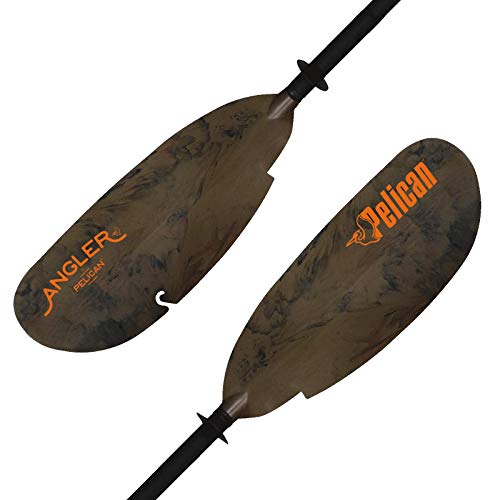
Pelican Poseidon Angler 98.5-Inch Kayak Paddle
Engineered specifically for wide-beam fishing kayaks over 34 inches, the Pelican Poseidon Angler features an extended 98.5-inch two-piece aluminum shaft with an integrated line hook notch and ruler. It is an affordable, functional choice for kayak anglers seeking proper reach and reduced wrist fatigue without spending a fortune on high-end carbon.
Pros
- Generous 98.5-inch reach eliminates knuckle scraping against wide-beam fishing kayak gunwales
- Integrated line retrieval notch and shaft ruler add practical convenience directly from the kayak seat
- Three-position push-button ferrule allows quick feathering adjustments to minimize wind resistance
- Ovalized right-side shaft indexing promotes consistent grip orientation and helps lessen forearm fatigue
Cons
- At 2.6 pounds, the aluminum shaft is heavier over all-day distance paddling than composite alternatives
- Push-button ferrule offers fixed feathering angles rather than continuous infinite angle adjustment
- Bare aluminum shaft can feel cold to unprotected hands during early-spring or late-autumn paddling
OCEANBROAD 4-Piece 230cm Kayak Paddle
Built for easy transport, this 230cm paddle breaks down into four 25-inch sections that fit neatly into travel packs or gear bags. The anodized aluminum shaft resists saltwater corrosion, while adjustable blade feathering helps cut wind drag during longer tours.
Pros
- Breaks down into compact sections for travel
- Corrosion-resistant anodized aluminum construction
- Dual feathering angles for customizable paddle strokes
- Drip rings prevent water pooling on grips
Cons
- Relatively heavy at 3.17 pounds
- Overall length is fixed at 230cm without height adjustment
BKC Brooklyn 12.0 Pedal Fishing Kayak
The BKC Brooklyn 12.0 is a 12-foot sit-on-top fishing kayak featuring a hands-free propeller pedal drive, responsive hand-controlled rudder, and a 33.5-inch wide UV-protected HDPE hull. Weighing 75 pounds and equipped with an ergonomic aluminum frame seat, it is well suited for lake and coastal bay anglers seeking hands-free trolling and reliable primary stability.
Pros
- Hands-free propeller pedal drive facilitates effortless trolling and position-holding while casting
- Wide 33.5-inch beam and 12-foot waterline provide strong primary stability on lakes, slow rivers, and sheltered bays
- Ergonomic aluminum frame seat keeps paddlers elevated off the deck with breathable lumbar support
- Hand-operated rudder system delivers smooth steering response without requiring foot-peg adjustments
- Comprehensive storage layout includes dual dry bag-equipped hatches, rear bungee well, and scupper plugs
Cons
- Listed 75-pound bare hull weight can make solo rooftop car-topping demanding without a load-assist rack or cart
- Fixed propeller pedal mechanism requires manual lifting or removal when navigating shallow water or thick vegetation
- Propeller system does not feature an instant-kick-up obstacle avoidance mechanism found on premium fin drives
OCEANBROAD Adjustable Fishing Kayak Paddle
Built for kayak anglers, this adjustable aluminum paddle extends from 240cm to 260cm and features an integrated hook retrieval notch on the blade. Its three-piece breakdown, drip rings, and included leash offer dependable utility for recreational outings.
Pros
- Hook retrieval notch aids kayak anglers
- Length adjusts in five-centimeter increments
- Three-piece breakdown simplifies transport
- Comes with bungee leash and drip rings
Cons
- Aluminum shaft is heavier than composite alternatives
- Longest section measures 51 inches when disassembled
Hornet Watersports 230-240cm Kayak Paddle
Built with a lightweight carbon fiber and fiberglass shaft, this paddle extends from 230 to 240 cm to accommodate diverse touring and fishing setups. Its dihedral fiberglass blade provides smooth water displacement paired with an eye-catching printed graphic.
Pros
- Lightweight 26-ounce construction minimizes arm fatigue
- Telescoping shaft extends from 230 to 240 cm
- Customizable blade feathering from 0 to 60 degrees
- Breaks down into two pieces for convenient transport
- Durable fiberglass blade with scratch-resistant printed graphic
Cons
- Straight shaft design lacks ergonomic bent-grip contouring
- Base 230 cm length may prove too long for narrow kayaks
- Prominent graphic styling may not suit all tastes
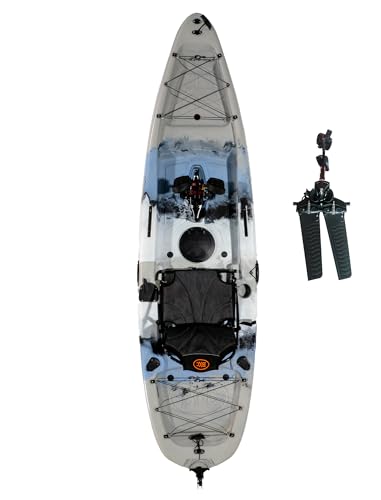
BKC Brooklyn 10.0 Pedal Fishing Kayak
The BKC Brooklyn 10.0 is a 10-foot sit-on-top fishing kayak featuring a hands-free flipper pedal drive, hand-operated rudder, and a stable 33.25-inch beam. With a 350-pound maximum weight capacity and built-in rod holders, it offers a maneuverable platform for calm lakes, slow rivers, and inshore waters.
Pros
- Smooth flipper pedal drive frees hands for casting, trolling, and handling tackle
- Wide 33.25-inch beam offers reassuring flatwater balance and easy boarding for recreational anglers
- Elevated aluminum-frame seat provides better lumbar support and a drier ride than flat molded foam seats
- Pre-rigged with essential fishing features including rod holders, accessory tracks, and a stern rudder
Cons
- Listing features contain conflicting notes on whether a paddle is included or must be purchased separately
- At 75 pounds total rigged weight (58 pounds bare hull), solo car-topping onto tall vehicle roofs may require a load-assist bar or cart
- Short 10-foot waterline is engineered for agility in tight spaces rather than high-speed open-water tracking
Frequently Asked Questions
Is a pedal kayak faster than a paddle kayak over long distances?
Yes, pedal kayaks generally maintain higher average cruising speeds over distance because human leg muscles possess greater endurance than arms and shoulders. While lightweight paddles can hit brisk short sprint bursts, pedaling easily sustains a steady 3 to 4 mile-per-hour pace for hours. This lower-body efficiency makes pedal drives ideal for traveling across open lakes during 2026 without arm burnout.
How does beam width impact pedal vs paddle kayak speed on flatwater?
Wider hulls increase water resistance, reducing overall forward speed regardless of propulsion style. Sit-on-top platforms measuring 34 inches or wider prioritize rock-solid primary stability for casting, creating extra hull drag on flatwater. Conversely, narrower hulls under 30 inches slice through chop cleanly, letting paddlers reach peak hull speed with far less physical effort.
Are traditional kayak paddles better than pedal drives in shallow water?
Yes, traditional paddles excel in shallow water, marsh grass, and submerged timber where mechanical drives risk bottom strikes. Propeller and flipper units require at least 12 to 18 inches of clearance to operate safely. Using a lightweight oar allows you to pull the pedal drive, retract your rudder, and slip across skinny flats without snagging weeds.
How does payload capacity affect overall cruising speed and stability?
Exceeding 70 percent of total weight capacity drops the hull lower into the waterline, increasing friction and drastically slowing progress. Keeping an ample payload safety margin ensures rapid scupper drainage and keeps the bow responsive against waves. Distributing heavy coolers and gear crates evenly between front and rear storage wells prevents sluggish tracking.
Can a solo paddler maintain good speed in a tandem kayak?
Solo paddlers can achieve respectable cruising speed by trimming hull balance to prevent the bow from catching wind. Understanding tips for handling solo paddling configurations helps you position ballast correctly near the cockpit center. An extended paddle shaft clears wide gunwales to produce efficient, ergonomic strokes without bumping the deck.
About the author
Reuben Parsons is an experienced water-sports writer and gear reviewer specializing in surfing and stand-up paddleboarding. With a background in marine biology and more than a decade of outdoor writing, He has tested hundreds of products and spent thousands of hours evaluating outdoor gear. He approach combines technical research with genuine experience on the water.