
How to Repurpose a Leaky Canoe or Kayak
How to repurpose a leaky canoe or kayak, from safe garden uses to storage and decor, with practical checks for November 2026.
 By Maggie Nichols
Updated November 27, 2026


A canoe or kayak that takes on water can be more than a repair bill waiting to happen. If it no longer feels dependable on the water, how to repurpose a leaky canoe or kayak starts with separating safe, dry-land reuse from any attempt to keep paddling in a compromised hull. A retired boat can become a planter, storage trough, garden feature, or indoor display, but its condition and material determine which ideas make sense.
First identify where water enters and whether the damage affects the hull’s structure. A loose accessory or repairable small leak is different from a crack, soft area, failed seam, or damage near a seat or deck fitting. If you are weighing repair against replacement, articles on choosing a kayak for open-water use and kayak seating options can help clarify what features matter in a replacement. Never treat a repurposed boat as seaworthy without an appropriate repair and manufacturer guidance.
Top Products
| Award | Product | WSG Score About WSG ScoreThe WSG Score is our own rating from 0 to 10, based on performance, design and build, ease of use, and value. It reflects independent research and is never influenced by manufacturers, retailers, or affiliate commissions. Learn more › | |
|---|---|---|---|
| Best Overall |
Menasha Ridge Press Introduction to Paddling
|
9.2/10 | Buy |
| Best Value |
 Menasha Ridge Press Canoeing & Kayaking Guide |
8.9/10 | Buy |
| Best Budget |
 Menasha Ridge Press Canoeing & Kayaking South |
8.8/10 | Buy |
 DK Complete Idiot's Guide to Canoeing & Kayaking |
8.6/10 | Buy | |
 CreateSpace Power to the Paddle Paperback |
8.6/10 | Buy | |
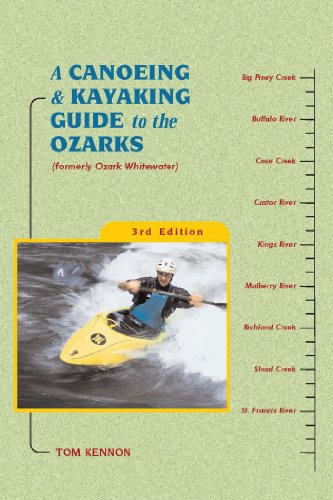 Menasha Ridge Ozarks Canoe and Kayak Guide |
8.4/10 | Buy | |
| Best Premium |
 Otter Run Media Paddling Iowa, 129 Journeys |
8.3/10 | Buy |
 Menasha Ridge Canoeing & Kayaking New York |
8.1/10 | Buy | |
 Fundamentals of Kayak Navigation Guidebook |
7.8/10 | Buy |
Menasha Ridge Press Introduction to Paddling
This concise paperback guide outlines fundamental canoeing techniques for navigating both lakes and rivers. Its ultra-lightweight, slim format makes it convenient to slip into an outdoor pack for water outings.
Pros
- Weighs less than a quarter pound
- Slim dimensions fit easily inside dry bags
- Broad page dimensions allow clear visual presentation
- Dedicated specifically to lake and river basics
Cons
- Paperback binding lacks moisture protection near water
- Slim 0.2-inch profile indicates limited depth
Menasha Ridge Press Canoeing & Kayaking Guide
This comprehensive 5th edition guidebook from Menasha Ridge Press delivers detailed river beta, access locations, and rapid classifications across West Virginia waterways. It is an indispensable route-planning accessory for recreational paddlers, kayak anglers, and whitewater explorers mapping out their next river trip.
Pros
- Comprehensive coverage of West Virginia rivers, creeks, and runs for both recreational paddlers and whitewater enthusiasts
- Provides critical access details including put-in locations, takeouts, mileage, and difficulty ratings
- Lightweight, portable one-pound format easily stows inside a dry bag or dry box on the water
- Offers dependable offline river intelligence in remote river gorges where cell phone reception is absent
Cons
- Standard paperback print construction is not waterproof and requires a sealed dry bag or clear map case on the water
- Print guidebooks cannot provide live USGS water gauge readings or real-time seasonal flow variations
- River hazards, tree strainers, and access point policies can shift over time compared to published edition details
Menasha Ridge Press Canoeing & Kayaking South
This Menasha Ridge Press guidebook details 60 canoe and kayak routes within 60 miles of Madison, providing essential access points, waterway classifications, and launch logistics. It is an indispensable planning resource for Wisconsin flatwater explorers, slow-river paddlers, and kayak anglers.
Pros
- Thorough breakdown of 60 paddling trips within a manageable 60-mile radius of the Madison metropolitan area
- Detailed put-in and take-out descriptions make arranging vehicle shuttles and solo car-topping routes straightforward
- Identifies specific navigational hazards such as dams, shallow water, and portages before you hit the water
- Convenient 6-by-9-inch form factor stows cleanly in dry gear bags and glove compartments
Cons
- Standard paperback binding is not waterproof and requires a separate dry bag or clear map case when brought on board
- Printed route details cannot reflect real-time seasonal water-level changes, recent storm deadfalls, or updated park fees
- Strictly limited to South Central Wisconsin waters, offering no coverage for northern waterways or Great Lakes coastlines
DK Complete Idiot's Guide to Canoeing & Kayaking
This digital handbook from DK delivers purchasing guidance and practical advice for prospective canoe and kayak owners. Available in Kindle format, it serves as a portable reference for paddlers evaluating watercraft options.
Pros
- Convenient Kindle format for reading on portable devices
- Focused advice for purchasing canoes and kayaks
- Accessible introductory guide for recreational paddlers
Cons
- Requires a Kindle-compatible device or application
- Digital format lacks a physical print copy
CreateSpace Power to the Paddle Paperback
Power to the Paddle offers targeted conditioning exercises designed to help canoeists and kayakers build strength and improve paddling performance. Weighing around half a pound, this compact physical guide packs easily alongside regular training gear.
Pros
- Dedicated exercise guidance for paddle sports
- Lightweight build at roughly half a pound
- Compact size fits easily into gear bags
- Convenient physical reference without needing screens
Cons
- Paperback cover lacks water resistance near water
- Less durable over time than hardcover binding
Menasha Ridge Ozarks Canoe and Kayak Guide
Paddlers planning river trips through the Ozarks can pack this Menasha Ridge Press guidebook directly into their gear bag. At under a pound, its slim paperback format serves as a portable reference for regional canoe and kayak routes.
Pros
- Compact size fits easily into daypacks and dry bags
- Lightweight construction adds under a pound of bulk
- Flexible paperback binding makes transport convenient
- Focused regional coverage tailored to Ozarks waters
Cons
- Paperback cover lacks built-in water resistance on the river
- Offered in pre-owned condition rather than brand new
Otter Run Media Paddling Iowa, 129 Journeys
Otter Run Media's Paddling Iowa outlines 129 water routes tailored for canoe, kayak, and stand-up paddleboard paddlers. The lightweight paperback format makes it an accessible planning resource for exploring Iowa waterways.
Pros
- Covers 129 water routes across Iowa
- Applies to canoes, kayaks, and SUP boards
- Weighs less than one pound
Menasha Ridge Canoeing & Kayaking New York
Authored by Kevin Stiegelmaier, this Menasha Ridge Press guidebook details paddling routes across New York waterways. Its compact paperback format fits easily into a gear bag or dry pouch for reference on trips.
Pros
- Lightweight build under 0.72 pounds
- Compact profile fits easily into daypacks
- Slim half-inch thickness stores flat in gear
- Focused exclusively on New York paddle routes
Cons
- Paperback pages require protection from water
- Physical volume adds pack bulk compared to digital files
Fundamentals of Kayak Navigation Guidebook
Fundamentals of Kayak Navigation is a comprehensive instructional guide from the How to Paddle Series that teaches traditional chart-and-compass pilotage alongside modern electronic navigation. Measuring 7.5 by 9.25 inches in a lightweight paperback format, it is an essential planning manual for lake tourers, coastal explorers, and distance paddlers heading onto open water.
Pros
- Bridges traditional paper chart pilotage with modern GPS electronic navigation
- Tailored specifically to the distinct perspective, low eye height, and speed of kayaks
- Compact paperback dimensions make it easy to pack along for multi-day trips
- Excellent safety and route planning resource for touring and coastal paddlers
Cons
- Standard paperback cover is not waterproof and requires a sealed dry bag or deck case near water
- Focuses on navigational theory and planning rather than paddling strokes or rescue drills
- Reading theory cannot replace practical compass drills and on-water practice
Give a Leaky Canoe or Kayak a Safe Second Life
Repurposing is a sensible option when a boat is no longer suitable for paddling, but it is not a substitute for diagnosing a leak. Remove it from service until the source and extent of damage are understood. A hull that is taking on water can become unstable or swamp, and a decorative conversion does not make it safe to launch again. Treat the project as a dry-land reuse unless a qualified repair assessment and the manufacturer’s instructions support returning the craft to the water.
Decide Whether the Boat Can Be Repaired Before Reusing It
Start with a careful visual inspection on a stable, level surface. Look over the hull, seams, ends, fittings, drain hardware, hatch covers, and any areas that have rubbed against a rack or shoreline. Note cracks, holes, distorted areas, loose fittings, and signs that a seam or joint has separated, but do not assume that a visible mark is the only source of a leak.
Next, check the owner’s manual or contact the manufacturer for repair guidance that matches the boat’s material and construction. Canoes and kayaks may use different plastics, composites, inflatable fabrics, or joined panels, and a repair method that suits one material may damage another. If the boat has a structural crack, extensive deformation, a failed joint, or damage around a load-bearing seat or deck fitting, ask a qualified repair professional before deciding that it can safely be restored.
For an inflatable craft, do not repurpose a chamber that cannot retain air as though it were a sound, rigid container. A leak may involve a valve, seam, or panel, and the correct inspection and repair approach depends on the design. Keep the boat out of use while you seek the manufacturer’s instructions, and do not use improvised patches, household adhesive, or a repurposed hull as a flotation device.
A modest, manufacturer-approved repair may make sense when damage is limited and the remaining hull is sound. The relevant question is not only whether a leak can be closed, but whether the repair restores the structure and watertight integrity needed for the intended use. If that cannot be confirmed, plan for land-based reuse or responsible disposal instead of an uncertain return to paddling.
Choose a Reuse That Matches the Hull’s Condition
A retired hull can work well as a garden planter, provided it is stable and placed where its weight and size will not create a hazard. A canoe’s long shape can form a raised planting bed, while a kayak may suit a smaller garden display or container. Check local rules before placing a large object outdoors, especially near a shared path, drainage route, property boundary, or public space.
Storage is another practical use. A sound, dry hull may hold gardening supplies, cushions, pool accessories, or seasonal equipment in a garage or shed. Keep sharp, heavy, or chemical items in suitable containers rather than letting them rub against the hull, and avoid storing anything that can leak into the soil or a drain. A boat with an open crack or a leaking seam is a poor choice for items that need to stay dry.
Some people turn an old boat into a display feature, a bench base, or a decorative focal point. Those projects require a stable support and careful consideration of edges, load, and location. Do not assume that a hull designed to float can safely support people as furniture, or that its seat fittings remain sound after years of wear. For a bench or other load-bearing project, use an appropriate independent frame and have the design assessed if people will sit or climb on it.
Garden use has its own trade-offs. Soil and standing water add weight, and drainage holes or cuts may be needed for planting, but altering the hull is irreversible and can create sharp edges. Before cutting, confirm that the boat will never be returned to the water and check for hidden wiring, fittings, or other components. Use appropriate eye and respiratory protection and follow the tool and material manufacturer’s safety instructions.
Plan Drainage, Support, and Weather Exposure
Water that collects in a retired hull can add substantial weight, attract insects, and stress the support points. For an outdoor planter or display, think through where rainwater will go before setting the boat in place. A level base, planned drainage, and access for cleaning are more useful than simply putting the hull on the ground and hoping it stays dry.
Support the boat broadly rather than balancing it on a few narrow contact points. A hull that was designed to sit in water can deform when stored or displayed under uneven loads, especially if it is already damaged. Use supports suitable for the project and keep the boat away from sources of excessive heat. Do not tighten straps or fasteners enough to crush or distort the hull.
Sun and weather matter for long-term outdoor display. Inspect the hull periodically for changes, loose supports, and sharp or brittle edges, and follow the manufacturer’s care guidance for its material. If the boat is in a public or shared area, secure it so wind or accidental contact cannot move it, and make sure the setup cannot collect water where children or pets might be at risk.
A hull used as a planter should not be treated as a food-safe growing container unless the material and its previous use are known to be appropriate. Old coatings, unknown contaminants, and residues from stored gear can make that assumption unwise. Use a separate, suitable liner or containers for planting, and avoid growing edible crops directly in a hull of uncertain history.
Make an Honest Repair-or-Retirement Decision
Repair is more attractive when the damage is clearly limited, the boat’s construction is known, and the manufacturer provides an approved method or a qualified repair service can assess it. Retirement is more prudent when the hull has extensive cracking, a compromised seam, major deformation, or a history that makes its condition uncertain. A patch that stops a drip during a brief check does not by itself establish that a boat is safe under paddling loads or changing water conditions.
Think about the whole cost and effort of restoring the boat, not just the repair material. A repair may involve compatible supplies, professional labor, replacement hardware, and follow-up inspection. If the boat is old or has several damaged areas, a land-based project or proper recycling may be a more responsible use of time than a partial fix that leaves uncertainty about its structure.
Do not remove bulkheads, flotation, or structural components to make room for a project while keeping the craft available for paddling. Those parts can affect safety and hull integrity. If you decide the boat is permanently retired, mark it clearly and keep it away from launch areas so another person does not mistake it for usable equipment.
For a replacement craft, prioritize fit, intended water, carrying capacity, and transport needs rather than assuming that every boat suits every outing. A local lake, slow river, and exposed water call for different judgment about conditions and equipment. The site’s overview of kayak styles for lake paddling can provide a starting point, but check current manufacturer specifications and local requirements before buying or launching.
Use the Listed Books for Paddling Knowledge, Not Hull Repair
The products listed with this article are books and regional paddling references, not repair kits or replacement hull parts. Introduction to Paddling is described as a canoeing basics title for lakes and rivers, so it may help readers build general paddling knowledge. It does not supply a documented repair procedure for a particular damaged boat.
Regional guidebooks have a different role. A Canoeing & Kayaking Guide to West Virginia, 5th is identified as a guide to West Virginia paddling, while the South Central Wisconsin and Ozarks titles focus on their named regions. Those descriptions do not establish that a book covers hull repair, and local route information cannot replace checking water conditions, access rules, or current safety requirements.
Other listed titles cover broader topics, including canoeing and kayaking advice, paddling exercises, Iowa journeys, New York routes, and kayak navigation. Their usefulness depends on the reader’s purpose and location. The unusually high listed price for one book is not evidence of repair expertise or special technical content, so check the edition, subject, and listing details before choosing any title.
For an actual leak, rely on the boat maker’s material-specific instructions or a repair professional rather than a general paddling guide. A book may help someone learn about paddling or plan a route, but it cannot confirm the condition of a particular hull. Keep those purposes separate when deciding whether to repair, reuse, or retire a craft.
Retire the Hull Responsibly
If reuse is not suitable, ask local waste or recycling services whether they accept the boat’s material and size. Acceptance varies, so do not leave a hull beside a recycling bin or dump it at a shoreline. Remove personal gear and dispose of any fuel, chemicals, or other stored materials through appropriate local channels.
Before handing a boat to someone else, describe known damage plainly and state that it is not ready for paddling if that is the case. Do not advertise a leaky or structurally compromised craft as seaworthy based on appearance alone. Clear information helps prevent a future owner from mistaking a garden project for a watercraft.
The practical decision is straightforward: repair only when the material, damage, and approved method support a reliable restoration; otherwise, choose a stable, dry-land reuse or responsible disposal. Keep the boat out of the water while its condition is uncertain, and treat any future launch as a separate decision that requires confirmed structural integrity, appropriate safety equipment, and compliance with local rules.
About the author
Maggie Nichols is an experienced paddler, adventure guide, and gear reviewer with more than 25 years around paddle sports. Her background includes canoe touring, whitewater rafting and kayaking, ocean kayak guiding, and extensive outdoor education. She approaches water gear with a strong focus on real-world usability, durability, comfort, and practical performance.