
How to Measure for a Kayak Paddle: Sizing Guide for 2026
Learn how to measure for a kayak paddle using torso height and kayak beam width to paddle efficiently and avoid shoulder strain in October 2026.
 By Edward Ting
Updated October 4, 2026
By Edward Ting
Updated October 4, 2026
Relying solely on standing height to select paddle length often leads to battered knuckles, excessive gunwale strikes, and unnecessary upper body fatigue. A paddler standing six feet tall might have long legs and a short torso, requiring a completely different reach than someone of identical height with a longer upper body. Understanding how to measure for a kayak paddle requires evaluating both your seated torso height and the actual beam width of your boat. Traditional sizing rules frequently fail when paddlers transition from narrow touring hulls to wide recreational craft or stable single sit-in kayaks designed for calm inland lakes.
Boat width directly establishes how far your hands must reach over the side to plant the blade clean in the water without grazing the deck. If your shaft is too short, you will find yourself leaning awkwardly across the gunwales on every forward stroke, throwing your body off balance. Conversely, an oversized paddle creates excessive mechanical leverage that strains your shoulders and slows down your paddling cadence over long distances. Selecting the right gear setup transforms your efficiency, preserves your stamina, and allows you to maintain full control across varied water conditions.
| Award | Product | WSG Score About WSG ScoreThe WSG Score is our own rating from 0 to 10, based on performance, design and build, ease of use, and value. It reflects independent research and is never influenced by manufacturers, retailers, or affiliate commissions. Learn more › | |
|---|---|---|---|
| Best Overall |
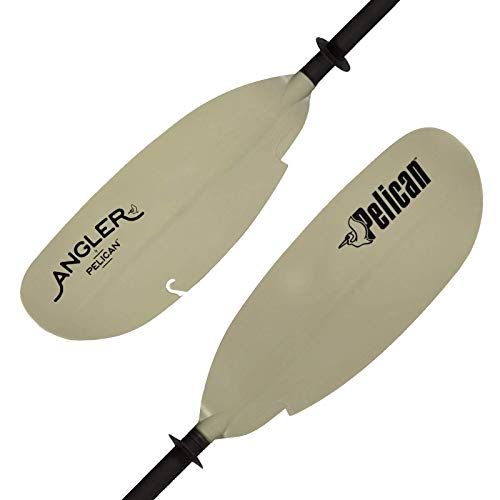
Pelican Poseidon Angler 98.5-Inch Kayak Paddle
|
8.8/10 | Buy |
| Best Value |
 OCEANBROAD Kayak and SUP Paddle Leash
|
8.1/10 | Buy |
Pelican Poseidon Angler 98.5-Inch Kayak Paddle
The Pelican Poseidon Angler is a lightweight, 98.5-inch two-piece paddle designed specifically to provide clean stroke clearance over wider fishing kayaks. Featuring an integrated hook retrieval notch, high-visibility shaft ruler, and ergonomic indexing, it offers outstanding utility for kayak anglers on calm lakes and slow rivers.
Pros
- Generous 250 cm length is tailored for wider fishing hulls and paddlers taller than 5 feet 5 inches
- Integrated angling tools include a hook retrieval notch and clear shaft measurement markings
- Weighs only 2.1 pounds, helping to minimize shoulder strain during full-day paddling trips
- Two-piece breakdown design packs easily into car trunks or alongside kayak gear in truck beds
- Built-in internal flotation blocks ensure the paddle will not sink if dropped in deep water
Cons
- At 98.5 inches long, it may feel overly long and cumbersome on narrow day-touring kayaks or for paddlers under 5 feet 5 inches
- Bare aluminum shaft can feel cold against bare hands during early spring or late autumn outings without gloves
- Push-button ferrule limits feathering adjustment strictly to 0-degree or 65-degree offset positions
OCEANBROAD Kayak and SUP Paddle Leash
The OCEANBROAD Paddle Leash provides reliable, lightweight tethering for SUP paddles, kayak oars, and fishing rods using an elastic bungee wrapped in woven nylon. It is an affordable safety essential for flatwater paddlers and kayak anglers seeking to prevent lost gear on the water.
Pros
- Flexible 4 to 7 foot expansion range accommodates standard paddle strokes without restricting arm movement
- Corrosion-resistant stainless steel carabiner gate holds up against fresh and saltwater environments
- Featherlight 0.15-pound profile prevents paddle shaft drag and stores effortlessly anywhere
- Dependable loop knot attachment fits a wide range of paddle shaft diameters and fishing rods
Cons
- Lacks a quick-release velcro wrist cuff, requiring manual unlooping from the paddle shaft to detach
- Bungee cord presents an entanglement hazard if used in fast-moving rivers, whitewater, or breaking surf
- Alloy carabiner benefits from routine freshwater rinsing after saltwater outings to ensure long-term gate action
Accurate Methods and Hydrodynamic Factors for Sizing Kayak Paddles
Matching a paddle to your specific body geometry and kayak dimensions is the single most critical adjustment for on-water comfort and propulsion efficiency. Many paddlers mistakenly purchase a paddle based purely on overall standing height, only to discover painful wrist strain, dripping water in their lap, and sluggish boat control. A correct fit harmonizes your natural seated reach with the beam width of the hull, the height of your seat frame, and your preferred stroke angle. Resolving these variables before heading out ensures that every forward stroke delivers clean drive without wasted physical effort or joint inflammation.
Measuring Your Torso Height Accurately at Home
Torso height provides a far more accurate sizing metric than total standing height because your legs remain fully enclosed or extended inside the hull. Two paddlers who both stand six feet tall may possess vastly different upper body proportions depending on their leg inseam. To obtain an exact torso measurement, sit upright on a flat, firm chair with your back pressed naturally against a vertical wall. Use a standard measuring tape to find the vertical distance from the flat chair surface between your legs up to your nose or eye level.
This seated measurement isolates the working upper body length that actually dictates your arm extension and paddle reach relative to the water line. If your measured torso height falls below twenty-eight inches, your upper body sits closer to the deck, requiring a shorter shaft to avoid clumsy overhead arm angles. Paddlers with torso measurements between twenty-eight and thirty-two inches represent the standard recreational average, fitting comfortably with medium-length shafts. A torso measurement exceeding thirty-two inches indicates a long upper body that necessitates additional paddle length to maintain a natural stroke arc without stooping forward.
The Critical Role of Kayak Beam Width
Kayak beam width refers to the widest distance across the hull, and it represents the primary physical barrier your paddle must clear. Narrow performance kayaks and day-touring craft often feature beam widths between twenty and twenty-four inches, allowing a very tight, efficient reach to the waterline. Recreational sit-inside models, stable fishing craft, and wide heavy-duty inflatable kayaks often range from thirty to thirty-six inches across the beam. This extra hull width pushes the waterline farther away from your shoulders, demanding a noticeably longer paddle shaft to maintain proper stroke mechanics.
Attempting to navigate a thirty-four-inch beam kayak with a standard two-hundred-ten-centimeter touring paddle forces you into a cramped, unnatural posture. You will repeatedly bang the paddle shaft against the composite or polyethylene gunwales, scraping the plastic and jarring your elbows. To clear the sides of the boat without striking the deck, you would have to lurch your torso side to side, rapidly fatiguing your core muscles. Adding ten to twenty centimeters of shaft length completely eliminates gunwale contact and restores a smooth, centered paddling rhythm.
Distinguishing Between Low-Angle and High-Angle Stroke Styles
Your preferred paddling style heavily influences the ideal shaft length and blade geometry for your setup. Low-angle paddling is the most common technique for recreational paddlers, kayak anglers, and long-distance day cruisers seeking effortless forward movement. During a low-angle stroke, the paddle shaft stays relatively horizontal, forming an angle of roughly twenty to thirty degrees relative to the flat water surface. This relaxed cadence conserves energy over several hours and requires a longer, narrower blade coupled with a longer shaft length, typically between two hundred twenty and two hundred forty centimeters.
High-angle paddling employs a much steeper shaft orientation where the paddle remains almost vertical, approaching sixty to seventy degrees to the water during power delivery. This technique places the blade close to the hull for aggressive acceleration, sharp pivoting maneuvers, and rapid corrections in turbulent chop or moving currents. Because the paddle travels vertically downward into the water rather than sweeping outward, high-angle paddlers require shorter shafts, usually between two hundred ten and two hundred twenty-five centimeters. Choosing a long paddle for a high-angle stroke creates excessive swing weight and increases shoulder strain during aggressive catches.
Factoring Seat Height and Frame Elevation on Modern Kayaks
Traditional sit-inside kayaks seat the paddler directly on the floor pan, placing your hips below or level with the external waterline. Modern sit-on-top fishing craft and premium recreational boats, however, increasingly utilize raised aluminum-frame stadium seats for enhanced visibility and all-day comfort. These elevated seating systems lift your torso anywhere from four to ten inches above the primary deck floor. Raising your seated center of gravity increases the vertical drop required for the paddle blades to enter the water completely.
Paddlers operating from elevated seats must compensate for this vertical gain by adding length to their paddle selection. Even on standard recreational hulls, a raised seat frame often mandates an extra ten centimeters of paddle shaft length to prevent shallow, inefficient blade dipping. Anglers piloting wide hulls or specialized pedal kayaks with trolling motors regularly employ shafts extending to two hundred forty or two hundred fifty centimeters. Models like the Pelican Poseidon Angler are specifically built at ninety-eight point five inches, or two hundred fifty centimeters, to accommodate paddlers taller than five feet five inches in wide fishing platforms.
Blade Feathering and Wind Resistance Management
Blade feathering refers to the angular offset between the right and left blades along the central connecting ferrule. When a paddle is unfeathered at zero degrees, both blades remain on the exact same plane, requiring identical wrist alignment on both sides of the hull. While unfeathered setups feel intuitive for novices, paddling into stiff crosswinds or headwinds causes the elevated upper blade to catch air resistance like a sail. This air drag increases muscular strain on your arms and subtly steers the bow off course on windy open reservoirs.
Modern two-piece paddles feature push-button ferrule adjustment systems that allow paddlers to set blade feathering between zero and sixty-five degrees. Offsetting the blades lets the out-of-water blade slice cleanly through headwinds with minimal aerodynamic resistance while the active blade pulls through the water. Paddling with feathered blades requires one hand to maintain a loose control grip while rotating the shaft slightly between strokes. This technique significantly reduces top-blade drag, conserving substantial upper body stamina during long open-water crossings against sustained winds.
Shaft Indexing and Ergonomics for Joint Protection
Repetitive paddling motions over several miles place continuous cyclical strain on your wrist flexors, forearms, and shoulder joints. Traditional round aluminum shafts force paddlers to squeeze the grip tightly to confirm blade orientation, especially when water splashes make the metal slippery. Ergonomic shaft indexing addresses this issue by shaping the control side of the shaft into a subtle oval rather than a continuous round tube. Feeling the oval contour directly against your palm instantly informs you of the blade angle without requiring you to glance down at your hands.
Paddles equipped with ergonomic indexing, such as the two-piece Pelican Poseidon Angler shaft, promote proper grip technique and reduce excessive hand squeezing. The built-in anti-slip surface and indexed grip allow paddlers to maintain a relaxed, open-handed push with the upper arm while pulling smoothly with the lower arm. This relaxed grip mechanics dramatically decreases forearm pump and prevents painful tendon inflammation such as wrist tendonitis or carpal tunnel irritation. Paired with lightweight fiberglass-reinforced polypropylene blades, an indexed shaft delivers responsive hydrodynamic bite while mitigating cumulative joint fatigue.
Paddle Flotation and Securing Gear on Open Water
A properly measured paddle is only beneficial as long as it remains within your control on the water. Multi-piece aluminum paddles can slowly take on water through the ferrule connection if left submerged, causing them to lose buoyancy and sink to the bottom. Reliable manufacturers integrate internal foam flotation blocks inside the tubular shaft sections, ensuring the paddle remains floating on the surface if accidentally dropped. These flotation blocks provide valuable peace of mind, allowing paddlers to retrieve an escaped paddle even in deep coastal bays or dark reservoir waters.
To prevent accidental loss entirely, especially when casting rods or taking photos, paddlers frequently attach a stretchable lanyard system. The OCEANBROAD Kayak Paddle Leash provides four to seven feet of high-grade woven nylon and elastic bungee cord to keep your paddle tethered securely. Its corrosion-resistant alloy carabiner features a stainless steel gate that clips directly to a deck D-ring or life vest attachment point. Securing the shaft with a simple loop knot ensures the paddle floats safely beside your boat without tangling in your paddling stroke.
Troubleshooting Common Fit Issues and Sizing Mistakes
Recognizing the physical symptoms of an improperly sized paddle allows you to make necessary adjustments before developing chronic joint pain. If your paddle shaft is too short, you will notice persistent scuff marks along the gunwales and painful bruised knuckles from striking the cockpit rim. You may also find water consistently pouring into your lap because the drip rings remain positioned inside the cockpit coaming rather than over the open water. These warning signs indicate that you need to increase your paddle length by at least ten centimeters or lower your seating elevation.
Conversely, using a paddle that is excessively long creates noticeable sluggishness and excessive yawing with every stroke. The extended lever arm forces your hands higher in the air, creating a burning sensation across the tops of your shoulders and trapezius muscles. An overly long shaft also causes the boat to zigzag wildly from side to side because each forward stroke acts as a sweeping turn rather than a straight pull. Downsizing your paddle length or adjusting your stroke angle to a more vertical orientation can instantly restore straight-line tracking.
Practical On-Water Checks to Confirm Your Paddle Measurement
Before embarking on a lengthy voyage, paddlers can perform a few physical checks on land and near shore to verify proper sizing. Stand upright with the paddle vertical beside your body; curling the fingers of your raised arm over the top edge of the blade should feel natural without straining your shoulder. While seated in your kayak on flatwater, hold the paddle centered horizontally across your head with your elbows bent at clean ninety-degree angles. Your hands should rest approximately six to eight inches inward from each blade throat on a properly sized two-piece shaft.
During forward strokes on the water, observe where the blade enters and exits the water column relative to the boat. The entire blade surface should submerge smoothly into the water on each stroke without the shaft collars or your hands submerging. If water constantly runs down the shaft into your lap despite using drip rings, your paddle is likely too short, forcing an excessively steep entry angle. Conversely, if your strokes sweep far out from the hull and cause the kayak to zig-zag excessively, your shaft length is likely too long for your torso.
Safety Gear and Regulatory Preparation for Safe Kayaking
Proper equipment sizing is just one component of responsible paddlecraft preparation on open waterways. The United States Coast Guard mandates under Title 33 CFR Part 175 that all recreational paddlecraft carry an approved wearable life jacket for each person aboard. Choosing a kayak-specific Type III or Type V personal flotation device with a high-back foam cut prevents interference with elevated stadium seats. In addition to a properly fitted vest, federal navigation regulations require paddlers to carry an efficient sound-producing device, such as a pealess safety whistle.
Carrying proper signaling equipment and wearing your safety vest ensures you remain prepared for unexpected capsizes or changing weather conditions. When practicing deep-water re-entry or wet exits, tethered gear and buoyant paddles prevent critical equipment from drifting away in wind currents. Ensuring your paddle floats and keeping emergency gear clipped to your hull transforms a potentially dangerous capsize into a manageable inconvenience. Taking time to dial in your equipment dimensions alongside required safety gear ensures comfortable, compliant, and secure paddling adventures on every trip.
Investing time to calculate your torso height and match it against your kayak beam width yields immediate dividends in speed, endurance, and overall joint comfort. Balancing proper shaft length with blade feathering angles and ergonomic indexing protects your wrists while maximizing propulsion through every stroke. Securing your fitted paddle with a durable bungee leash and verifying internal flotation blocks keeps your primary propulsion source safe at all times. Once your measurements align with your paddling posture, you can glide across lakes, rivers, and coastal flats with effortless confidence.
About the author
Reuben Parsons is an experienced water-sports writer and gear reviewer specializing in surfing and stand-up paddleboarding. With a background in marine biology and more than a decade of outdoor writing, He has tested hundreds of products and spent thousands of hours evaluating outdoor gear. He approach combines technical research with genuine experience on the water.