
How to Kayak Fish in the Ocean: Practical Guide for 2026
Learn how to kayak fish in the ocean safely with essential launch skills, hull stability insights, and rigging tactics for October 2026.
 By Marius Fox
Updated October 5, 2026
By Marius Fox
Updated October 5, 2026

Rolling swells, unpredictable wind chop, and shifting coastal tides make open-water angling vastly different from cruising across sheltered inland lakes. Learning how to kayak fish in the ocean requires an intimate understanding of hull dynamics, safe payload management, and weather evaluation before you push off the sand. Paddlers must balance primary stability for fighting active gamefish with secondary stability for cleanly slicing through breaking waves. Exploring high-mobility options such as motorized ocean kayaks can significantly enhance your operational range when contending with persistent offshore currents.
Securing gear against saltwater immersion demands disciplined deck organization to prevent costly gear loss during sudden capsizes. Every tackle box, paddle, and fishing rod holder needs to remain tethered and accessible without compromising the vessel’s center of gravity. Maintaining a healthy reserve buoyancy buffer ensures that unexpected swells or choppy wakes will not swamp your deck during a hookset. With the right foundation of surf-launch mechanics, safety discipline, and purpose-built rigging, offshore paddlecraft angling delivers unmatched access to productive coastal fisheries.
| Award | Product | WSG Score About WSG ScoreThe WSG Score is our own rating from 0 to 10, based on performance, design and build, ease of use, and value. It reflects independent research and is never influenced by manufacturers, retailers, or affiliate commissions. Learn more › | |
|---|---|---|---|
| Best Overall |
YakAttack Kayak Fishing Starter Pack
|
8.9/10 | Buy |
| Best Value |
 Pelican Catch Classic 100 Angler 10-Foot
|
8.9/10 | Buy |
| Best Premium |
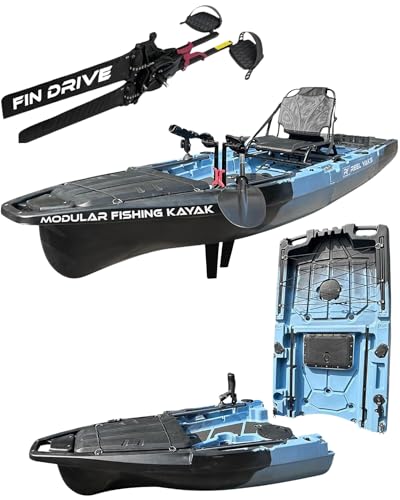 Reel Yaks Recon 10.5-Foot Modular Kayak
|
8.4/10 | Buy |
 Pelican Catch Mode 110 Fishing Kayak
|
8.3/10 | Buy | |
| Best Budget |
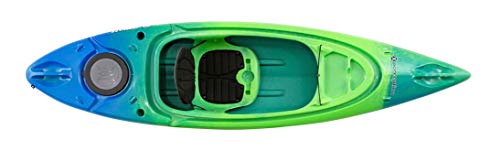 Perception Flash 9.5 Sit-Inside Kayak
|
8.0/10 | Buy |
YakAttack Kayak Fishing Starter Pack
Anglers outfitting a new vessel can quickly establish a functional deck layout with this all-in-one accessory set. Built from UV-stabilized polymers and stainless steel hardware, it delivers essential rod, paddle, and gear management compatible with standard kayak tracks.
Pros
- Quick tool-free mounting on standard kayak tracks
- Marine-grade materials resist freshwater and saltwater corrosion
- Provides essential fishing mounts in a single kit
- Easily expands with additional brand track accessories
Cons
- Requires existing compatible track rails for mounting
- Includes only a single rod holder
- Adds 3.4 pounds to kayak deck setup
Pelican Catch Classic 100 Angler 10-Foot
The Pelican Catch Classic 100 Angler is a 10-foot sit-on-top fishing kayak featuring a steady tunnel hull and an adjustable dual-position Ergocast frame seat. Weighing just 57 pounds with a 350-pound maximum capacity, it is a reliable, easily transportable platform for kayak anglers navigating lakes, ponds, and slow rivers.
Pros
- Tunnel hull provides exceptional initial flatwater stability for confident casting and gear access
- Ergocast frame seat keeps paddlers elevated off the deck with high and low position adjustments
- Relatively light 57-pound bare hull weight makes solo roof rack loading and transport practical
- Dual 4-inch rigging tracks allow seamless attachment of fish finders and accessories without drilling
- Adjustable footrests and paddle tie-downs ensure a comfortable, hands-free fishing experience
Cons
- Compact 10-foot waterline prioritizes close-quarters turning agility over long-distance straight tracking
- Paddle is not included in the base package and must be purchased separately
- Paddlers approaching the 350-pound maximum capacity ceiling may notice reduced freeboard and deck wash
Reel Yaks Recon 10.5-Foot Modular Kayak
Breaking down into two separate sections, this modular pedal kayak pairs a hands-free fin drive with a stable 400-pound capacity W-hull. It gives anglers a fully outfitted fishing platform that fits inside vehicle trunks without requiring a roof rack.
Pros
- Separates into two pieces for compact vehicle transport
- Quiet hands-free fin pedal drive system
- Stable W-hull supports up to 400 pounds
- Factory-installed rod holders and accessory track rails
- Eliminates the need for a roof rack or trailer
Cons
- Total assembled weight of 88 pounds is fairly heavy
- Wide 35.4-inch beam can feel sluggish when paddling manually
- Requires assembly and latching at the water's edge
Pelican Catch Mode 110 Fishing Kayak
Anglers seeking a secure casting platform will appreciate the wide tunnel hull and elevated ERGOBOOST seating on this 10.5-foot craft. Outfitted with integrated rigging tracks, flush rod holders, and dual tank wells, it delivers solid utility for flatwater fishing trips.
Pros
- Wide tunnel hull allows stable stand-up casting
- Adjustable padded seat offers improved sightlines
- Multiple integrated rod holders and accessory tracks
- Ample open deck storage in front and rear wells
- Internal hull flotation meets ABYC safety standards
Cons
- Weight of 67 pounds makes solo roof-loading demanding
- Wide 34.5-inch beam trades paddling speed for stability
- 375-pound weight limit restricts heavy multi-day camping gear
Perception Flash 9.5 Sit-Inside Kayak
The Perception Flash 9.5 is a compact 9-foot-6-inch sit-inside kayak combining a lightweight 41-pound hull with dual integrated rod holders and a generous 325-pound capacity. It is an ideal pick for solo car-toppers, recreational flatwater paddlers, and casual anglers seeking nimble handling on calm lakes and slow rivers.
Pros
- Lightweight 41-pound design allows effortless solo loading onto vehicle J-cradles or truck beds
- Substantial 325-pound maximum capacity provides ample buoyancy for a compact 9-foot-6-inch hull
- Factory-molded dashboard console and dual rear rod holders support spontaneous fishing trips
- Adjustable foot pegs allow fast legroom customization to maintain proper paddling posture
- Quality American manufacturing ensures resilient hull longevity across varied inland waters
Cons
- Sit-inside cockpit lacks self-bailing scupper holes, making a hand bilge pump or sponge advisable in choppy conditions
- Short 9-foot-6-inch waterline prioritizes agile turning over long-distance straight-line tracking speed
- Paddle and cockpit spray skirt are not included and must be purchased separately
Mastering Ocean Kayak Fishing: Technique, Safety, and Rigging
Launching a small plastic watercraft into the open sea presents challenges that freshwater anglers rarely encounter. Swells, rip currents, breaking surf, and pelagic predators create an environment where preparation directly dictates personal safety and fishing success. Knowing the core fundamentals of boat control, navigation, and tackle organization allows you to focus on finding productive structure rather than fighting the water.
Coastal paddling requires a deliberate shift in mindset toward defensive boating and hydrodynamic awareness. An angler who respects the power of incoming breakers and monitors localized weather windows will enjoy safer and more consistent days on the water. The following breakdown covers everything from selecting appropriate hull geometry to mastering surf launches, organizing saltwater rigging, and executing self-rescue drills.
Selecting the Right Hull Architecture for Coastal Water
Hull geometry fundamentally dictates how a kayak responds to rolling ocean swells and sudden chop. Coastal anglers generally benefit from multi-chine profiles, shallow V-shapes, or dedicated tunnel hulls that provide dependable secondary stability when waves strike from the side. Both the Pelican Catch Classic 100 Angler and the Pelican Catch Mode 110 Fishing Kayak utilize engineered tunnel hulls that distribute displacement outward to deliver steady footing without sacrificing wave shedding.
Cockpit style is another critical consideration for ocean safety and comfort. Sit-inside designs like the Perception Flash 9.5 Sit Inside Kayak excel on protected waterways, slow-moving rivers, and calm coastal bays by keeping the lower body shielded from cool breezes. Open-ocean conditions strongly favor self-bailing sit-on-top kayaks equipped with functional scupper holes, which rapidly dump incoming surf water to preserve vital freeboard.
Wide platform configurations, such as the W-hull profile on the Reel Yaks Recon Modular Fishing Kayak – Fin Drive, provide an exceptional balance between primary stability and open-water tracking. A broader beam creates a reassuring foundation for casting, landing vigorous fish, or adjusting tackle in choppy surface conditions. Anglers should assess their typical launch environment, choosing an open, self-bailing deck whenever surf launches and rolling coastal swells are part of the daily itinerary.
Calculating Usable Payload Capacity and the Reserve Buoyancy Buffer
Every kayak carries a certified maximum weight capacity, but operating near that printed threshold on the ocean is dangerous. As total weight increases, the hull settles deeper into the water column, dramatically reducing available freeboard and inviting water to pool across the standing deck. Experienced coastal anglers follow the one-third safety buffer rule, ensuring that combined paddler and gear weight does not exceed 70 to 75 percent of the stated rating to preserve buoyancy.
Calculating your true payload requires totaling several distinct weight factors before setting out. Start with your personal dressed body weight, including your immersion apparel, footwear, and life jacket. Then add the fully rigged weight of your accessories, which includes the seat frame, pedal drive units, tackle crates, anchors, ice, and retained catch.
Evaluating craft specifications reveals distinct payload tolerances suited to different angler profiles. The Pelican Catch Classic 100 provides a 350-pound maximum capacity, making it a nimble choice for lighter paddlers carrying minimalist tackle. Stepping up to the Pelican Catch Mode 110 yields a 375-pound capacity, while the Reel Yaks Recon offers a 400-pound limit that accommodates heavier offshore setups.
Propulsion Choices: Paddle Power Versus Hands-Free Fin Drives
Choosing your primary method of propulsion directly impacts fishing efficiency and physical endurance across long tidal sessions. Traditional double-bladed paddles provide simple, reliable movement and excel when maneuvering through thick inshore kelp or shallow sandbars. Paddlers must continuously stow and retrieve their paddle whenever a fish strikes, which can lead to missed hooksets and lost boat control during strong drifts.
Pedal propulsion has transformed ocean angling by leaving both hands free to handle rods, manage electronics, and fight fish. Systems like the oscillating fin drive on the Reel Yaks Recon Modular Fishing Kayak – Fin Drive deliver quiet, continuous propulsion that effortlessly holds position against tidal currents. Anglers exploring specialized power options like pedal kayaks with trolling motors find that mechanized propulsion reduces physical exhaustion on long return journeys.
Propulsion hardware requires regular inspection to withstand the relentless abrasion of saltwater and marine grit. Fin drives should be visually checked for bent masts or trapped sea grass before launching into open water. Always keep an emergency hand paddle firmly secured to your deck, regardless of how dependable your mechanical drive system feels.
Conquering the Surf Zone: Launch and Landing Procedures
The surf zone represents the single most dangerous obstacle during any ocean kayak fishing excursion. Breaking waves generate tremendous hydraulic force capable of flipping a heavy craft and driving pointed fishing gear toward the paddler. Taking ten minutes to study incoming sets from the beach allows you to identify wave intervals and find temporary lulls where you can launch safely.
Executing an outbound surf launch demands deliberate timing, physical commitment, and straight boat orientation. Wade the kayak into knee-deep water between breaking sets, straddling the seat while keeping the bow pointed directly perpendicular into oncoming waves. Hop smoothly onto the deck, grab your paddle, and stroke aggressively through the breaker zone with maximum forward momentum to avoid getting pushed back.
Landing your kayak back on the beach requires equal discipline and situational awareness. Stop just outside the primary surf line to stow all rods horizontally, leash your gear securely, and wait for the back of a larger set to pass. Paddle in directly behind the final wave of the set, maintaining moderate speed so you remain on the back of the swell rather than surfing down its face.
Deep-Water Safety, Re-Entry Drills, and Federal Regulations
Federal maritime laws enforce strict safety guidelines that every ocean kayak angler must respect before entering coastal waterways. Under United States Coast Guard regulations outlined in Title 33 CFR Part 175, paddlecraft operators must carry a wearable Type III or Type V life jacket. Selecting a kayak-specific PFD with a high-back foam profile ensures comfortable clearance above elevated seating systems, such as the ERGOCAST seat on the Pelican Catch Classic 100. Anglers must also carry an accessible sound-producing whistle, while a 360-degree white light is mandatory when operating during low-light hours or fog.
Equipment alone cannot save an angler who lacks the physical ability to climb back aboard an overturned hull in deep water. Capsizing several miles from shore is a genuine survival scenario where hypothermia and panic can set in quickly. The side-scramble re-entry technique requires reaching across the upright kayak deck, kicking your legs horizontally to the surface, and pulling your chest upward over the gunwales.
Additional safety outfitting provides an indispensable margin of error when unforeseen ocean hazards arise. Always clip a handheld, waterproof VHF marine radio directly to your life jacket to maintain direct communication with the Coast Guard and nearby vessels. Never fish alone in open ocean environments without filing a clear float plan detailing your intended launch point and expected return time.
Deck Rigging and Saltwater Corrosion Protection
Open-ocean rigging requires a minimalist, clutter-free layout that prioritizes gear security over excessive gadgetry. High-grade modular accessory kits, such as the YakAttack Kayak Fishing Starter Pack Bundle, provide purposeful anchor points for essential equipment. Utilizing the Omega Rod Holder with a LockNLoad base keeps valuable rods elevated above corrosive salt spray while allowing quick adjustments during trolling passes.
Saltwater represents one of the most hostile operating environments for mechanical accessories and metal hardware. The marine-grade polymers and stainless steel fasteners found in the YakAttack bundle are engineered specifically to resist salt crystallization and UV degradation. Rinsing your accessory tracks, rod holders, and storage boxes with clean freshwater after every saltwater outing is vital to prolonging equipment life.
Organizing tackle on an open deck requires adhering strictly to the time-tested offshore rule: leash it or lose it. Secure your tackle containers within sealed hatches or enclosed units like the TracPak Quick Release Storage Box to prevent gear from scattering during rough water crossings. Keeping your primary deck clear of loose lines and unhooked lures significantly reduces the risk of entanglement during an emergency wet exit.
Offshore Fishing Tactics: Trolling, Bottom Dropping, and Fish Handling
Locating fish in the vast expanse of the ocean requires reading surface signs, bottom contours, and tidal rips. Trolling artificial lures or rigged natural bait behind your kayak is one of the most effective strategies for locating dispersed pelagic species. Maintain a steady forward momentum, adjusting your drag settings lightly so a violent strike does not spin your craft broadside into incoming waves.
Target bottom-dwelling species around reefs and kelp beds by practicing controlled drift management. Dropping heavy jigs into deep structure requires you to feather your rudder or pedal drive to counteract wind drift and keep your line vertical. If strong tidal flow pushes your kayak too rapidly across the reef, deploying a properly sized drift chute can slow your movement and keep your bait in the strike zone.
Landing a large fish alongside a kayak requires calm, deliberate movements to avoid capsizing the boat at the gunwale. Guide the exhausted fish alongside the boat, using a lip gripper or short-handled landing net rather than attempting to hoist heavy gamefish by the line. Be exceptionally cautious when handling toothy species or spiny bottom fish, keeping your hands well clear of sharp gills and thrashing treble hooks.
Transport and Storage Logistics for Heavy Coastal Craft
Managing the physical logistics of heavy coastal fishing kayaks requires proper equipment long before you arrive at the boat ramp. Installing heavy-duty kayak roof racks equipped with load-assist rollers or side-loading bars provides a stable, secure foundation for highway transport. Always secure the hull with UV-resistant non-stretch cam straps, avoiding mechanical ratchet straps that can easily crack or deform rotomolded polyethylene.
Anglers facing limited storage space or transport restrictions can look toward innovative modular designs. The Reel Yaks Recon separates into two distinct lightweight sections, allowing paddlers to load the vessel directly into a car trunk or SUV cargo bay without requiring heavy overhead lifting. Once at the beach, the modular hull latches together securely within minutes to create a rigid, sea-ready angling platform.
Long-term storage practices directly affect the operational lifespan and hydrodynamic performance of your kayak hull. Storing a plastic boat directly on its bottom across narrow crossbars causes permanent indentations known as oil-canning, which ruins straight-line tracking on the water. Support the vessel on edge or suspend it using wide webbing slings evenly distributed along the reinforced bulkheads to maintain hull shape.
Mastering ocean kayak fishing is a continuous process of refining your boat handling, respecting maritime weather conditions, and maintaining dependable gear. By calculating realistic payload margins, outfitting your craft with corrosion-resistant rigging, and practicing essential deep-water self-rescue drills, you can explore offshore waters with confidence. Every outing reinforces the value of disciplined deck management, giving you the freedom to focus entirely on landing ocean gamefish safely from a human-powered watercraft.
About the author
Marius Fox brings extensive hands-on experience from both above and below the water. A PADI Master Scuba Diver Trainer and AIDA freediver, she has worked as a scuba instructor, managed diving operations, participated in shark research, and contributed to marine conservation projects. His expertise provides a practical perspective on diving, snorkeling, water safety, and adventure gear.