
How to Haul a Kayak on a Car: Practical Car-Topping and Transport Guide for 2026
Learn how to haul a kayak on a car safely in October 2026 with practical roof rack loading advice, tie-down steps, and essential highway gear.
 By Maggie Nichols
Updated October 5, 2026
By Maggie Nichols
Updated October 5, 2026

Lifting an awkward plastic kayak onto a vehicle roof can challenge even seasoned paddlers, especially after an exhausting afternoon on choppy water. Understanding how to haul a kayak on a car safely requires balancing hull protection, vehicle load boundaries, and highway stability. Whether securing a rotomolded sit-on-top hull or a composite day-touring boat, selecting proper rooftop cradles and utilizing non-stretch tie-down straps prevents expensive transit damage. Paddlers seeking reliable vehicle support often start by evaluating heavy-duty kayak rack options designed to handle varying roof capacities and crossbar configurations.
Road transport introduces significant aerodynamic drag and upward lift that can deform plastic hulls if tie-downs are improperly positioned. Using balanced bow and stern safety lines alongside robust crossbar cradles keeps the craft stabilized in crosswinds and sudden highway stops. Many outdoor enthusiasts also pair their rooftop systems with ground carts to move boats from parking lots across sandy shores or rough launch ramps without straining their backs. Learning standard vehicle loading techniques ensures both the boat and the automobile arrive at the launch ramp in seaworthy condition.
| Award | Product | WSG Score About WSG ScoreThe WSG Score is our own rating from 0 to 10, based on performance, design and build, ease of use, and value. It reflects independent research and is never influenced by manufacturers, retailers, or affiliate commissions. Learn more › | |
|---|---|---|---|
| Best Overall |
AA-Racks Folding J-Bar Kayak Roof Rack 2-Pair
|
8.9/10 | Buy |
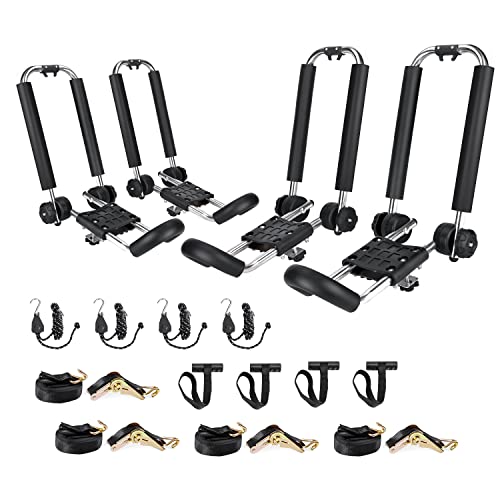 AA-Racks 2-Kayak Folding Roof Rack
|
8.8/10 | Buy | |
| Best Budget |
 Bonnlo Foldable Kayak Cart Dolly with 10-Inch
|
8.3/10 | Buy |
AA-Racks Folding J-Bar Kayak Roof Rack 2-Pair
This dual-pair folding J-bar rooftop rack provides a reliable way to carry up to two kayaks or canoes without sacrificing parking garage clearance. With dense protective foam, real rubber base pads, and four 16-foot ratchet straps, it offers solid transport utility for solo boaters and paddling duos.
Pros
- Foldable design lays flat when not in use to clear low garages and drive-thrus without unbolting
- Two full pairs included in one package, allowing direct transport for two separate kayaks
- Dense foam sleeves and non-slip rubber bases safeguard plastic and composite hulls from hard contact
- Comes with four 16-foot heavy-duty ratchet straps reviewed to 2,200 pounds for secure transport
Cons
- Vehicle roof rack crossbars are not included and must be sourced separately before installation
- Ratchet straps require careful tensioning to avoid overtightening and deforming hollow rotomolded plastic hulls
- Mounting hardware may require periodic retightening checks following highway travel on bumpy backroads
AA-Racks 2-Kayak Folding Roof Rack
The AA-Racks Folding J-Bar Roof Rack carries up to two kayaks with a 150-pound total capacity, featuring fold-down stainless steel frames and protective foam padding. It provides an efficient car-topping solution for paddlers and families who need reliable vehicle transport without sacrificing parking garage clearance.
Pros
- Fold-down design eliminates the hassle of removing racks when entering low-clearance garages
- Transports two full-sized watercraft simultaneously to maximize vehicle roof space
- Durable corrosion-resistant steel build with anti-slip rubber cushioning to protect boat hulls
- Complete rigging bundle with 16-foot ratchet straps and bow and stern tie-downs included
Cons
- 150-pound total load limit requires caution when transporting two heavy rotomolded fishing kayaks
- Ratchet-style tie-downs can risk denting plastic hulls if overtightened compared to traditional cam straps
- Total rack hardware weight of 20 pounds adds meaningful static load to vehicle crossbars
Bonnlo Foldable Kayak Cart Dolly with 10-Inch
The Bonnlo Foldable Kayak Cart provides a reliable 200-pound transport solution featuring 10-inch puncture-proof solid tires and a lightweight aluminum frame. It is ideal for solo paddlers and anglers needing to haul kayaks, canoes, or paddleboards from the vehicle to the water without tire-pressure hassles.
Pros
- Airless 10-inch solid PU tires never go flat or require air pumps at the boat ramp
- Sturdy 200-pound load limit easily supports rigged fishing kayaks, canoes, and paddleboards
- Spring-loaded 12-inch kickstand keeps the dolly propped up for steady solo loading
- Folds down compactly with detachable wheels for convenient storage inside a hatch or on deck
- Thick foam padding prevents aluminum tubing from gouging or scratching composite and plastic hulls
Cons
- Included strap is suited for craft under 31.5 inches wide, requiring a longer strap for extra-wide fishing kayaks
- Narrower 3-inch solid tires can dig into deep, loose beach sand more than specialized balloon wheels
- Requires careful placement under the kayak center of gravity to avoid frame slippage on steep launch ramps
Comprehensive Guide to Transporting Kayaks on Passenger Cars
Transporting a kayak safely atop a passenger vehicle requires thoughtful preparation, structural awareness, and reliable hardware. A kayak strapped to a car roof becomes an aerodynamic surface subject to crosswinds, buffeting from passing trucks, and upward highway pitch. Learning the proper mechanics of securing your paddlecraft prevents vehicle body damage and protects fellow motorists from catastrophic gear failure. By pairing capable rooftop carriers with disciplined rigging techniques, paddlers can transport both plastic and composite craft with peace of mind.
Rooftop Transport Fundamentals and Vehicle Roof Limits
Every passenger vehicle features a defined dynamic roof weight limit established by the manufacturer, which governs loads carried while in motion. This dynamic rating differs sharply from static weight capacities, which only measure vertical force supported when the vehicle remains parked. Paddlers must calculate the combined weight of crossbars, carrier mounts, and kayak hulls to verify they remain below this threshold. Exceeding this ceiling compromises vehicle stability, exaggerates body roll through curves, and can damage roof sheet metal.
Crossbar spread plays an equally vital role in highway stability, hull support, and vibration damping. A wider stance between front and rear crossbars distributes wind shear more evenly across the kayak hull. When hauling long boats on compact sedans with narrow crossbar spacing, upward aerodynamic pitch increases substantially at high speeds. Positioning crossbars between twenty-four and thirty-six inches apart provides the structural foundation required for long highway travel.
Selecting Carrier Styles: J-Cradles, Saddles, and Foam Mounts
J-cradle systems, such as the AA-Racks 2 Pair J-Bar Rack Roof Top Mount with 16, carry kayaks on their sides at roughly a forty-five-degree angle. This angled orientation frees up valuable horizontal crossbar space, allowing drivers of smaller cars to transport two paddlecraft simultaneously on a single vehicle roof. Many modern folding J-bar racks fold down flat when not in use, permitting vehicle entry into low-clearance garages without dismounting the hardware. Foldable carriers also provide geometric flexibility to accommodate various hull shapes while holding boats firmly against road vibration.
Heavy-duty systems like the AA-Racks Kayak Roof Rack for 2 Kayaks Foldable offer powder-coated corrosion-resistant steel construction capable of supporting up to 150 pounds across two kayaks. Their rubber base pads and high-density foam protectors shield automobile roofs from scratches and prevent hull slippage during travel. In contrast, horizontal saddles support boats flat on their bellies, which improves aerodynamics but consumes significantly more crossbar width. Temporary foam blocks rest directly on bare vehicle sheet metal, providing an entry-level solution best suited for low-speed local transits.
Paddlers managing specialized crafts or space limitations often compare rooftop configurations against alternative transport methods. For example, owners of inflatable watercraft frequently balance the convenience of deflated trunk transport against the quick-launch benefits of roof-topping inflated boats. Those exploring rugged paddling locations often inspect heavy-duty inflatable kayaks that can be packed internally or secured to standard rooftop cradles when fully pressurized. Choosing between rigid side-loading J-cradles and horizontal cradles ultimately hinges on hull width, roof clearance, and total boat count.
Pre-Loading Inspection of Crossbars and Contact Surfaces
Before hoisting any watercraft onto a vehicle, a physical inspection of the roof rack system is essential for highway safety. Grab each crossbar near its mounting towers and apply firm directional force to check for loose brackets, failing clamp bolts, or worn footpads. Road vibration and seasonal temperature fluctuations can loosen hardware over time, allowing brackets to shift unexpectedly on high-speed journeys. Tightening every mounting screw to manufacturer specifications guarantees that your carrier remains anchored to the automobile chassis.
Check the padding and contact surfaces of your kayak carrier for signs of UV degradation, cracking, or embedded grit. Hardened rubber or sun-rotted foam can scuff gelcoat finishes or abrade plastic hulls during extended highway transit. Carriers equipped with high-density synthetic rubber bases and thick foam sleeves provide critical anti-slip traction while protecting car paint. Wiping down crossbars and carrier cradles before each trip removes abrasive road sand that could otherwise scratch delicate hulls.
Solo and Tandem Rooftop Loading Mechanics
Lifting a rotomolded kayak that weighs sixty to eighty pounds onto a high SUV roof poses physical injury risks if attempted without proper leverage. Rather than attempting a pure deadlift from the ground, solo paddlers can employ the pivot-and-slide technique to protect their backs. Place a soft bath mat, dense moving blanket, or suction-mounted roller onto the vehicle rear spoiler or hatchback glass to protect automotive paint. Lift the kayak bow onto the protected rear corner, walk back to the stern, and slide the boat forward into the rooftop cradles.
When two people load a kayak, standard lifting mechanics keep the procedure controlled, balanced, and safe. Position one paddler at the bow and the other at the stern, lifting simultaneously with the legs while maintaining upright spines. Hoist the boat waist-high, pause to confirm secure footing on the pavement, and lift overhead together directly into the J-cradles or saddle pads. Communicating clearly before initiating the lift prevents sudden slips or awkward dropping motions against vehicle doors.
Positioning the kayak longitudinally within the carrier requires proper balance between the bow and stern overhangs. Center the bulk of the kayak mass between the front and rear crossbars so neither end acts as an excessive lever against the vehicle. An overly long bow overhang catches substantial windshield updrafts, creating intense upward rotational torque at highway speeds. Adjusting the boat slightly forward or backward helps balance the fore-and-aft aerodynamic load against oncoming airflow.
Hull Tie-Down Mechanics: Straps and Tension Management
Securing the kayak hull firmly to the crossbars requires disciplined strap routing around structural mounting points. Feed the strap under the crossbar on the inside of the carrier tower, drape it over the top of the kayak hull, and loop it under the crossbar on the opposite side. Bring the strap end back across the hull and thread it through the buckle mechanism to encircle both the crossbar and the watercraft. This wrapping technique ensures the boat cannot lift or slide sideways under centrifugal cornering forces.
While carrier kits often include 16-foot ratchet lashing straps tested to heavy load ratings, paddlers must exercise restraint when tensioning them. Ratchet mechanisms generate tremendous mechanical leverage that can easily crush rotomolded polyethylene hulls, crack fiberglass seams, or bend crossbar tubing. Tighten ratchet lines only until the strap is snug and the boat resists hand-pushed lateral movement. Overtightening can permanently indent the bottom of plastic kayaks or damage factory roof rack attachments.
Managing excess strap webbing prevents loud flapping noises and hazardous vehicle entanglements on the road. Loose strap tails vibrating in highway crosswinds can slap against vehicle windows, creating annoying drumming sounds and potentially abrading car paint. Tie off any trailing strap length around the crossbars using multiple half-hitch knots, or tuck the slack securely inside the car doors. Ensuring every loose end is restrained eliminates aerodynamic whip and keeps the driver focused on the road.
Bow and Stern Lines: Anchoring to Structural Recovery Points
Bow and stern safety lines are non-negotiable secondary restraints that prevent total loss of the kayak if primary crossbar mounts fail. Highway airflow creates tremendous upward lift under the front overhang of the hull, testing crossbar clamps against vertical shear forces. A bow line running from the front grab handle to the vehicle chassis holds the nose down against oncoming air pressure. Similarly, a stern line restricts forward surging during sudden, hard braking events on the expressway.
Never attach bow or stern lines to cosmetic plastic bumper covers or fragile grill slats that can snap under highway aerodynamic load. Instead, connect safety hooks directly to structural metal recovery loops located beneath the front and rear chassis. If your vehicle lacks accessible underbody tow hooks, install temporary hood-loop straps under the vehicle hood bolts to create sturdy anchor points. These reinforced webbing loops protrude safely past closed hood seams, creating reliable, paint-safe attachment points for front tie-down lines.
Tension bow and stern lines with moderate firmness rather than extreme pulling pressure. Pulling front tie-downs excessively tight bends the kayak bow downward, generating continuous stress that can distort the hull rocker profile. The lines should remain snug enough to eliminate slack, yet flexible enough to allow the vehicle suspension to cycle without pulling on the boat. Periodically pluck the lines with your fingers; they should feel taut like a firm guitar string without pulling the hull out of alignment.
Preventing Polyethylene Hull Oil-Canning and Wind Shear
Linear polyethylene hulls are susceptible to thermal deformation, commonly referred to as oil-canning, when exposed to heat and localized strap pressure. Parking in direct sunlight with tightly cinched tie-downs softens the plastic and forces deep indentations where crossbars contact the hull. Transporting kayaks on their side rails within padded J-cradles dramatically reduces this risk because gunwales possess higher structural rigidity than flat hull bottoms. If carrying a kayak flat on crossbars, resting it upside down on its sturdy cockpit gunwales shields the hydrodynamic bottom.
Aerodynamic drag from rooftop paddlecraft substantially affects vehicle fuel consumption and handling in blustery conditions. High-sided fishing kayaks and wide tandem boats present broad surface profiles that catch gusty crosswinds on open bridges or highway plains. Drivers should reduce highway speeds when transporting large hulls, which lowers upward aerodynamic lift and preserves automotive stability. Increasing following distances behind preceding traffic provides ample braking margins when carrying high-profile roof loads.
Shoreline Transition: Dolly Carts and Launch Logistics
Hauling a kayak on a car solves highway transit, but moving a heavy hull from the parking space to the water requires practical ground logistics. Portaging a rigged fishing kayak across loose beach sand or cobblestone shorelines can strain back muscles and scuff plastic keels. Using a folding trolley cart, such as the Bonnlo Kayak Car Foldable Aluminum Kayak Trailer, transforms this arduous chore into an effortless rolling transfer. With its ten-inch solid polyurethane tires and two-hundred-pound weight capacity, such a dolly glides over rough terrain without risk of flat tires.
This aluminum alloy cart utilizes twenty-by-1.75-millimeter tubing and includes an 11.5-foot strap to grip boat hulls under 31.5 inches wide firmly. Foam bumpers on each arm cushion the bottom hull, while protective foot caps prevent metal wear during assembly. The cart features a 12-inch spring-loaded kickstand that keeps the carrier propped upright on shore for rapid loading right at the water edge. When packing up, the trolley folds down easily and the airless 10-inch solid PU tires detach so the frame can stow inside a backpack or boat tankwell.
Combining rooftop transport systems with ground dollies establishes a seamless workflow from garage to water. Rather than dragging a rotomolded hull across gravel parking areas, wheeling it down to the boat ramp protects the plastic keel from excessive abrasion. Stowing the folded cart on board allows you to take out at distant shoreline locations without walking back to your car. This integrated transport routine preserves your physical energy for paddling and protects the structural integrity of your watercraft over years of use.
Roadside Verification Stops and Waterway Safety Regulations
Establish a mandatory habit of stopping after the first five to ten miles of any highway journey to inspect all tie-downs and mounting brackets. Straps can stretch slightly when first buffeted by highway wind, and settling hulls can introduce subtle slack into previously tight lines. Walk around the vehicle, physically tug the kayak bow and stern to test rigidity, and verify that buckle teeth remain fully engaged. Performing this quick intermediate inspection catches minor settling issues before they escalate into dangerous highway hazards.
Safe transport practices extend naturally to personal safety preparation once you unstrap your boat at the launch ramp. Always verify that life jackets and safety signaling equipment are accessible before launching into unfamiliar waterways. United States Coast Guard regulations under Title 33 CFR part 175 require every paddler to carry a properly fitted, wearable life jacket and an audible sound-producing whistle. Taking the time to haul your gear properly and respect waterway safety mandates guarantees that every paddling excursion begins and ends with complete confidence.
About the author
Maggie Nichols is an experienced paddler, adventure guide, and gear reviewer with more than 25 years around paddle sports. Her background includes canoe touring, whitewater rafting and kayaking, ocean kayak guiding, and extensive outdoor education. She approaches water gear with a strong focus on real-world usability, durability, comfort, and practical performance.