
How to Get in a Fishing Kayak: Practical Safety Guide for 2026
Learn how to get in a fishing kayak safely from shores, docks, or deep water with proven stability techniques and gear tips for October 2026.
 By Marius Fox
Updated October 5, 2026
By Marius Fox
Updated October 5, 2026

Launching an angling craft loaded with rods, tackle boxes, and landing nets presents a balance challenge that regular recreational paddling rarely matches. Figuring out how to get in a fishing kayak without swamping the deck or tipping requires steady footwork, proper weight distribution, and an understanding of your boat’s hull geometry. Wide tunnel hulls and pontoon platforms provide impressive primary stability on calm water, but an uncoordinated step onto the gunwale can quickly pitch an angler sideways. Taking the time to master basic shore, dock, and shallow-water entries keeps your gear dry and prevents unexpected swimming sessions before your day even begins.
Transporting your vessel to the launch point with a sturdy heavy-duty kayak rack is only the first step of a successful outing. Once you reach the shoreline, managing your center of gravity while navigating elevated stadium seats and flush-mounted rod holders becomes essential. Sit-on-top fishing platforms like the Pelican Catch Classic 100 Angler offer open, self-bailing decks that simplify entry, yet improper foot placement can still destabilize the craft. By following systematic entry protocols and respecting safe payload thresholds, you can step aboard smoothly, protect your expensive tackle, and focus entirely on finding fish.
| Award | Product | WSG Score About WSG ScoreThe WSG Score is our own rating from 0 to 10, based on performance, design and build, ease of use, and value. It reflects independent research and is never influenced by manufacturers, retailers, or affiliate commissions. Learn more › | |
|---|---|---|---|
| Best Overall |
PLUSINNO Kayak Fishing Rod Holder 2-Pack
|
9.1/10 | Buy |
| Best Premium |
 Pelican Sentinel 100X Angler Fishing Kayak
|
8.9/10 | Buy |
 Pelican Catch Classic 100 Angler 10-Foot
|
8.9/10 | Buy | |
| Best Budget |
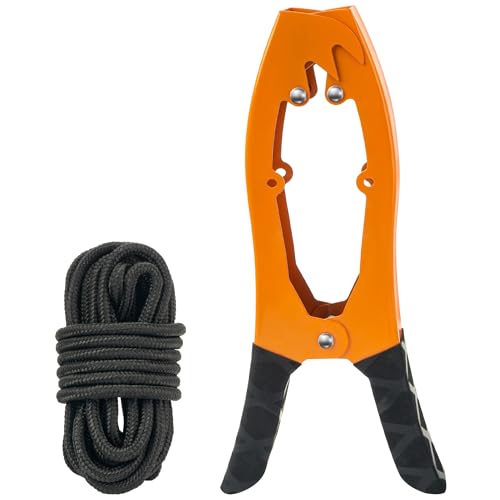 Omoojee Kayak Brush Gripper with 16.4ft Paracord
|
8.8/10 | Buy |
 Bombrooster 4-Piece Kayak Fishing Tool Kit
|
7.8/10 | Buy | |
| Best Value |
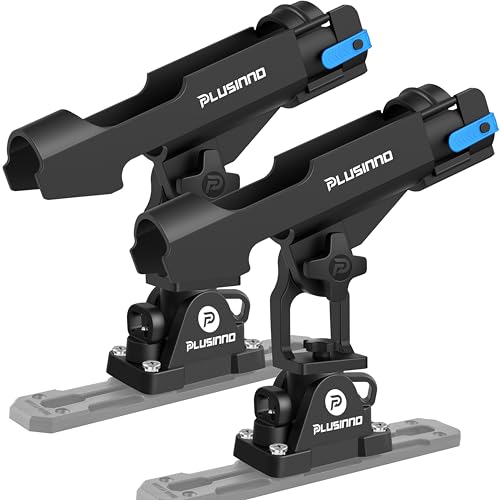 PLUSINNO 2-in-1 Kayak Rod Holder (2-Pack)
|
7.8/10 | Buy |
PLUSINNO Kayak Fishing Rod Holder 2-Pack
The PLUSINNO Kayak Fishing Rod Holder 2-Pack provides versatile track- and deck-mount utility with 360-degree positioning and protective retention straps for secure rod staging on the water. It is an ideal outfitting upgrade for kayak anglers seeking stable trolling angles and reliable gear security without complex rigging.
Pros
- Dual-mount compatibility works with factory kayak gear tracks or bare gunwales using the included rails
- Elastic silicone safety band keeps rods firmly anchored during sudden strikes or rough chop
- Wide range of motion with 360-degree rotation and 10-degree fine tilt increments for dialing in rod angles
- Silicone gaskets protect kayak plastic while dampening vibration and resisting bracket slip
Cons
- Installing onto slick kayaks without pre-existing track channels requires drilling into the deck
- Silicone rod safety strap generally requires two hands to latch or release quickly
- Sliding adjustment hardware requires periodic freshwater rinsing to prevent grit buildup and maintain smooth action
Pelican Sentinel 100X Angler Fishing Kayak
Anglers seeking a manageable solo craft will appreciate this compact sit-on-top kayak. Weighing under 45 pounds at nine and a half feet, it combines easy transportation with four rod holders and an Ergolounge padded seat.
Pros
- Lightweight 44.6-pound frame makes solo handling simple
- Ergolounge seat offers thick cushioning and high back support
- Removable ExoPak crate holds two vertical fishing rods
- Two built-in flush-mount rod holders keep gear ready
- Molded-in side handles provide secure lifting points
Pelican Catch Classic 100 Angler 10-Foot
The Pelican Catch Classic 100 Angler is a 10-foot sit-on-top fishing kayak featuring a steady tunnel hull and an adjustable dual-position Ergocast frame seat. Weighing just 57 pounds with a 350-pound maximum capacity, it is a reliable, easily transportable platform for kayak anglers navigating lakes, ponds, and slow rivers.
Pros
- Tunnel hull provides exceptional initial flatwater stability for confident casting and gear access
- Ergocast frame seat keeps paddlers elevated off the deck with high and low position adjustments
- Relatively light 57-pound bare hull weight makes solo roof rack loading and transport practical
- Dual 4-inch rigging tracks allow seamless attachment of fish finders and accessories without drilling
- Adjustable footrests and paddle tie-downs ensure a comfortable, hands-free fishing experience
Cons
- Compact 10-foot waterline prioritizes close-quarters turning agility over long-distance straight tracking
- Paddle is not included in the base package and must be purchased separately
- Paddlers approaching the 350-pound maximum capacity ceiling may notice reduced freeboard and deck wash
Omoojee Kayak Brush Gripper with 16.4ft Paracord
The Omoojee Kayak Anchor Grip is a spring-tensioned brush clamp crafted from painted 304 stainless steel and rigged with 16.4 feet of paracord. It offers silent, dependable station-keeping along tree-lined banks and dock pilings without the weight or bottom disturbance of heavy claw anchors, making it a great pick for shallow-water kayak anglers.
Pros
- Corrosion-resistant 304 stainless steel construction with an anti-rust painted finish
- Aggressive jaw teeth secure a firm hold on branches, limbs, and dock pilings under wind drift
- Stealthy alternative to heavy bottom anchors that avoids stirring up silt or spooking fish
- Lightweight and compact footprint saves valuable deck and hatch space on smaller kayaks
Cons
- Only functions where solid shoreline vegetation, fallen timber, or dock posts are present
- Not rated for holding heavy watercraft in fast-moving river currents or heavy wind swells
- Lacks a built-in line float, so securing the cord to the craft before deploying is critical
Bombrooster 4-Piece Kayak Fishing Tool Kit
The Bombrooster 4-Piece Kayak Fishing Tool Kit provides a space-saving landing and fish-handling solution tailored for crowded watercraft decks. Featuring a foldable coated net, stainless pliers, hook extractor, and tethered lip gripper, it is a practical package for kayak anglers seeking organized cockpit utility.
Pros
- All-in-one starter tool collection eliminates the need to buy kayak fishing accessories separately
- Folding net design stows neatly without tangling in rod tips or deck bungee cords
- Quick-dry coated mesh reduces hook fouling during frantic boat-side landings
- Wrist lanyard helps prevent costly accidental drops into deep water
Cons
- Compact net dimensions are better suited for panfish and bass than trophy-sized saltwater gamefish
- Tools do not include kayak track-mount brackets or molded deck holsters
- Stainless steel hardware requires regular freshwater rinsing after saltwater trips to prevent surface oxidation
PLUSINNO 2-in-1 Kayak Rod Holder (2-Pack)
Designed for kayak and boat anglers, this dual-pack holder pairs full 360-degree rotation with silicone padding to keep rods firmly anchored without scuffing the hull. Marine-grade stainless steel hardware and integrated safety straps ensure dependable security for both spinning and baitcasting setups.
Pros
- Full 360-degree adjustment with precise 10-degree locking increments
- Protective silicone padding prevents surface scratches on boats
- Integrated retention straps prevent accidental rod loss
- Durable marine-grade stainless steel mounting hardware
- Compatible with both spinning and baitcasting setups
Cons
- Mounting tracks are not included in the package
- Requires compatible boat tracks for installation
Essential Techniques for Entering a Fishing Kayak Safely
Entering an angling kayak safely demands a deliberate approach that accounts for water depth, shoreline terrain, and onboard equipment. Fishing kayaks carry substantial gear weight and feature wider beams than traditional touring models, which alters how they react when an angler steps aboard. Learning the precise body mechanics for different launch scenarios ensures that you maintain balance, keep deck wells dry, and protect expensive electronics. Whether launching from a gravel beach, stepping off a wooden dock, or performing an open-water self-rescue, the right technique keeps the hull stable beneath you.
Shoreline and Shallow-Water Straddle Mount
The shoreline straddle entry is widely recognized as the safest and most stable method for launching from sand, gravel, or gentle mud banks. Begin by sliding the kayak into the water until it floats freely in calf-deep to knee-deep water. Attempting to board while the boat rests partially on dry land can cause the hull to tip suddenly when pushed into deeper water, while also grinding the polyethylene bottom against sharp rocks. Positioning the vessel parallel to the shoreline allows you to straddle the cockpit naturally while standing on the firm lake or river bed.
Once the kayak is floating freely, stand directly over the seat with one foot on either side of the hull. Keep your knees slightly bent to maintain a low center of gravity, and place both hands firmly on the gunwales or seat frame for balance. Lower your backside straight down into the center of the seat before attempting to lift your legs out of the water. Once seated, swing your feet smoothly onto the deck floor one at a time and push off with your paddle. This controlled sequence prevents sudden listing and eliminates awkward lunges that can tip the boat.
Boarding from a Fixed Dock or Pier
Boarding from a wooden dock or pier presents a different balance challenge because the kayak floats well below your standing position. Begin by pulling the kayak alongside the dock edge and securing it temporarily with a bow line or a clamping device like the Omoojee Kayak Anchor Grip. This spring-loaded stainless steel gripper fastens securely to dock posts or cleats, holding the boat tight against the structure so it cannot drift away during entry. Lay your paddle across the gunwales directly behind the seat so it remains within easy reach once you are seated.
To enter, sit down directly on the dock edge with your feet dangling above the kayak cockpit. Rotate your torso toward the bow and lower both feet into the center channel of the kayak floor, keeping your body weight supported by your hands on the dock planks. Never step downward from a standing posture directly onto the kayak deck, because the sudden impact will kick the boat away from the dock. Slowly slide your hips down into the seat, unclip your mooring line, and push gently away into open water.
Deep-Water Re-Entry and Scramble Techniques
Capsizing in open water requires calm, methodical execution to re-enter a high-profile fishing kayak. If the kayak has overturned, swim to the center of the hull, reach across the bottom to grab the opposite gunwale, and plant your knees on the near rail to roll the vessel upright. Sit-on-top fishing platforms like the Pelican Sentinel 100X – Angler Sit on top Fishing feature self-bailing scupper holes, which automatically drain pooled water once the hull is righted. Secure your loose paddle under a deck bungee cord to keep both hands free for the re-entry scramble.
Position yourself along the side of the cockpit, facing the seat, and grab both gunwales with your hands spread shoulder-width apart. Kick your legs vigorously to the water surface behind you so your body floats horizontally, rather than trying to pull dead weight straight upward from a vertical hanging position. With a strong kick and an explosive pull from your arms, thrust your chest across the center of the deck, aiming your torso directly toward the seat cushion. Stay low, slide your belly further inward, and roll your hips over until you can swing your legs into the footwells. Investing in ergonomic, supportive kayak seats provides a clear physical target and rigid frame to brace against during this maneuver.
Deck Clearance and Securing Angling Gear
A cluttered deck is one of the leading causes of boarding slips, damaged equipment, and painful hook injuries. Before putting a single foot into your craft, inspect the footwells and standing platform to ensure they are completely clear of loose lines, lures, and tackle boxes. Anglers frequently trip over rods lying flat on the deck or step on tackle trays that shatter underfoot. Utilizing track-mounted accessories such as the PLUSINNO Kayak Fishing Rod Holder with Tracks keeps your rods pointing upright and safely out of your boarding path.
Compact gear management tools also make a dramatic difference in preserving open deck space. Keeping a folding landing net like the Bombrooster Foldable Kayak Landing Net Kit collapsed and tucked inside a rear tank well prevents snagging your vest or boots as you slide into the seat. Tethering high-value items before you push off protects them in case the kayak tips slightly while you find your footing. Mount rod leashes to any rods resting in the PLUSINNO 2 in 1 Kayak Fishing Rod Holder, and ensure your fish grippers and pliers are secured with lanyards. A tidy cockpit gives you full freedom of movement to plant your feet securely along the deck channels.
Hull Geometry: Primary Versus Secondary Stability
Understanding how your specific hull shape interacts with water displacement is critical for mastering smooth kayak entries. Kayaks designed specifically for angling prioritize primary stability, which refers to the craft’s initial resistance to tilting when floating flat on calm water. Platforms such as the Pelican Catch Classic 100 Angler utilize a wide tunnel hull design that acts like a miniature pontoon catamaran. This hull shape pushes water toward the outer chines, creating an exceptionally stable base that forgives minor balance errors when stepping into the cockpit.
However, hulls that offer high primary stability often have lower secondary stability compared to rounded touring hulls. Secondary stability is the resistance to flipping once the kayak is already leaned over on its edge. When stepping into a tunnel or multi-chine fishing hull, the boat feels rock solid until you reach a critical tipping threshold, at which point the rail can suddenly dip under water. Recognizing this boundary helps paddlers understand why keeping body weight centered is essential, even on boats marketed as exceptionally stable. Keeping your knees flexible allows your hips to absorb small wake movements without tipping your upper torso.
Safe Operating Payloads and Reserve Buoyancy
Boarding a fishing kayak safely depends heavily on maintaining adequate freeboard, which is the vertical distance between the waterline and the top of the gunwales. When a kayak is overloaded with heavy batteries, anchors, coolers, and tackle, the hull sits deep in the water, reducing freeboard to risky levels. With minimal freeboard, the slight lateral tilt that occurs when stepping aboard can easily cause water to rush over the sidewalls and flood the deck. Adhering to the 70 to 75 percent safe operating payload threshold ensures that the hull retains sufficient reserve buoyancy.
To calculate your usable capacity, check the manufacturer’s certified weight rating and multiply it by 0.70. For example, a fishing platform with a maximum capacity of 350 pounds provides a safe practical operating limit of approximately 245 pounds. This payload must account for your own body weight, clothing, personal flotation device, tackle boxes, electronics, and accessories. If you outfit heavier platforms such as pedal kayaks with trolling motors, the combined weight of the drive unit, deep-cycle marine battery, and motor mount consumes a substantial portion of this reserve buoyancy before you even step in. Distributing heavy tackle evenly between the bow hatch and stern tank well keeps the craft level and ready for boarding.
Transitioning from Seated to Standing Positions
Once you are safely inside the cockpit, many fishing kayak designs allow you to stand up for sight casting and improved casting distance. Standing up requires the exact same principles of balance and weight centering as entering the boat. Begin by planting both feet flat on the non-slip deck pads, spreading them shoulder-width apart just ahead of the seat base. Check that your paddle is safely secured in a paddle clip or leash so your hands are completely unencumbered.
To rise, lean your upper torso forward so your weight is centered directly over your feet, rather than relying on your arms to hoist yourself upward. If your boat is equipped with a stand-assist strap anchored to the bow deck, grasp the webbing firmly and use it to steady your upward motion. Push down evenly through both heels, extending your knees smoothly while keeping your head centered over the spine of the boat. When sitting back down, reverse the movement by lowering your hips slowly into the seat cushion rather than dropping your full weight suddenly.
Pre-Launch Safety Protocols and Common Mistakes
One of the most frequent boarding errors made by novice kayak anglers is stepping directly onto the gunwale or outer rail. The gunwale represents the extreme lateral edge of the hull, and placing body weight there acts as a powerful lever that flips the boat upside down. Always plant your footwear directly in the center floor channel or designated footwells. If you must adjust your footing, slide your soles along the floor rather than lifting your feet high into the air, which temporarily removes your stabilizing contact points.
Federal boating safety regulations established under US Coast Guard Title 33 CFR Part 175 require every paddlecraft operator to carry a wearable personal flotation device. Wearing a properly sized Type III or Type V PFD with high-back foam clearance ensures that your vest does not interfere with elevated kayak seat frames. Always carry an accessible sound-producing whistle and verify that your stern drain plug is threaded tightly into place before pushing off from shore. Taking sixty seconds to verify your gear, adjust your life vest, and check water conditions guarantees a safe entry and sets the stage for a successful day on the water.
About the author
Marius Fox brings extensive hands-on experience from both above and below the water. A PADI Master Scuba Diver Trainer and AIDA freediver, she has worked as a scuba instructor, managed diving operations, participated in shark research, and contributed to marine conservation projects. His expertise provides a practical perspective on diving, snorkeling, water safety, and adventure gear.