
How to Build a Kayak Stand: A Practical Guide for 2026
Learn how to build a kayak stand safely and explore reliable storage rack designs for your boat in October 2026.
 By Maggie Nichols
Updated October 5, 2026
By Maggie Nichols
Updated October 5, 2026

Storing a kayak directly on concrete or damp grass leads to hull deformation, surface scuffs, and unnecessary garage clutter. Learning how to build a kayak stand provides an effective way to elevate your boat, protect the hull bottom from permanent indentations, and make pre-trip rigging much simpler. Whether you own a thermoformed day tourer, a rotomolded fishing platform, or a composite craft, proper off-ground support maintains hull symmetry and preserves rocker geometry over long off-seasons. Investing time in a solid storage solution keeps your equipment organized and ready for the water.
Paddlers often deliberate between building a custom timber or PVC stand and purchasing a manufactured freestanding frame. While a homemade rack allows for tailored dimensions and custom sling drops, pre-engineered solutions like heavy-duty kayak storage rack options offer verified load capacities and quick assembly right out of the box. Understanding the mechanical requirements of hull weight distribution ensures that whichever path you choose will keep your boat safe from localized pressure dents and accidental tip-overs.
| Award | Product | WSG Score About WSG ScoreThe WSG Score is our own rating from 0 to 10, based on performance, design and build, ease of use, and value. It reflects independent research and is never influenced by manufacturers, retailers, or affiliate commissions. Learn more › | |
|---|---|---|---|
| Best Overall |
RAD Sportz Folding Kayak Stands (Set of 2)
|
8.8/10 | Buy |
| Best Value |
 VEVOR Freestanding Kayak Storage Rack
|
8.6/10 | Buy |
| Best Premium |
 Suspenz Yellowfin Kayak Work Stands (55-0140)
|
8.6/10 | Buy |
| Best Budget |
 Artibear 180-lb Folding Kayak Stand (2-Pack)
|
8.0/10 | Buy |
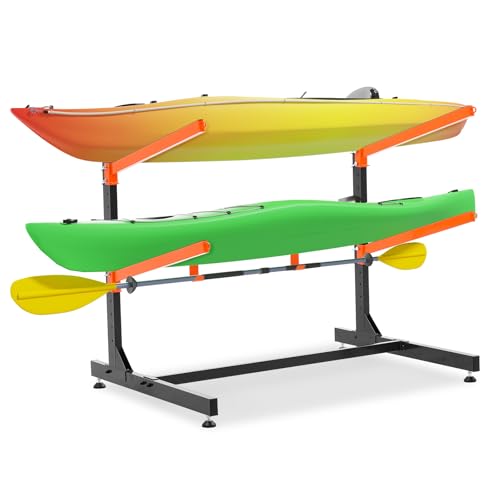 UOKRR 2-Level Freestanding Kayak Storage Rack
|
8.0/10 | Buy |
RAD Sportz Folding Kayak Stands (Set of 2)
Built from powder-coated steel with protective rubber bumpers, these folding stands offer a portable solution for keeping watercraft elevated off wet or rough ground. They work well for paddlers who need quick dockside staging, easy hull maintenance, or compact garage storage.
Pros
- Folds quickly into the included mesh bag
- Rubber bumpers protect delicate hull finishes
- Durable powder-coated steel frame
- Adjustable straps secure different watercraft widths
Cons
- Combined 100-pound weight capacity limits heavier tandem crafts
- Low 17-inch clearance keeps hulls close to ground
VEVOR Freestanding Kayak Storage Rack
This heavy-duty steel freestanding storage stand holds up to two kayaks, canoes, or paddleboards with a 175-pound total load capacity. Featuring tool-free width adjustment and padded support arms, it provides paddlers with an organized, drill-free hull storage solution for garages, sheds, or docks.
Pros
- Freestanding design eliminates the need to drill mounting brackets into drywall or dock pilings
- Quick-adjust hand screws allow tool-free width adjustments between 48.4 and 71.8 inches
- Padded 21.1-inch support arms help safeguard boat finishes against direct metal contact
- Broad triangular base footprint with non-slip rubber pads stays planted on level concrete or decking
Cons
- Total 175-pound weight ceiling means pairs of fully rigged heavy pedal fishing kayaks may exceed safe limits
- Must be assembled and placed on strictly flat, level ground to prevent wobbling or balance issues
- Assembly required out of the box before loading watercraft
Suspenz Yellowfin Kayak Work Stands (55-0140)
Built with rust-resistant aluminum and deep canvas slings, these heavy-duty stands provide easy underside clearance for rigging and maintaining large fishing kayaks or canoes. They support up to 350 pounds and fold flat for straightforward storage between outings.
Pros
- High 350-pound total weight capacity
- Corrosion-resistant aluminum and stainless steel build
- Deep sling drop simplifies hull rigging and maintenance
- Accommodates extra-wide kayaks, canoes, and SUPs
- Folds flat for compact transport and storage
Cons
- Requires manual assembly before initial use
- Utility shelves, casters, and tables sold separately
- Large 51-inch folded length requires ample storage space
Artibear 180-lb Folding Kayak Stand (2-Pack)
This portable two-piece metal stand provides off-the-ground support for kayaks, canoes, and paddleboards up to 180 pounds. Its quick-folding frame and foam-padded cradles make it practical for gear cleaning, dock staging, or tight garage storage.
Pros
- Lightweight and highly portable at 4.16 pounds each
- Compact folding design fits easily into car trunks
- Padded cradles and webbing protect against surface scratches
- Straightforward assembly requires no complex tools
- Angled feet provide solid stability on various surfaces
Cons
- 180-pound weight limit may not suit heavy tandem hulls
- 22.8-inch height keeps watercraft relatively low to the ground
- Accommodates only a single watercraft across the pair
UOKRR 2-Level Freestanding Kayak Storage Rack
The UOKRR 2-Level Freestanding Kayak Stand provides a sturdy powder-coated steel storage solution engineered to support two watercraft up to 200 pounds total. With adjustable-height padded arms and leveling feet, it is an ideal garage or dock organizer for paddlers wanting to protect their hulls from oil-canning without drilling into walls.
Pros
- Heavy-duty industrial steel frame rated for up to 100 pounds per tier and 200 pounds total
- Completely freestanding footprint eliminates the hassle and wall damage of hanging heavy kayak brackets
- Support arms adjust vertically up to 22 inches to fit varying kayak hull depths and paddleboard rails
- Durable felt protective padding prevents hull gouging, gelcoat scratches, and plastic scuffing
- Adjustable leveling feet keep watercraft steady on irregular surfaces like cracked concrete or wooden docks
Cons
- Maximum vertical tier clearance caps at 22 inches, which may require removing tall stadium seats or gear consoles before stowing
- Weighs 26 pounds unladen, so high-wind outdoor dock placements may require using supplemental bungee cords or base tie-downs
- Assembly is required out of the box and calls for careful alignment of the arm adjustment pins
Engineering a Kayak Stand: DIY Plans, Hull Protection, and Storage Options
Building an elevated kayak stand solves the common problem of ground-level storage damage while providing a convenient workstation for cleaning, rigging, and maintenance. Rotomolded polyethylene and composite hulls require evenly distributed support to prevent permanent warping across their running surfaces. Constructing your own custom cradle or choosing an adjustable manufactured rack ensures your boat remains secure between paddling trips. Taking the time to calculate proper dimensions and support materials guarantees years of dependable hull protection.
Hull Protection Mechanics: Preventing Oil-Canning and Pressure Deformations
Polyethylene plastic hulls possess natural memory, meaning they can deform when exposed to concentrated stress points over extended periods. High temperatures inside summer garages can soften the plastic, accelerating an indentation process known as oil-canning where the bottom bows inward. When a kayak rests on narrow, unpadded beams, the entire weight presses against small surface contact points. Distributing this load along the bulkheads or curved chines prevents flat spots from compromising on-water tracking performance.
Suspended strap slings and contoured foam bunks offer the best protection by spreading hull weight across broad contact bands. Flexible webbing cradles conform directly to the natural contour of round, V-shaped, or pontoon hulls rather than forcing the plastic into an unnatural angle. Rigid wooden crossbars must always feature thick closed-cell foam or marine carpet padding to soften direct contact. Maintaining the structural integrity of the rocker profile preserves straight-line tracking and keeps the boat gliding efficiently.
Choosing DIY Materials: Pressure-Treated Wood vs Furniture-Grade PVC
Paddlers constructing homemade storage racks typically choose between dimensional lumber and rigid polyvinyl chloride pipe. Standard two-by-four dimensional lumber offers immense compressive strength, making it ideal for heavier fishing kayaks and multi-boat storage systems. Exterior-grade construction lumber fastened with coated deck screws resists atmospheric moisture and handles heavy loads without bending. Timber stands provide a stable, weighty foundation that resists tipping even when loading boats in windy outdoor conditions.
Schedule 40 PVC pipe presents a lighter, corrosion-resistant alternative that works exceptionally well in humid basements or sheltered boat houses. Assembling a stand using PVC requires purple primer and solvent cement to fuse the fittings into a single rigid structure. However, PVC lacks the absolute rigidity of lumber and can sag over time if subjected to high ambient heat and heavy boats. For lighter recreational hulls, PVC provides an affordable, rust-free solution that glides smoothly without scratching gel coats or plastic skins.
Step-by-Step Guide to Building a Wooden Kayak Sawhorse Stand
Building a pair of wooden kayak sawhorses begins by measuring your kayak beam width and measuring total hull depth from keel to gunwale. Gather four eight-foot two-by-four boards, three-inch exterior wood screws, and four yards of heavy two-inch nylon webbing. You will also need a hand saw, a power drill with driver bits, and a measuring tape. Pre-drilling screw pilot holes prevents the timber from splitting near board ends and ensures tight, durable joints.
Begin construction by cutting eight identical upright legs measuring twenty-four to thirty inches in length, depending on your preferred working height. Cut a fifteen-degree bevel angle at the top and bottom of each leg to create a wide, splayed stance for maximum lateral stability. Cut four horizontal crossmembers measuring twenty-six to thirty inches wide to form the upper support arms and lower base spreaders. Fasten two legs to an upper crossmember using exterior screws, forming an inverted V-shape assembly for the first sawhorse.
Reinforce each sawhorse assembly by attaching a horizontal stretcher bar across the lower portion of the legs about six inches above the ground. Adding diagonal gusset blocks or small plywood triangular braces at the upper corners eliminates racking motion when a heavy kayak is hoisted aboard. Repeat the entire cutting and fastening process to create the matching second sawhorse unit. Sand down any rough timber edges or sharp splinters that could catch on clothing or abrade synthetic webbing slings.
Complete the wooden stands by securing the nylon webbing slings across the top opening of each sawhorse frame. Fasten each end of the two-inch webbing securely to the outer edge of the upper crossmembers using heavy-duty fender washers and wood screws. Allow the webbing to sag six to eight inches in the center so it cradles the hull belly without letting the keel bottom out on bare wood. This suspended cradle design evenly distributes weight along the hull curves and prevents localized denting.
Constructing a Freestanding PVC Pipe Kayak Stand
Assembling a freestanding PVC stand requires two-inch schedule 40 pipe to provide adequate wall thickness and resistance against flex. Avoid thin-wall schedule 20 or conduit piping, as these lighter tubes cannot support the focused weight of a fully rigged kayak. You will need several ninety-degree elbows, T-fittings, end caps, and PVC primer and cement. Cut the pipe into measured lengths for the vertical risers, base runners, and upper horizontal support arms using a hand saw or pipe cutter.
Dry-fit all components on a level floor before applying cement to confirm square alignment and uniform height across both upright towers. Once verified, clean the joint areas with purple primer and coat them with solvent cement, twisting each fitting a quarter-turn as you press it into place. The base assembly should feature wide outrigger feet to prevent the stand from tipping laterally during boat placement. Allow the solvent weld to cure fully for twenty-four hours before loading any substantial weight onto the completed frame.
Wrap the upper horizontal support bars with closed-cell polyethylene foam pipe insulation to protect the hull from scuffs. Secure the foam padding using heavy zip ties or waterproof exterior tape to prevent the cushions from rolling when sliding the boat into position. If you store your craft outdoors, remember that untreated PVC degrades under ultraviolet sunlight over several seasons. Applying outdoor plastic spray paint shields the pipe from sun embrittlement and extends the service life of the stand.
Crucial Dimensions: Calculating Height, Width, and Sling Drop
Selecting the correct height for your kayak stand depends directly on whether you intend to use it for passive storage or active boat rigging. Low-profile storage stands measuring seventeen to twenty-three inches high conserve vertical wall clearance in standard residential garages and make solo lifting manageable. Conversely, rigging stations designed for installing fish finders, rod holders, or pedal drives should elevate the hull thirty to thirty-six inches high. This elevated position keeps the boat at waist height, preventing back strain during extended gear maintenance sessions.
Width dimensions must reflect the beam width of your specific watercraft to ensure balanced stability. A stand width measuring twenty-four to thirty inches accommodates narrow touring models as well as wide recreational and angling hulls. Narrower stands risk lateral tipping when loading heavy boats, while excessively wide stands consume unnecessary floor footprint. When positioning narrow single sit-in touring kayaks on wide crossbars, ensure the support points contact the reinforced bulkheads rather than unsupported cockpit areas.
Sling drop depth directly controls how securely the hull rests inside the suspension webbing without bottoming out. A strap drop of six to nine inches allows the fabric to cradle the hull curvature snugly while holding the keel clear of rigid structural bars. If the sling is pulled too tight, the boat perches precariously on top and may roll when bumped. If the sling hangs too loose, the keel will contact the lower crossmember, creating the exact pressure point the stand was designed to avoid.
Work Stand vs Multi-Tier Garage Storage Configurations
Portable scissor stands and independent sawhorse pairs excel at single-boat utility because they can be repositioned instantly around the garage or shoreline. These individual units fold flat or stack easily, freeing up valuable floor space when your kayak is loaded on your vehicle. However, households with multiple watercraft quickly run out of usable floor space when using individual floor-standing cradles. In crowded spaces, expanding horizontally compromises parking room and forces gear into messy piles.
Multi-tier freestanding racks solve floor congestion by stacking two or more kayaks vertically along an interior wall. These structures utilize heavy steel or thick timber uprights with cantilevered support arms capable of holding separate hulls on multiple levels. Proper vertical clearance between tiers is critical, allowing paddlers to slide boats in and out without scratching deck accessories or striking rudders. Leveling feet and anchored base spreaders keep multi-level towers steady on uneven garage concrete floors.
Pre-Engineered Manufactured Stands vs DIY Projects
Building a custom stand offers complete control over sizing and materials, but commercial freestanding racks provide engineered weight capacities and immediate functionality. Products like the Rad Sportz Kayak Storage Racks utilize powder-coated steel scissor frames standing seventeen inches tall, offering a combined hundred-pound capacity with convenient fold-flat portability. Similarly, the Artibear Folding Kayak Stand provides a hundred-and-eighty-pound capacity across a two-pack set with durable foam cotton cushions and central webbing support. These compact folding models eliminate construction time while delivering portable off-the-ground support suitable for both garage storage and launch-side cleaning.
Paddlers maintaining heavy fishing kayaks often require elevated workbenches with superior load ratings. The Suspenz Yellowfin Kayak and Canoe Rigging Stations feature powder-coated rust-free aluminum frames and stainless hardware supporting up to three hundred and fifty pounds. Standing thirty-four inches tall with a nine-inch canvas sling drop, these heavy-duty stations allow comfortable standing access to hull undersides and gear tracks. For anglers needing a dedicated workstation that accommodates wide hulls and accessories like tool pouches or casters, pre-built rigging stations offer specialized ergonomics that timber sawhorses cannot easily replicate.
Multi-boat owners may prefer adjustable freestanding units such as the VEVOR Freestanding Kayak Storage Rack or the UOKRR 2-Level Kayak Stand. The VEVOR rack features heavy steel construction supporting two kayaks up to one hundred and seventy-five pounds, along with tool-free width adjustment from 48.4 to 71.8 inches. Meanwhile, the UOKRR rack provides dual tiers with laser-welded height-adjustable arms, felt padding, and leveling feet supporting two hundred pounds total. Choosing a commercial steel or aluminum stand often proves more economical than sourcing premium lumber, hardware, and protective padding, especially when multi-level adjustability is needed.
Environmental Maintenance and Off-Season Storage Protocols
Regardless of whether you construct a wooden stand or assemble a metal rack, proper environmental placement preserves your kayak hull over long storage periods. Store your watercraft indoors or beneath a shaded overhang to protect the polymer chains in polyethylene hulls from ultraviolet degradation. Direct sun exposure weakens plastic, fades vibrant pigments, and creates brittle spots prone to cracking under impact. If outdoor storage is unavoidable, drape a loose, breathable UV-resistant tarp over the boat, keeping the cover elevated to allow air circulation.
Always wash your kayak thoroughly with fresh water and mild soap before placing it on the stand for extended off-season storage. Rinsing eliminates abrasive sand, dried salt crystals, and organic grime that can scratch gel coats or corrode aluminum track hardware. Ensure all cockpit drain scuppers and interior hull cavities are completely dry to prevent mildew growth and foul odors. Inspect the stand contact padding periodically, wiping away trapped grit so the cushions remain soft against the hull surface.
Practical Verification and Final Safety Checks
Before loading your boat onto a freshly constructed or newly assembled stand, perform a thorough stability and load test. Place moderate downward pressure on the center of the frame and shake it gently to identify any loose fasteners, flexing joints, or wobbling legs. Verify that all fasteners are tightened securely and that rubber feet or base pads sit flush against the ground. Level the stand on uneven garage concrete using shims or integrated leveling feet to eliminate tipping hazards.
Once the kayak is resting in place, verify that the hull contacts the padding evenly and that the keel remains fully suspended above structural bars. If storing boats in areas prone to seasonal wind or seismic movement, secure the hull to the stand using light bungee cords or cam buckle tie-downs. Building a reliable kayak stand or selecting an adjustable pre-built rack preserves the hull shape of your boat, simplifies routine maintenance, and ensures your paddlecraft remains in peak condition for many seasons ahead.
About the author
Maggie Nichols is an experienced paddler, adventure guide, and gear reviewer with more than 25 years around paddle sports. Her background includes canoe touring, whitewater rafting and kayaking, ocean kayak guiding, and extensive outdoor education. She approaches water gear with a strong focus on real-world usability, durability, comfort, and practical performance.