
How Deep You Can Snorkel: Practical Limits and Safety Guide for 2026
Understanding how deep you can snorkel depends on water pressure and lung physiology. Learn critical depth limits and safety rules for October 2026.
 By Sara James
Updated October 5, 2026
By Sara James
Updated October 5, 2026
Floating effortlessly above a vibrant coral reef or quiet bay offers an unforgettable perspective on marine life, yet many swimmers wonder about the physical boundaries of their equipment. While gliding along the surface feels natural, diving down to examine a sea turtle or rocky outcrop immediately brings unique physiological challenges into play. Clarifying how deep you can snorkel requires distinguishing between breathing continuously from the surface and holding your breath during a descent into deeper water. Beginners often imagine that a longer breathing tube allows them to explore several feet beneath the surface, but basic water physics quickly disproves that assumption.
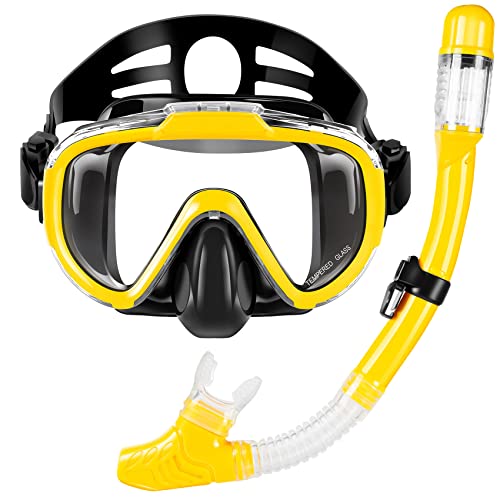
Modern gear like the Snorkel Set, Zipoute Snorkel Dry Top Snorkeling kit uses responsive dry-top float valves and panoramic tempered glass lenses to keep water out while you submerge. Knowing how external pressure affects your chest and ears helps you plan safer underwater excursions whether using standard gear or evaluating specialized swimming snorkels for conditioning. Exploring beneath the waves safely comes down to understanding hydrostatic pressure, managing dead air space inside the breathing tube, and executing proper equalization on every descent.
| Award | Product | WSG Score About WSG ScoreThe WSG Score is our own rating from 0 to 10, based on performance, design and build, ease of use, and value. It reflects independent research and is never influenced by manufacturers, retailers, or affiliate commissions. Learn more › | |
|---|---|---|---|
| Best Overall |
Zipoute Adult Dry Top Snorkel Set with Panoramic
|
8.8/10 | Buy |
Zipoute Adult Dry Top Snorkel Set with Panoramic
The Zipoute Adult Dry Top Snorkel Set pairs an anti-fog tempered glass panoramic mask with a dry-top breathing tube for clear underwater vision and splash protection. It is a lightweight, packable accessory ideal for recreational paddlers, lake explorers, and snorkelers who want dependable gear to stash in a kayak dry hatch.
Pros
- Panoramic tempered glass lens delivers expansive visibility with reliable impact and scratch resistance
- Dry-top snorkel valve effectively blocks splash and wave wash from flooding the breathing tube
- Lightweight design at roughly 1.33 pounds packs easily into kayak hatches or dry bags
- Simple strap adjustment system allows quick sizing changes for different adult paddlers
Cons
- Anti-fog coatings require periodic defogging treatments or baby shampoo prep for optimal long-term clarity
- Facial hair or unique face shapes may require careful strap adjustment to prevent minor perimeter water seepage
- Does not include a padded protective travel case for shielding the tempered glass lens in rough gear crates
Hydrodynamics, Physiology, and Practical Limits of Snorkeling Depths
Determining exactly how deep you can snorkel begins with understanding the strict physical boundary between surface breathing and submerged breath-hold diving. If you attempt to breathe atmospheric air through a tube, the absolute functional limit is right at the surface, typically no deeper than twelve to sixteen inches. Descending any further requires closing your airway, holding your breath, and transitioning into skin diving. While a snorkel provides a clear view into the aquatic world from the surface, going below shifts the challenge from passive ventilation to active pressure management.
The Surface Breathing Boundary: Why Snorkels Cannot Extend Deeper
Swimmers often wonder why breathing tubes cannot extend several feet down to the surface. Water is roughly eight hundred times denser than air, exerting significant hydrostatic pressure on your body upon submersion. At just three feet deep, water pressing against your chest generates roughly one point five pounds per square inch of inward pressure. Human respiratory muscles simply lack the mechanical strength to expand your rib cage against that external water load.
Attempting to inhale through a long tube at depth creates severe negative pressure inside your thoracic cavity. This pressure differential pulls blood into delicate pulmonary capillaries, risking capillary ruptures and acute negative pressure pulmonary edema. Furthermore, a longer tube increases dead air space, which traps exhaled air inside the conduit between breaths. When a tube exceeds standard dimensions, you repeatedly re-inhale carbon dioxide, leading to rapid hypercapnia, dizziness, and sudden unconsciousness.
International safety standards strictly regulate commercial snorkel dimensions to protect swimmers from these hazards. Guidelines cap the internal volume of a recreational tube around two hundred and thirty milliliters, while keeping overall length between thirty-five and forty-three centimeters. This compact geometry ensures that normal breathing continuously flushes stale carbon dioxide out through the top opening. Consequently, continuous breathing through a snorkel remains strictly confined to the immediate surface.
Breath-Hold Skin Diving: How Deep Swimmers Actually Submerge
Once you recognize that a snorkel cannot supply air underwater, the question becomes how deep you can travel on a single breath. Recreational skin divers typically explore depths between ten and twenty feet, which offers easy access to coral heads and rocky reefs. Experienced breath-hold divers who practice relaxation techniques often reach depths of thirty to fifty feet comfortably. At those intermediate depths, sunlight remains bright and water temperatures usually stay pleasant without thick exposure suits.
Descending beneath the waves requires efficient propulsion to conserve metabolic oxygen throughout the dive cycle. Swimmers use a smooth duck dive, bending at the waist and lifting their legs upward so gravity pushes them down cleanly. Once underwater, slow flutter kicks propel the diver toward their target while keeping heart rate low. Staying relaxed is essential because tense muscles consume vital oxygen reserves far more rapidly during depth excursions.
Managing the snorkel during a breath-hold descent involves specific safety decisions. Many recreational swimmers leave the mouthpiece in place, relying on a dry-top mechanism to seal the passage automatically as pressure rises. Advanced skin divers generally spit the mouthpiece out before descending so their jaw relaxes and accidental water inhalation is prevented. If you plan to visit shallow reef snorkeling locations, practicing proper breath-hold descents in calm water builds comfort before tackling deeper drop-offs.
Barotrauma and Equalization: Protecting Ears, Sinuses, and Mask
Water pressure increases rapidly as you descend, climbing by one atmosphere of pressure for every thirty-three feet of saltwater depth. According to Boyle’s law, any gas-filled space within or against your body compresses proportionally as ambient pressure climbs. At a depth of thirty-three feet, the volume of air inside your lungs, middle ears, and mask shrinks to half its surface volume. Failing to equalize these air pockets causes painful barotrauma that can damage delicate tissues.
Your middle ear spaces represent the most vulnerable air cavities encountered during a vertical descent. To balance inward pressure on your eardrum, you must open the Eustachian tubes connecting your throat to your ears. The common Valsalva maneuver involves gently pinching your nose through the flexible mask pocket and blowing softly against closed nostrils. Experienced divers often use the Frenzel maneuver, which uses the back of the tongue to push air into the nasal cavity with less physical strain.
Equalization must happen early and frequently, ideally every few feet before you ever feel sharp pressure in your ears. Waiting until discomfort arises forces the eardrums inward, locking the Eustachian tubes shut and making equalization nearly impossible. Furthermore, descending divers must never forget mask equalization, which prevents facial bruising and eye capillary damage from external suction. Exhaling a small puff of air through your nose into the mask equalizes internal volume instantly and keeps the rigid frame comfortable.
Never dive down with nasal congestion, allergies, or an active cold. Swollen tissues can trap air inside your sinus cavities, triggering severe frontal headaches or reverse squeeze upon ascent. Reverse squeeze occurs when expanding air cannot escape through congested passages, potentially injuring an eardrum as you swim toward the surface. If your ears refuse to equalize smoothly within the first six feet of descent, abort the dive immediately and return to surface snorkeling.
Snorkel Design Features and Submersion Mechanics
The specific design of your breathing gear significantly affects how effortlessly you transition between surface swimming and underwater exploring. Traditional J-style open tubes allow direct airflow but flood completely the moment you dip your head beneath the surface. Semi-dry snorkels incorporate angled deflection baffles and splash guards at the top opening to shed wind-driven chop and surface spray. However, semi-dry designs still admit water when you fully submerge during a breath-hold dive.
Modern dry-top models, such as the Snorkel Set, Zipoute Snorkel Dry Top Snorkeling system, feature an integrated buoyant float mechanism housed within the upper valve. As you submerge beneath the surface, water lifts the buoyant float upward to seal the opening firmly against a soft silicone gasket. This automatic seal prevents water from flooding down the tube while you swim around submerged rocks or inspect marine life below. When your head breaks the surface, gravity drops the float back down, reopening the airway for clear inhalation.
Purge valves located at the base of the snorkel barrel offer another vital layer of comfort for active swimmers. A one-way silicone diaphragm sits inside a small reservoir well below the level of the mouthpiece. Any stray droplets that enter the tube collect in this lower well rather than entering your mouth. Exhaling sharply forces that trapped water out through the bottom valve into the surrounding sea, leaving the main barrel clear for normal breathing.
Mask construction also plays a central role when exploring deeper waters where water pressure tests frame integrity. High-grade masks feature tempered glass lenses that resist scratching, withstand water pressure, and resist shattering under impact. Soft liquid silicone facial skirts form an airtight seal against varied facial contours while preventing skin chafing. Selecting reliable gear, whether choosing adult systems or outfitting younger family members with dedicated youth snorkeling gear, ensures a safe and leak-free aquatic adventure.
Critical Safety Protocols: Shallow Water Blackout and Buddy Operations
Exploring depth on a single breath introduces physiological hazards that require strict safety discipline and constant situational awareness. The most dangerous hazard confronting skin divers is shallow water blackout, which occurs without warning during the final stages of an ascent. Swimmers often mistakenly hyperventilate before diving, taking rapid, deep breaths to extend their underwater endurance. Hyperventilation flushes carbon dioxide from the bloodstream without significantly increasing oxygen saturation, disabling the body’s natural trigger that warns you to breathe.
As you descend, ambient water pressure keeps the partial pressure of oxygen in your lungs artificially elevated, allowing consciousness to continue even as cellular reserves deplete. During the final ten to fifteen feet of your return ascent, the rapid drop in ambient pressure causes oxygen partial pressure to plummet. If oxygen levels fall below the threshold required to support brain function, the diver loses consciousness instantly before breaking the surface. Without immediate rescue, a blacked-out diver will inhale water and drown silently.
Preventing shallow water blackout requires adopting a strict one-up, one-down buddy protocol on every outing. One partner remains vigilant on the surface, keeping direct line of sight on the submerged diver throughout the descent and ascent. When the diver surfaces, the surface buddy continues watching for at least thirty seconds, verifying normal breathing and alertness. Partners then switch roles, ensuring that no swimmer descends into deep water without an alert rescuer poised overhead.
Proper buoyancy control provides an indispensable safety net for both surface snorkeling and shallow skin diving excursions. Inflatable snorkel vests allow you to rest comfortably on the surface without expending muscular effort to stay afloat. If you wear an exposure suit or weight belt, weight yourself so you remain positively buoyant at the surface even after full exhalation. Being positively buoyant ensures that if you ever experience fatigue or distress, your body naturally rises to the surface where clean air is accessible.
Environmental Variables and Safe Depth Planning
Local water conditions strongly dictate how deep you can safely venture during any snorkeling session. Clear tropical waters with thirty to fifty feet of visibility allow divers to judge bottom contours accurately and maintain visual contact with surface companions. In contrast, murky water, suspended silt, or plankton blooms reduce visibility, turning even a ten-foot descent into a hazard. When visibility drops below fifteen feet, staying close to the surface prevents collisions with submerged structures or buddy separation.
Water currents, surge, and tidal flows also alter depth safety profiles dramatically around exposed reefs and offshore pinnacles. A gentle surface current can accelerate into a powerful undertow or rip current as water funnels through narrow reef cuts or around rocky points. Fighting currents consumes massive amounts of oxygen, drastically shortening your safe breath-hold time and increasing exhaustion risks. Always assess local tide tables, wind directions, and current strength before attempting to dive beneath the surface in unfamiliar waters.
Thermoclines represent another unexpected environmental factor that can affect your physical reaction when descending through the water column. In many coastal areas and freshwater lakes, a warm surface layer sits directly atop a frigid deep layer separated by an abrupt thermal boundary. Plunging through a sharp thermocline can trigger an involuntary gasp reflex, which poses an immediate drowning hazard if the diver is underwater. Dressing in appropriate thermal protection, such as a flexible neoprene spring suit, cushions your body against thermal shock and preserves muscular coordination.
Surface boat traffic poses an omnipresent threat to submerged divers who may be invisible to vessel operators above. Because a skin diver sits low in the water or remains submerged beneath waves, approaching speedboats, jet skis, and personal watercraft may not spot you. Towing a bright diver-down flag on a float line alerts nearby boaters to maintain a legal distance of at least one hundred feet. Staying mindful of engine noises and surfacing close to your flag provides essential protection against motorized watercraft collisions.
Practical Steps for Exploring Depth Confidently
Developing confidence beneath the surface is a progressive process that rewards patience, proper technique, and respect for water physics. Begin your sessions by floating relaxed on the surface, practicing smooth breathing through your tube while scanning the bottom features below. When you spot an interesting feature, take two or three calm breaths, perform a smooth duck dive, and equalize your ears before you reach five feet. Never push past ear pain or lingering discomfort, and always keep your underwater excursions well within your natural physical comfort zone.
Investing in reliable, comfortable gear with clear optics and dependable dry-top valves removes unnecessary distractions while you enjoy the underwater world. By respecting the strict mechanical limits of surface breathing tubes and practicing diligent breath-hold protocols, you unlock thrilling underwater sights without compromising personal safety. Pair up with a trusted partner, monitor weather and water conditions carefully, and enjoy the beauty of the sea with complete peace of mind.
About the author
Sara James is an experienced paddler and outdoor gear reviewer with more than two decades of involvement in paddle sports. Her background spans touring kayaking, Class V whitewater, stand-up paddleboarding, and international kayaking events. She brings a practical, experience-driven perspective to evaluating kayaks, paddles, life jackets, dry bags, and other essential water gear.