
Can You Put Pedals on a Kayak: Practical Answers for 2026
Determining whether can you put pedals on a kayak requires checking hull designs, drive trunks, and steering hardware for October 2026.
 By Edward Ting
Updated October 5, 2026
By Edward Ting
Updated October 5, 2026

Many paddlers asking whether can you put pedals on a kayak hope to convert an ordinary recreational boat into an efficient, hands-free craft for fishing or photography. While the idea of swapping arm fatigue for leg power sounds appealing, the physical reality depends entirely on whether you mean steering pedals or a true pedal-propulsion drive. Adding foot braces or steering foot pegs to control a stern rudder is relatively straightforward on many hulls, but retrofitting a mechanical pedal-drive mechanism into a standard kayak is rarely feasible. Standard hulls, especially traditional single sit-in kayak designs, lack the internal molded pass-through ports and structural deck bracing required to support the continuous torque of pedaling.
Attempting to cut custom drive wells into an existing rotomolded plastic deck usually destroys hull integrity, compromises reserve buoyancy, and creates severe leaking risks. For paddlers seeking hands-free maneuverability on the water, exploring purpose-built pedal crafts or specialized pedal kayak with motor setups offers a far safer and more stable alternative. Dedicated pedal-drive boats feature factory-sealed drive trunks, wide beams, and integrated rudder steering systems engineered specifically for leg propulsion. Understanding the mechanical differences between steering foot pegs and full propulsion drives will help you choose the right gear without risking your boat or your safety.
| Award | Product | WSG Score About WSG ScoreThe WSG Score is our own rating from 0 to 10, based on performance, design and build, ease of use, and value. It reflects independent research and is never influenced by manufacturers, retailers, or affiliate commissions. Learn more › | |
|---|---|---|---|
| Best Overall |
Pelican Catch Kicker 110 HDII Pedal Kayak
|
9.2/10 | Buy |
| Best Premium |
 Old Town Malibu Pedal 12-Foot Kayak
|
9.2/10 | Buy |
| Best Value |
 BKC Brooklyn 12.0 Pedal Fishing Kayak
|
8.9/10 | Buy |
| Best Budget |
 Danrelax 12ft Inflatable Fishing Kayak
|
8.8/10 | Buy |
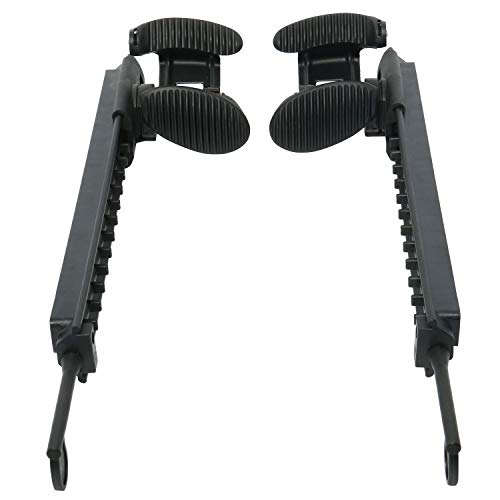 NovelBee Kayak Rudder Steering Foot Pegs
|
8.4/10 | Buy | |
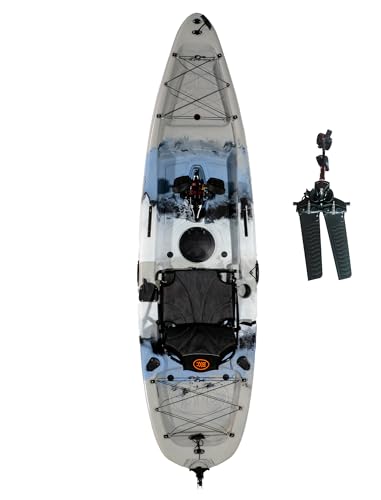 BKC Brooklyn 10.0 Pedal Fishing Kayak
|
8.0/10 | Buy | |
 Reel Yaks Raptor 9.5ft Modular Pedal Fishing Kayak
|
7.8/10 | Buy |
Pelican Catch Kicker 110 HDII Pedal Kayak
Designed for hands-free angling, this 11-foot kayak pairs an adjustable fin pedal system with an elevated seat for extended casting sessions. Built-in handle tracks and dual-side rudder steering provide functional rigging options and responsive maneuvering in shallow waters.
Pros
- Fin pedal drive maneuvers smoothly in shallow or weedy water
- Elevated, adjustable seating improves sightlines while fishing
- Dual-sided rudder controls allow convenient steering from either hand
- Integrated track grooves on handles hold extra fishing accessories
Cons
- At 59 pounds, solo vehicle roof loading requires substantial effort
- 125.5-inch hull length requires ample transport and storage space
Old Town Malibu Pedal 12-Foot Kayak
Equipped with a forward and reverse pedal drive, this 12-foot sit-on-top kayak keeps hands free for casting or navigating. An adaptable Element Beach seat doubles as a standalone beach chair, while built-in tracks and rod holders support day trips on the water.
Pros
- Hands-free pedal drive with forward and reverse
- Removable seat doubles as a beach chair
- Three flush-mount rod holders included
- Dual 18-inch tracks allow custom rigging
- Generous rear tankwell storage space
Cons
- 12-foot length requires ample vehicle and storage space
- Open deck layout leaves cargo exposed to spray
BKC Brooklyn 12.0 Pedal Fishing Kayak
The BKC Brooklyn 12.0 is a 12-foot sit-on-top fishing kayak featuring a hands-free propeller pedal drive, responsive hand-controlled rudder, and a 33.5-inch wide UV-protected HDPE hull. Weighing 75 pounds and equipped with an ergonomic aluminum frame seat, it is well suited for lake and coastal bay anglers seeking hands-free trolling and reliable primary stability.
Pros
- Hands-free propeller pedal drive facilitates effortless trolling and position-holding while casting
- Wide 33.5-inch beam and 12-foot waterline provide strong primary stability on lakes, slow rivers, and sheltered bays
- Ergonomic aluminum frame seat keeps paddlers elevated off the deck with breathable lumbar support
- Hand-operated rudder system delivers smooth steering response without requiring foot-peg adjustments
- Comprehensive storage layout includes dual dry bag-equipped hatches, rear bungee well, and scupper plugs
Cons
- Listed 75-pound bare hull weight can make solo rooftop car-topping demanding without a load-assist rack or cart
- Fixed propeller pedal mechanism requires manual lifting or removal when navigating shallow water or thick vegetation
- Propeller system does not feature an instant-kick-up obstacle avoidance mechanism found on premium fin drives
Danrelax 12ft Inflatable Fishing Kayak
The Danrelax 12ft Inflatable Pedal Kayak combines heavy-duty 2600g/m² PVC and a wide 38.5-inch beam with a hands-free aluminum pedal drive and integrated rudder for flatwater angling. It delivers dependable primary stability and an all-inclusive outfitting kit for paddlers who need a portable fishing craft without hauling a rigid hard-shell trailer.
Pros
- Hands-free pedal mechanism and cable-operated rudder allow anglers to cast and maneuver without holding a paddle
- Extra-wide 38.58-inch beam provides reassuring primary stability on calm lakes, reservoirs, and slow-moving rivers
- Heavy-duty 2600g/m² PVC build with drop-stitch EVA deck padding resists typical launch wear and enhances foot comfort
- Complete all-in-one outfitting package with framed seat, dual-action pump, paddle, and carry bag ready for immediate assembly
Cons
- Heavy total package weight listed at 160 pounds makes moving the boxed kit demanding for solo paddlers without a wheeled cart
- Wide inflatable beam and side air chambers create higher windage and water drag compared to narrow hard-shell touring kayaks
- Requires thorough freshwater rinsing, full drying, and deflation time after every trip to maintain PVC seams and prevent mildew
NovelBee Kayak Rudder Steering Foot Pegs
Designed for directional rudder control on kayaks, canoes, and angling boats, this NovelBee foot peg pair provides an expansive 16.7-inch adjustment range. The rotating pedal mechanism and rigid base tracks deliver dependable foot bracing and steering input.
Pros
- Wide 16.7-inch pedal adjustment track
- Includes both left and right assemblies
- Responsive rotating pedals for steering control
- Versatile fit for kayaks and canoes
Cons
- At 22 inches, tracks require significant cockpit space
- Weighs nearly 2.5 pounds for the pair
- Requires a separate rudder system to operate
BKC Brooklyn 10.0 Pedal Fishing Kayak
The BKC Brooklyn 10.0 is a 10-foot sit-on-top fishing kayak featuring a hands-free flipper pedal drive, hand-operated rudder, and a stable 33.25-inch beam. With a 350-pound maximum weight capacity and built-in rod holders, it offers a maneuverable platform for calm lakes, slow rivers, and inshore waters.
Pros
- Smooth flipper pedal drive frees hands for casting, trolling, and handling tackle
- Wide 33.25-inch beam offers reassuring flatwater balance and easy boarding for recreational anglers
- Elevated aluminum-frame seat provides better lumbar support and a drier ride than flat molded foam seats
- Pre-rigged with essential fishing features including rod holders, accessory tracks, and a stern rudder
Cons
- Listing features contain conflicting notes on whether a paddle is included or must be purchased separately
- At 75 pounds total rigged weight (58 pounds bare hull), solo car-topping onto tall vehicle roofs may require a load-assist bar or cart
- Short 10-foot waterline is engineered for agility in tight spaces rather than high-speed open-water tracking
Reel Yaks Raptor 9.5ft Modular Pedal Fishing Kayak
The Reel Yaks Raptor is a 9.5-foot modular sit-on-top fishing kayak featuring a hands-free fin-drive pedal system and an initial-stability-focused W-hull design. Weighing 62 pounds with a 380-pound capacity, it separates into two pieces, making it an excellent choice for apartment dwellers and solo anglers wanting to transport a pedal craft inside a vehicle trunk.
Pros
- Two-piece modular construction eliminates the physical strain and gear requirements of roof-rack car-topping or trailering
- Fin-drive pedal system allows hands-free boat positioning while actively casting or trolling
- W-hull profile offers reassuring primary stability on calm lakes, ponds, and slow-moving rivers
- Comes equipped out of the box with accessory track rails, storage hatches, and flush-mount rod holders
- Total 62-pound weight is split across two sections, making solo loading and portage significantly easier
Cons
- Short 9.5-foot waterline prioritizes close-quarters turning agility over long-distance straight-line tracking
- Fin-drive mechanism requires adequate water depth and must be flattened or removed when landing in shallows
- Modular connection hardware requires routine rinsing and inspection to keep latching points free of sand and road grit
Engineering Realities and Conversion Limits of Pedal Kayaks
You cannot safely install a true pedal-propulsion drive into an ordinary kayak that was not originally engineered for one. While aftermarket steering foot pedals can be mounted along cockpit tracks to control a stern rudder, pedal propulsion requires an open through-hull drive well molded directly into the boat shell at the factory. Cutting into a solid rotomolded or thermoformed hull breaks its watertight structural integrity and ruins its built-in buoyancy chambers. Paddlers who want leg-powered propulsion are much better served by choosing a craft built specifically for hands-free pedaling.
Rudder Steering Foot Pegs Versus Pedal Propulsion Drives
Much of the confusion surrounding pedal conversion comes from conflating rudder steering foot pegs with mechanical propulsion systems. Foot peg kits, such as the NovelBee Pair Kayak Rudder Kit, feature sliding pedals mounted on composite base tracks with roughly sixteen inches of adjustment range. These pedals connect to synthetic cables or stainless steel steering wires that pivot a stern rudder left and right when pressed with your feet. They provide excellent directional control while you paddle, but they do not provide any forward propulsion on their own.
Propulsion drives operate on an entirely different mechanical level by turning leg effort into forward and reverse movement. Systems like the HyDryve II fin drive on the Pelican Catch Kicker 110 HDII or the rotary propeller on the BKC Brooklyn 12.0 rely on heavy-duty crank arms, gearboxes, and submerged flippers or blades. These cassettes must drop directly through a vertical trunk opening in the cockpit floor to reach water beneath the keel. Installing these large assemblies requires factory-molded locking brackets and structural support that standard paddle craft simply lack.
Why Cutting a DIY Drive Well Into a Plastic Hull Fails
Recreational and fishing kayaks made from rotomolded high-density polyethylene rely on a sealed, hollow outer shell to create rigidity and float safely. The continuous plastic skin forms an enclosed air chamber that provides structural strength across the keel line and gunwales. Using an angle grinder, router, or jigsaw to cut a large through-hull opening in the cockpit floor destroys this structural envelope immediately. Without complex plastic welding and specialized internal bulkheads, the edges of the cut will separate, flex, and admit water into the hull.
Leg muscles produce substantial torque compared to the upper body, generating continuous downward, forward, and rotational force against the boat deck with every pedal stroke. An aftermarket drive dropped into a homemade cutout will twist and pry against the surrounding plastic skin whenever you pedal hard against wind or current. Over a short period of use, this localized stress causes stress cracks, tears the hull material, and leads to swamping far from shore. Even high-grade marine sealants and mechanical fasteners cannot withstand the dynamic vibrational loads transferred through a pedaling cassette.
How Factory Pedal Drive Trunks Protect Hull Rigidity
Factory-engineered pedal kayaks incorporate dedicated drive wells that are molded as a seamless, unified part of the hull during manufacturing. In models like the Old Town Ocean Kayak Malibu Pedal and BKC single pedal kayaks, the walls of the drive trunk connect the cockpit floor directly to the bottom hull skin. This vertical column acts as an internal structural pillar that resists flexing while channeling water cleanly through the bottom of the boat without breaching the dry hull interior. The entire assembly functions essentially like an oversized, reinforced scupper tube.
These factory drive trunks are equipped with molded cross-pins, heavy latching cams, and reinforced metal brackets designed to lock the drive cassette securely in place. When the drive is locked down, pedaling forces are distributed evenly across the entire beam and keel line rather than concentrating on an isolated patch of plastic. If you encounter shallow rocks, sandbars, or weed mats, you can release the latch mechanism in seconds and pull the entire drive unit up into the cockpit. The boat remains completely watertight and seaworthy even when the drive unit is removed.
Hull Beam Width and Primary Stability Demands
Traditional paddle kayaks are designed with narrow beam widths, usually between twenty-six and twenty-nine inches, so paddlers can easily reach the water without banging their knuckles against the sides. In contrast, pedal-driven kayaks require significantly wider beams, often measuring thirty-two to thirty-six inches across. The wide thirty-four-inch beam profile on platforms like the BKC Brooklyn 12.0 provides the massive primary stability necessary to keep the boat flat while pedaling. Without that extra width, the alternating downward thrust of your left and right legs would cause the boat to roll uncomfortably with every stroke.
Wider hulls also allow anglers to stand up, sight cast, and stretch their legs without worrying about sudden balance loss. Most pedal hulls utilize a catamaran-inspired tunnel hull or a wide tri-hull profile that maximizes surface contact with flat water while shedding cross-chop. If you attempted to force a pedal drive into a narrow, rounded day-touring kayak, the boat would feel excessively tippy and twitchy whenever your leg cadence accelerated. Stability geometry must be matched carefully to the propulsion method to ensure a secure paddling experience.
Elevated Seating Ergonomics and Leg Propulsion Mechanics
Paddlers in standard sit-inside kayaks and basic sit-on-tops sit directly on the floor with their legs stretched out almost horizontally in front of them. This low seating posture is ideal for lowering your center of gravity during double-bladed paddle strokes, but it creates terrible biomechanical leverage for pedaling. Pushing pedals from a flat-floor position places extreme strain on your lower back, hip flexors, and hamstrings, leading to rapid muscle cramping and numbness. Efficient pedaling requires your hips to be elevated several inches above your heels.
Factory pedal kayaks solve this ergonomic problem by featuring raised aluminum-frame stadium seats with breathable mesh and adjustable backrests. Seats like the Ergoboost system on the Pelican Catch Kicker or the Element Beach seat on the Old Town Malibu Pedal position your knees at a comfortable bend. This elevated angle allows your quadriceps and glutes to drive the crank arms or fin levers with minimal spinal pressure. The raised seat also keeps you elevated above any cockpit spray or deck water that splashes through open scuppers on windy days.
Fin-Drive Systems Versus Rotary Propellers
If you decide to step into a dedicated pedal kayak, you will encounter two primary drive technologies: oscillating fins and rotary propellers. Fin-drive systems, such as the HyDryve II mechanism on the Pelican Catch Kicker 110 HDII or the fin drive on the BKC Brooklyn 10.0, utilize two flexible synthetic fins that flap back and forth beneath the hull. They mimic the natural swimming motion of a penguin or sea turtle, delivering smooth acceleration and silent movement through shallow coastal waters. Pushing one pedal completely forward parks both fins flush against the bottom hull, allowing you to glide safely over shallow sandbars.
Rotary propeller systems, found on the BKC Brooklyn 12.0 and the Old Town Malibu Pedal, operate like a stationary bicycle connected to a lower propeller shaft. Their primary advantage is immediate forward and reverse functionality, which allows you to back away from shoreline snags, docks, or fighting fish simply by pedaling backward. Propellers provide excellent cruising speed and responsive positioning on open lakes, but they require deeper water clearance than oscillating fins. In shallow creeks choked with hydrilla or thick eelgrass, propeller blades can gather vegetation and require periodic clearing.
Portable Modular and Drop-Stitch Inflatable Alternatives
Many paddlers consider cutting their existing boats because they lack the garage storage space or vehicle carrying capacity needed for a massive, rigid plastic pedal kayak. Fortunately, modern portable designs provide factory-engineered pedal drive capability without demanding full-size trailer or garage storage. Advanced heavy-duty inflatable kayaks, such as high-pressure drop-stitch PVC models with integrated pedal assemblies, deliver remarkable rigidity on the water while packing into a storage bag. Models like the Danrelax 12-foot inflatable use heavy 2600-gram PVC fabric and rigid aluminum frames to hold a pedal drive firmly without flexing.
Modular hard-shell kayaks offer another practical solution for paddlers facing strict storage and transport limits. The Reel Yaks Raptor modular fishing kayak features an innovative two-piece rotomolded hull that separates quickly to fit inside vehicle trunks, SUV cargo areas, or apartment closets. When locked together at the water’s edge, its wide W-hull profile supports a factory-engineered fin-drive cassette and boasts a safe carrying capacity of 380 pounds. Choosing a modular or drop-stitch platform gives you authentic pedal-drive performance without requiring dangerous DIY hull cutouts or expensive utility trailers.
Steering Mechanics and Integrated Rudder Authority
A pedal-propulsion kayak is practically unmanageable on the water without a reliable, integrated stern rudder system. When using a traditional paddle, you constantly make minor sweep strokes, draws, and ruddering adjustments with your arms to keep the boat pointing in your intended direction. A pedal drive, whether fin-based or propeller-driven, delivers pure forward thrust along the centerline with zero lateral steering authority. Without a rudder continuously trimming your course, crosswinds and surface currents will push the bow off target, forcing the boat into an endless, frustrating yaw.
Quality pedal-drive craft place a smooth hand-steering control knob or lever right alongside the seat rail where your fingers naturally rest. In hulls like the BKC Brooklyn series or the Pelican Catch Kicker, moving this lever pulls stainless steel or coated synthetic cables that rotate the stern rudder blade instantly. This arrangement allows you to hold a fishing rod with both hands or take photographs while making micro-adjustments to your heading using just one finger. When docking or pulling up onto shallow gravel ramps, a quick-release haul line pulls the rudder blade up out of harm’s way.
Calculating Usable Payload and Maintaining Safe Freeboard
Adding a pedal mechanism, an elevated aluminum seat, and heavy-duty steering gear adds substantial deadweight to your overall setup. While an entry-level paddle kayak may weigh under fifty pounds, fully rigged pedal craft often weigh between sixty and eighty-five pounds before you load tackle or coolers. You must account for this extra structural hardware when calculating your usable payload against the manufacturer’s maximum weight rating. Exceeding the safe operating threshold pushes the hull dangerously low in the water, reducing freeboard and flooding self-bailing scuppers.
A smart operating rule is to maintain a buffer by loading the kayak to no more than seventy to seventy-five percent of its certified weight capacity. For example, a kayak rated for 350 pounds performs best when the combined weight of the paddler, pedal drive, tackle, battery, and safety gear stays under 260 pounds. Keeping that reserve buoyancy prevents sluggish tracking, protects responsiveness in boat wakes, and ensures the hull can shed deck water efficiently. Always carry a USCG-approved Type III life jacket and an audible whistle on board to stay safe and compliant with federal navigation regulations.
Car-Top Transport Logistics and Hull Maintenance
Moving a wide, heavier pedal craft from your home to the water requires reliable transportation gear and smart physical mechanics. Securing a rotomolded boat to quality heavy-duty kayak roof racks with padded saddles or heavy-duty load-assist bars prevents vehicle damage and makes solo loading manageable. Always remove the pedal drive cassette, aluminum seat, and gear boxes before lifting the boat onto your roof rack to shed twenty or more pounds of awkward deadweight. Lightening the bare hull protects your shoulders and lower back during overhead lifting.
When strapping the boat down for highway travel, use wide polyester cam buckle straps rather than mechanical ratchet straps that can crush plastic gunwales. Ratchet straps generate extreme tension that can permanently indent the bottom of a rotomolded hull, creating an aerodynamic and hydrodynamic flaw known as oil-canning. After every outing, rinse the pedal drive mechanism thoroughly with fresh water to remove sand, silt, and dried salt crystals from the sprockets, bearings, and cables. Storing the hull supported on wide padded bars or suspended on edge in a shaded garage preserves the plastic for years of smooth, trouble-free pedaling.
While you cannot safely turn a regular paddle kayak into a pedal boat with DIY cutouts, identifying your specific on-water goals will point you toward the right path. If you simply want easier tracking and hands-free directional steering, installing an aftermarket rudder kit with adjustable foot pegs on your current boat provides an affordable upgrade. If you want true hands-free leg propulsion for fishing, photography, or long-distance touring, investing in a purpose-built pedal kayak, modular boat, or drop-stitch inflatable is the only safe, structurally sound, and rewarding choice.
About the author
Reuben Parsons is an experienced water-sports writer and gear reviewer specializing in surfing and stand-up paddleboarding. With a background in marine biology and more than a decade of outdoor writing, He has tested hundreds of products and spent thousands of hours evaluating outdoor gear. He approach combines technical research with genuine experience on the water.