
Can You Put a Motor on an Inflatable Kayak: Practical Guide for 2026
Can you put a motor on an inflatable kayak? Learn about mounting brackets, thrust limits, legal registration, and safety gear for October 2026.
 By Marius Fox
Updated October 5, 2026
By Marius Fox
Updated October 5, 2026

Paddling across open reservoirs or fighting strong tidal currents can quickly turn a relaxing day into an exhausting physical battle. Many paddlers searching for extended range wonder if can you put a motor on an inflatable kayak without compromising structural integrity or on-water stability. Modern drop-stitch PVC designs and modular mounting hardware allow recreational boaters to attach compact electric trolling motors with remarkable success. Pairing auxiliary propulsion with heavy-duty inflatable kayaks provides hands-free cruising, steady trolling speeds, and dependable power when head-winds threaten your return to shore.
Adding an electric motor requires close attention to hull rigidity, transom brackets, and balance. Exceeding manufacturer payload limits or placing heavy marine batteries in the stern can alter boat trim and create swamping hazards in choppy water. Furthermore, mounting any mechanical propulsion system onto a paddlecraft triggers specific state registration requirements and United States Coast Guard safety mandates. Understanding how to manage motor thrust, battery weight, and hull geometry ensures a stable, legal, and enjoyable experience across flatwater lakes and slow-moving rivers.
| Award | Product | WSG Score About WSG ScoreThe WSG Score is our own rating from 0 to 10, based on performance, design and build, ease of use, and value. It reflects independent research and is never influenced by manufacturers, retailers, or affiliate commissions. Learn more › | |
|---|---|---|---|
| Best Overall |
Brocraft Inflatable Kayak & SUP Motor Mount
|
9.2/10 | Buy |
| Best Premium |
 Beyond Marina Aqualura 12.5ft Inflatable Fishing
|
8.6/10 | Buy |
| Best Value |
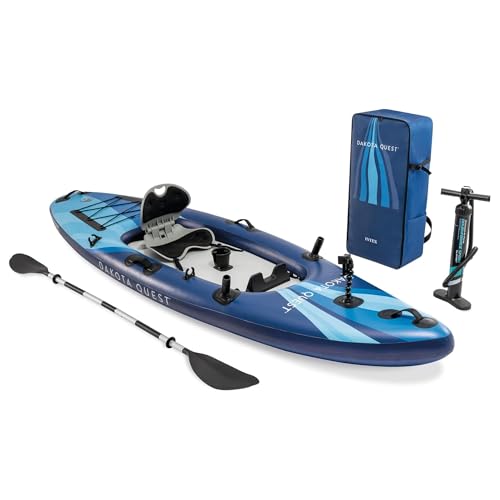 Intex Dakota Quest 10.5ft Inflatable Kayak
|
8.4/10 | Buy |
 BKC Kayak Trolling Motor for PK Series Sit-on-Top
|
8.0/10 | Buy | |
| Best Budget |
 Sunluway Universal Kayak Trolling Motor Mount
|
7.8/10 | Buy |
Brocraft Inflatable Kayak & SUP Motor Mount
Designed for PVC watercraft, this Brocraft mounting kit equips inflatable kayaks and paddleboards with an adjustable, marine-grade aluminum frame for electric motors. The adaptable track bar accommodates different hull widths, though paddlers will need to provide their own adhesive and motor.
Pros
- Strong marine grade aluminum construction
- Adjusts easily for different hull widths
- Protective nylon guards clamp surfaces
- Backed by a one-year warranty
Cons
- Mounting glue is not included
- Electric motor must be purchased separately
Beyond Marina Aqualura 12.5ft Inflatable Fishing
The Beyond Marina Aqualura 12.5-foot inflatable fishing kayak pairs a rigid drop-stitch PVC floor with a 530-pound maximum capacity and an integrated motor bracket. It offers solid flatwater stability and compact transport for lake and slow-river anglers.
Pros
- High 530-pound manufacturer weight capacity accommodates heavy gear loads, tackle crates, and cooler setups
- Drop-stitch PVC floor provides rigid underfoot support and dependable initial flatwater stability
- Factory-integrated motor bracket allows straightforward trolling motor or small outboard mounting
- Heavy-duty wheeled backpack facilitates smooth transport from vehicle trunks to paved launch ramps
Cons
- Total weight of 60 pounds makes carrying the packed travel bag over rugged, unpaved terrain physically demanding
- Base package does not include a paddle, requiring buyers to source a properly sized paddle separately
- Wide inflatable side tubes create noticeable wind resistance in open-water crosswinds and breezy conditions
Intex Dakota Quest 10.5ft Inflatable Kayak
Designed for recreational paddlers and casual anglers, this sit-on-top inflatable kayak features a wide, buoyant deck with integrated rod and camera mounts. Its elevated seat and all-inclusive accessory kit make it a convenient option for calm lake excursions.
Pros
- All-in-one package includes pump, paddle, and carry bag
- Elevated seat keeps paddlers comfortable above the waterline
- Wide profile offers dependable primary stability for beginners
- Integrated mounts easily accommodate fishing and camera gear
Cons
- Manual hand pump requires physical effort before launching
- 352-pound limit restricts heavier paddlers carrying extra gear
- Large tracking skeg can catch in shallow water
BKC Kayak Trolling Motor for PK Series Sit-on-Top
Designed specifically for BKC PK Series sit-on-top fishing kayaks, this 14.3-pound trolling motor delivers 36 pounds of quiet thrust with five forward and three reverse speeds. It is an ideal bolt-on propulsion upgrade for kayak anglers seeking hands-free cruising and effortless positioning on calm lakes and slow rivers.
Pros
- Lightweight 14.3-pound design minimizes impact on your kayak's usable gear payload
- Generous 36-pound thrust output matched to propel BKC PK Series fishing hulls with ease
- Eight versatile speed settings provide flexible control for low-speed trolling and open-water cruising
- Rapid installation and detachment process streamlines vehicle loading and off-season storage
- Whisper-quiet operation maintains stealth around active fishing structures
Cons
- Proprietary mounting design is tailored specifically for BKC PK Series hulls rather than serving as a universal mount
- Requires an external marine battery and wiring setup that must be factored into deck space and total payload
- Fixed 36-pound thrust rating is optimized for calm waters rather than high-velocity tidal currents or open-ocean swells
Sunluway Universal Kayak Trolling Motor Mount
The Sunluway Kayak Motor Mount Bracket provides a rugged, marine-grade aluminum platform engineered to support clamp-on electric trolling motors up to 60 lbs of thrust. Ideal for kayak anglers and distance paddlers, it offers an adjustable rail mounting system that delivers motor-assist cruising without cumbersome hull modifications.
Pros
- Supports robust electric trolling motors rated up to 60 lbs of thrust for extended flatwater range
- Built from marine-grade aluminum and high-impact steel for dependable corrosion resistance in freshwater and saltwater
- Adjustable mounting bases accommodate varied kayak beam widths and deck contours
- Quick-release mechanism simplifies breakdown before loading the kayak onto vehicle roof racks
- Provides accessory attachment points behind the seat for rod holders and electronics
Cons
- Requires careful onboard weight counter-balancing when pairing heavy deep-cycle or lithium batteries with the motor
- May require drilling into bare gunwales if your kayak lacks pre-installed track or flat accessory platforms
- Motor, battery, steering linkage, and wiring harness must be purchased and rigged separately
Technical and Practical Realities of Motorizing an Inflatable Kayak
You can install an electric motor on an inflatable kayak if the craft has adequate structural rigidity, a secure mounting bracket, and enough buoyancy to handle the additional gear. While traditional hard-shell kayaks feature solid transoms or molded gunwales, inflatable hulls rely on pressurized air chambers to maintain their shape. Equipping an inflatable boat with mechanical propulsion requires balancing motor thrust against fabric flexibility to prevent the stern from buckling under acceleration. With the right hardware, proper battery positioning, and sensible power ratings, an inflatable vessel becomes an efficient motorized platform for fishing and cruising.
Hull Construction and Pressure Requirements for Motor Mounting
Hull construction plays a decisive role in determining whether an inflatable kayak can support the dynamic torque of an electric trolling motor. Inflatables built with standard low-pressure vinyl or thin gauge PVC often flex excessively when thrust is applied to the stern. This structural deformation forces the propeller downward, causing the bow to pitch upward and dragging the stern deeper into the waterline. Without adequate hull stiffness, steering becomes unpredictable and the craft loses forward momentum.
Rigid inflatable craft utilize high-density drop-stitch PVC construction, which allows air chambers to hold significantly higher internal pressure than traditional round-tube inflatables. Thousands of fine polyester threads connect the top and bottom fabric layers inside drop-stitch chambers, creating flat, rigid decks that mimic the structural feel of solid polyethylene. Models like the Beyond Marina 12.5ft fishing kayak leverage reinforced drop-stitch materials to maintain clean longitudinal lines even under the strain of an outboard bracket. This rigid floor prevents the hull from bending or folding when an electric motor pushes forward against water resistance.
Material thickness and seam construction also dictate long-term durability against motor vibrations and bracket clamp pressure. Multi-layer PVC fabric, often reinforced with internal polyester scrim, resists abrasion from metal brackets and clamp thumb screws. Welded or reinforced glued seams withstand the localized stress that motor thrust transfers through the pontoons. Before mounting any mechanical drive, verifying that your inflatable kayak features heavy-duty PVC or drop-stitch architecture ensures the boat remains safe and structurally intact.
Motor Mount Types: Transom Brackets vs Glue-On Mounting Pads
Securing a motor to an inflatable hull requires a dedicated mounting interface, because inflatable gunwales cannot accept direct clamp-on hardware. Purpose-built inflatable fishing kayaks frequently come equipped with integrated stern transom plates designed to hold small trolling motors or mini outboards. These integrated mounts distribute dynamic thrust directly into the reinforced stern pontoons through structural crossbars. Kayaks featuring pre-installed mounting brackets streamline setup time and eliminate the need for aftermarket adhesives.
For inflatable paddlecraft lacking factory transoms, aftermarket mounting kits offer adaptable alternatives. Universal kits like the Brocraft motor mount utilize an adjustable marine-grade aluminum track bar paired with heavy-duty glue-on PVC pads. These pads are bonded directly to the port and starboard pontoon tubes using marine PVC adhesive, creating strong anchor points for the crossbar. Nylon protection clamps shield the aluminum bar, while the adjustable width accommodates diverse hull profiles across both kayaks and stand-up paddleboards.
Universal transom adapters, such as the Sunluway kayak motor mount, expand mounting possibilities by utilizing dual rail mounts and adjustable mounting bases. This style of bracket clamps securely across the cockpit or behind the paddler seat, supporting standard clamp-on trolling motors up to 60 pounds of thrust. The modular design incorporates accessory rail tracks, allowing anglers to mount rod holders, camera poles, or navigation lights directly to the motor frame. Proper installation of any aftermarket mount requires following adhesive cure times meticulously and checking bolt tightness prior to every launch.
Sizing the Motor: Thrust Limits and Weight Considerations
Sizing an electric motor for an inflatable kayak is not about chasing high speed, but rather achieving efficient cruising and reliable control against wind and current. Electric trolling motors are rated by pounds of thrust rather than horsepower, with ratings typically ranging from 20 pounds up to 55 pounds or more for small craft. For most single-person and tandem inflatable kayaks, a motor producing between 30 and 45 pounds of thrust provides ample power to reach displacement hull speeds around 3 to 4 miles per hour. Installing excessive power does not significantly increase top speed, because non-planing kayak hulls hit a hydrodynamic wall dictated by their waterline length.
Lightweight motor construction is essential to prevent stern sag and preserve necessary freeboard. Dedicated units like the BKC kayak trolling motor weigh approximately 14.3 pounds while delivering 36 pounds of thrust, making them well-matched for portable kayak hulls. This lightweight profile pairs five forward speeds with three reverse speeds, allowing the operator to fine-tune cruising pace and conserve battery reserves. Keeping the dry motor weight low helps maintain proper boat balance and simplifies carrying the craft from the vehicle to the water.
Anglers exploring motorization often compare custom inflatable setups against factory-built options such as pedal kayaks with trolling motors that incorporate specialized hull cavities. While dedicated rigid hulls feature molded stern wells, an inflatable kayak with a 30 to 40-pound thrust motor offers superior transportability and compact storage. However, exceeding 55 pounds of thrust on an inflatable frame is rarely advisable, as excess torque can overwhelm glue-on pads and twist the mounting bar. Selecting a moderate thrust rating protects the fabric seams, prevents sudden capsizing under hard rudder turns, and optimizes electrical efficiency.
Managing Payload and Battery Weight Distribution
Weight distribution is the single most critical safety factor when operating a motorized inflatable kayak. Electric trolling motors require a 12-volt deep-cycle marine battery, which can add substantial weight to your total payload. Standard lead-acid or AGM batteries often weigh between 50 and 65 pounds, which can severely compromise freeboard if placed directly in the stern next to the motor. Overloading the stern lowers the craft in the water, increases drag, and makes the kayak vulnerable to swamping from trailing boat wakes.
Calculating your total load according to the 70 to 75 percent safe payload threshold prevents accidental swamping and preserves reserve buoyancy. If an inflatable kayak lists a maximum weight capacity of 350 pounds, the total weight of the paddler, motor, battery, and tackle should stay below roughly 250 pounds. Choosing a modern lithium iron phosphate (LiFePO4) battery can dramatically reduce onboard weight, as a 50-amp-hour lithium battery typically weighs less than 15 pounds while delivering consistent voltage throughout its discharge cycle. This weight reduction keeps the vessel nimble and well within safe buoyancy margins.
Battery positioning directly governs fore-and-aft hull trim on flatwater and river runs. Placing the battery box in the center of the cockpit or slightly toward the bow counterbalances the motor hanging off the stern. Running marine-grade extension cables inside protective split loom tubing keeps the wiring secure and out of the paddler footwell. Always house the battery in a sealed, waterproof battery box equipped with an inline fuse or manual-reset circuit breaker to eliminate electrical fire risks around damp inflatable surfaces.
Steering Control, Throttle Access, and Cockpit Ergonomics
Operating an electric motor while seated inside an inflatable cockpit introduces unique ergonomic challenges. Most standard transom-mount trolling motors utilize a twist-grip tiller handle positioned behind the paddler back. Constantly twisting around to adjust throttle speeds or steer the motor can cause severe lower back fatigue and disrupt primary hull stability. When a paddler leans too far to one side while turning to reach the tiller, the shift in center of gravity increases the risk of capsizing.
Installing an adjustable tiller extension handle allows boaters to control throttle speed and steering angle without twisting their torso unnaturally. Telescoping handles bring the control grip forward alongside the seat frame, maintaining an upright, stable paddling posture. Some motorized setups incorporate simple cord-and-pulley steering rigs connected to foot pedals or hand levers, providing responsive directional control while keeping hands free for fishing rods or cameras. Maintaining easy access to speed controls ensures swift reaction times when navigating around shallow sandbars or floating debris.
Cockpit seating design significantly impacts control comfort and all-day endurance on motorized inflatable vessels. Elevated stadium-style aluminum mesh seats provide better visibility over the bow and improve leverage when adjusting motor hardware. Kayaks with low-profile inflatable floor cushions, such as the Intex Dakota Quest, keep the paddler low to maximize secondary stability, but can make reaching rear-mounted controls slightly more awkward. Adding a padded, raised seat or positioning the motor mount just behind the backrest optimizes access without sacrificing boat balance.
Legal Compliance and State Vessel Registration Mandates
Adding any mechanical propulsion system to an inflatable kayak instantly alters its legal classification across almost every state jurisdiction. While human-powered paddlecraft like traditional kayaks and paddleboards are generally exempt from registration, mounting an electric trolling motor converts the vessel into a motorized watercraft. This classification change requires the owner to register the boat with their state Department of Natural Resources, motor vehicle agency, or wildlife commission before operating on public waterways. Operating an unregistered motorized craft can lead to immediate law enforcement stops.
Registering an inflatable kayak requires specific legal documentation that can sometimes catch DIY boaters off guard. Owners typically need to present a Manufacturer Statement of Origin (MSO) and an official bill of sale displaying a valid 12-character Hull Identification Number (HIN). Most recreational budget inflatables feature an embossed HIN plate near the stern, which state authorities inspect to issue a title and registration card. If your inflatable kayak lacks a certified HIN, you may need to apply for a state-assigned hull number through a formal marine inspection process.
Once registration is approved, boaters must display official state registration numbers and validation decals on the forward half of the hull. Applying vinyl adhesive numbers to flexible PVC pontoons requires durable marine-grade lettering that flexes without peeling during inflation and deflation. Carrying your physical registration card in a waterproof dry bag on the water is mandatory in most jurisdictions. Failing to register a motorized inflatable kayak can result in costly citations from marine patrol officers during routine watercraft safety inspections.
Essential Water Safety Equipment and Navigation Rules
Operating a motorized paddlecraft demands strict adherence to United States Coast Guard safety regulations outlined under Title 33 CFR Part 175. Every person aboard must wear or have immediate access to a properly fitted, USCG-approved Type III or Type V personal flotation device (PFD). High-back paddling life jackets designed with large armholes accommodate comfortable seated operation without riding up against seat backs or motor brackets. Inflatable PFDs are acceptable for adult operators on calm lakes, but inherently buoyant foam vests provide vital immediate protection in cold water or swift currents.
Federal and state maritime laws mandate carrying an audible sound-signaling device, such as a pea-less safety whistle or mini air horn, audible for at least one-half nautical mile. When operating motorized vessels between sunset and sunrise, or during periods of restricted visibility like fog, you must display proper navigation lighting. A 360-degree all-around white navigation light mounted on an elevated pole ensures your low-profile inflatable kayak remains visible to larger powerboats. Red and green bow sidelights are also required on motorized vessels in federal waters and many state waterways when traveling after dusk.
Integrating an emergency motor shutoff switch with a coiled lanyard is a vital safety precaution on motorized paddlecraft. Lanyard kill switches instantly cut electrical power to the propeller if the operator is accidentally thrown from the seat by a wake or submerged log. Without a kill switch, a motorized kayak can circle erratically in gear, creating an extreme hazard for the swimmer in the water. Always keep a breakdown emergency paddle secured to the deck bungees, ensuring you can navigate back to shore safely if the motor battery depletes or an electrical circuit fails.
Maintenance, Storage, and Preventing Hull Wear
Operating with an electric motor subjects an inflatable kayak to distinct mechanical stresses that require ongoing maintenance. Vibrations from electric motor props can loosen mounting hardware, thumb screws, and track adapters over time. Before every launch, inspect the crossbar connections, rail mounts, and glued transom pads for signs of stress, hairline cracks, or adhesive peeling. Rinsing the motor bracket, electrical terminals, and PVC hull with fresh water after every outing prevents corrosion from mineral buildup and brackish saltwater residue.
Disassembly and storage habits directly impact the operational lifespan of your motorized inflatable platform. Always remove the motor mount bracket, aluminum track bars, and battery boxes before deflating and rolling the kayak. Folding an inflatable hull with rigid metal brackets attached can puncture the PVC fabric, damage chamber valves, or crease structural seams. Storing the deflated hull properly also protects the material, and paddlers who transport their boats inflated can consult a guide on heavy-duty kayak storage racks to prevent pressure points and hull distortion.
Practical Verification and Pre-Launch Checklist
Before pushing off from the boat ramp or shoreline, executing a methodical pre-launch check ensures smooth operation on open water. Verify that all air chambers are inflated to the manufacturer recommended pressure, using a reliable pressure gauge to prevent under-inflation flex under motor thrust. Check that the motor bracket is firmly seated and that the clamp screws are tightened down with a safety lanyard tethering the motor head directly to the kayak frame. Test the throttle dial, speed settings, and reverse switch on land to confirm that electrical connections from the battery box are functioning properly.
Once on the water, test the craft at low forward speeds near the shore to verify that the motor propeller runs clear of the hull fabric and tracking skeg. Observe how the vessel sits in the water to ensure the battery and gear balance the paddler weight evenly without dragging the stern. Keep your emergency paddle within arm reach, wear your fastened life jacket at all times, and monitor battery levels closely throughout your trip. Approaching inflatable kayak motorization with thoughtful preparation turns a standard paddlecraft into a versatile, reliable, and capable adventure vessel.
About the author
Marius Fox brings extensive hands-on experience from both above and below the water. A PADI Master Scuba Diver Trainer and AIDA freediver, she has worked as a scuba instructor, managed diving operations, participated in shark research, and contributed to marine conservation projects. His expertise provides a practical perspective on diving, snorkeling, water safety, and adventure gear.