
Can You Kayak Without Lessons? Essential Guide for 2026
Can you kayak without lessons? Learn essential safety rules, hull stability tips, and basic paddle strokes for October 2026 before launching.
 By Maggie Nichols
Updated October 5, 2026
By Maggie Nichols
Updated October 5, 2026

Stepping into a kayak for the first time brings a mix of excitement and hesitation, especially when facing open water without formal training. Many aspiring paddlers ask whether can you kayak without lessons, and the straightforward reality is that you can safely enjoy calm, sheltered waters if you respect fundamental safety protocols. Recreational boats feature wide beam profiles and forgiving hull geometries engineered to maximize initial stability on quiet lakes and slow-moving rivers. Exploring reliable recreational sit-inside kayaks or wide sit-on-top platforms allows beginners to master straight-line tracking and gentle forward strokes at their own pace. However, skipping instruction means you must take personal responsibility for understanding weather forecasts, water temperature risks, and craft displacement limits before pushing away from the shoreline.
True confidence on the water develops from practical preparation rather than complicated athletic maneuvers. Federal maritime regulations under USCG Title 33 CFR § 175 mandate carrying an approved wearable life jacket for every person on board, which serves as your primary defense against sudden immersion shock. Novice paddlers frequently misjudge wind speeds, water currents, and personal fatigue when venturing out into open bays. Equipping yourself with a reliable whistle, maintaining a conservative float plan, and practicing self-rescue techniques near shore will protect you from avoidable hazards. Taking your first strokes without a professional coach is entirely practical as long as you choose protected flatwater, verify your equipment, and remain well within your physical comfort zone.
| Award | Product | WSG Score About WSG ScoreThe WSG Score is our own rating from 0 to 10, based on performance, design and build, ease of use, and value. It reflects independent research and is never influenced by manufacturers, retailers, or affiliate commissions. Learn more › | |
|---|---|---|---|
| Best Overall |
Oru Kayak Inlet Foldable Kayak
|
9.2/10 | Buy |
| Best Value |
 Oru Kayak Lake Sport Foldable Kayak
|
9.1/10 | Buy |
| Best Budget |
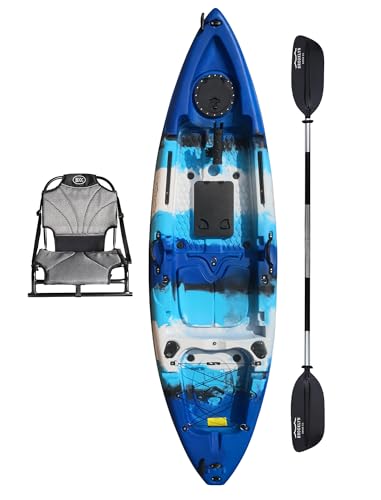 BKC Brooklyn 9.2 Fishing Kayak
|
8.9/10 | Buy |
 Perception Sound 10.5 Sit-Inside Kayak
|
8.9/10 | Buy | |
 Oru Kayak Lake Sport Foldable Kayak
|
8.9/10 | Buy | |
| Best Premium |
 BKC Brooklyn 12.0 Pedal Fishing Kayak
|
8.9/10 | Buy |
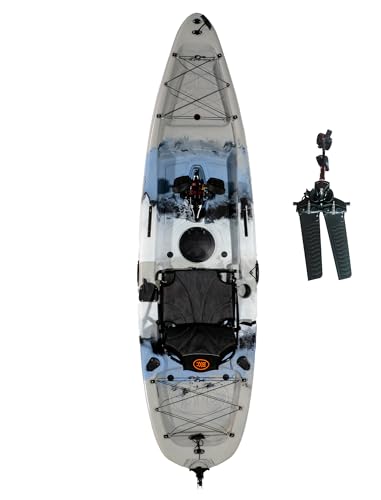 BKC Brooklyn 10.0 Pedal Fishing Kayak
|
8.0/10 | Buy | |
 Wilderness Systems Kayak Crate
|
7.8/10 | Buy |
Oru Kayak Inlet Foldable Kayak
The Oru Kayak Inlet is a 20-pound origami-style folding kayak engineered for flatwater lakes, slow rivers, and calm bays. Collapsing into a compact trunk-sized box in under five minutes, it offers exceptional primary stability and unbeatable portability for apartment dwellers and solo paddlers.
Pros
- At just 20 pounds, it is exceptionally easy to carry and load solo without roof racks or trailers
- Assembly takes under five minutes with intuitive fold lines, fairings, and tension buckles
- Wide 31-inch beam delivers reassuring initial flatwater balance for beginners and casual paddlers
- Compact folded dimensions make it ideal for small vehicles, public transit, and tight apartment storage
Cons
- Not engineered for coastal swell, open-ocean chop, breaking surf, or fast-moving whitewater rapids
- Base package includes the kayak only; paddle, PFD, and backpack carrying case are sold separately
- The 275-pound maximum capacity requires careful gear management for larger paddlers to maintain safe freeboard
Oru Kayak Lake Sport Foldable Kayak
Weighing just 18 pounds and folding into a self-contained box, the Oru Kayak Lake Sport offers unmatched portability for calm lake and slow river recreation without requiring a vehicle roof rack. It is ideal for apartment dwellers, compact-car owners, and solo paddlers wanting an effortless setup and comfortable flatwater cruising.
Pros
- Remarkably light 18-pound weight makes carrying and solo launching completely strain-free
- Folds into a compact box that fits in car trunks and apartment closets without requiring a roof rack
- 5 mm double-layered polypropylene skin provides dependable puncture and abrasion resistance
- Upgraded interior includes an adjustable footrest and height-adjustable backrest for solid seated support
Cons
- Sold as a kayak-only package and does not include an essential paddle or personal flotation device
- 250-pound maximum weight limit restricts heavier paddlers when accounting for the standard 70-80% safe operational payload guideline
- Engineered strictly for calm flatwater and slow rivers; unsuitable for ocean surf, heavy chop, or whitewater
BKC Brooklyn 9.2 Fishing Kayak
Tailored for solo anglers navigating calm lakes and rivers, this compact 9-foot craft pairs solid stability with an upright aluminum frame seat. Multiple integrated rod holders, accessory rails, and dual water-resistant hatches make it ready for fishing without complex setup.
Pros
- Lightweight 46-pound hull allows manageable solo transport
- Upright aluminum frame seat provides solid ergonomic support
- Equipped with versatile rod holders and mounting rails
- Dual dry hatches keep essential gear protected
Cons
- Intended for calm waters rather than rough open seas
- Molded footrests lack sliding track adjustability
- Shorter hull limits straight-line paddling speed
Perception Sound 10.5 Sit-Inside Kayak
The Perception Sound 10.5 is a versatile 10-foot-6-inch sit-inside recreational and fishing kayak featuring a stable tri-keel hull, spacious 56-inch cockpit, and a manageable 46-pound hull weight. With a 335-pound maximum capacity and comfortable Zone seating, it is well suited for beginners, lake paddlers, and kayak anglers seeking hassle-free solo transport.
Pros
- Manageable 46-pound hull weight allows straightforward solo lifting and loading onto roof racks or truck beds
- Tri-keel hull design provides dependable flatwater primary stability and smooth steering in calm lakes and slow rivers
- Generous 56-inch long cockpit opening ensures effortless entry and exit for paddlers of varying body sizes
- Built-in fishing convenience with dual molded-in rod holders and dashboard accessory mounting recesses
Cons
- Does not include a paddle or Solo Mount hardware, requiring separate purchases before launching
- Open rear storage well lacks a watertight sealed bulkhead, leaving gear exposed to rain, splash, and spray
- Sit-inside hull is not self-bailing, meaning accumulated water must be removed manually with a sponge or pump
Oru Kayak Lake Sport Foldable Kayak
The Oru Kayak Lake Sport is an ultra-portable 18-pound origami folding kayak built from durable 5 mm double-layered polypropylene that stows easily in a car trunk. With its wide 32-inch beam, adjustable backrest, and integrated footrest, it offers reliable flatwater stability for apartment dwellers and recreational paddlers.
Pros
- Weighs only 18 pounds, making solo transport and carrying down to the shoreline effortless
- Folds down to a 42 x 10 x 18-inch profile that fits neatly into small car trunks without a roof rack
- Upgraded Lake Sport model includes an adjustable footrest and height-adjustable cushioned backrest
- Generous 66 x 44-inch open cockpit allows easy entry and comfortable legroom for paddlers up to 6'4"
Cons
- This package is kayak-only, requiring a separate purchase of a breakdown paddle, PFD, and storage pack
- The 250-pound maximum capacity leaves narrow margin for heavier paddlers carrying extensive gear
- Open cockpit and lightweight hull are engineered strictly for calm inland waters, not coastal surf or whitewater
BKC Brooklyn 12.0 Pedal Fishing Kayak
The BKC Brooklyn 12.0 is a 12-foot sit-on-top fishing kayak featuring a hands-free propeller pedal drive, responsive hand-controlled rudder, and a 33.5-inch wide UV-protected HDPE hull. Weighing 75 pounds and equipped with an ergonomic aluminum frame seat, it is well suited for lake and coastal bay anglers seeking hands-free trolling and reliable primary stability.
Pros
- Hands-free propeller pedal drive facilitates effortless trolling and position-holding while casting
- Wide 33.5-inch beam and 12-foot waterline provide strong primary stability on lakes, slow rivers, and sheltered bays
- Ergonomic aluminum frame seat keeps paddlers elevated off the deck with breathable lumbar support
- Hand-operated rudder system delivers smooth steering response without requiring foot-peg adjustments
- Comprehensive storage layout includes dual dry bag-equipped hatches, rear bungee well, and scupper plugs
Cons
- Listed 75-pound bare hull weight can make solo rooftop car-topping demanding without a load-assist rack or cart
- Fixed propeller pedal mechanism requires manual lifting or removal when navigating shallow water or thick vegetation
- Propeller system does not feature an instant-kick-up obstacle avoidance mechanism found on premium fin drives
BKC Brooklyn 10.0 Pedal Fishing Kayak
The BKC Brooklyn 10.0 is a 10-foot sit-on-top fishing kayak featuring a hands-free flipper pedal drive, hand-operated rudder, and a stable 33.25-inch beam. With a 350-pound maximum weight capacity and built-in rod holders, it offers a maneuverable platform for calm lakes, slow rivers, and inshore waters.
Pros
- Smooth flipper pedal drive frees hands for casting, trolling, and handling tackle
- Wide 33.25-inch beam offers reassuring flatwater balance and easy boarding for recreational anglers
- Elevated aluminum-frame seat provides better lumbar support and a drier ride than flat molded foam seats
- Pre-rigged with essential fishing features including rod holders, accessory tracks, and a stern rudder
Cons
- Listing features contain conflicting notes on whether a paddle is included or must be purchased separately
- At 75 pounds total rigged weight (58 pounds bare hull), solo car-topping onto tall vehicle roofs may require a load-assist bar or cart
- Short 10-foot waterline is engineered for agility in tight spaces rather than high-speed open-water tracking
Wilderness Systems Kayak Crate
The Wilderness Systems Kayak Crate offers 29 liters of blow-molded, water-resistant storage equipped with four rod holders and dual-level lid organization. It is an ideal stern tankwell upgrade for kayak anglers seeking durable tackle management without the mess of open milk crates.
Pros
- Spacious 29-liter volume keeps multiple tackle boxes and essential angling accessories organized in one place.
- Supplied with four rod holders plus offset riser brackets that adapt to narrow or steep-walled tankwells.
- Blow-molded construction offers significantly better gear protection and impact resistance than standard open milk crates.
- Dual-level storage design allows rapid access to small terminal tackle inside the lid without rummaging through the main vault.
- Universal lash-down points make securing the crate to factory deck bungees or cam straps quick and simple.
Cons
- Listed unladen weight of roughly 10.9 pounds adds baseline weight to your kayak stern before adding heavy tackle.
- Water-resistant latching protects against paddle splash and rain but is not fully submersible if your kayak swamps or flips.
- The 18-inch depth and 12-1/4-inch width footprint may not fit cleanly into compact or shallow recreational sit-on-top tankwells.
Essential Realities of Kayaking Without Formal Lessons
The short answer is yes, you can paddle a kayak without formal instruction, provided you stay within controlled environments and respect basic safety guidelines. Thousands of recreational enthusiasts begin their paddling journeys on calm inland waterways without ever attending a certified class. However, self-directed paddling demands respect for watercraft hydrodynamics, weather conditions, and personal physical boundaries. Understanding how your boat responds to your body movements makes the difference between a relaxing outing and an emergency situation.
Safe Environmental Boundaries for Beginners
Calm, enclosed water bodies represent the only sensible starting ground for an untrained boater. Small local ponds, sheltered lakes without motorboat traffic, and slow-moving canals provide predictable surfaces where wind and currents remain minimal. Launching in these protected zones ensures that if you lose your paddle or struggle with boat control, drifting to a nearby bank remains simple. Staying within a short swimming distance of the shore offers an essential safety margin while you learn boat balance.
Moving water, tidal bays, and coastal surf zones present entirely different hydrodynamic forces that can quickly overwhelm a novice. Rivers with fast currents, submerged strainers, and Class I or higher rapids require specialized maneuvering techniques that self-taught boaters cannot safely improvise. Similarly, open ocean paddling introduces ocean swells, tidal currents, and sudden offshore breezes that demand guided instruction. Confining your initial excursions to flat, mirror-like water dramatically reduces capsize risk and builds baseline confidence.
Hull Stability Dynamics: Sit-On-Top vs. Sit-Inside Designs
Kayak stability falls into two distinct categories: primary stability and secondary stability. Primary stability describes how steady the boat feels when resting flat on calm water, which is what beginners notice immediately upon sitting down. Wide-beamed hulls, typically measuring thirty inches or wider, deliver high primary stability that prevents sudden wobbling. Secondary stability refers to a kayak’s ability to resist flipping when tilted on its side by waves, a characteristic common in narrower touring models.
Sit-on-top kayaks serve as the most forgiving option for self-taught paddlers because they feature an open deck and self-bailing scupper holes. If water splashes over the gunwales, it drains automatically through the floor rather than pooling inside the boat. Re-entering a sit-on-top after an accidental spill is substantially easier than pumping water out of an enclosed deck. Models like the BKC Brooklyn 9.2 or BKC Brooklyn 10.0 offer wide flat-bottom hulls that give novice paddlers dependable primary stability.
Sit-inside designs enclose the paddler’s lower body within a cockpit rim, lowering the center of gravity and providing shelter from wind and splash. The Perception Sound series utilizes a tri-keel hull shape to combine the dry ride of a sit-inside cockpit with the dependable stability of a multi-chine bottom. However, if a sit-inside kayak capsizes in deep water, the cockpit can fill rapidly, requiring a manual bilge pump or shoreline rescue. Beginners choosing sit-inside kayaks must ensure the cockpit opening is wide enough to facilitate a clean, unhindered exit.
Mastering Essential Paddle Strokes and Body Mechanics
Propelling a kayak efficiently requires engaging large muscle groups in your core and back rather than relying exclusively on your arms. Many self-taught beginners make the mistake of arm-paddling, which quickly leads to bicep fatigue and shoulder strain. Sit upright with your back supported by the seat frame, bend your knees slightly against the foot braces, and rotate your torso with each stroke. Pushing forward with the upper hand while pulling with the lower hand creates balanced, fluid power through your abdominal muscles.
The forward stroke forms the foundation of all kayak travel. Plant the paddle blade fully into the water near your toes, keeping the shaft at roughly a forty-five-degree angle to the surface. Pull the blade backward along the side of the hull using torso rotation, slicing it out of the water once it reaches your hip. Letting the blade travel past your hip wastes energy and creates drag that slows forward momentum.
Steering requires mastering the forward sweep stroke and the reverse stroke. To turn your boat to the left, execute a wide, sweeping arc on the right side of the hull, starting at the bow and extending far out to the side. Conversely, a reverse stroke placed near the stern acts as an immediate brake and pivots the bow sharply. Practicing these basic turning inputs in calm water will teach you how your boat responds before you encounter obstacles.
Sizing Your Paddle to Match Boat Beam and Torso Height
Using an incorrectly sized paddle causes unnecessary muscle fatigue, poor boat tracking, and repetitive knuckle strikes against the kayak gunwales. Paddle sizing depends on two interconnected variables: the width of your kayak hull and the seated height of your torso. Wide recreational kayaks, such as folding crafts like the Oru Kayak Inlet or wide sit-on-top fishing platforms, require longer paddles to reach the water comfortably. A narrow touring kayak, by contrast, allows for a shorter shaft that facilitates higher cadence strokes.
Standard recreational paddles range between 220 and 240 centimeters in overall length. If your kayak beam measures between thirty and thirty-four inches, pairing it with a 230-centimeter or 240-centimeter paddle ensures your blades submerge without leaning awkwardly over the deck. Paddlers with shorter torsos in wide crafts benefit from longer shafts to maintain an upright posture. Adjusting the blade feathering angle can also reduce wind resistance against the elevated blade during breezy excursions.
Calculating the Safe Payload Threshold and Buoyancy Buffer
Every kayak carries a certified maximum weight capacity, but treating that manufacturer number as a safe operating target is a dangerous beginner mistake. When a kayak approaches its gross weight limit, its hull sits dangerously low in the water, drastically diminishing freeboard. Reduced freeboard allows modest surface chop to spill into the cockpit or deck area, compromising overall stability and sluggishly degrading handling. A boat loaded to maximum capacity tracks poorly and responds slowly to corrective steering inputs.
Experienced paddlers observe the 70-to-75 percent safe payload threshold to maintain essential buoyancy reserves. To apply this standard, multiply the manufacturer’s total weight limit by 0.70 to find your practical working maximum. Your personal body weight, paddling clothes, safety gear, anchor kits, and accessories like a Wilderness Systems Kayak Crate must fall below this calculated figure. Maintaining a twenty-five to thirty percent buoyancy buffer preserves freeboard, ensures crisp maneuverability, and prevents swamping.
For example, a boat rated for 250 pounds safely supports an operational load of roughly 175 to 185 pounds. Exceeding this threshold forces the scupper holes on sit-on-top kayaks to push water upward onto the deck, leaving you seated in standing water. Distributing weight evenly between the forward hatch and rear cargo tankwell keeps the hull properly trimmed. A level boat glides cleanly across the surface without dragging its stern or plowing its bow.
Mandatory Safety Equipment and USCG Regulations
Operating a paddlecraft without formal training makes strict adherence to federal maritime safety laws non-negotiable. Under USCG Title 33 CFR § 175, all recreational paddlecraft must carry a wearable, Coast Guard-approved personal flotation device (PFD) for every person on board. A high-back Type III paddling vest represents the ideal choice because its elevated mesh back accommodates tall kayak seats without bunching. Wearing your PFD at all times, rather than stowing it beneath bungee cords, provides instant flotation during unexpected immersion.
Federal regulations also require carrying an efficient sound-producing device, such as a pea-less marine safety whistle, attached directly to your life jacket. If a motorized boat approaches too closely or fog rolls across the water, a high-decibel whistle alert carries far better than human yelling. Paddlers venturing out between sunset and sunrise must carry an operable electric torch or white lantern to prevent collisions. Investing in basic safety essentials guarantees that you remain compliant with state watercraft enforcement while protecting yourself on public waterways.
Launching, Landing, and Avoiding Common Capsize Triggers
Entering and exiting a kayak accounts for a significant portion of all beginner capsizes. When launching from a gentle shoreline or boat ramp, float the kayak in calf-deep water parallel to the bank rather than trying to climb in while the hull is high and dry. Straddle the cockpit or seating well with your feet planted firmly on the firm ground beneath the shallow water. Lower your rear smoothly into the seat first, keeping your center of gravity low, before swinging your legs inside one at a time.
Reverse this exact process when returning to the shoreline at the conclusion of your paddle. Approach the bank slowly, align your hull parallel to the shallow edge, swing both feet onto the sand, and stand up with your weight centered over your feet. Never push yourself up by grabbing the kayak gunwales while your feet remain floating. Keeping your body centered over the hull’s keel line prevents unexpected tipping during transitions.
Wet Exits and Deep-Water Self-Rescue Realities
Before paddling in water over your head, you must understand how to separate yourself from a capsized boat and get to safety. In a sit-on-top kayak, a capsize simply tosses you into the open water, where your life jacket keeps your head elevated. Flipping a sit-inside kayak requires executing a calm wet exit by sliding your hips out of the cockpit rim and pushing the boat away. Resisting the instinct to panic and practicing this exit in waist-deep water demystifies the experience entirely.
Deep-water re-entry without formal instruction is notoriously difficult and requires significant upper-body strength. Climbing back onto an overturned sit-on-top involves righting the boat first, grabbing the opposite gunwale, and kicking your legs to the surface before pulling your chest across the center deck. Without instruction in specialized techniques like paddle float rescues or heel-hook re-entries, an untrained boater should remain close enough to shore to swim the hull to shallow water. Exploring heavy-duty inflatable kayaks with broad side chambers can provide reassuring buoyancy, but practicing self-rescue close to land remains essential.
Environmental Hazards: Wind, Currents, and Cold Water Shock
Weather conditions represent the greatest external hazard for self-taught recreational kayakers. Wind blowing across open water creates surface waves and generates a phenomenon known as weathercocking, where your boat naturally turns into the wind. Paddling against a stiff ten-knot headwind requires tremendous physical exertion, which can exhaust a novice paddler far from their launch point. Always check local forecasts before launching, and plan your route by paddling into the wind first so the breeze assists your return journey.
Water temperature poses a severe threat that many beginners underestimate, particularly during sunny spring days when air temperatures feel warm. Sudden immersion in water below sixty degrees Fahrenheit triggers an involuntary gasp reflex and rapid hyperventilation known as cold water shock. Follow the golden paddling rule of dressing for the water temperature rather than the air temperature, utilizing neoprene garments or quick-drying synthetic layers. Avoiding cotton clothing prevents evaporative heat loss if you happen to get splashed or damp during your excursion.
Transport Rigging and Preventing Hull Deformation
Getting your kayak to and from the water safely requires proper vehicle rigging and mindful handling practices. Securing a plastic hull to car crossbars should always be done with marine-grade cam straps rather than high-tension mechanical ratchet straps. Ratchet straps apply crushing leverage that can permanently warp polyethylene or buckle composite hulls, creating indented flat spots known as oil-canning. Securing both bow and stern safety lines to your vehicle frame recovery points prevents crosswinds from lifting the boat at highway speeds.
Investing in reliable heavy-duty kayak roof racks equipped with padded J-cradles or saddle mounts distributes the boat’s weight evenly across its strongest structural points. Lightweight folding models, such as the Oru Kayak Lake Sport, bypass vehicle racking entirely by fitting directly inside a car trunk or back seat. Storing your kayak off the ground on padded wall slings or standing on its side away from direct sunlight prevents heat-induced plastic sagging over time. Inspecting your transport lines and storage mounting points periodically ensures your craft remains ready for the water.
When Formal Instruction Becomes Non-Negotiable
While calm recreational lakes welcome self-taught paddlers, certain paddling environments strictly demand professional instruction. Whitewater paddling involves navigating river hydraulics, eddy lines, and dangerous rock sieves that require instant, instinctive rolling and bracing skills. Sea kayaking across coastal crossings demands advanced navigation, tide table comprehension, and reliable open-water rescue techniques like assisted T-rescues. If your paddling aspirations extend beyond warm, quiet flatwater, enrolling in a certified course provides the structured safety training required for dynamic environments.
Solo paddling without lessons is entirely viable when approached with patience, respect for the elements, and conservative judgment. Selecting a wide, stable boat, wearing a properly fitted life jacket, and staying within protected shallow waters creates a safe foundation for skill building. As your comfort on the water grows, self-awareness will guide your decision on whether to pursue certified training for more challenging expeditions.
About the author
Maggie Nichols is an experienced paddler, adventure guide, and gear reviewer with more than 25 years around paddle sports. Her background includes canoe touring, whitewater rafting and kayaking, ocean kayak guiding, and extensive outdoor education. She approaches water gear with a strong focus on real-world usability, durability, comfort, and practical performance.