
Average Price of Kayak of 2026 Value Guide
Assessing the average price of kayak helps paddlers budget wisely in November 2026 without sacrificing hull stability, comfortable seating, or gear capacity.
 By Maggie Nichols
Updated October 13, 2026

Wrestling a heavy polyethylene hull onto a car roof rack after a long day on choppy water quickly takes the wind out of your sails. Rigid plastic perches can also ruin an afternoon with nagging lower back aches, while sluggish tracking forces you to waste energy zig-zagging across the bay. Getting a firm grip on the average price of kayak helps paddlers dodge flimsy bargain boats while securing dependable primary stability and long-term durability. It’s especially useful whether you plan on paddling solo in a tandem kayak or loading a dedicated solo fishing craft for a weekend tournament.
Careful analysis of manufacturer specifications, rotomolded plastic designs, and verified user feedback reveals that boat dimensions and outfitting dictate where a model lands within the typical average price of kayak bracket. Premium aluminum-frame seating, tri-keel tracking hulls, and molded rod holders bump prices up, but they also keep you dry and balanced when chop picks up. If you are exploring inland lakes in Wisconsin or drifting calm farm ponds, picking a hull with a generous usable payload margin keeps gear secure without dragging down your paddling cadence. Balancing hull rigidity against portability means you won’t dread loading up at the boat ramp.
| Award | Product | WSG Score About WSG ScoreThe WSG Score is our own rating from 0 to 10, based on performance, design and build, ease of use, and value. It reflects independent research and is never influenced by manufacturers, retailers, or affiliate commissions. Learn more › | |
|---|---|---|---|
| Best Overall |
Wooden Boat Publications Kayakcraft Book
|
9.2/10 | Buy |
| Best Premium |
 Perception Access 9.5 Sit-On-Top Kayak |
9.1/10 | Buy |
 Oru Kayak Lake Sport Foldable Kayak |
9.1/10 | Buy | |
| Best Value |
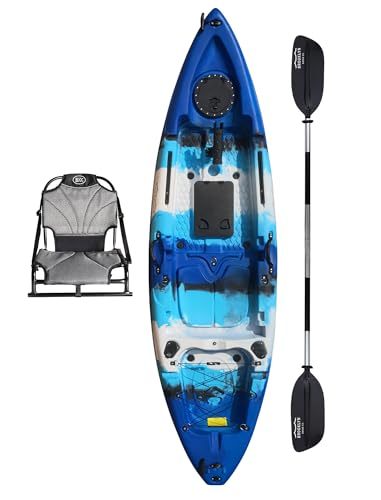 BKC Brooklyn 9.2 Fishing Kayak |
8.9/10 | Buy |
 Perception Sound 10.5 Sit-Inside Kayak |
8.9/10 | Buy | |
| Best Budget |
 Kudzupatch Fuselage Frame Boats Guide |
8.6/10 | Buy |
Wooden Boat Publications Kayakcraft Book
Kayakcraft provides a dedicated instructional resource for assembling fine woodstrip kayaks, issued in a large paperback format by Wooden Boat Publications. Measuring 8.75 by 11.25 inches, this manual offers a practical reference size for woodworking shops and marine craft enthusiasts.
Pros
- Generous page dimensions suit workshop reading
- Lightweight construction makes it easy to transport
- Dedicated subject matter for strip-built kayak builders
- Published by an established marine craft press
Cons
- Paperback cover offers limited moisture protection in workshops
- Pre-owned copy may show minor physical wear
Perception Access 9.5 Sit-On-Top Kayak
Weighing just 42 pounds, this compact sit-on-top kayak provides easy handling and comfortable high-back seating for calm waters. Dual bungee storage areas and molded-in rod holders make it a practical choice for casual day paddlers and light angling.
Pros
- Light 42-pound weight simplifies transport and car-topping
- Ergonomic cushioned high-back seat enhances paddling comfort
- Five-position footrests accommodate various leg lengths
- Integrated rod holders add instant fishing functionality
Cons
- 250-pound maximum capacity limits gear and heavier paddlers
- Open bungee wells provide no enclosed dry storage
Oru Kayak Lake Sport Foldable Kayak
Weighing just 18 pounds and folding into a self-contained box, the Oru Kayak Lake Sport offers unmatched portability for calm lake and slow river recreation without requiring a vehicle roof rack. It is ideal for apartment dwellers, compact-car owners, and solo paddlers wanting an effortless setup and comfortable flatwater cruising.
Pros
- Remarkably light 18-pound weight makes carrying and solo launching completely strain-free
- Folds into a compact box that fits in car trunks and apartment closets without requiring a roof rack
- 5 mm double-layered polypropylene skin provides dependable puncture and abrasion resistance
- Upgraded interior includes an adjustable footrest and height-adjustable backrest for solid seated support
Cons
- Sold as a kayak-only package and does not include an essential paddle or personal flotation device
- 250-pound maximum weight limit restricts heavier paddlers when accounting for the standard 70-80% safe operational payload guideline
- Engineered strictly for calm flatwater and slow rivers; unsuitable for ocean surf, heavy chop, or whitewater
BKC Brooklyn 9.2 Fishing Kayak
Tailored for solo anglers navigating calm lakes and rivers, this compact 9-foot craft pairs solid stability with an upright aluminum frame seat. Multiple integrated rod holders, accessory rails, and dual water-resistant hatches make it ready for fishing without complex setup.
Pros
- Lightweight 46-pound hull allows manageable solo transport
- Upright aluminum frame seat provides solid ergonomic support
- Equipped with versatile rod holders and mounting rails
- Dual dry hatches keep essential gear protected
Cons
- Intended for calm waters rather than rough open seas
- Molded footrests lack sliding track adjustability
- Shorter hull limits straight-line paddling speed
Perception Sound 10.5 Sit-Inside Kayak
The Perception Sound 10.5 is a versatile 10-foot-6-inch sit-inside recreational and fishing kayak featuring a stable tri-keel hull, spacious 56-inch cockpit, and a manageable 46-pound hull weight. With a 335-pound maximum capacity and comfortable Zone seating, it is well suited for beginners, lake paddlers, and kayak anglers seeking hassle-free solo transport.
Pros
- Manageable 46-pound hull weight allows straightforward solo lifting and loading onto roof racks or truck beds
- Tri-keel hull design provides dependable flatwater primary stability and smooth steering in calm lakes and slow rivers
- Generous 56-inch long cockpit opening ensures effortless entry and exit for paddlers of varying body sizes
- Built-in fishing convenience with dual molded-in rod holders and dashboard accessory mounting recesses
Cons
- Does not include a paddle or Solo Mount hardware, requiring separate purchases before launching
- Open rear storage well lacks a watertight sealed bulkhead, leaving gear exposed to rain, splash, and spray
- Sit-inside hull is not self-bailing, meaning accumulated water must be removed manually with a sponge or pump
Kudzupatch Fuselage Frame Boats Guide
Aspiring woodworkers and paddlers can learn the craft of skin kayak construction through this specialized manual from Kudzupatch, Inc. Bound in a convenient 7 by 10 inch paperback format, the book concentrates on fuselage frame techniques.
Pros
- Focuses specifically on skin kayak and canoe building
- Manageable 1.15 pound weight for shop use
- Compact 7 by 10 inch reference size
Cons
- Paperback binding is vulnerable to workshop moisture
- Limited strictly to fuselage frame boat designs
Frequently Asked Questions About Kayak Pricing and Features
What is the average price of kayak models for recreational paddlers in 2026?
Most recreational kayaks cost between $400 and $800, depending on hull materials and outfitting. Standard thermoformed or rotomolded polyethylene sit-on-top craft sit comfortably in this middle tier, offering dependable impact resistance for lakes and lazy rivers. Bare-bones entry options may dip lower, while origami folding hulls or specialty craft with upgraded aluminum seating sit near the top of that range.
Does a higher kayak cost guarantee better primary stability on open water?
No, kayak stability depends on beam width and hull geometry rather than price alone. A wider beam and a flat or pontoon hull provide steady primary stability regardless of whether the boat costs $300 or $1,200. Higher price tags typically reflect upgraded deck rigging, adjustable foot braces, high-back frame seats, and lighter transport weight rather than sheer balance alone.
How does hull material affect the overall average price of kayak?
Hull material directly influences manufacturing costs, weight, and long-term durability. High-density polyethylene hulls offer great impact tolerance against rocky river beds at an accessible cost, whereas folding polypropylene boats prioritize compact car trunk storage at a moderate premium. If you are navigating calm rivers in Hocking Hills, a sturdy rotomolded hull provides the toughness you need without breaking the bank.
What is the usable payload rule when checking kayak weight capacity?
Paddlers should stay within 65 to 70 percent of a kayak’s maximum rated weight capacity for safe handling. Exceeding this functional limit causes the deck to ride low, swamping scupper holes and ruining tracking responsiveness in light chop. Factoring your body weight, paddle gear, and dry bags into this margin prevents dangerous capsize risks during coastal kayaking trips in Maine or choppy reservoir runs.
Are sit-on-top kayaks generally more expensive than sit-inside models?
Sit-on-top and sit-inside recreational kayaks usually share similar price brackets across comparable hull lengths. Sit-on-top designs feature self-bailing scupper drains and open decks that allow effortless entry, making them popular for fishing and summer floats. Sit-inside models provide better lower body shelter from wind and splash, making cockpit sizing and padded backrests the key comfort factors instead of hull price differences.
Why do folding and modular kayaks often cost more than traditional rigid boats?
Specialized engineering, custom hinges, and lightweight puncture-resistant polymers increase the manufacturing cost of folding watercraft. These boats eliminate the need for car roof racks and heavy lifting by collapsing into compact cases that slip into small trunks. Paddlers invest in these designs primarily to bypass storage headaches in apartments and simplify transport without sacrificing on-water performance.
About the author
Maggie Nichols is an experienced paddler, adventure guide, and gear reviewer with more than 25 years around paddle sports. Her background includes canoe touring, whitewater rafting and kayaking, ocean kayak guiding, and extensive outdoor education. She approaches water gear with a strong focus on real-world usability, durability, comfort, and practical performance.