
Are Full Face Snorkel Masks Safe? What You Need to Know for 2026
Are Full Face Snorkel Masks Safe? Learn how dual airflow channels, proper fit, and CO2 ventilation keep surface swimmers protected in October 2026.
 By Brooke Hess
Updated October 5, 2026
By Brooke Hess
Updated October 5, 2026

Gliding over a shallow coral reef or paddling along a calm coastal inlet offers incredible underwater views, yet many water sports enthusiasts hesitate before strapping on an integrated one-piece mask. Anyone planning their next surface excursion naturally asks, are full face snorkel masks safe for recreational swimming and sightseeing? While traditional gear isolates the eyes from the breathing tube, full-face configurations enclose the entire face in a panoramic dome, creating distinct airflow dynamics. Understanding how these systems circulate fresh air while exhausting carbon dioxide helps swimmers make educated, safety-first decisions before venturing beyond the shoreline.
Unlike dedicated swimming snorkel designs that require gripping a silicone mouthpiece between your teeth, integrated masks allow natural breathing through both the nose and mouth. However, improper sizing, vigorous swimming exertion, or cheap single-chamber copies can compromise breathing safety and cause sudden disorientation. By examining airflow channels, dry-top valve mechanics, and quick-release strap security, recreational explorers can determine whether an integrated mask matches their comfort level and water conditions. Focusing on certified engineering ensures your time floating above marine life remains tranquil, clear, and secure.
| Award | Product | WSG Score About WSG ScoreThe WSG Score is our own rating from 0 to 10, based on performance, design and build, ease of use, and value. It reflects independent research and is never influenced by manufacturers, retailers, or affiliate commissions. Learn more › | |
|---|---|---|---|
| Best Overall |
Greatever G2 Full Face Snorkel Mask for Adults
|
9.2/10 | Buy |
| Best Budget |
 QingSong Full Face Snorkel Mask with Camera Mount
|
9.1/10 | Buy |
| Best Value |
 Seaview 180 Sport Full Face Snorkel Mask
|
9.1/10 | Buy |
 Khroom Full Face Snorkel Mask with Camera Mount
|
9.1/10 | Buy | |
 QingSong Adult Full Face Snorkel Mask 2-Pack
|
9.1/10 | Buy | |
| Best Premium |
 Seaview 180 V3 Full Face Snorkel Mask
|
8.8/10 | Buy |
 Greatever G2 Full Face Snorkel Mask with Foldable
|
8.1/10 | Buy |
Greatever G2 Full Face Snorkel Mask for Adults
The Greatever G2 Full Face Snorkel Mask features an expanded 1.26-inch dry-top breathing tube, a dual-pane flat PU resin lens, and an integrated action camera mount for calm surface exploration. It offers vacationers and cruise travelers a comfortable nose-and-mouth breathing experience without the jaw fatigue of a traditional mouthpiece.
Pros
- Flat PU resin lens helps prevent the disorienting fisheye distortion common to standard rounded full-face masks
- Foldable snorkel barrel reduces packing bulk, making the 11.5 x 8.5 x 4-inch footprint easy to stash in travel bags
- Wider 1.26-inch snorkel barrel and dual exhaust channels promote steady airflow during relaxed surface swimming
- Removable camera bracket allows you to mount an action camera or detach it for a sleeker profile
Cons
- Intended strictly for surface-level swimming; not suitable for freediving, duck diving, or ear pressure equalization
- Large/X-Large sizing requires adequate bridge-to-chin length and may not seal properly on smaller or narrow faces
- Facial hair, heavy stubble, or deep jaw contours can compromise the perimeter seal and cause water seepage
QingSong Full Face Snorkel Mask with Camera Mount
The QingSong Full Face Snorkel Mask provides a wide 180-degree view and natural nose-or-mouth breathing for surface snorkeling without jaw fatigue. With its dual-channel anti-fog airflow and floating ball dry-top valve, it is a practical pick for vacationers and beginners exploring calm coastal waters.
Pros
- Eliminates jaw clenching and gum fatigue by allowing natural breathing through both nose and mouth
- Sweeping 180-degree panoramic viewing window offers wide peripheral visibility over shallow reefs
- Dry-top floating ball mechanism helps protect against unexpected water entry from surface chop
- Integrated camera mount provides an easy way to capture vacation snorkeling footage hands-free
- Soft silicone perimeter seal cushions contact points across the forehead, cheeks, and jaw
Cons
- Designed strictly for surface-level snorkeling; cannot be used for freediving, duck dives, or ear equalization
- Dense facial hair or heavy beard growth along the jawline may break the silicone seal and cause minor seepage
- Polycarbonate viewing face requires careful freshwater rinsing to protect the surface against fine sand scratches
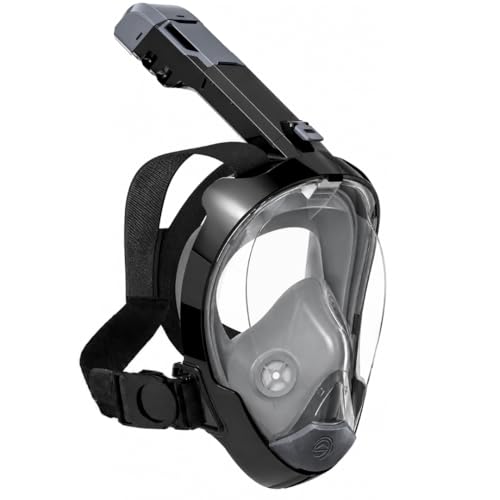
Seaview 180 Sport Full Face Snorkel Mask
The Seaview 180 Sport Full Face Snorkel Mask features a panoramic polycarbonate lens and a dual-channel airflow system designed for natural surface breathing through both nose and mouth. With a detachable dry-top snorkel tube and built-in camera mount, it is a convenient travel choice for beginners, cruise vacationers, and casual reef explorers.
Pros
- Separate airflow pathways help maintain clear forward visibility during relaxed surface swimming.
- Dry-top floating ball mechanism effectively helps reduce accidental water entry from wave splash.
- Removable snorkel tube makes the mask easy to pack flat in vacation luggage and straightforward to rinse after saltwater use.
- Quick-release buckles allow for fast and uncomplicated strap removal after each session.
- Built-in action camera mount eliminates the need for bulky handheld accessories while exploring shallow reefs.
Cons
- Designed strictly for surface-level snorkeling and cannot be used for freediving, duck diving, or ear equalization at depth.
- Polycarbonate lenses require careful handling to avoid cosmetic scratches from beach sand and abrasive surfaces.
- Full-face silicone seals can experience minor water seepage when worn over dense facial hair, heavy stubble, or thick mustaches.
Khroom Full Face Snorkel Mask with Camera Mount
The Khroom Full Face Snorkel Mask features a separated airflow breathing channel and a panoramic 180-degree lens designed for relaxed, natural surface snorkeling. It offers beginner vacationers and resort travelers an accessible, leak-resistant alternative to traditional mouthpieces without sacrificing optical clarity.
Pros
- Separated inhalation and exhalation channels support natural nose and mouth breathing on the water surface
- Expansive 180-degree field of view provides broad peripheral sightlines without bulky frame borders
- Built-in action camera mount makes capturing vacation memories simple and completely hands-free
- Comfortable silicone skirt creates a soft, reliable facial seal without needing excessive strap pressure
- Includes a breathable mesh bag that allows equipment to drain and air-dry after a freshwater rinse
Cons
- Strictly limited to relaxed surface snorkeling and cannot be used for freediving, duck diving, or ear pressure equalization
- Dense facial hair, thick mustaches, or pronounced jaw stubble can break the skirt suction and cause micro-leaks
- The one-piece rigid chassis has a larger packing profile in luggage compared to traditional two-piece low-volume mask sets
QingSong Adult Full Face Snorkel Mask 2-Pack
This QingSong full-face snorkel mask two-pack delivers a wide 180-degree view and natural nose-and-mouth breathing without jaw fatigue from a traditional mouthpiece. It is a practical, value-packed choice for casual vacationers and couples preparing for calm surface snorkeling at beach resorts or cruise ports.
Pros
- Natural nose and mouth breathing eliminates traditional mouthpiece bite fatigue
- 180-degree panoramic lens provides expansive surface viewing across coral reefs
- Dry-top floating ball helps deflect splash and surface chop from entering the breathing tube
- Includes an integrated camera bracket for capturing hands-free vacation footage
- Two-mask bundle in Large/Extra-Large sizing provides great value for adult pairs
Cons
- Surface snorkeling only; design does not allow for ear equalization or duck diving
- Facial hair, heavy stubble, or mustaches can break the silicone perimeter seal and cause minor seepage
- Bulkier pack profile than traditional low-profile two-piece mask and snorkel sets
Seaview 180 V3 Full Face Snorkel Mask
The Seaview 180 V3 provides a wide 180-degree panoramic viewing window and an isolated Flowtech dual-chamber breathing system for effortless surface snorkeling. It is an ideal pick for cruise travelers, resort vacationers, and casual swimmers seeking natural nose-and-mouth breathing without jaw fatigue.
Pros
- Flowtech breathing channels enable comfortable, natural breathing through both nose and mouth
- Expansive 180-degree viewing window offers panoramic peripheral visibility over shallow reefs
- Chin-level swivel camera mount stays underwater for steadier action camera footage
- Three-size fit options allow travelers to dial in a closer seal than two-size alternatives
Cons
- Strictly intended for surface snorkeling; does not allow ear pinch equalization for duck diving or freediving
- Stubble or dense facial hair along the jawline can break the skirt suction and cause micro-leaks
- Rigid full-face chassis takes up more luggage volume than a traditional low-profile two-piece mask and snorkel
Greatever G2 Full Face Snorkel Mask with Foldable
The Greatever G2 full face snorkel mask offers vacationers a clear panoramic view through a flat PU resin lens and an integrated foldable dry-top snorkel. Engineered for natural surface breathing with a dual-channel exhaust system, it serves as a comfortable, user-friendly choice for calm resort bays and tropical beach getaways.
Pros
- Flat viewing window helps reduce the dizzying fishbowl distortion common to curved full-face masks
- Foldable snorkel tube makes packing and gear storage considerably more manageable for travel
- Dual-pane lens design provides a physical thermal barrier to help curb condensation
- Removable motion camera mount allows quick attachment of action cameras for vacation footage
- Integrated dry-top float mechanism helps deflect surface chop and light wave splash
Cons
- Strictly intended for surface-level recreational snorkeling and cannot be used for freediving, duck diving, or scuba
- Full-face skirt seal can experience minor water seepage when positioned over dense facial hair or heavy stubble
- PU resin viewing lens requires delicate care and soft microfiber rinsing to avoid surface scratching
Comprehensive Safety Analysis of Full Face Snorkel Masks
Recreational swimmers and coastal explorers frequently question the overall reliability of integrated full-face designs when planning open-water adventures. The direct answer is that reputable, multi-channel full face masks are generally safe for relaxed surface snorkeling when fitted properly and used in calm conditions. However, safety depends heavily on internal airflow architecture, appropriate sizing, and staying within recreational surface limits. Understanding the mechanics of these masks allows swimmers to enjoy expansive visibility while avoiding common pitfalls associated with substandard equipment or improper breathing habits.
The Engineering Behind Breathing Safety and Airflow Channels
Early iterations of full-face masks faced scrutiny because many generic models utilized a single open breathing chamber where inhaled and exhaled air mixed freely. Modern reputable masks resolve this issue by implementing physically isolated breathing pathways that separate fresh air intake from carbon dioxide exhaust. Products like the Khroom Full Face Snorkel Mask for Adults feature separate airflow channels with enlarged intake paths to support normal, unrestricted respiration. Similarly, the Seaview 180 V3 Full Face Snorkel Mask employs a multi-chamber layout with one-way silicone valves that direct incoming air across the viewing visor before routing spent breath out through side channels.
This isolated directional circulation accomplishes two crucial safety objectives simultaneously during a swim. Fresh air enters through the center snorkel channel and passes over the lens, which continuously clears humidity and prevents fog from obscuring your vision. When you exhale through the nose or mouth, flexible silicone check valves seal the intake route, forcing exhaled gas outward through perimeter exhaust channels. The Greatever G2 Full Face Snorkel Mask Adults platform integrates a two-channel exhaust valve and an expanded 1.26-inch snorkel tube to reduce breathing resistance during sustained surface swimming. This physical separation prevents exhaled air from lingering inside the oral-nasal pocket.
Understanding Carbon Dioxide Buildup and Hypercapnia Risks
The primary hazard associated with low-quality or damaged full face masks is hypercapnia, which occurs when a swimmer repeatedly re-breathes their own exhaled carbon dioxide. In an enclosed mask without functional one-way valves, the volume of dead space allows carbon dioxide to accumulate with every breath cycle. As carbon dioxide levels rise inside the mask, the user begins to experience subtle symptoms such as a dull headache, unexpected fatigue, lightheadedness, and an escalating feeling of air hunger. Because hypercapnia impairs decision-making and induces sudden anxiety, a swimmer in deep water may panic without recognizing the physiological cause of their distress.
High-quality masks minimize dead space by utilizing an internal silicone oral-nasal skirt that seals tightly around the mouth and nose. This secondary barrier confines exhaled gases to a tiny pocket, ensuring that the vast majority of the mask interior remains filled with fresh atmospheric air. Manufacturer documentation for models like the Seaview 180 V3 indicates that third-party airflow and carbon dioxide testing was conducted to verify breathing safety. Choosing equipment engineered with strict directional airflow and tested venting channels is the single most effective way to eliminate carbon dioxide accumulation during calm surface exploration.
Dry-Top Floating Ball Mechanisms and Water Entry Protection
Full face masks utilize dry-top snorkel technology to prevent ocean swell or passing chop from flooding the breathing tube. At the apex of the snorkel tube sits a floating ball mechanism suspended within a protective cage. When the swimmer floats face down on the surface, the ball rests at the bottom of the cage, allowing fresh air to flow unobstructed through the intake vents. If a wave washes over the tube or the swimmer angles their head downward, water buoyancy drives the floating ball upward against an airtight silicone gasket, instantly sealing the tube against water intrusion.
Models such as the QingSong Full Face Snorkel Mask for Adults combine this floating ball mechanism with a silicone sealing skirt to provide dependable water exclusion in gentle waves. When the swimmer lifts their head back toward the surface, gravity drops the ball back into its cradle, immediately restoring the open air pathway. Swimmers should remember that this mechanism requires a brief split-second to seat itself when submerged. Attempting to inhale precisely as a wave strikes can pull the floating ball shut abruptly, momentarily cutting off airflow and startling an unprepared snorkeler.
Chin Purge Valves and Managing Accidental Leaks
Even with advanced dry-top tubes, minor amounts of water can occasionally enter the mask skirt due to facial movements, jaw adjustments, or loose straps. To manage nuisance water safely, modern masks incorporate a one-way silicone purge valve located at the lowest point of the chin. As water trickles down the interior walls of the visor, it naturally pools in the chin reservoir, completely below the swimmer’s mouth and nose. This lower reservoir keeps minor seepage from contacting the airway, allowing the snorkeler to maintain steady breathing without choking or swallowing salty water.
Expelling this collected water does not require taking the mask off while treading water. The swimmer simply lifts their chin slightly above the surface and exhales firmly through the mouth or nose. The positive air pressure created by the exhale pushes the flexible silicone valve outward, draining the pooled liquid directly back into the ocean. Because this purge valve operates on standard gravity and pressure differentials, it remains a vital safety feature for clearing accidental leaks without interrupting a swim.
Why Full Face Masks Are Strictly for Surface Snorkeling
One critical safety limitation that every water enthusiast must respect is that full face masks are strictly engineered for surface snorkeling, never for freediving or deep breath-hold descents. When diving down several feet beneath the surface, external water pressure increases rapidly, compressing the air inside the mask and creating intense suction against the face known as mask squeeze. In a standard two-piece diving mask, the flexible silicone nose pocket allows the diver to pinch their nostrils and blow gently to equalize ear pressure. Because a full face mask encloses the entire face behind a rigid polycarbonate lens, the wearer cannot access their nose to equalize middle ear pressure.
Attempting to descend while wearing a full face mask risks eardrum injury, intense sinus pain, and severe capillary bruising from uncompensated pressure changes. Furthermore, the massive internal air volume of a full-face visor creates substantial positive buoyancy, making it physically exhausting to swim downward against the water’s upward lift. The dry-top floating ball is designed solely to shed occasional surface splashes, not to withstand the hydrostatic pressure of prolonged submersion. For anyone planning to dive down and inspect reefs at depth, traditional low-volume diving masks remain the proper and safe equipment choice.
Achieving an Airtight Seal: Sizing, Facial Hair, and Leak Prevention
A secure silicone seal around the perimeter of the face is fundamental to both comfort and breathing safety. If the mask skirt fails to form an airtight barrier against the skin, water will steadily seep inward, overwhelming the chin purge valve and compromising the separated airflow chambers. Sizing is determined by measuring the linear distance from the bridge of the nose, situated between the eyes, down along the side of the nose to the tip of the chin. Most brands offer small/medium and large/extra-large options, while the Seaview 180 V3 provides three distinct sizes to achieve a closer ergonomic match across diverse facial structures.
Facial hair represents one of the most common causes of seal failure and unexpected leakage in the water. Even moderate mustache stubble or a short beard breaks the contact between the smooth silicone skirt and the skin, creating micro-channels where water continuously seeps into the lower chamber. Swimmers with prominent facial hair should shave the contact zones or apply a generous layer of petroleum jelly along the mustache to create a temporary water barrier. If you find yourself positioned between two mask sizes, manufacturers generally advise selecting the smaller option to ensure a snug, leak-free seal.
Emergency Removal and Quick-Release Strap Mechanisms
Knowing how to remove a full face mask rapidly in an emergency is an essential skill that every swimmer must master before leaving shallow water. Unlike a standard snorkel that can be spit out in a fraction of a second, an integrated full-face mask covers the entire face and is anchored by a four-point elastic harness. If the mask unexpectedly floods, fogs completely, or induces sudden claustrophobia, a swimmer who struggles with tangled straps can easily panic. Quick-release buckles, like those built into the Seaview 180 Sport Full Face Snorkel Mask Adults, allow the user to unclip the lower harness straps with a single motion for immediate mask removal.
Before swimming in deep ocean water, practice ditching the mask multiple times while standing in waist-deep water or in a swimming pool. Place both thumbs under the lower edge of the silicone skirt near the jawline, pull the mask upward and away from the face, and slip the harness over your head in one continuous movement. Avoid overtightening the elastic straps during initial fitting, as excessive tension deforms the silicone skirt, causes uncomfortable pressure points, and makes rapid removal much more difficult. Straps should be snug enough to prevent leaks without leaving deep indentations in the skin.
Breathing Mechanics and Exertion Limits in Open Water
Breathing through an integrated snorkel mask requires a conscious adjustment in respiratory tempo compared to land-based breathing. Snorkelers should adopt slow, deep, diaphragmatic breaths through the nose and mouth rather than rapid, shallow gasps. Shallow breathing leaves stagnant air in the snorkel tube, increasing the proportion of recycled gas with each inhalation. Deep, measured breathing fully flushes the intake channels with fresh atmospheric air and activates the one-way exhaust valves with consistent air pressure.
Full face masks are designed strictly for low-intensity, relaxed surface sightseeing and should never be used for aggressive lap swimming or fighting strong ocean rip currents. When a swimmer exerts themselves vigorously, their oxygen demand spikes and carbon dioxide production multiplies exponentially. Even the most efficient dual-channel airflow systems cannot exchange gas rapidly enough to match heavy athletic hyperventilation. Greatever safety guidelines explicitly recommend that beginners take frequent rests after ten minutes of swimming, while experienced snorkelers should pause after twenty minutes to verify their comfort and physical stamina.
Full Face Masks Versus Traditional Snorkel Sets
Deciding between an integrated mask and a traditional two-piece set depends largely on your comfort priorities and intended aquatic activities. Swimmers embarking on relaxed coastal reef snorkeling trips often appreciate the unobstructed 180-degree panoramic field of view that flat resin lenses provide. Furthermore, full-face configurations eliminate the persistent jaw soreness and gum fatigue caused by clenching a rubber mouthpiece for hours. Casual surface snorkelers, seniors, and beginners often find that natural nose breathing significantly reduces initial water anxiety.
Conversely, choosing a classic diving mask and snorkel set provides superior versatility for dynamic water sports, free diving, and rougher ocean conditions. Traditional masks offer negligible buoyancy, instant nose-pinch equalization, and lightning-fast clearing if knocked off by an unexpected wave. They also pack into much smaller travel bags and adapt easily to varying facial hair profiles. Understanding these functional trade-offs ensures that you select the gear that aligns with your swimming ability and the specific water environments you plan to explore.
Pre-Launch Safety Checklist for Ocean and Lake Swimmers
Performing a methodical pre-launch equipment inspection takes only two minutes and substantially reduces on-water risks. Begin by visually examining the silicone oral-nasal skirt, checking that the one-way valves are pliable, clean, and seating flat against their plastic housings. Shake the snorkel tube gently to verify that the dry-top floating ball rattles freely inside its cage and is not jammed by dried sand or salt crystals. Inspect the perimeter silicone skirt for tears, and confirm that the camera mount screws are secure so accessories do not vibrate loose during your swim.
Conduct your initial fitting in calm, shallow water where you can easily stand upright before swimming into deeper areas. Press the mask against your face without using the straps, inhale gently through your nose, and check if the suction holds the mask in place for a second to verify an airtight seal. Always swim with a companion and wear a personal flotation device, especially when snorkeling near boat channels or off rocky coastlines. Taking these deliberate precautions ensures that your equipment functions as engineered, keeping you relaxed and protected throughout your excursion.
Practical Assessment on Full Face Mask Reliability
Full face snorkel masks represent a comfortable and accessible innovation for surface recreation when built by reputable manufacturers with dedicated airflow channels. They are not inherently hazardous devices, but they require strict adherence to proper sizing, calm surface use, and disciplined, relaxed breathing habits. By choosing certified multi-channel designs, avoiding freediving descents, and practicing quick-release removal, water lovers can confidently enjoy stunning underwater views without compromising their respiratory safety.
About the author
Brooke Hess is an accomplished whitewater kayaker and outdoor writer with years of experience paddling rivers around the world. He has competed internationally in freestyle kayaking and extreme races and has represented the United States in competitive kayaking. His deep understanding of river conditions and paddling performance gives her valuable insight into technical kayaking gear.