
Best Kayak With a Motor of 2026 Picks for Kayak Anglers
Upgrade your on-water speed with the best kayak with a motor guide for October 2026, featuring key specs on thrust, shaft length, and battery balance.
 By Andrew McKean
Updated October 2, 2026
By Andrew McKean
Updated October 2, 2026
Powering Your Hull Across Expansive Waterways
Fighting relentless headwinds and stiff tidal currents can quickly turn a peaceful day on the water into an exhausting upper-body workout. Kayak anglers and recreational paddlers often struggle with shoulder fatigue long before reaching distant fishing drop-offs or secluded marsh bays. Rigging a dependable electric propulsion unit transforms that experience by preserving your stamina and extending your total exploration range. Researching motor mounting options, battery weight distribution, and thrust ratings reveals the best kayak with a motor configuration that balances agile maneuvering with dependable propulsion.
Transom-mounted electric setups allow you to maintain steady trolling speeds while freeing up your hands for casting lines or navigating shallow flats. Reviewing motor shaft dimensions, saltwater-grade alloy durability, and forward-reverse throttle control ensures your chosen gear survives rugged marine environments. Keeping your craft balanced requires mindful planning around battery weight and usable hull payload capacity so your kayak tracks true across open chop.
| Award | Product | WSG Score About WSG ScoreThe WSG Score is our own rating from 0 to 10, based on performance, design and build, ease of use, and value. It reflects independent research and is never influenced by manufacturers, retailers, or affiliate commissions. Learn more › | |
|---|---|---|---|
| Best Overall |
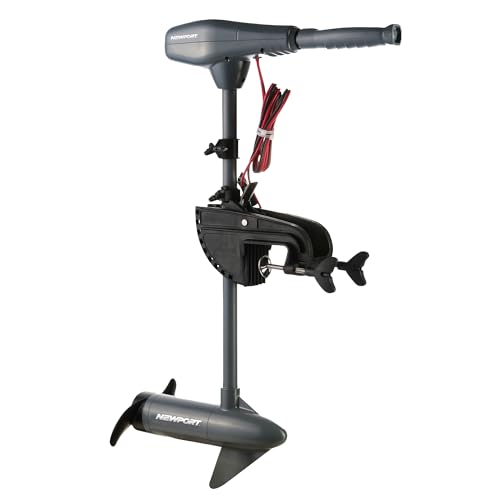
Newport Kayak Series 36lb Thrust Transom Mounted
|
8.6/10 | Buy |
Frequently Asked Questions
How much thrust does an electric motor need for a standard fishing kayak?
A motor producing 30 to 45 pounds of thrust is generally optimal for most recreational and fishing hulls under fourteen feet. That thrust level delivers ample push against river currents and brisk winds without drawing excessive battery amperage. It also prevents overpowering the transom bracket, keeping your craft stable and fully manageable at cruising throttle.
Can a motorized kayak setup be used safely in saltwater environments?
Yes, provided the trolling motor features corrosion-resistant hardware such as stainless steel, zinc anodes, and powder-coated aluminum components. Saltwater causes rapid galvanic corrosion on untreated metals, making marine-grade build quality essential for coastal paddling. Always rinse the motor bracket, shaft, and electrical connections with fresh water immediately after every saltwater trip.
How do you balance battery weight when rigging the best kayak with a motor?
Place the battery in the center console or forward storage hatch to offset the weight of a transom-mounted motor. Running extended 5-foot or longer power cables allows flexible battery positioning along the kayak’s center of gravity. Keeping that heavy lead-acid or lithium battery centered preserves primary hull stability and keeps the bow from riding dangerously high in choppy water.
What shaft length is best for a transom-mounted kayak motor?
A 24-inch shaft is widely considered the ideal size for most sit-on-top and fishing kayak transoms. Longer 36-inch shafts designed for standard boats stick up too high, interfering with paddle strokes and fishing casts. A 24-inch fiberglass or composite shaft submerges the prop deep enough to avoid cavitation while maintaining shallow-water clearance over submerged sandbars.
Does adding an electric motor require registering your kayak in 2026?
Yes, most state wildlife and boating agencies require motorized vessels of any kind to be formally registered and numbered. Even an electric trolling motor mounted on a standard plastic kayak triggers state registration, titling, and display decal requirements. Check your specific local boating regulations to confirm life jacket mandates, lighting rules, and waterway registration guidelines before launching.
How do speed settings impact battery life during all-day outings?
Operating at lower forward throttle levels drastically extends battery runtime compared to running continuously at full throttle. Multi-speed systems with separate forward and reverse gears allow you to sip battery power during slow trolling maneuvers. Dropping your cruising speed by just one or two settings can double your usable on-water time without sacrificing basic navigational control.
About the author
Andrew McKean is an experienced outdoor journalist and optics specialist with extensive experience evaluating binoculars, spotting scopes, and other outdoor optical equipment. His work combines practical field testing with detailed technical analysis, helping readers understand optical performance, durability, and the features that matter when comparing equipment.