
Kayak Price Trends of 2026 Top Value Picks
Kayak Price Trends in October 2026 highlight lightweight portable hulls, durable materials, and ergonomic seats for paddling without breaking the bank.
 By Sara James
Updated October 13, 2026
By Sara James
Updated October 13, 2026

Hauling a bulky plastic boat onto high roof racks turns an exciting morning into an exhausting chore before you even hit the water. Modern shifts in hull engineering and manufacturing have reshaped kayak price trends, pushing lightweight portability and space-saving folding designs into the spotlight. Kayakers no longer need to sacrifice primary stability or drain their savings to get a reliable craft for calm lakes and lazy rivers. Careful analysis of hull materials and design innovations shows that modern folding models and compact sit-on-top hulls provide serious utility without the backbreaking load.
Evaluating current designs reveals that comfortable stadium seating, durable double-layer polypropylene, and integrated accessory tracks now appear at far more accessible price points. Whether you want to plan weekend trips like kayaking in Wisconsin or navigate local estuaries, understanding these market shifts helps you secure the right balance of payload capacity and tracking performance. Keeping an eye on Kayak Price Trends allows solo paddlers to balance portability with long-term watercraft durability.
| Award | Product | WSG Score About WSG ScoreThe WSG Score is our own rating from 0 to 10, based on performance, design and build, ease of use, and value. It reflects independent research and is never influenced by manufacturers, retailers, or affiliate commissions. Learn more › | |
|---|---|---|---|
| Best Overall |
Oru Kayak Lake Sport Foldable Kayak
|
9.1/10 | Buy |
| Best Value |
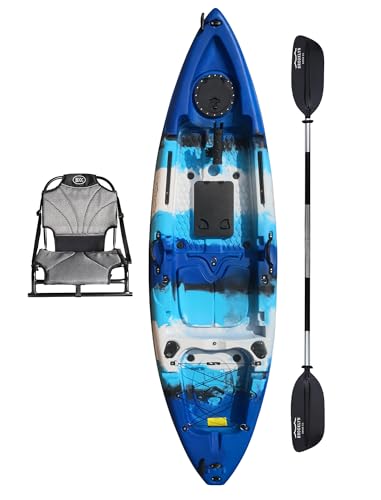 BKC Brooklyn 9.2 Fishing Kayak
|
8.9/10 | Buy |
Oru Kayak Lake Sport Foldable Kayak
Weighing just 18 pounds and folding into a self-contained box, the Oru Kayak Lake Sport offers unmatched portability for calm lake and slow river recreation without requiring a vehicle roof rack. It is ideal for apartment dwellers, compact-car owners, and solo paddlers wanting an effortless setup and comfortable flatwater cruising.
Pros
- Remarkably light 18-pound weight makes carrying and solo launching completely strain-free
- Folds into a compact box that fits in car trunks and apartment closets without requiring a roof rack
- 5 mm double-layered polypropylene skin provides dependable puncture and abrasion resistance
- Upgraded interior includes an adjustable footrest and height-adjustable backrest for solid seated support
Cons
- Sold as a kayak-only package and does not include an essential paddle or personal flotation device
- 250-pound maximum weight limit restricts heavier paddlers when accounting for the standard 70-80% safe operational payload guideline
- Engineered strictly for calm flatwater and slow rivers; unsuitable for ocean surf, heavy chop, or whitewater
BKC Brooklyn 9.2 Fishing Kayak
Tailored for solo anglers navigating calm lakes and rivers, this compact 9-foot craft pairs solid stability with an upright aluminum frame seat. Multiple integrated rod holders, accessory rails, and dual water-resistant hatches make it ready for fishing without complex setup.
Pros
- Lightweight 46-pound hull allows manageable solo transport
- Upright aluminum frame seat provides solid ergonomic support
- Equipped with versatile rod holders and mounting rails
- Dual dry hatches keep essential gear protected
Cons
- Intended for calm waters rather than rough open seas
- Molded footrests lack sliding track adjustability
- Shorter hull limits straight-line paddling speed
Frequently Asked Questions About Kayak Pricing and Features
How do modern folding kayaks compare in price and durability to traditional rotomolded plastic hulls?
Folding kayaks typically command a moderate premium due to custom extruded materials, but they eliminate roof rack expenses. Double-layered 5 mm polypropylene sheets offer impressive puncture and abrasion resistance that rival hard-shell durability on calm lakes. You save significant money on vehicle storage systems and heavy kayak carts. That portability makes folding boats an appealing investment for apartment residents who lack garage storage.
What is the difference between maximum weight capacity and usable payload margin?
Usable payload should never exceed 65 to 70 percent of a craft’s advertised maximum capacity. Exceeding this threshold pushes the hull deeper into the waterline, which slows paddle response and increases the risk of swamping in chop. For example, a kayak with a 250-pound limit comfortably handles a paddler and gear totaling around 175 pounds. Leaving a safety margin keeps your secondary stability intact across breezy lake waters.
Are aluminum frame stadium seats worth the extra cost over basic molded seats?
Yes, upright aluminum frame seats are well worth the investment for paddlers seeking lower back support. Molded plastic indentations with thin foam pads often cause severe posture fatigue after an hour of active paddling. Elevated frame seats promote better hip alignment, improve sightlines for casting, and keep you off a wet deck. They turn a short excursion into a comfortable all-day adventure.
How do kayak price trends in 2026 affect the choice between sit-on-top and sit-inside models?
Current market options give paddlers feature-rich sit-on-top fishing platforms and ultralight sit-inside hulls at very comparable pricing tiers. Sit-on-top boats feature self-bailing scupper holes and open decks ideal for warm days and easy re-entry. Meanwhile, compact sit-inside models shield legs from chilly spray and wind. Paddlers assessing gear needs for destinations like Hocking Hills kayaking often weigh this cockpit protection against open gear deck freedom.
Does hull length directly dictate kayaking stability and tracking?
No, hull beam width dictates initial stability while length primarily governs forward glide and tracking efficiency. Shorter hulls around nine feet turn quickly and weigh less for easy loading onto small vehicles. Longer hulls cut straight through wind chop with less paddle correction but demand more storage room. Choosing between them depends on whether you prioritize tight river maneuverability or open lake cruising speed.
About the author
Sara James is an experienced paddler and outdoor gear reviewer with more than two decades of involvement in paddle sports. Her background spans touring kayaking, Class V whitewater, stand-up paddleboarding, and international kayaking events. She brings a practical, experience-driven perspective to evaluating kayaks, paddles, life jackets, dry bags, and other essential water gear.