
Sit in vs Sit on Kayak for Fishing of 2026 Stability-Focused Picks
Rock-solid hull balance keeps you safe on water. Our sit in vs sit on kayak for fishing guide for November 2026 details deck space and seat comfort.
 By Edward Ting
Updated November 6, 2026

Evaluating Hull Balance and Cockpit Freedom for Anglers
Wrestling with an unsteady deck while fighting a stubborn largemouth bass can ruin what should’ve been a calm morning on the water. Many anglers dread the sudden wobble that threatens to dump expensive tackle boxes into deep weed beds. Sorting out the debate surrounding a sit in vs sit on kayak for fishing requires examining how enclosed cockpits and open self-bailing decks behave in real conditions. Enclosed cockpits shield your lower body from chilly spray and cutting winds, while open platforms give you immediate freedom to stretch your legs and access gear crates. Based on our detailed comparison of hull shapes, payload capacities, and user feedback, each design serves distinct angling environments and personal comfort thresholds.
Hours on open reservoirs demand ergonomic stadium seating, since lower back stiffness won’t let you stay out once the fish start biting. Modern craft frequently incorporate raised aluminum frame seats or double-layer gel pads to relieve pressure on your tailbone. Anglers exploring specialized setups often inspect pedal-driven fishing kayaks for hands-free trolling efficiency along weed lines. Meanwhile, understanding overall weight distribution is just as vital as mastering handling a tandem kayak solo on breezy afternoons. After carefully analyzing the product specifications and deck layouts of leading watercraft, matching your craft to local water temperatures and storage demands makes all the difference.
| Award | Product | WSG Score About WSG ScoreThe WSG Score is our own rating from 0 to 10, based on performance, design and build, ease of use, and value. It reflects independent research and is never influenced by manufacturers, retailers, or affiliate commissions. Learn more › | |
|---|---|---|---|
| Best Overall |
Albott 9.4ft Modular Pedal Fishing Kayak
|
9.2/10 | Buy |
| Best Budget |
 NEW-Vi Double-Layer Gel Kayak Cushion |
8.9/10 | Buy |
| Best Value |
 Pelican Sentinel 100X Angler Fishing Kayak |
8.9/10 | Buy |
 Perception Sound 10.5 Sit-Inside Kayak |
8.9/10 | Buy | |
| Best Premium |
 Pelican Catch Classic 100 Angler 10-Foot |
8.9/10 | Buy |
 Lifetime Yukon Angler 11'6" Fishing Kayak |
8.6/10 | Buy | |
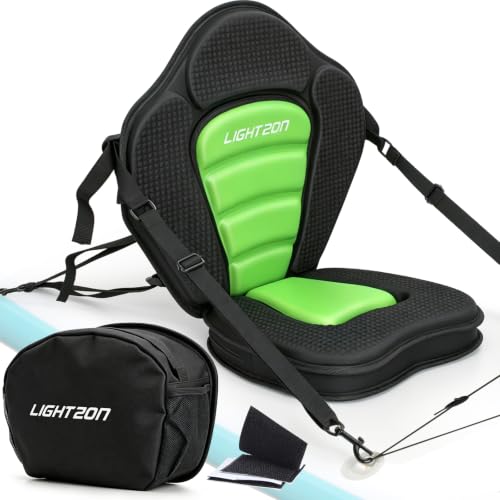 LightZon Universal 2.75" Kayak Seat |
8.4/10 | Buy | |
 BENEHIKE Aluminum Frame Kayak Seat |
8.4/10 | Buy | |
 CLIO Deluxe Padded Kayak Seat |
8.0/10 | Buy |
Albott 9.4ft Modular Pedal Fishing Kayak
Anglers seeking easier transport will appreciate this sectional craft, which breaks down into manageable pieces with internal carrying handles and a four-step assembly. Built from tough HDPE, it pairs a weed-resistant pedal fin drive with cable-controlled rudder steering for quiet, hands-free fishing.
Pros
- Modular pieces enable straightforward vehicle transport and storage
- Weed-resistant fin drive navigates quietly through shallow water
- Rugged HDPE build withstands rough launches and impacts
- Integrated rudder system delivers smooth steering control
- Includes spare fins for the pedal drive mechanism
Cons
- Heavy total assembled weight of 102.4 pounds
- Compact 9.4-foot length offers limited deck walking space
- Requires manual pin assembly and disassembly each outing
NEW-Vi Double-Layer Gel Kayak Cushion
Paddlers dealing with lower-back stiffness or seat numbness will appreciate the NEW-Vi gel pad, which uses a thick double-layer honeycomb structure to relieve pressure points and facilitate cooling airflow. A removable zippered cover with silicone grip dots ensures stability across wet kayak, canoe, or stadium benches.
Pros
- Double-layer gel relieves tailbone pressure effectively
- Honeycomb grid pattern promotes continuous cooling airflow
- Removable zippered cover cleans up easily
- Silicone grip dots keep cushion stable on wet surfaces
- Flexible design folds down for convenient transport
Cons
- Weighs nearly 1.85 pounds, which may deter ultralight paddlers
- Fixed rectangular dimensions may not fit narrow contoured seats
Pelican Sentinel 100X Angler Fishing Kayak
Anglers seeking a manageable solo craft will appreciate this compact sit-on-top kayak. Weighing under 45 pounds at nine and a half feet, it combines easy transportation with four rod holders and an Ergolounge padded seat.
Pros
- Lightweight 44.6-pound frame makes solo handling simple
- Ergolounge seat offers thick cushioning and high back support
- Removable ExoPak crate holds two vertical fishing rods
- Two built-in flush-mount rod holders keep gear ready
- Molded-in side handles provide secure lifting points
Perception Sound 10.5 Sit-Inside Kayak
The Perception Sound 10.5 is a versatile 10-foot-6-inch sit-inside recreational and fishing kayak featuring a stable tri-keel hull, spacious 56-inch cockpit, and a manageable 46-pound hull weight. With a 335-pound maximum capacity and comfortable Zone seating, it is well suited for beginners, lake paddlers, and kayak anglers seeking hassle-free solo transport.
Pros
- Manageable 46-pound hull weight allows straightforward solo lifting and loading onto roof racks or truck beds
- Tri-keel hull design provides dependable flatwater primary stability and smooth steering in calm lakes and slow rivers
- Generous 56-inch long cockpit opening ensures effortless entry and exit for paddlers of varying body sizes
- Built-in fishing convenience with dual molded-in rod holders and dashboard accessory mounting recesses
Cons
- Does not include a paddle or Solo Mount hardware, requiring separate purchases before launching
- Open rear storage well lacks a watertight sealed bulkhead, leaving gear exposed to rain, splash, and spray
- Sit-inside hull is not self-bailing, meaning accumulated water must be removed manually with a sponge or pump
Pelican Catch Classic 100 Angler 10-Foot
The Pelican Catch Classic 100 Angler is a 10-foot sit-on-top fishing kayak featuring a steady tunnel hull and an adjustable dual-position Ergocast frame seat. Weighing just 57 pounds with a 350-pound maximum capacity, it is a reliable, easily transportable platform for kayak anglers navigating lakes, ponds, and slow rivers.
Pros
- Tunnel hull provides exceptional initial flatwater stability for confident casting and gear access
- Ergocast frame seat keeps paddlers elevated off the deck with high and low position adjustments
- Relatively light 57-pound bare hull weight makes solo roof rack loading and transport practical
- Dual 4-inch rigging tracks allow seamless attachment of fish finders and accessories without drilling
- Adjustable footrests and paddle tie-downs ensure a comfortable, hands-free fishing experience
Cons
- Compact 10-foot waterline prioritizes close-quarters turning agility over long-distance straight tracking
- Paddle is not included in the base package and must be purchased separately
- Paddlers approaching the 350-pound maximum capacity ceiling may notice reduced freeboard and deck wash
Lifetime Yukon Angler 11'6" Fishing Kayak
Built for anglers who prioritize stability, this sit-on-top kayak features an assist strap for stand-up casting, an adjustable dual-position frame seat, and integrated gear mounts. It comes equipped with a paddle and dedicated rod storage, though its substantial hull weight requires extra effort to transport solo.
Pros
- Very stable hull design for stand-up fishing
- Adjustable mesh seat offers upright and reclining positions
- Comes ready to fish with paddle and rod holders
- Integrated skeg wheel assists with ground transport
Cons
- Heavy 78.5-pound hull makes solo car-topping difficult
- Rudder and sonar transducer hardware not included
LightZon Universal 2.75" Kayak Seat
Paddlers tackling long days on the water will appreciate the LightZon kayak seat, which pairs an extra-thick 2.75-inch EVA base with a rigid ergonomic backboard. Its universal four-strap mounting system makes it a straightforward comfort upgrade for sit-on-top kayaks, canoes, and paddleboards.
Pros
- Thick 2.75-inch EVA cushion provides substantial tailbone relief
- Rigid ergonomic backboard promotes proper paddling posture
- Non-slip base keeps the seat firmly positioned
- Corrosion-resistant hardware handles freshwater and saltwater use
- Rear splash-resistant pocket keeps small gear accessible
Cons
- Weight capacity is limited to 264 pounds
- Elevated cushion height slightly raises the center of gravity
- Available only in a single color option
BENEHIKE Aluminum Frame Kayak Seat
The BENEHIKE Aluminum Frame Kayak Seat provides elevated back support and versatile mounting for sit-on-top fishing kayaks, inflatable craft, and SUPs. It is an ideal comfort upgrade for anglers and recreational paddlers tired of soggy, unsupportive foam seats.
Pros
- Versatile installation paths accommodate both grooved gear tracks and tie-down D-rings
- Rigid aluminum frame delivers vastly superior upright posture support compared to standard thin foam backrests
- Elevated seat positioning helps keep your lower body dry from pooled deck water
- Fold-flat profile simplifies packing into car trunks, truck beds, or gear closets
- Integrated rear waterproof pocket and included cup holder offer practical on-water organization
Cons
- Substantial 23-inch width requires a wide cockpit well and will not fit narrow sit-inside kayaks
- Elevated stadium seating raises the paddler center of gravity, which may feel slightly less stable on narrow hulls
- Requires existing D-rings or track rails on your watercraft for secure installation
CLIO Deluxe Padded Kayak Seat
Built with contoured EVA foam and an elevated backrest, this CLIO seat supports long paddling outings on kayaks, canoes, or rafts. Four-way adjustable straps and brass clips keep the cushion firmly anchored, while a detachable rear bag adds dry storage for small essentials.
Pros
- Thick EVA foam provides solid lumbar support
- Corrosion-resistant brass snaps withstand marine environments
- Detachable waterproof rear bag adds extra utility
- Includes mounting hardware for versatile boat setups
Cons
- May require drilling into hulls lacking anchor points
- Weighs over 3.2 pounds, adding portage bulk
Frequently Asked Questions
Which style offers better primary stability for stand-up casting?
Sit-on-top kayaks offer significantly higher primary stability for standing and casting. Wider beam dimensions and flatter pontoon or tunnel hull profiles allow anglers to balance comfortably on deck without tipping. Models like the Pelican Catch Classic 100 Angler incorporate wide standing platforms specifically designed to prevent deck flex during hooksets. Sit-inside designs place your center of gravity lower in the water, which aids secondary stability in rough swells but makes standing up nearly impossible.
How do water drainage systems compare in a sit in vs sit on kayak for fishing comparison?
Sit-on-top kayaks feature self-bailing scupper holes that drain water automatically, whereas sit-inside kayaks retain any water that splashes over the cockpit coaming. Passing waves or rain exit through open deck channels on sit-on-top hulls, keeping the craft buoyant without manual bailing. Sit-inside hulls require a bilge pump or hand sponge if a wave swamps the cockpit rim. Paddlers using enclosed cockpits often add a spray skirt to keep water out entirely during cold weather.
How should anglers calculate usable payload capacity versus maximum weight limits in 2026?
Anglers should adhere to the 65 to 70 percent rule by keeping total combined weight well below the manufacturer’s maximum rating. Exceeding 70 percent of stated hull capacity forces the boat lower into the water line, reducing speed, compromising secondary stability, and allowing water to back up through scuppers. A kayak rated for 350 pounds performs best with an operational load of around 245 pounds, including the paddler, tackle, battery, and cooler. Planning payload margins ensures that fishing expeditions remain buoyant and responsive across choppy lake surfaces.
Does cockpit enclosure protect better against cold weather and spray?
Yes, sit-inside kayaks offer superior thermal protection and wind shielding for cold-weather angling. The enclosed cockpit traps radiant body heat and keeps chilly spray off your legs and torso throughout long morning outings. Kayaks such as the Perception Kayaks Sound feature deep sit-in cockpits with molded dashboards that shield sensitive tackle from windblown spray. Sit-on-top craft leave your entire lower body exposed to splashing water and freezing breezes, making them better suited for mild climates.
What paddle length is necessary for wide fishing hulls?
Wide fishing hulls require longer paddles ranging from 230 to 250 centimeters to reach the water comfortably without striking the gunwales. Beam widths on fishing watercraft often exceed 31 inches, necessitating extended shafts for efficient forward strokes. When exploring calm river currents or planning inland lake paddling routes, selecting the proper paddle length prevents shoulder fatigue and keeps tracking straight. Paddlers with taller torsos or high stadium seating adjustments should opt for the longer end of that spectrum.
When is a rudder or tracking skeg necessary on open water?
A tracking skeg or rudder system is essential when fishing in persistent crosswinds or strong tidal currents. Broad fishing hulls with high deck profiles tend to catch wind, causing the craft to weathercock and drift off course. A stern rudder controlled via foot braces keeps your heading straight without requiring corrective paddle strokes on every forward stroke. This tracking assistance lets you concentrate on casting and line management rather than constantly fighting wind drift.
About the author
Reuben Parsons is an experienced water-sports writer and gear reviewer specializing in surfing and stand-up paddleboarding. With a background in marine biology and more than a decade of outdoor writing, He has tested hundreds of products and spent thousands of hours evaluating outdoor gear. He approach combines technical research with genuine experience on the water.