
Can You Paddle a Pedal Kayak? Practical Guide for 2026
Can you paddle a pedal kayak? Learn how dual propulsion works, drive stowage rules, and paddle sizing in October 2026 for safe trips.
 By Maggie Nichols
Updated October 5, 2026
By Maggie Nichols
Updated October 5, 2026
Gliding over shallow flats, navigating thick vegetation beds, or docking against a splintered pier often reveals the practical boundaries of mechanical drives. Wondering can you paddle a pedal kayak is a natural question for both prospective buyers and experienced boaters. The short answer is yes, virtually every pedal-driven watercraft is fully capable of being paddled with a conventional double-bladed paddle. Carrying a dedicated paddle is not merely an optional convenience on pedal craft; it functions as a primary safety backup that marine safety authorities and experienced navigators consider indispensable.
While pedal systems offer incredible lower-body propulsion and hands-free fishing, the physical architecture of these boats presents distinct handling characteristics. Pedal hulls are generally wider and heavier than standard touring boats or traditional single sit-in kayaks built strictly for blade propulsion. Mastering how to balance paddle strokes with rudder controls, stow drive units without scratching the hull, and maintain a safe payload threshold ensures you stay confident in diverse waterways.
| Award | Product | WSG Score About WSG ScoreThe WSG Score is our own rating from 0 to 10, based on performance, design and build, ease of use, and value. It reflects independent research and is never influenced by manufacturers, retailers, or affiliate commissions. Learn more › | |
|---|---|---|---|
| Best Overall |
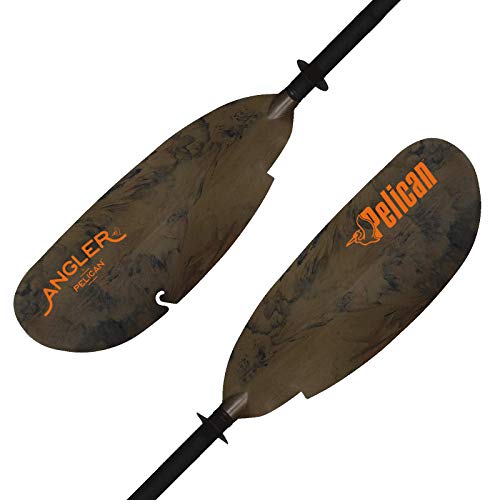
Pelican Poseidon Angler 98.5-Inch Kayak Paddle
|
9.1/10 | Buy |
| Best Value |
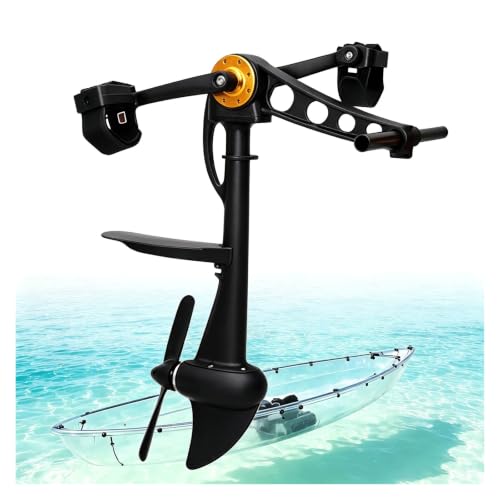 Kiboom Kayak Pedal Drive Kit
|
8.9/10 | Buy |
 Danrelax 12ft Inflatable Fishing Kayak
|
8.8/10 | Buy | |
| Best Budget |
 OCEANBROAD 230cm Alloy Kayak Paddle
|
8.6/10 | Buy |
| Best Premium |
 Spatium 48-Inch Inflatable Fishing SUP
|
8.6/10 | Buy |
 Abahub 210-230cm Adjustable Kayak Paddle
|
8.1/10 | Buy | |
 Greeily Telescoping 94-Inch Kayak Paddle
|
8.0/10 | Buy | |
 BKC Brooklyn 10.0 Pedal Fishing Kayak
|
8.0/10 | Buy | |
 Pelican Monaco 2-Person Pedal Boat
|
7.8/10 | Buy | |
 Reel Yaks Raptor 9.5ft Modular Pedal Fishing Kayak
|
7.8/10 | Buy |
Pelican Poseidon Angler 98.5-Inch Kayak Paddle
Engineered specifically for wide-beam fishing kayaks over 34 inches, the Pelican Poseidon Angler features an extended 98.5-inch two-piece aluminum shaft with an integrated line hook notch and ruler. It is an affordable, functional choice for kayak anglers seeking proper reach and reduced wrist fatigue without spending a fortune on high-end carbon.
Pros
- Generous 98.5-inch reach eliminates knuckle scraping against wide-beam fishing kayak gunwales
- Integrated line retrieval notch and shaft ruler add practical convenience directly from the kayak seat
- Three-position push-button ferrule allows quick feathering adjustments to minimize wind resistance
- Ovalized right-side shaft indexing promotes consistent grip orientation and helps lessen forearm fatigue
Cons
- At 2.6 pounds, the aluminum shaft is heavier over all-day distance paddling than composite alternatives
- Push-button ferrule offers fixed feathering angles rather than continuous infinite angle adjustment
- Bare aluminum shaft can feel cold to unprotected hands during early-spring or late-autumn paddling
Kiboom Kayak Pedal Drive Kit
This modular foot-powered propulsion system frees your hands for fishing and navigation by delivering steady forward thrust. Built with corrosion-resistant anodized aluminum and an auto-folding impact mechanism, it easily fits a wide variety of recreational and fishing kayaks.
Pros
- Durable anodized aluminum and stainless steel construction
- Spring-loaded pedals fold up to prevent underwater damage
- Frees hands for fishing and paddling alternatives
- Quick modular assembly without complicated tools
Cons
- Delivers forward thrust without an instant reverse gear
- May require verifying hull dimensions for compatibility
Danrelax 12ft Inflatable Fishing Kayak
The Danrelax 12ft Inflatable Pedal Kayak combines heavy-duty 2600g/m² PVC and a wide 38.5-inch beam with a hands-free aluminum pedal drive and integrated rudder for flatwater angling. It delivers dependable primary stability and an all-inclusive outfitting kit for paddlers who need a portable fishing craft without hauling a rigid hard-shell trailer.
Pros
- Hands-free pedal mechanism and cable-operated rudder allow anglers to cast and maneuver without holding a paddle
- Extra-wide 38.58-inch beam provides reassuring primary stability on calm lakes, reservoirs, and slow-moving rivers
- Heavy-duty 2600g/m² PVC build with drop-stitch EVA deck padding resists typical launch wear and enhances foot comfort
- Complete all-in-one outfitting package with framed seat, dual-action pump, paddle, and carry bag ready for immediate assembly
Cons
- Heavy total package weight listed at 160 pounds makes moving the boxed kit demanding for solo paddlers without a wheeled cart
- Wide inflatable beam and side air chambers create higher windage and water drag compared to narrow hard-shell touring kayaks
- Requires thorough freshwater rinsing, full drying, and deflation time after every trip to maintain PVC seams and prevent mildew
OCEANBROAD 230cm Alloy Kayak Paddle
Built with an aluminum shaft and fiberglass-reinforced blades, this two-piece paddle delivers dependable control for beginners and recreational paddlers. An insulated grip sleeve protects hands from cold metal, while the included leash and drip rings keep outings dry and secure.
Pros
- Insulated PE grip protects hands against cold alloy
- Three locking positions allow blade feathering customization
- Comes with a convenient bungee leash
- Two-piece breakdown design packs easily for travel
- Fiberglass-reinforced blades provide solid rigidity
Cons
- Heavier in hand than composite or carbon paddles
- Fixed 230cm length cannot adjust for different boats
Spatium 48-Inch Inflatable Fishing SUP
Built with an extra-wide 48-inch profile and a 660-pound capacity, this triple-chamber hybrid board offers a remarkably steady platform for casting and cruising. It combines kayak-style utility with paddleboard versatility, coming outfitted with a 360-degree swivel seat and steering mount.
Pros
- High 660-pound capacity accommodates two paddlers easily
- 360-degree swivel seat enhances angling comfort
- Triple-chamber structure boosts overall stability and safety
- Includes comprehensive gear bundle right out of the box
Cons
- Extra-wide 48-inch beam reduces cruising speed and glide
- Manual pump requires significant effort for three chambers
Abahub 210-230cm Adjustable Kayak Paddle
Built for family recreation and travel, this three-piece paddle adjusts from 210 to 230 cm to fit various paddler heights. An aluminum shaft and asymmetrical feathered blades provide dependable durability and reduced wind resistance on the water.
Pros
- Adjustable length fits paddlers of different heights
- Three-piece design packs down easily for travel
- Aluminum shaft withstands regular wear and tear
- Asymmetrical blades cut smoothly through water
- Feathered angle minimizes wind resistance
Cons
- Total weight reaches 2.35 pounds
- Multi-piece shaft requires regular joint alignment checks
Greeily Telescoping 94-Inch Kayak Paddle
Designed for beginner and intermediate recreational paddlers, this four-piece paddle extends from 71 to 94 inches to accommodate different boat widths and paddling styles. It pairs durable polypropylene blades with a 360-degree rotating shaft and includes an elastic leash for extra security.
Pros
- Broad telescoping range fits various paddler heights
- Four-piece modular design packs down easily
- Comes with an elastic safety leash included
- Integrated drip rings help maintain dry hand grips
- Allows full 360-degree blade feathering adjustments
Cons
- Heavier than average at 3.5 pounds
- Screw-together assembly requires extra setup time
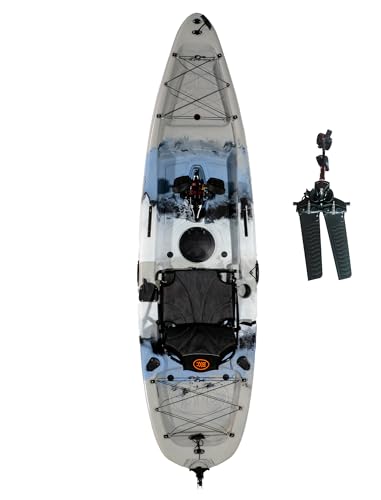
BKC Brooklyn 10.0 Pedal Fishing Kayak
The BKC Brooklyn 10.0 is a 10-foot sit-on-top fishing kayak featuring a hands-free flipper pedal drive, hand-operated rudder, and a stable 33.25-inch beam. With a 350-pound maximum weight capacity and built-in rod holders, it offers a maneuverable platform for calm lakes, slow rivers, and inshore waters.
Pros
- Smooth flipper pedal drive frees hands for casting, trolling, and handling tackle
- Wide 33.25-inch beam offers reassuring flatwater balance and easy boarding for recreational anglers
- Elevated aluminum-frame seat provides better lumbar support and a drier ride than flat molded foam seats
- Pre-rigged with essential fishing features including rod holders, accessory tracks, and a stern rudder
Cons
- Listing features contain conflicting notes on whether a paddle is included or must be purchased separately
- At 75 pounds total rigged weight (58 pounds bare hull), solo car-topping onto tall vehicle roofs may require a load-assist bar or cart
- Short 10-foot waterline is engineered for agility in tight spaces rather than high-speed open-water tracking
Pelican Monaco 2-Person Pedal Boat
Built with durable Ram-X impact-resistant material, the Pelican Monaco provides a stable setup for casual lake cruising. A centered steering handle allows either rider to navigate, while adjustable backrests and onboard storage ensure a relaxed outing.
Pros
- Impact-resistant Ram-X hull construction
- Centered steering accessible from either pedaling seat
- Adjustable backrests offer personalized seating support
- Includes onboard gear storage and four drink holders
Cons
- Heavy at over 103 pounds to transport alone
- Bulky dimensions require dedicated vehicle transport
Reel Yaks Raptor 9.5ft Modular Pedal Fishing Kayak
The Reel Yaks Raptor is a 9.5-foot modular sit-on-top fishing kayak featuring a hands-free fin-drive pedal system and an initial-stability-focused W-hull design. Weighing 62 pounds with a 380-pound capacity, it separates into two pieces, making it an excellent choice for apartment dwellers and solo anglers wanting to transport a pedal craft inside a vehicle trunk.
Pros
- Two-piece modular construction eliminates the physical strain and gear requirements of roof-rack car-topping or trailering
- Fin-drive pedal system allows hands-free boat positioning while actively casting or trolling
- W-hull profile offers reassuring primary stability on calm lakes, ponds, and slow-moving rivers
- Comes equipped out of the box with accessory track rails, storage hatches, and flush-mount rod holders
- Total 62-pound weight is split across two sections, making solo loading and portage significantly easier
Cons
- Short 9.5-foot waterline prioritizes close-quarters turning agility over long-distance straight-line tracking
- Fin-drive mechanism requires adequate water depth and must be flattened or removed when landing in shallows
- Modular connection hardware requires routine rinsing and inspection to keep latching points free of sand and road grit
Essential Mechanics and Techniques for Paddling a Pedal Kayak
Paddling a pedal kayak is not only entirely feasible, but it is also an indispensable skill that every kayak owner must master before venturing onto open water. While mechanical foot drives provide effortless forward cruising and hands-free line casting, manual paddle propulsion serves as your baseline navigation method, your primary steering backup, and your essential safety redundancy.
The Fundamental Answer: Why Paddling Remains Mandatory
Asking whether you can paddle a pedal kayak addresses one of the most critical operational realities of modern paddlecraft. Every reputable pedal-drive watercraft is engineered to support standard double-bladed paddle propulsion alongside its mechanical foot pedals. Even though pedal drives excel at steady forward cruising, carrying an auxiliary paddle is a non-negotiable safety practice on every body of water. Navigators must never treat a mechanical pedal system as an excuse to leave their paddle on shore.
Mechanical components inevitably face real-world stresses from sand, marine growth, and submerged debris. A sheared propeller pin, snapped drive cable, or bent fin mast can disable foot propulsion miles from the nearest boat ramp. In those situations, your paddle becomes your sole method of self-rescue and navigational control. Relying entirely on mechanical parts without a manual backup violates core watercraft safety principles and leaves paddlers vulnerable to sudden shifts in wind or current.
Hydrodynamic Realities: How Pedal Hulls Behave Under Blade Power
Paddling a pedal kayak feels distinctly different from gliding in a streamlined, traditional touring boat. Most pedal-driven hulls are designed with wide beam dimensions, often spanning between 33 and 38 inches, to provide maximum primary stability for standing and casting. Craft such as the Reel Yaks Raptor utilize specialized W-hull profiles that distribute volume across the outer edges to resist tipping. This expanded width increases wetted surface area, creating more hydrodynamic skin friction against the water as you propel the boat forward.
Weight also plays a substantial role in how these hulls respond to individual paddle strokes. Traditional sit-on-top kayaks often weigh between 40 and 60 pounds, whereas a rotomolded pedal boat can easily weigh 65 to 90 pounds before adding tackle or electronics. When you initiate a forward stroke, the extra mass demands more initial effort to overcome inertia and reach cruising speed. Once moving, the heavy hull carries steady momentum, but quick accelerations and aggressive pivot turns require deliberate, authoritative blade placement.
Open drive wells can also introduce turbulence beneath the waterline if the mechanical unit is removed without a blanking plug. Water swirling through an open drive scupper can cause noticeable drag and disrupt clean laminar flow along the keel. Many experienced paddlers choose to keep the drive installed and locked in an elevated position or insert a factory deck plug to maintain a smooth hull bottom. Understanding these hydrodynamic traits allows you to pace your energy expenditure during extended excursions.
Managing the Pedal Drive Unit During Manual Paddling
Efficiently paddling a pedal craft requires knowing what to do with the mechanical drive unit itself. Flipper-style fin mechanisms, such as those found on the BKC Brooklyn 10.0, allow paddlers to push one pedal fully forward to hold the flexible fins flush against the underside of the hull. This flush positioning minimizes draft and prevents the fins from dragging through shallow silt or snagging on underwater structure. Leaving fins dangling downward creates severe resistance, pulling the bow off course with every paddle stroke.
Rotary propeller systems, including standalone units like the Kiboom Kayak Pedal Drive Kit, function somewhat differently when transitioning to manual paddle power. Propeller drives generally pivot upward on a hinge or slide completely out of an aluminum mounting bracket via quick-release levers. If your route crosses extensive shallow flats or rock gardens, unlocking the assembly and resting it securely inside the cockpit well protects delicate propeller blades from bottom impact. Securing the retracted drive with an integrated bungee cord prevents it from shifting awkwardly while you execute low-angle paddle strokes.
Inflatable pedal models, such as the Danrelax Inflatable Kayak with Pedal System, integrate lightweight aluminum drive mounts that require careful seating. When you pull the drive to paddle through weed-choked channels, always verify that the unit is safely lashed to a cockpit D-ring so it cannot slip overboard. An unsecured drive unit resting loose on the deck creates a major capsize hazard if an unexpected wake rocks the boat. Proper drive management keeps your working deck organized, quiet, and balanced.
Paddle Selection: Matching Blade Length to High-Seat Wide Hulls
Standard kayak paddles measuring 210 to 220 centimeters are almost always too short for modern pedal-driven kayaks. Because pedal hulls are exceptionally wide to support standing stability, a short paddle forces the boater to lean awkwardly over the gunwales to dip the blade fully into the water. This repetitive leaning quickly strains lower back muscles, causes painful wrist flexion, and leads to constant paddle strikes against the hard plastic deck. Selecting an appropriately sized paddle is essential for maintaining efficient forward propulsion.
Elevated stadium-style seating frames further complicate paddling geometry by raising the paddler several inches above the kayak floor. Products like the Pelican Poseidon Angler Kayak Paddle address this challenge by providing an extended reach of 98.5 inches, which equals roughly 250 centimeters. That extra length allows the blades to enter the water cleanly past wide hull gunwales while your torso remains upright in the mesh seat. Paddles featuring ovalized shaft indexing and push-button feathering adjustments also help reduce wrist strain when combating stiff afternoon head-winds.
Adjustable paddles with telescoping shafts, such as the Greeily Kayak Paddle or the Abahub 210-230cm Adjustable Kayak Paddle, offer practical versatility for mixed-use days. When you drop your seat to a low position for traveling across choppy open bays, you can shorten the shaft slightly to achieve a higher stroke cadence. When raising the seat to sight-cast or navigate tight channels, extending the shaft to its maximum length preserves smooth clearance. Using durable fiberglass-reinforced polypropylene blades ensures the paddle can push off muddy banks or gravel bars without cracking under load.
Rudder Coordination and Tracking Dynamics
Steering a pedal kayak while paddling introduces a unique dynamic between your hands, your blades, and the stern rudder. Most pedal watercraft rely on an integrated kick-up rudder controlled by a hand-operated lever mounted beside the seat. When paddling a conventional kayak, you maintain course using corrective strokes like sweeps, draws, and stern rudders executed with the paddle blade. On a pedal boat, you can center the hand rudder and paddle normally, or use subtle rudder inputs to correct wind drift without breaking your paddling rhythm.
Strong crosswinds often cause high-sided fishing kayaks to experience weathercocking, which is the tendency of the bow to swing directly into the wind. Fighting weathercocking using asymmetrical paddle strokes alone can rapidly exhaust your upper body and leave your shoulders sore. By setting your stern rudder a few degrees into the wind with the control knob, you create steady counter-torque that keeps the hull tracking true. This mechanical assistance allows you to maintain an even, rhythmic cadence with both arms instead of constantly executing fatiguing corrective strokes on one side.
Operating a stern rudder while paddling requires smooth, measured movements rather than sharp turns. Deflecting the rudder blade too aggressively creates substantial hydrodynamic drag, effectively acting as an underwater brake that kills forward momentum. If you enter twisting backwater creeks with tight ninety-degree bends, combining a wide forward sweep stroke with a synchronized rudder deflection produces remarkably tight pivot turns. Learning how your rudder and paddle complement each other gives you superior control in confined waterways.
Overcoming Shallow Water, Aquatic Vegetation, and Obstacles
Shallow water is the single most common environment where paddlers must temporarily abandon pedal power in favor of a traditional paddle. Rotating propellers and oscillating fins require anywhere from twelve to twenty inches of clean water clearance beneath the keel to operate without striking the bottom. When floating across submerged oyster bars, shallow river shoals, or tidal flats, pedaling risks bending drive shafts, tearing flexible fins, or shattering shear pins. Retracting the drive and picking up your paddle reduces your draft to mere inches, allowing you to glide safely through thin water.
Aquatic vegetation presents another severe operational obstacle for mechanical pedal drives. Invasive hydrilla, dense milfoil, and fibrous lily pad stems quickly wrap around propeller hubs and jam the sprockets of fin systems. Once choked with weeds, pedal resistance increases dramatically, forcing the boater to halt and manually clear the underwater mechanism. Switching to a durable paddle equipped with a built-in hook retrieval notch, such as the OCEANBROAD Kayak Paddle with its sturdy fiberglass blade, allows you to slice through weed beds without fouling mechanical parts.
Launching and landing through breaking surf or unimproved rocky shorelines also demands manual paddle control. Attempting to pedal directly onto a gravel beach or concrete launch ramp almost guarantees costly impact damage to the drive assembly. By stowing the drive while still floating in safe water depth, you can paddle through the breaker zone with full bracing capability to prevent broaching and capsizing. Practicing quick transitions between pedaling and paddling prepares you for unpredictable launch conditions.
Seating Ergonomics, Torso Rotation, and Energy Management
Modern pedal kayaks prioritize all-day comfort by utilizing elevated aluminum-frame stadium seats with breathable mesh fabric. While these high-back chairs excel during relaxed pedaling sessions, they alter the core mechanics required for efficient kayak paddling. Traditional paddling relies heavily on open torso rotation and lower-body foot-brace engagement to transfer power from the core through the paddle shaft. In a high-back pedal seat, the supportive frame can restrict full shoulder extension and limit your rotational range of motion.
To paddle comfortably over extended distances in a pedal boat, adjust your seatback slightly forward to an upright, active posture rather than reclining. Reclining transfers the entire workload onto your forearms and deltoids, leading to premature fatigue and sore shoulder joints. Engaging your abdominal muscles and rotating from your rib cage allows your larger back muscles to absorb the load of moving a wide, heavy hull. If your boat features adjustable foot braces beside the pedal drive well, brace your heels firmly to stabilize your pelvis during each stroke.
Alternating between pedaling and paddling is one of the greatest physical benefits of owning a dual-propulsion watercraft. Long hours of continuous pedaling can cause muscle stiffness in your quadriceps, calves, and lower spine. Grabbing your paddle for twenty minutes stretches your legs, engages your upper body, and promotes healthy cardiovascular circulation throughout your trip. This seamless interplay between upper and lower muscle groups lets you cover greater cumulative mileage without suffering localized muscle exhaustion.
Payload Calculations, Reserve Buoyancy, and Hull Stability
Understanding weight distribution is vital when paddling a heavily loaded pedal fishing craft. Manufacturers assign a maximum weight capacity to every hull, such as 350 pounds on the BKC Brooklyn 10.0 or 380 pounds on the Reel Yaks Raptor. However, safe navigation requires adhering to the 70 to 75 percent safe payload capacity threshold, also recognized as the one-third reserve buoyancy rule. Operating at the absolute maximum capacity submerges the hull too deep, drastically reducing freeboard and making manual paddling sluggish, heavy, and wet.
When a kayak sits too low in the water, water begins pooling through the self-bailing scupper holes, flooding footwells and gear storage areas. Pushing a swampy, overloaded hull with a hand paddle requires tremendous physical exertion and severely compromises both primary and secondary stability. If you plan to carry heavy coolers, tackle crates, and safety equipment, carefully balance that weight between the forward dry hatch and the rear cargo tankwell. Proper fore-and-aft trim ensures the bow slices through oncoming waves cleanly rather than plowing water and resisting every stroke.
For paddlers requiring extreme gear stability or tandem capabilities, specialized multi-chamber platforms like the Spatium 3 Chamber Fishing Boat provide substantial weight limits up to 660 pounds across wide inflatable beams. Those exploring remote backwaters or rugged environments often compare these platforms with inflatable kayaks designed for rough waters to balance portable storage with rigid deck performance. Regardless of hull construction, never compromise reserve buoyancy by exceeding safe payload guidelines before pushing off from shore.
Essential Safety Equipment, USCG Regulations, and Deep-Water Self-Rescue
Operating a pedal kayak on public waterways places you under the jurisdiction of United States Coast Guard regulations outlined in Title 33 CFR Part 175. Federal law mandates that every paddlecraft must carry a properly sized, USCG-approved wearable personal flotation device for each person on board. Choosing a specialized kayak-fishing PFD with a high-back foam profile prevents the life jacket from bunching uncomfortably against elevated stadium seat frames. In addition, you must carry an accessible, non-mechanical sound-producing device, such as a pea-less safety whistle, to signal other boaters in restricted visibility.
Paddlers must also prepare for the challenging reality of executing a deep-water re-entry on a wide, high-sided pedal kayak. Because these hulls are substantially heavier and feature higher gunwales than standard boats, climbing back aboard after an accidental capsize requires deliberate technique. The presence of the pedal drive in the cockpit center can obstruct your chest as you attempt to slide across the deck. Practicing a side-scramble or heel-hook re-entry near shore ensures you can quickly clear the drive well and regain your seat if you capsize in deep, open water.
If your pedal kayak is equipped with a supplementary motor, state regulations typically reclassify the watercraft from an exempt paddlecraft to an engine-driven vessel requiring registration and display of hull numbers. Carrying a manual paddle remains legally necessary and practically vital on motorized setups to guard against electrical failure, dead batteries, or prop fouling. Always inspect your drain plugs, secure your paddle with an elastic leash, and verify weather forecasts before heading out onto expansive, wind-exposed lakes or coastal bays.
Deck Rigging, Storage Maintenance, and Vehicle Transport Logistics
Keeping your paddle readily accessible without cluttering your fishing workspace requires smart deck rigging. Most dedicated pedal kayaks feature molded-in paddle grooves, side-mounted bungee paddle parks, or aluminum accessory gear tracks designed for clip-in paddle holders. Utilizing a flexible bungee leash prevents your paddle from floating away while your hands are busy fighting a fish or adjusting electronics. When navigating tight mangrove creeks or tree-lined riverbanks, securing your paddle flat along the gunwale prevents branches from ripping it overboard.
Proper off-season storage is critical to preserving the hydrodynamic shape and bottom tracking of high-density polyethylene hulls. Never store a heavy pedal kayak resting directly on its bottom hull, as sustained pressure and seasonal heat can cause permanent indentations known as oil-canning. Oil-canned hull bottoms warp the straight keel line, creating severe tracking pull that makes manual paddling exhausting and unpredictable. Instead, store your kayak resting upside down on its sturdy gunwales, suspended using wide nylon webbing straps, or positioned on its side across padded wall cradles.
Transporting wide, heavy pedal boats to and from the water also requires durable gear and sound tie-down procedures. Loading a 60-to-80-pound rotomolded boat onto vehicle roofs is best accomplished using load-assist rollers or dedicated heavy-duty kayak racks capable of handling broad hull beams. Always secure your watercraft with non-stretch cam straps across the load bars, avoiding overtightened ratchet straps that can crush plastic scuppers or deform hull channels. Attaching structural bow and stern safety lines to your vehicle frame ensures safe highway transit before your next dual-propulsion adventure.
About the author
Maggie Nichols is an experienced paddler, adventure guide, and gear reviewer with more than 25 years around paddle sports. Her background includes canoe touring, whitewater rafting and kayaking, ocean kayak guiding, and extensive outdoor education. She approaches water gear with a strong focus on real-world usability, durability, comfort, and practical performance.