
What Size Anchor Do I Need for a Kayak: Sizing, Weight, and Rigging Guide for 2026
What Size Anchor Do I Need For A Kayak depends on hull displacement, windage, and current. Review anchor weight guides, scope ratios, and safety rigging for October 2026.
 By Marius Fox
Updated October 5, 2026
By Marius Fox
Updated October 5, 2026
Drifting across an open lake or fighting steady tidal currents can quickly turn a relaxing afternoon into an exhausting paddle battle. When positioning your boat for fishing, photography, or resting, determining what size anchor do i need for a kayak is essential to hold your position without overloading your deck or risking a capsize. Most standard paddlecraft between 10 and 14 feet perform best with a compact folding anchor weighing between 1.5 and 3.5 pounds. Paddlers operating lightweight sit-in recreational kayaks on calm inland ponds can often rely on lighter systems, whereas wider fishing platforms demand heavier ground tackle to resist wind resistance.
Carrying the wrong anchor size introduces distinct hazards, as an oversized unit consumes valuable safe payload capacity and adds deadweight during solo portages. Conversely, an undersized anchor drags across soft mud or sand, failing to keep your kayak stationary against changing tides and crosswinds. Choosing the right anchor also involves selecting proper rode length, understanding bottom composition, and rigging an anchor trolley system for safe bow-or-stern positioning. By matching anchor mass and grip style to your specific vessel dimensions, you can achieve reliable holding power while maintaining complete safety on the water.
| Award | Product | WSG Score About WSG ScoreThe WSG Score is our own rating from 0 to 10, based on performance, design and build, ease of use, and value. It reflects independent research and is never influenced by manufacturers, retailers, or affiliate commissions. Learn more › | |
|---|---|---|---|
| Best Overall |
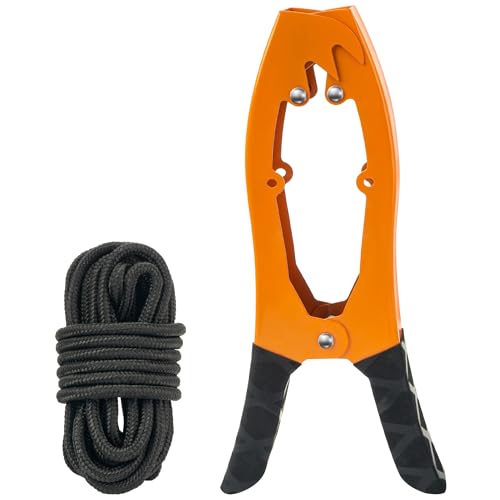
Omoojee Kayak Brush Gripper with 16.4ft Paracord
|
8.8/10 | Buy |
 XIALUO 3.5 lb Folding Kayak Anchor Kit
|
8.3/10 | Buy | |
 Best Marine and Outdoors 3.5 lb Folding Kayak
|
8.0/10 | Buy |
Omoojee Kayak Brush Gripper with 16.4ft Paracord
The Omoojee Kayak Anchor Grip is a spring-tensioned brush clamp crafted from painted 304 stainless steel and rigged with 16.4 feet of paracord. It offers silent, dependable station-keeping along tree-lined banks and dock pilings without the weight or bottom disturbance of heavy claw anchors, making it a great pick for shallow-water kayak anglers.
Pros
- Corrosion-resistant 304 stainless steel construction with an anti-rust painted finish
- Aggressive jaw teeth secure a firm hold on branches, limbs, and dock pilings under wind drift
- Stealthy alternative to heavy bottom anchors that avoids stirring up silt or spooking fish
- Lightweight and compact footprint saves valuable deck and hatch space on smaller kayaks
Cons
- Only functions where solid shoreline vegetation, fallen timber, or dock posts are present
- Not rated for holding heavy watercraft in fast-moving river currents or heavy wind swells
- Lacks a built-in line float, so securing the cord to the craft before deploying is critical
XIALUO 3.5 lb Folding Kayak Anchor Kit
Designed for kayaks, paddleboards, and small watercraft, this folding grappling anchor pairs a 3.5-pound head with 30 feet of braided nylon line. It packs down into an included storage bag to protect craft surfaces and preserve deck space.
Pros
- Complete kit ready for small craft use
- Compact folding design saves onboard storage space
- Locking collar secures flukes in position
- Protective storage bag prevents hull scratches
Cons
- 30-foot rope limits anchoring depth
- 3.5-pound weight is unsuitable for larger boats
Best Marine and Outdoors 3.5 lb Folding Kayak
This compact 3.5-pound carbon steel folding grapnel anchor includes 40 feet of marine-grade rope and multi-point attachment shackles for reliable station-keeping. It is an ideal ground tackle upgrade for kayak anglers, recreational paddlers, and paddleboarders holding position against wind and mild current.
Pros
- Includes 40 feet of durable marine rope, eliminating the need to source separate ground tackle line
- Multi-point attachment eyes allow easy breakaway rock rigging to retrieve snags without losing the anchor
- Folds down tightly to 4 x 12 x 4 inches, fitting easily into standard milk crates or dry hatch openings
- Adequate 3.5-pound weight provides solid holding power for personal watercraft without adding excessive ballast to your hull
Cons
- The 40-foot rope limits anchoring depth to roughly 8 to 12 feet when maintaining standard holding scope in wind or current
- Carbon steel flukes require careful handling around inflatable drop-stitch kayaks and paddleboards to prevent deck abrasions
- Does not include an anchor trolley system, which is recommended for safely anchoring a kayak from the bow or stern
Guide to Kayak Anchor Sizing, Scope, and Water Safety
Selecting the correct anchor setup requires balancing physical anchor mass with water depth, wind resistance, and hull displacement. For the vast majority of paddlecraft, a folding grapnel anchor weighing 3.5 pounds provides the ideal balance between holding power and portable storage. Paddlers navigating sheltered ponds in compact boats under ten feet can occasionally step down to a 1.5-pound anchor in calm conditions. However, wind and surface chop exert significant lateral force against a kayak hull, making the slightly heavier 3.5-pound anchor the standard choice for reliable stability.
Baseline Anchor Weight by Kayak Length and Hull Profile
Hull length and surface area directly determine how much drag wind and moving water exert on your anchored paddlecraft. Standard recreational kayaks measuring 10 to 12 feet feature moderate beam widths that sit relatively low in the water. For these standard hulls, a 3.5-pound folding anchor offers enough mass to grab bottom contours without burdening your deck. When paddling shorter, ultra-light crafts under 10 feet on glassy water, a 1.5-pound anchor may hold position, but it often slips as soon as an afternoon thermal breeze develops.
Large fishing kayaks and sit-on-top platforms between 12 and 14 feet present a much larger profile to both wind and current. These vessels often feature elevated framed stadium seating, gear tracks, rod holders, and tall gunwales that act like sails in open water. Even when paddling wider heavy-duty inflatable kayaks with broad buoyancy tubes, windage forces can push a lightweight anchor across a silt bed. A 3.5-pound grapnel anchor is the recognized sweet spot for these larger crafts, delivering dependable holding security without demanding excessive muscle effort to haul aboard.
Operating motorized rigs or heavily loaded touring craft increases the resistance against your ground tackle even further. In particular, anglers operating kayaks equipped with trolling motors and battery systems carry higher overall displacement that requires positive fluke engagement. While a heavier five-pound anchor might cross your mind for extreme conditions, handling such heavy weights from a seated position can destabilize your hull during retrieval. Sticking to a 3.5-pound anchor combined with proper rode scope remains the safest, most effective configuration for heavy kayaks.
Understanding Anchor Styles: Folding Grapnels Versus Shoreline Grips
The four-fluke folding grapnel anchor represents the standard design across the paddlecraft industry for good reason. Models like the XIALUO Marine Kayak Anchor Kits 3.5 lb Folding feature a sliding collar that locks four curved flukes outward during deployment. When collapsed, the entire assembly packs down into a compact twelve-inch by three-inch profile that fits neatly into an included storage bag. This folding mechanism prevents sharp metal edges from gouging rotomolded polyethylene decks, puncturing inflatable drop-stitch chambers, or tangling with loose cockpit gear.
The four flukes of a grapnel anchor excel in varied underwater terrain, including rocky structures, gravel river beds, submerged timber, and heavy weed beds. As horizontal tension pulls the anchor across the bottom, at least two flukes rotate downward to bite into the substrate. While traditional fluke or Danforth anchors provide superior grip in expansive sand flats, their rigid shanks and wide blades make them unwieldy to store on a narrow kayak deck. Grapnel anchors strike the practical compromise between multi-surface holding ability and compact deck storage.
Alternative anchoring tools serve specialized niches where traditional bottom anchors prove unnecessary or impractical. The Omoojee Kayak Anchor Grip offers a mechanical brush-gripping clamp built from 304 stainless steel with a protective antirust coating. Instead of dropping metal to the bottom and disturbing fish habitats, this spring-loaded gripper locks onto shoreline branches, mangrove roots, dock pilings, or flooded timber. Using a brush grip eliminates the physical effort of hoisting wet anchors and works exceptionally well for stealthy river fishing or backwater sloughs.
Rope Length and the Critical Importance of Anchor Scope
Paddlers frequently assume that holding power comes purely from anchor weight, but line length and scope ratio are actually far more critical. Scope refers to the ratio between the length of your anchor rode and the total vertical distance from your kayak deck to the water bottom. If you drop a 3.5-pound anchor directly beneath your hull on a short line, upward bobbing from waves will pull the shank vertical and dislodge the flukes immediately. Creating a horizontal pull along the bottom requires deploying sufficient rope to keep the anchor lying flat where it can dig in.
A minimum recommended scope ratio for calm inland lakes is 5:1, meaning you need five feet of anchor line for every one foot of water depth. For example, anchoring in six feet of water requires at least thirty feet of line to maintain proper fluke geometry. When facing choppy bays, tidal currents, or gusty winds, expanding your scope to 7:1 ensures the flukes stay buried under surging loads. Standard anchor kits often supply thirty to forty feet of marine-grade braided nylon rope, which suits water depths up to six to eight feet under moderate conditions.
Rope construction also influences how your kayak behaves while swinging at anchor. Double-braided marine nylon rope with an eight-millimeter diameter offers excellent tensile strength, mild elasticity to cushion wave shock, and comfortable handling for cold hands. Thinner utility cords or cheap polypropylene lines can cut into fingers, tangle easily, and float unpredictably near your paddle blades. Selecting quality braided rope paired with a high-visibility float buoy ensures smooth deployments and quick retrievals.
Multi-Point Shackle Attachments and Chain Dynamics
Connecting your anchor line correctly determines whether your flukes remain planted or skip uselessly across the bottom. Heavy-duty carbon steel options like the Kayak Anchor, 3.5 LB Folding Anchor System incorporate multi-point shackle attachments at both the head and crown of the anchor body. This dual-attachment engineering provides structural versatility for standard anchoring setups as well as advanced snag-release configurations. Carbon steel construction provides reliable rust resistance in both saltwater estuaries and freshwater reservoirs when properly rinsed after use.
Adding a two-foot to three-foot section of quarter-inch galvanized chain between the anchor shackle and your nylon rope dramatically improves holding performance. The chain acts as a flexible weight that hugs the lakebed, absorbing sudden boat tugs caused by wind gusts or boat wakes. This downward pull keeps the anchor shank parallel to the floor, allowing a lighter 3.5-pound anchor to hold with the tenacity of a much heavier unit. While adding chain increases total rigging weight slightly, it reduces the overall line scope needed to achieve a rock-solid hold.
Rigging an Anchor Trolley System to Prevent Capsizing
Tying an anchor line directly to your kayak cockpit coaming or side handle creates a serious capsize hazard on open water. If your boat is tethered from the side, passing boat wakes or shifting crosswinds will push against your beam broadside. Because kayaks lack significant secondary stability when anchored perpendicular to waves, broadside pressure can easily roll your hull into a wet capsize. You must always secure your anchor rode from either the extreme bow or the extreme stern, allowing the boat to swing naturally into the wind or current.
An anchor trolley system provides the safest method for adjusting your tether point without leaving your seat. A trolley consists of a continuous loop of paracord running through pulleys mounted near the bow and stern, equipped with a small stainless steel ring. You clip your anchor line into the center ring and shuttle the rope forward or backward using the loop. Shifting your anchor point to the bow points your hull into approaching waves, shedding water over the deck and maintaining your primary stability.
Paddling safety protocols require wearing a properly fitted personal flotation device whenever deploying or hauling ground tackle. Under US Coast Guard Title 33 CFR § 175 regulations, recreational paddlers must carry an approved wearable PFD and an audible sound-signaling device such as a pea-less whistle. Leaning over the gunwale to untie a stuck anchor rode increases the risk of an accidental tumble into cold water. A comfortable high-back life vest ensures complete mobility during anchor handling while providing essential passive buoyancy should an unexpected immersion occur.
Breakaway Rock Rigging for Snag Recovery
Dropping a grapnel anchor into rocky river bottoms, submerged riprap, or coral beds presents a high likelihood of getting snagged. If the four flukes wedge beneath a boulder under heavy tension, pulling upward from the top eyelet only jams the anchor tighter into the crevice. Paddlers who pull aggressively on a jammed anchor risk swamping their cockpit or having to cut their rope and abandon expensive ground gear. Rigging your anchor in a breakaway configuration eliminates this frustration by providing an automatic reverse release mechanism.
To rig a breakaway system, attach the primary shackle of your anchor rope directly to the bottom eyelet near the flukes. Run your anchor line snug against the central shank and secure it to the top eyelet using a small plastic zip-tie or heavy monofilament loop. Under normal anchoring loads, the zip-tie holds the pull force at the top of the shank, allowing the anchor to dig in normally. If the anchor snags firmly on rock, a hard, sharp upward pull snaps the zip-tie, transferring all retrieval force to the bottom eyelet and backing the flukes out of the obstacle cleanly.
Quick-Release Systems and Emergency Float Buoys
Rapid weather changes, sudden wakes from passing powerboats, or heavy river currents can turn a peaceful anchoring session into an emergency. If your kayak begins taking on water or an approaching vessel threatens your safety zone, you must be able to disconnect from your anchor instantly. Fastening your anchor line to a jam cleat or quick-release cam cleat mounted on your cockpit gunwale allows you to release tension with a single flick of your wrist. Never tie your anchor rope with complicated knots that cannot be undone under heavy load.
Every anchor rode should incorporate a buoyant foam float attached to the bitter end of the line. When you execute an emergency quick release, the entire rope drops into the water while the bright float remains bobbing on the surface. Once you paddle clear of immediate danger and stabilize your craft, you can simply circle back and retrieve the floating marker line. This setup prevents gear loss while guaranteeing that you never remain trapped in a hazardous position by your own ground tackle.
Safe Payload Buffers and Deck Storage Management
Every piece of ground tackle you carry subtracts directly from your kayak safe operating capacity. Marine manufacturers list maximum weight capacities, but safe paddling requires adhering to the 70 to 75 percent capacity threshold to preserve essential hull freeboard. Overloading a kayak with heavy anchors, long chains, tackle boxes, and camping gear reduces primary stability and causes cockpit footwells to pool with water. Allocating roughly five to six pounds for your complete anchor kit keeps your gross displacement well within conservative safety margins.
Organizing your ground gear properly ensures a clean deck free of trip hazards and snagged fishing lines. Storing your folded 3.5-pound anchor inside a dedicated padded storage pouch prevents rattling noises and protects your hull from abrasive cosmetic scratches. Coil your nylon rode neatly using a figure-eight wrap to prevent bird nests and tangles during quick drops. Keeping your anchor kit secured within arm reach in a front hatch or tankwell ensures rapid deployment whenever changing wind conditions demand immediate position holding.
Matching Anchor Technique to Waterway and Bottom Substrate
Bottom composition dictates how easily an anchor sets and whether a 3.5-pound grapnel can maintain its grip. In soft mud or silt bottoms, standard grapnel flukes can slide until they gather weed debris or sink into thicker sediment. Allowing a few extra feet of line scope helps the anchor settle deeper into soft lakebed muck. Conversely, hard-packed sand provides solid resistance once the flukes bite, allowing paddlers to use standard scope ratios with minimal drift.
Rivers with moderate currents demand special caution because moving water creates continuous hydrodynamic drag against the hull. Deploying an anchor from the stern in a fast river can pull the rear deck downward, swamping the cockpit in seconds. When anchoring in moving current, always align the bow directly upstream using an anchor trolley and avoid anchoring in swift chutes or near strainer hazards. If the bottom consists of thick gravel or cobble, a 3.5-pound folding anchor with breakaway rigging offers the most reliable holding without snag hazards.
Matching your kayak with a 3.5-pound folding grapnel anchor and thirty to forty feet of quality braided rode delivers the optimal combination of holding security and deck manageability. Adding an anchor trolley system, a breakaway rock rig, and an emergency float ensures you can position your vessel safely without risking broadside swamping. Whether you are holding on a windy reservoir flat or clamping to shoreline brush with a mechanical grip, the right ground gear lets you focus on paddling with absolute confidence.
About the author
Marius Fox brings extensive hands-on experience from both above and below the water. A PADI Master Scuba Diver Trainer and AIDA freediver, she has worked as a scuba instructor, managed diving operations, participated in shark research, and contributed to marine conservation projects. His expertise provides a practical perspective on diving, snorkeling, water safety, and adventure gear.