
Can You Put a Motor on a Kayak: Practical Guide and Legal Rules for 2026
Can you put a motor on a kayak? Discover mounting options, battery setups, legal registration rules, and safe payload limits for October 2026.
 By Edward Ting
Updated October 5, 2026
By Edward Ting
Updated October 5, 2026

Equipping a paddlecraft with electric power transforms how anglers and recreational paddlers explore expansive reservoirs, tidal bays, and river channels. Many paddlers wonder, can you put a motor on a kayak without sacrificing hull balance or stability. The short answer is an emphatic yes, provided you select a hull with sufficient displacement and match the motor mount to your boat architecture. Modern setups often integrate clamp-on brackets or crossbar systems to secure compact trolling units cleanly behind the cockpit. Paddlers exploring extended open water often evaluate pedal kayaks with trolling motors to maximize range without expending all their physical energy.
Before attaching an electric propulsion unit to your craft, you must assess several critical structural and legal details. Adding a motor, battery, and mounting bracket increases total displacement and alters the boat center of gravity. You must maintain a strict 25 to 30 percent reserve buoyancy buffer so your boat rides high enough above the water to prevent swamping. Adding mechanical propulsion also legally converts a human-powered paddlecraft into a motorized vessel in almost every jurisdiction. Understanding mounting geometry, power distribution, and state registration requirements ensures your upgrade remains safe, functional, and fully compliant on public waterways.
| Award | Product | WSG Score About WSG ScoreThe WSG Score is our own rating from 0 to 10, based on performance, design and build, ease of use, and value. It reflects independent research and is never influenced by manufacturers, retailers, or affiliate commissions. Learn more › | |
|---|---|---|---|
| Best Overall |
Brocraft Universal Canoe Trolling Motor Mount
|
8.9/10 | Buy |
| Best Budget |
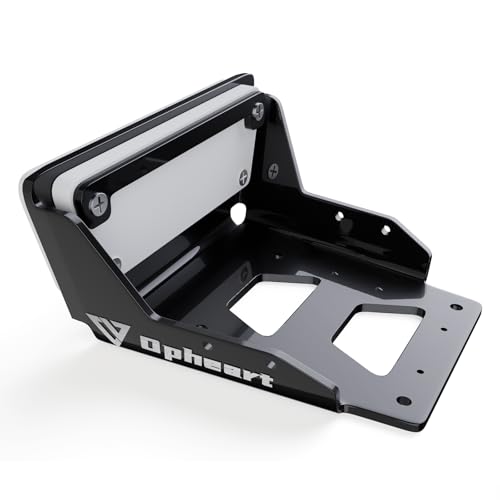 Opheart Aluminum Kayak Trolling Motor Mount
|
8.8/10 | Buy |
| Best Value |
 Brocraft 40-Inch Kayak Trolling Motor Mount
|
8.6/10 | Buy |
| Best Premium |
 Newport NV-Series 36lb Thrust 12V Kayak Trolling
|
8.1/10 | Buy |
 besttruck Kayak Trolling Motor Mount (3 HP)
|
8.0/10 | Buy | |
 BKC Kayak Trolling Motor for PK Series Sit-on-Top
|
8.0/10 | Buy | |
 Sunluway Universal Kayak Trolling Motor Mount
|
7.8/10 | Buy |
Brocraft Universal Canoe Trolling Motor Mount
Equipped with an adjustable crossbar and tool-free clamps, this Brocraft bracket attaches directly to canoe gunwales for quick motor setup. Its marine-grade aluminum and nylon structure accommodates both gas and electric motors for versatile paddling setups.
Pros
- Tool-free hand-tighten installation and removal
- Adjusts easily across different hull widths
- Corrosion-resistant marine-grade aluminum build
- Accepts both electric and gas motors
- Includes two-year warranty coverage
Cons
- Requires accessible canoe gunwales for clamping
- Manual hand-tightening requires periodic tension checks
Opheart Aluminum Kayak Trolling Motor Mount
Built from corrosion-resistant 5083 marine aluminum, this transom bracket allows kayak anglers to secure electric trolling motors up to 3 horsepower or 86 pounds of thrust. The integrated locking lip provides extra security against motor slippage during vibration.
Pros
- Durable 5mm marine-grade aluminum construction
- Protective powder coating handles saltwater exposure
- Rated for up to 86 pounds of thrust
- Pre-drilled for standard 3.75 x 4.75 inch patterns
- Locking lip prevents motor slippage from vibration
Cons
- Requires a flat stern surface for mounting
- Not suitable for motors over 3 horsepower
- Non-matching transoms will require drilling
Brocraft 40-Inch Kayak Trolling Motor Mount
Built from marine-grade anodized aluminum, this Brocraft mounting kit allows anglers to mount gas or electric trolling motors to a kayak via gear tracks or direct surface bolting. Its 40-inch crossbar accommodates various hull widths and offers flexible positioning for left- or right-side motor operation.
Pros
- Corrosion-resistant marine-grade anodized aluminum construction
- Supports both gear track and direct bolt-on installation
- Reversible plate allows left- or right-side motor placement
- Includes all necessary mounting hardware and support bars
Cons
- Direct installation requires bolting into the kayak hull
- Requires compatible parallel tracks for track mounting
Newport NV-Series 36lb Thrust 12V Kayak Trolling
The Newport NV-Series 36lb Thrust 12V Trolling Motor provides kayak anglers and small-craft paddlers with an efficient, quiet transom-mount electric propulsion system featuring a compact 30-inch shaft. Weighing 18.5 pounds with saltwater-ready components and five forward speeds, it is an ideal power upgrade for boaters looking to extend their range on calm lakes and sheltered coastal waters.
Pros
- Compact 30-inch shaft length is scaled nicely for kayaks and small craft rather than oversized boat transoms
- Corrosion-resistant materials allow versatile use in both freshwater reservoirs and saltwater bays
- Eight-speed control system (5 forward, 3 reverse) provides straightforward throttle adjustments for trolling
- Built-in LED battery indicator provides quick visual feedback on remaining 12V battery power
- Lightweight 18.5-pound design helps keep total stern weight within safe operational limits
Cons
- Requires a compatible 12V deep-cycle battery and aftermarket kayak mounting bracket (sold separately)
- Stepped speed settings lack the ultra-fine throttle precision of digital variable-speed motors
- 36 pounds of thrust is best suited for calm waters and may struggle against heavy river currents or coastal headwinds
besttruck Kayak Trolling Motor Mount (3 HP)
Built with corrosion-resistant nylon and stainless steel, this transom bracket allows kayak anglers to attach clamp-on electric motors up to 3 HP. It fits flat stern sections securely, though setting it up requires drilling into the hull.
Pros
- Durable stainless steel and nylon construction
- Accommodates electric trolling motors up to 3 HP
- Corrosion-resistant hardware withstands marine use
- Universal fit for kayaks with flat sterns
Cons
- Requires drilling four holes into the kayak
- Incompatible with outboard gas engines
- Limited to motors under 3 HP
BKC Kayak Trolling Motor for PK Series Sit-on-Top
Designed specifically for BKC PK Series sit-on-top fishing kayaks, this 14.3-pound trolling motor delivers 36 pounds of quiet thrust with five forward and three reverse speeds. It is an ideal bolt-on propulsion upgrade for kayak anglers seeking hands-free cruising and effortless positioning on calm lakes and slow rivers.
Pros
- Lightweight 14.3-pound design minimizes impact on your kayak's usable gear payload
- Generous 36-pound thrust output matched to propel BKC PK Series fishing hulls with ease
- Eight versatile speed settings provide flexible control for low-speed trolling and open-water cruising
- Rapid installation and detachment process streamlines vehicle loading and off-season storage
- Whisper-quiet operation maintains stealth around active fishing structures
Cons
- Proprietary mounting design is tailored specifically for BKC PK Series hulls rather than serving as a universal mount
- Requires an external marine battery and wiring setup that must be factored into deck space and total payload
- Fixed 36-pound thrust rating is optimized for calm waters rather than high-velocity tidal currents or open-ocean swells
Sunluway Universal Kayak Trolling Motor Mount
The Sunluway Kayak Motor Mount Bracket provides a rugged, marine-grade aluminum platform engineered to support clamp-on electric trolling motors up to 60 lbs of thrust. Ideal for kayak anglers and distance paddlers, it offers an adjustable rail mounting system that delivers motor-assist cruising without cumbersome hull modifications.
Pros
- Supports robust electric trolling motors rated up to 60 lbs of thrust for extended flatwater range
- Built from marine-grade aluminum and high-impact steel for dependable corrosion resistance in freshwater and saltwater
- Adjustable mounting bases accommodate varied kayak beam widths and deck contours
- Quick-release mechanism simplifies breakdown before loading the kayak onto vehicle roof racks
- Provides accessory attachment points behind the seat for rod holders and electronics
Cons
- Requires careful onboard weight counter-balancing when pairing heavy deep-cycle or lithium batteries with the motor
- May require drilling into bare gunwales if your kayak lacks pre-installed track or flat accessory platforms
- Motor, battery, steering linkage, and wiring harness must be purchased and rigged separately
Motorizing a Kayak: Complete Guide to Mounting, Wiring, and Safety
Adding an auxiliary electric trolling motor to a standard recreational or fishing kayak is completely practical with the right hardware. Most rotomolded sit-on-top kayaks feature broad beams and flat stern areas that accommodate aftermarket transom plates or crossbar brackets. But executing this conversion safely requires balancing structural load limits, managing electrical components, and obeying local boating regulations. Taking time to calculate payload boundaries and choosing suitable marine-grade hardware protects both your watercraft and your safety.
Hull Geometry, Cockpit Styles, and Safe Payload Buffers
Not every kayak hull responds identically to the weight and rotational torque generated by a trolling motor. Wide sit-on-top fishing kayaks featuring flat or tunnel pontoon hulls offer exceptional primary stability, making them the most accommodating platforms for auxiliary propulsion. These hulls resist rolling when an offset motor engages reverse or forward thrust in choppy water. While you can technically mount a small motor on traditional sit-inside kayaks, their narrower beam and lower initial stability demand far greater caution during operation.
Payload management represents the single most important safety consideration when converting any paddlecraft to motor power. Manufacturers assign a maximum gross weight rating to every hull, but operating near that limit drastically reduces freeboard. Safe paddling guidelines require adhering to a 70 to 75 percent safe payload threshold, leaving a 25 to 30 percent reserve buoyancy buffer. This reserve buoyancy prevents the stern from swamping when you encounter boat wakes or steep wind chop. An overloaded boat wallows in the water, handles sluggishly, and risks taking on water through low gunwales.
To calculate your operating capacity accurately, tally the weight of all items on board before launching. Combine your body weight, bare hull weight, motor unit, mounting hardware, battery, and tackle or safety gear. A standard 12-volt trolling motor weighs roughly 15 to 20 pounds, while a deep-cycle battery can add 30 to 60 pounds depending on chemistry. If this total exceeds 75 percent of the stated manufacturer weight capacity, you must lighten your gear or upgrade to a larger displacement kayak. Maintaining ample freeboard ensures the motor propeller stays submerged without dragging down your stern deck.
Motor Mount Configurations and Transom Engineering
Securing a trolling motor requires a rigid mounting platform that can absorb vibration, forward thrust, and reverse torque without flexing the hull plastic. Kayak owners generally choose between stern transom brackets, side-mounted crossbars, or factory gear-track mounting systems. Direct stern transom mounts attach to kayaks that feature a flat vertical surface or power-pole bolt pattern molded into the rear deck. Brackets made of 5mm marine-grade aluminum deliver dependable strength while resisting freshwater and saltwater corrosion. These brackets often utilize standard 3.75-inch by 4.75-inch bolt patterns, offering a solid base for clamp-on electric motors.
Side-mount crossbar systems provide an effective alternative for kayaks lacking a flat stern surface. These assemblies employ a heavy-duty anodized aluminum crossbar, often spanning 40 inches, that clamps across the gunwales or slides into parallel gear tracks behind the seating area. Crossbar mounts position the motor just behind the paddler on either the port or starboard side. This arrangement allows the operator to reach the motor tiller handle easily without twisting around to access the stern. But side-mounted motors exert asymmetric rotational torque on the kayak, which requires constant steering counter-corrections when running at higher throttle settings.
Universal adjustable rail-mount brackets offer another modular solution for modern angling kayaks equipped with factory accessory tracks. These kits utilize dual rail bases and male-to-male adaptors that adjust across various hull widths without requiring permanent holes in the plastic. Marine-grade hardware with stainless steel fasteners and locking nylon plates helps prevent loosening caused by engine vibration. Whichever mounting style you select, ensure the clamping surface features a raised locking lip to prevent the motor bracket from slipping free into deep water. Inspecting all mounting bolts and track knobs before every launch prevents accidental motor loss.
Thrust Ratings, Shaft Lengths, and Hull Speed Limits
Selecting the appropriate thrust rating prevents underpowering your boat against stiff currents while avoiding excessive battery consumption. For most solo kayaks measuring 10 to 14 feet, a 12-volt electric motor delivering 36 pounds of thrust offers an ideal balance of power and efficiency. Units in this class provide ample propulsion to push through moderate headwinds without overstressing lightweight transom mounts. Motors generating 55 to 86 pounds of thrust are available, but their torque can strain hull plastics and quickly drain battery reserves. Lighter setups benefit most from motors optimized for low-amp draw and steady cruising runtime.
Shaft length is an equally critical specification that directly impacts kayak performance and shallow-water draft. Standard boat trolling motors feature 36-inch to 42-inch shafts, which are far too long for a low-profile kayak sitting close to the water. A 30-inch shaft generally provides optimal depth, keeping the two-blade propeller submerged beneath surface turbulence while avoiding underwater obstacles. An excessively long shaft acts as a high-leverage lever arm that magnifies torque against the mounting bracket and interferes with paddle strokes. Many kayak-specific motors feature adjustable collar clamps, allowing you to fine-tune propeller depth based on water depth and paddler weight.
Beginners often assume that doubling motor thrust will double their kayak forward velocity, but hydrodynamic principles limit displacement hulls. A kayak cannot exceed its theoretical hull speed, which is dictated by its waterline length, without attempting to plane. For a typical 12-foot kayak, hull speed tops out between 4 and 5 miles per hour. Applying 55 or 80 pounds of thrust into a displacement hull primarily produces larger stern waves and burns battery power rather than creating significant speed gains. Using moderate throttle settings preserves battery life, keeps motor noise minimal, and delivers smooth, predictable handling.
Battery Selection and Marine Electrical Safety
Powering your trolling motor requires a dedicated deep-cycle marine battery capable of sustaining continuous electrical discharge. Traditional sealed lead-acid (SLA) or absorbed glass mat (AGM) batteries provide reliable power at an accessible upfront investment. But a standard 100-amp-hour AGM battery weighs roughly 60 pounds, consuming a massive portion of your kayak safe payload threshold. In contrast, modern lithium iron phosphate (LiFePO4) batteries have become the favored standard among kayak anglers because they weigh less than half of an equivalent AGM battery. A 50-amp-hour lithium battery provides several hours of trolling time while keeping total rigged weight manageable.
Positioning the battery inside the kayak hull requires careful weight distribution to maintain proper fore-and-aft trim. Placing a heavy battery too far back in the stern tankwell pulls the bow upward, creating drag and increasing vulnerability to following seas. Storing the battery inside a central hull hatch or directly beneath the elevated seat frame keeps the center of gravity low and centered. Always secure the battery inside a durable, non-conductive battery box with heavy-duty cam straps to prevent shifting during rapid maneuvers or accidental capsizes. A shifting battery can destabilize the hull instantly and cause structural damage to internal bulkheads.
Marine electrical systems on small watercraft operate in wet environments that accelerate corrosion and short circuits. Every motorized kayak electrical circuit must include an appropriately rated inline marine fuse or manual reset circuit breaker placed close to the positive battery terminal. A 50-amp or 60-amp breaker protects motor wiring from overheating if the propeller tangles in heavy hydrilla, lily pads, or submerged fishing lines. Use tinned marine-grade copper wiring with waterproof heat-shrink connectors to resist moisture ingress. Dielectric grease applied to terminal connections prevents electrolytic oxidation, ensuring steady electrical current trip after trip.
Throttle Controls and Steering Integration
Controlling your motor requires an intuitive throttle and steering system that does not compromise your paddling or fishing posture. Standard transom-mount trolling motors feature a multi-speed twist tiller handle offering five forward speeds and three reverse speeds. When the motor is mounted directly to the stern, reaching behind your seat to adjust the tiller is ergonomically uncomfortable and can destabilize your balance. Paddlers using stern mounts frequently attach rigid PVC or aluminum tiller handle extensions, bringing throttle control forward beside the kayak seat. This simple addition allows you to adjust speed settings without twisting your upper body away from the centerline.
Steering a stern-mounted trolling motor can be achieved through locked-tiller paddle steering or integrated foot-control systems. In a locked-tiller setup, the motor remains fixed straight ahead, providing constant forward thrust while you steer using gentle paddle rudder strokes. This hybrid approach works well on open, snag-free lakes but lacks responsiveness in tight river bends or crowded boat ramps. Serious kayak anglers frequently connect the motor head to their foot-brace cables using stainless steel steering lines and carabiners. Pushing the foot pedals pivots the motor smoothly, giving you hands-free directional control while casting or fighting fish.
Side-mounted motors offer the simplest manual steering because the tiller handle remains within arm reach alongside the cockpit. You can pivot the lower motor unit directly by hand, turning the kayak with immediate authority at low speeds. But operating a side-mounted motor at higher throttle levels pushes the bow toward the opposite gunwale due to off-center propulsion. You must maintain a slight counter-angle on the tiller to track in a straight line. Regardless of your steering configuration, always stow an easily accessible breakdown paddle on your deck rigging for backup propulsion and tight docking maneuvers.
State Watercraft Registration and Boating Laws
One of the most widely overlooked consequences of adding a motor to a kayak is legal reclassification under state and federal maritime laws. Unpowered paddlecraft such as kayaks and canoes are typically exempt from state watercraft registration and titling requirements. But the exact moment you attach an electric trolling motor or gas outboard, your kayak legally becomes a motorized vessel. In virtually every US state, motorized vessels must be formally registered with the appropriate state wildlife, natural resources, or motor vehicle agency. Operating an unregistered motorized kayak on public waters can result in expensive citations and immediate removal from the waterway.
Registering a motorized kayak requires proving legal ownership using the manufacturer Certificate of Origin (MSO) or a notarized bill of sale. Every rotomolded kayak features an official twelve-character Hull Identification Number (HIN) stamped into the starboard stern gunwale. State agencies use this HIN to issue your vessel registration card and decals. Once registered, you must apply vinyl numbers and validation stickers to both sides of the bow according to state spacing and contrast standards. Keep your paper or digital registration card sealed inside a waterproof dry bag on board whenever you operate under motor power.
Motorized kayaks also fall under United States Coast Guard safety equipment mandates under Title 33 of the Code of Federal Regulations. Federal regulations require every vessel operator to carry a properly sized, readily accessible, USCG-approved wearable life jacket (Type III or Type V PFD). You must also carry an efficient sound-producing device, such as a pea-less safety whistle, attached directly to your life vest. If you operate between sunset and sunrise or during periods of restricted visibility, your motorized kayak must display an all-around 360-degree white navigation light and red/green bow combination lights. Maintaining these mandatory safety items protects you from collisions in high-traffic channels.
Safe Launching, Transit, and Vehicle Transport Rigging
Transporting a motorized kayak setup requires adapting your vehicle loading habits to handle additional weight and delicate hardware. Never attempt to car-top or trailer a kayak with the trolling motor, battery, or heavy accessories installed on the hull. Traveling at highway speeds creates enormous aerodynamic forces that can tear motor brackets away from plastic decks and bend aluminum track bars. Always de-rig your craft entirely, storing the motor, battery box, and tackle safely inside your vehicle trunk or truck bed. Transporting a stripped, bare hull keeps lifting weight manageable and protects your vehicle roof panels from excessive stress.
Loading a 60-pound to 80-pound rotomolded fishing kayak onto vehicle crossbars demands durable transport equipment. Investing in heavy-duty kayak roof racks equipped with load-assist rollers or padded saddle cradles prevents hull slippage during solo car-topping. When strapping down the boat, always use high-strength, non-stretch cam buckle straps rather than mechanical ratchet straps. Ratchet straps generate extreme mechanical leverage that can easily crush gunwales and cause permanent bottom-hull denting known as oil-canning. Always secure dedicated bow and stern safety tie-down lines directly to vehicle structural tow hooks for highway stability.
At the boat launch, stage your motorized kayak in shallow water before securing the motor to its mounting bracket. Connect your electrical quick-disconnect plugs and verify that your circuit breaker is set to the closed position. Before pulling away from shore, attach the motor emergency kill switch lanyard to your life vest if your unit features an automatic shut-off feature. Test the steering swing radius, verify propeller depth to avoid bottom strikes, and ensure your rudder pins are fully seated. Methodical pre-launch checks prevent unexpected electrical failures and ensure your motorized kayak delivers an enjoyable, trouble-free voyage across open water.
Motorizing your kayak opens up remote fishing spots and allows you to cover expansive waterways without exhausting your arms. By selecting a hull with adequate displacement, strictly observing the safe payload capacity buffer, and choosing rigid marine-grade mounting brackets, you ensure your setup remains reliable and stable. Always remember to complete your state motorized boat registration, carry mandatory USCG safety gear, and wear your life jacket at all times on the water. With thoughtful rigging and disciplined weight management, adding a motor turns any capable kayak into an efficient personal exploration craft.
About the author
Reuben Parsons is an experienced water-sports writer and gear reviewer specializing in surfing and stand-up paddleboarding. With a background in marine biology and more than a decade of outdoor writing, He has tested hundreds of products and spent thousands of hours evaluating outdoor gear. He approach combines technical research with genuine experience on the water.