
How to Make an Anchor for a Kayak: Practical Guide for 2026
Learn how to make an anchor for a kayak safely with DIY rigs, anchor trolley setups, and breakaway systems for October 2026.
 By Sara James
Updated October 5, 2026
By Sara James
Updated October 5, 2026
Paddling across open lakes or coastal marshes often exposes watercraft to sudden wind drift and tidal flow that disrupt fishing or resting. Anchoring a small paddlecraft requires an understanding of displacement, water movement, and hull stability. Learning how to make an anchor for a kayak allows paddlers to maintain their exact position without drifting into hazardous obstacles or fighting relentless breezes. Proper anchor selection directly influences how traditional hulls such as single sit-in kayaks balance against shifting currents.
Rigging an effective anchor setup involves far more than simply tying a heavy metal object to a nylon cord. Improper anchoring can pull a gunwale underwater, causing a catastrophic capsize when waves or boat wakes strike broadside. Whether outfitting recreational models or rugged craft like heavy-duty inflatable kayaks, paddlers must prioritize quick-release hardware, proper line scope, and balanced attachment points. Understanding the mechanical forces at play ensures your boat remains safely pinned in place without compromising your primary stability or reserve buoyancy buffer.
| Award | Product | WSG Score About WSG ScoreThe WSG Score is our own rating from 0 to 10, based on performance, design and build, ease of use, and value. It reflects independent research and is never influenced by manufacturers, retailers, or affiliate commissions. Learn more › | |
|---|---|---|---|
| Best Overall |
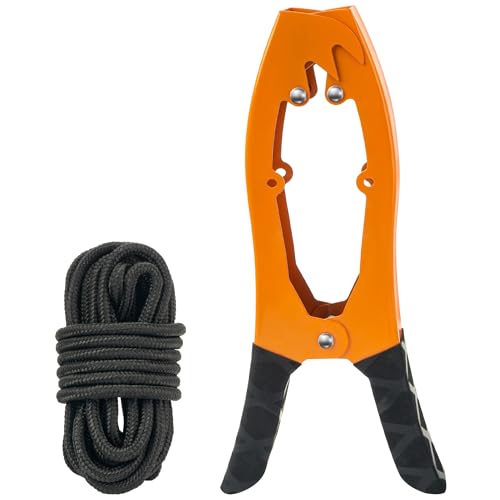
Omoojee Kayak Brush Gripper with 16.4ft Paracord
|
8.8/10 | Buy |
| Best Budget |
 BeGrit 1.5 lb Folding Kayak Anchor Kit with 10M
|
8.6/10 | Buy |
| Best Premium |
 XIALUO 3.5 lb Folding Kayak Anchor Kit
|
8.3/10 | Buy |
| Best Value |
 FLKQC 3.5 lb Folding Kayak Anchor Kit with 40ft
|
8.0/10 | Buy |
Omoojee Kayak Brush Gripper with 16.4ft Paracord
The Omoojee Kayak Anchor Grip is a spring-tensioned brush clamp crafted from painted 304 stainless steel and rigged with 16.4 feet of paracord. It offers silent, dependable station-keeping along tree-lined banks and dock pilings without the weight or bottom disturbance of heavy claw anchors, making it a great pick for shallow-water kayak anglers.
Pros
- Corrosion-resistant 304 stainless steel construction with an anti-rust painted finish
- Aggressive jaw teeth secure a firm hold on branches, limbs, and dock pilings under wind drift
- Stealthy alternative to heavy bottom anchors that avoids stirring up silt or spooking fish
- Lightweight and compact footprint saves valuable deck and hatch space on smaller kayaks
Cons
- Only functions where solid shoreline vegetation, fallen timber, or dock posts are present
- Not rated for holding heavy watercraft in fast-moving river currents or heavy wind swells
- Lacks a built-in line float, so securing the cord to the craft before deploying is critical
BeGrit 1.5 lb Folding Kayak Anchor Kit with 10M
The BeGrit 1.5 lb folding grapnel anchor kit provides a compact, lightweight anchoring solution designed to hold small kayaks, canoes, and paddle boards stationary in calm inland waters. Featuring a four-fluke locking collar design, 10 meters of line, a marker buoy, and a storage bag, it is a convenient accessory for kayak anglers and recreational paddlers looking for reliable station-keeping without cluttering deck space.
Pros
- Folds into an ultra-compact 7-inch profile that fits inside small day hatches and tackle crates
- Includes all essential basic rigging: 10 meters of tow rope, snap hook, marker buoy, and storage bag
- Sliding locking collar holds the flukes securely in both deployed and stowed positions
- Galvanized carbon steel build provides solid durability and abrasion resistance against rocky lakebeds
Cons
- At 1.5 lbs, it is designed for calm flatwater and light breezes; it may drag in brisk winds or strong river currents
- The 10-meter line lacks a chain leader, which can reduce horizontal fluke bite in hard-packed sand
- Requires freshwater rinsing and thorough drying after brackish or saltwater use to prevent surface oxidation
XIALUO 3.5 lb Folding Kayak Anchor Kit
Designed for kayaks, paddleboards, and small watercraft, this folding grappling anchor pairs a 3.5-pound head with 30 feet of braided nylon line. It packs down into an included storage bag to protect craft surfaces and preserve deck space.
Pros
- Complete kit ready for small craft use
- Compact folding design saves onboard storage space
- Locking collar secures flukes in position
- Protective storage bag prevents hull scratches
Cons
- 30-foot rope limits anchoring depth
- 3.5-pound weight is unsuitable for larger boats
FLKQC 3.5 lb Folding Kayak Anchor Kit with 40ft
The FLKQC 3.5-Pound Folding Kayak Anchor Kit is a complete station-keeping solution engineered for kayak anglers, recreational paddlers, and paddleboarders seeking steady positioning in wind or light chop. Featuring a 40-foot marine-grade line, locking 4-fluke galvanized grapnel, buoy float, carabiner, and storage bag, it offers dependable hold on lakes, slow rivers, and sheltered bays.
Pros
- Ready-to-use package contains anchor, 40-foot marine rope, retrieval float, carabiner clip, and nylon storage sack out of the box
- Folding 4-fluke mechanism collapses smoothly, minimizing deck clutter and eliminating sharp edges against inflatable drop-stitch or plastic hulls
- 3.5-pound weight provides solid holding power for kayaks and SUPs in calm waters, slow currents, and mild breezes
- Galvanized iron with zinc plating delivers dependable corrosion protection across diverse aquatic settings
Cons
- The 40-foot rope length limits anchoring to relatively shallow water depths when maintaining proper 3:1 or 5:1 scope ratios
- Does not include an anchor trolley system or a chain leader for rough open-water chop or heavy river currents
- Sliding collar mechanism requires a quick rinse if coated in heavy shoreline mud or packed river weeds to slide freely
Building and Rigging a Reliable Kayak Anchor System
Constructing a dependable anchoring rig requires balancing holding power against on-water safety protocols. A kayak has a narrow beam width, meaning water tension exerts direct leverage over the entire hull. Fabricating a customized anchor setup provides fine control over gear weight, stowage footprint, and retrieval speed across varying lakebeds and river bottoms.
Hydrodynamic Forces and the Dangers of Side Anchoring
Anchoring a kayak from the gunwale presents an immediate capsize risk in paddle sports. When a watercraft is tethered to the bottom amidships, passing river currents or boat wakes push directly against the hull. Because the anchor holds the boat stationary, this broadside pressure forces the upstream gunwale down into the water. Swamping occurs within seconds once the rail dips beneath the surface.
A safe anchoring system must always direct the pulling force to the bow or stern. Aligning the anchor line with the keel allows the kayak to point directly into oncoming wind or current. This hydrodynamic orientation minimizes hull drag and prevents rolling moments that threaten balance. Never tie an anchor rope directly to a mid-cockpit cleat, seat frame, or carry handle.
Selecting Safe DIY Anchor Weights and Materials
Choosing the right weight for a homemade anchor involves evaluating bottom structure and safe carrying capacity. Kayaks respond best to anchors weighing between 1.5 pounds and 3.5 pounds. Excessively heavy weights reduce your safe payload buffer, while lighter options drag across smooth sand. Successful DIY anchor bodies often utilize vintage window sash weights, vinyl-coated exercise dumbbells, or short lengths of galvanized chain.
Window sash weights offer a slim profile that drops quickly through the water column and stows neatly in narrow tankwells. Vinyl-coated dumbbells provide blunt mass without scratching gelcoat or damaging composite hulls during transport. A length of heavy-duty galvanized chain wrapped in bicycle inner tube rubber creates an exceptional drag anchor for moving water. The rubber dampens noise, keeping bottom friction high over gravel and rock beds.
Poured concrete anchors inside small PVC pipe cylinders also serve as effective holding options for calm inland lakes. When casting concrete into PVC caps, insert a stainless steel eye bolt through the base to form a secure attachment point. Ensure the concrete cures fully to prevent crumbling upon repeated water immersion. Keep the finished weight modest to maintain a safe 25 to 30 percent reserve buoyancy buffer.
Anchor Line Mechanics: Cordage Selection and Scope Ratios
Selecting appropriate anchor line requires balancing tensile strength, water resistance, and handling characteristics. Premium double-braided nylon cord between 3/16 inch and 1/4 inch diameter is generally considered the optimal choice for paddlecraft. Nylon possesses natural elasticity that acts as a shock absorber against rolling surface swells, preventing sudden jerks. Avoid brittle monofilament lines or thin twine that can cut hands during manual retrieval.
Paracord remains popular for lightweight DIY kits due to its compactness and high breaking strength. If using paracord, choose rot-resistant polyester or marine-grade variations that resist ultraviolet degradation and mildew. Regardless of line type, always connect a bright, high-visibility buoy float a few feet from the bitter end. A conspicuous float keeps the line on the surface if dropped and marks the anchor location clearly.
Achieving reliable holding power depends heavily on understanding the mechanical concept of anchor scope. Scope refers to the ratio of line deployed relative to the vertical depth from the gunwale to the bottom. In calm flatwater conditions, maintain a minimum scope ratio of 5:1, meaning you deploy 50 feet of line in 10 feet of water. In windy conditions or chop, increasing scope to 7:1 ensures the line pulls horizontally, locking the anchor securely.
Building a Breakaway System for Rocky Bottoms
Submerged boulders, tree roots, and sunken debris can easily wedge anchor flukes into an immovable trap. If an anchor snags in moving water, pulling directly upward from a light kayak can pull the bow underwater. A breakaway rigging system is an essential safety modification that allows paddlers to recover trapped anchors. This technique works exceptionally well on traditional folding grapnel anchors and customized pronged designs.
To build a breakaway rig, attach the main anchor rope directly to the bottom crown eyelet using a stainless steel shackle. Run the rope up along the length of the central shaft toward the top collar eyelet. Instead of knotting the rope to the top eyelet, secure it to the collar with a standard light-duty nylon zip tie. Under normal conditions, the zip tie holds the line firmly against the shaft, allowing the anchor to set.
When the anchor snags beneath a ledge or root system, paddle your kayak directly over the anchor point. Applying firm, vertical upward pressure snaps the lower-tensile zip tie at the top collar. Once the zip tie shears away, the pulling force shifts entirely to the bottom crown shackle. This reverses the angle of pull, rotating the flukes backward out of the snag for easy retrieval.
Installing and Operating an Anchor Trolley System
An anchor trolley represents the single most important safety accessory for an anchored kayak. Consisting of a continuous loop of marine cord running through pulleys mounted near the bow and stern, the trolley serves as an adjustable tow point. A stainless steel ring or carabiner floats along the cord loop, through which the main anchor line passes. Paddlers can easily shuttle this connection ring from the seat to either end of the hull.
Shifting your anchor line to the bow points the kayak directly into wind and waves, creating a wave-splitting stance. Moving the anchor point to the stern allows paddlers to fish or cast downwind without hull swinging. Installing an anchor trolley is especially beneficial for heavily rigged vessels like pedal kayaks with trolling motors, where added motor weight demands precise trim control. Secure the trolley cord at your desired setting using a deck-mounted zig-zag jam cleat placed within arm reach.
When mounting pulleys and pad eyes to a polyethylene hull, always use marine-grade stainless steel hardware and backing washers. Seal every drill hole with marine silicone or polyurethane sealant to prevent slow leaks into the hull cavity. Ensure the trolley cord remains tight enough to prevent drooping into the water while remaining loose enough to glide smoothly across the pulleys. Regularly inspect cordage for fraying or sun fading before launching.
Emergency Quick-Release Protocols and Safety Compliance
Every anchor setup must incorporate a fast, fail-safe method for detaching the boat from the line during sudden hazards. If an unexpected squall hits or a motorized boat creates an overwhelming wake, fumbling with stubborn knots leads to capsizing. A proper quick-release system secures the anchor line using a tension cleat, cam cleat, or open clip rather than a permanent knot. This configuration allows the paddler to free the kayak with a single one-handed motion.
Attaching a brightly colored foam buoy to the released line ensures your anchor gear remains floating on the surface for later recovery. Never venture onto the water without complying with United States Coast Guard safety regulations under Title 33 CFR Part 175. Always wear a properly fitted, USCG-approved Type III or Type V personal flotation device with high-back foam clearance designed for kayak seating. Keep a pea-less safety whistle attached to your vest and carry a sharp line knife to cut tangled cordage instantly.
Practicing wet exits and deep-water re-entry techniques on calm water builds the muscle memory needed if an anchoring mishap occurs. If your kayak does capsize, release the anchor immediately to avoid getting entangled with submerged lines beneath the hull. Maintain calm, execute a standard side-scramble or stirrup re-entry, and pump out pooled water before attempting to retrieve floating equipment. Prioritizing personal survival over gear recovery ensures you return to shore safely after every outing.
Vegetated Waters and Brush Grippers
Heavy metal anchors often struggle in densely vegetated environments such as lily pad fields, hydrilla mats, and mangrove shorelines. Dropping a grapnel or sash weight into thick submersed weeds often results in dragging, as plant matter balls up around the flukes. In these specific conditions, mechanical brush clamps like the Omoojee Kayak Anchor Grip offer a far superior holding method. These spring-loaded gripping claws attach directly to overhanging tree limbs, shoreline brush, or wooden dock pilings without disturbing bottom sediment.
Brush grippers utilize tension from the current or wind to bite down tighter into wood, holding the kayak stationary without underwater noise. The 16.4-foot paracord included with typical brush grips secures easily to deck cleats or an anchor trolley ring. Because no heavy weight rests on the lakebed, paddlers avoid dragging muddy debris into the cockpit during retrieval. This silent holding strategy is particularly effective for stealthy shoreline angling and bird photography in shallow backwaters.
For shallow mud flats devoid of trees, consider pairing your gear with a rigid fiberglass or composite stake-out pole. Driving a pole through a scupper hole or an anchor trolley ring pins the boat firmly in shallow water up to four feet deep. Stake-out poles provide instantaneous deployment and zero hull swing, making them ideal companions to standard anchor systems. Combining diverse anchoring tools guarantees you have an appropriate anchoring solution regardless of local aquatic structure.
Commercial Folding Anchors Compared to Homemade Rigs
While crafting a DIY anchor offers rewarding customization, comparing homemade rigs to commercially engineered folding grapnel kits highlights practical design trade-offs. Manufactured kits such as the BeGrit 1.5lb, XIALUO 3.5lb, and FLKQC 3.5lb anchors feature four folding flukes that lock into place with a sliding collar. When collapsed, these galvanized iron and steel anchors fold into tight dimensions, slipping neatly into protective storage bags that prevent hull gouging during transport.
Commercial grapnel anchors excel on rocky or coral bottoms where their curved flukes can hook naturally into crevasses. The included accessories in complete kits, such as marine-grade double-braided nylon ropes, galvanized spring hooks, and bright marker buoys, provide integrated convenience straight from the box. Conversely, DIY weights like coated dumbbells or sash weights are less likely to snag permanently on logs, though they rely strictly on mass rather than mechanical biting grip.
Transporting anchoring equipment securely to the launch ramp requires thoughtful storage planning inside your vehicle or gear crates. If carrying multiple boats on heavy-duty kayak roof racks, stow heavy metal anchors inside the trunk rather than loose inside open cockpit wells. Loose anchors can bounce during highway transit, cracking cockpit walls or damaging seating hardware. Choosing between DIY fabrications and commercial folding kits ultimately hinges on the specific water bottoms you frequent and your preferred storage footprint.
Pre-Launch Inspection and Final Operational Checklist
Before pushing off from the launch ramp, perform a thorough physical inspection of every component in your anchor system. Check your anchor line for abraded strands, unraveling braids, or compromised knots, paying special attention to the connection points at the crown shackle and breakaway zip tie. Test the sliding collar on folding anchors or the spring tension on brush grippers to ensure smooth, unhindered operation. Verify that your line float is securely fastened and that excess cordage remains coiled inside a mesh storage bag to prevent deck tangles.
Once on the water, deploy your anchor gradually rather than tossing it overboard, allowing the line to pay out under controlled hand tension. Confirm that your anchor trolley operates smoothly from bow to stern and locks firmly into the jam cleat without slipping. By respecting the hydrodynamic forces of moving water, sizing your gear to your craft, and maintaining reliable quick-release mechanisms, your homemade anchor setup will keep your kayak stable, secure, and ready for all-day paddling.
About the author
Sara James is an experienced paddler and outdoor gear reviewer with more than two decades of involvement in paddle sports. Her background spans touring kayaking, Class V whitewater, stand-up paddleboarding, and international kayaking events. She brings a practical, experience-driven perspective to evaluating kayaks, paddles, life jackets, dry bags, and other essential water gear.