
How to Get in a Tandem Kayak: Practical Guide for 2026
Master how to get in a tandem kayak safely with essential launch techniques, partner balance tips, and safety protocols for October 2026.
 By Marius Fox
Updated October 4, 2026
By Marius Fox
Updated October 4, 2026
Coordinated boarding prevents awkward capsizes before your paddling adventure even starts. Learning how to get in a tandem kayak requires understanding partner communication, body weight shifts, and primary hull stability. When two paddlers move at the same time, the boat rocks unpredictably, increasing the risk of taking on water or tumbling into shoreline mud. Establishing clear roles before placing a single foot on deck ensures a balanced, controlled embarkation every time.
Whether you paddle rigid rotomolded craft or portable heavy-duty inflatable kayaks, establishing a reliable boarding sequence keeps the boat flat against the water. The heavier or more experienced paddler normally acts as the shore stabilizer from the stern position, while the bow paddler climbs aboard first. Taking a calm, methodical approach transforms a stressful launch into an effortless transition, letting both paddlers focus on navigating calm lakes, coastal bays, or slow-moving rivers.
| Award | Product | WSG Score About WSG ScoreThe WSG Score is our own rating from 0 to 10, based on performance, design and build, ease of use, and value. It reflects independent research and is never influenced by manufacturers, retailers, or affiliate commissions. Learn more › | |
|---|---|---|---|
| Best Overall |
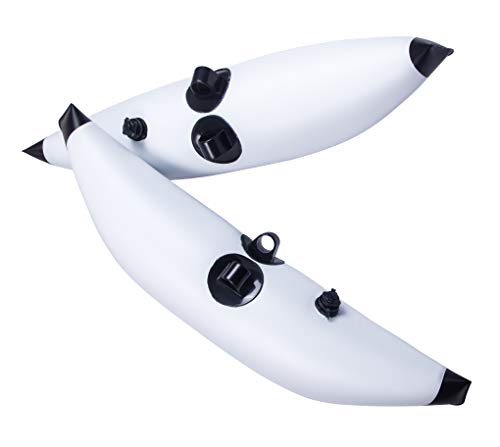
METER STAR Kayak Outrigger Stabilizers (2-Pack)
|
8.8/10 | Buy |
| Best Budget |
 Brone 2-Person Inflatable Tandem Kayak Set
|
8.8/10 | Buy |
| Best Premium |
 BKC Brooklyn 13.0 Pro Tandem Fishing Kayak
|
8.8/10 | Buy |
| Best Value |
 Perception Rambler 13.5 Sit-on-Top Tandem Kayak
|
8.4/10 | Buy |
 Pelican Argo 136XP 13-Foot Tandem Kayak
|
8.4/10 | Buy | |
 VEVOR 2-Person Inflatable Kayak 14.3 Ft
|
8.1/10 | Buy | |
 Perception Tribe 13.5 Tandem Kayak
|
8.0/10 | Buy |
METER STAR Kayak Outrigger Stabilizers (2-Pack)
Designed to enhance watercraft balance for beginners and anglers, these lightweight PVC outriggers secure directly to paddle shafts to provide extra buoyancy. Quick-release valves and an adjustable height mechanism make them easy to transport and deploy on the water.
Pros
- Lightweight build at only 2.6 pounds
- Rapid deflation via turn-knob valve
- Includes four puncture repair patches
- Adjustable height with twist-and-click lock
Cons
- Lacks integrated D-rings or pad eyes
- Low maximum inflation ceiling of 4 PSI
Brone 2-Person Inflatable Tandem Kayak Set
Weighing just over 25 pounds, this two-person inflatable kayak packs down into a carry bag for easy transport to calm lakes and gentle rivers. It arrives ready for the water with two seats, dual paddles, an inflation pump, and a 400-pound load capacity.
Pros
- Includes full accessory kit with paddles and pump
- Lightweight 25.2-pound design simplifies transport
- Generous 122-inch length offers good tandem space
- 400-pound capacity handles two adult riders
Cons
- Intended only for calm lakes and flat waters
- 400-pound maximum limit restricts heavy cargo
BKC Brooklyn 13.0 Pro Tandem Fishing Kayak
The BKC Brooklyn 13.0 Pro is an expansive sit-on-top kayak offering an impressive 800-pound capacity, adjustable aluminum frame seats, and a versatile layout that converts smoothly from tandem to center solo paddling. It delivers strong primary stability and dedicated fishing outfitting, making it a reliable option for angling pairs, small families, or gear-heavy solo paddlers on calm lakes and slow rivers.
Pros
- Generous 800-pound capacity easily supports two adults and a child or substantial camping and angling payloads
- Flexible seat configuration allows one seat to mount in the center position for balanced solo outings
- Height-adjustable aluminum frame seats deliver superior upright comfort compared to basic foam backrests
- Comes pre-rigged with accessory mounting rails, flush rod holders, and dual dry storage compartments
- Flat-bottomed 34-inch hull provides reassuring initial flatwater balance for casting and landing fish
Cons
- Unladen bare-boat weight of 85 pounds makes solo roof-rack car-topping demanding without a load-assist system
- Wide flat-bottom profile prioritizes initial stability over fast displacement cruising speed and long-distance glide
- Stock package does not explicitly include paddles, requiring separate purchase of adequately sized tandem paddles
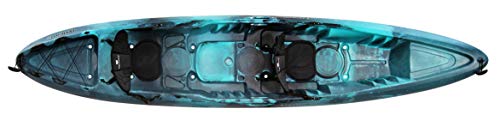
Perception Rambler 13.5 Sit-on-Top Tandem Kayak
The Perception Rambler 13.5 is a versatile 13-foot-6-inch sit-on-top tandem kayak featuring a stable 34-inch beam, a 550-pound maximum capacity, and a molded center seat for a child or pet. Weighing 78 pounds, it provides dependable primary stability and relaxed flatwater tracking for families and recreational pairs exploring lakes, ocean bays, and slow rivers.
Pros
- High 550-pound maximum weight capacity easily supports two adults and a child or dog in the molded center seat
- Generous 34-inch width creates reassuring initial stability that helps calm first-time and recreational paddlers
- Removable padded seat bottoms and adjustable backrests provide better lumbar comfort than basic molded plastic
- Tiered molded foot positions accommodate different leg lengths without mechanical sliders that can jam with sand
Cons
- Substantial 78-pound hull weight and 13.6-foot length make solo rooftop loading challenging without a cart or assistance
- Paddles and scupper plugs are not included in the standard package and must be purchased separately
- Open deck layout lacks a sealed watertight dry bulkhead hatch for sensitive electronic gear
Pelican Argo 136XP 13-Foot Tandem Kayak
Designed for paired outings, this sit-in tandem kayak pairs a multi-chine flat-bottom hull with an integrated keel extension for dependable stability and tracking. Pelican constructs the hull from durable Ram-X material, complemented by cushioned Ergofit seats and adjustable footrests for customized support.
Pros
- Stable multi-chine hull with tracking keel extension
- Durable, lightweight Ram-X construction
- Padded and adjustable Ergofit seating
- Customizable footrests fit paddlers of varying sizes
Cons
- Weighs 67 pounds, making solo carrying difficult
- Long 162-inch frame requires substantial storage space
VEVOR 2-Person Inflatable Kayak 14.3 Ft
The VEVOR 2-Person Inflatable Kayak features a spacious 14-foot-4-inch hull with a rigid drop-stitch floor and a 700-pound capacity, offering rock-solid primary stability for tandem touring and calm-water fishing. It packs down neatly into an included duffel bag, making it a dependable choice for apartment dwellers, families, and dog owners seeking easy vehicle transport without a roof rack.
Pros
- Expansive cockpit with a generous 700-lb payload rating fits two adults and a dog comfortably
- Rigid drop-stitch PVC floor provides superior structural stiffness compared to basic inflatable floors
- Seven reinforced mounting points offer flexible rigging for rod holders and fish finders
- Complete package includes two paddles, a dual-action pump, a 9-inch fin, and a carry bag
Cons
- Overall package weight of approximately 60 pounds makes the packed duffel relatively heavy for solo carrying over long distances
- Wide 42.9-inch beam requires wider paddle strokes and prioritizes stability over aggressive forward glide
- Inflatable PVC material requires thorough rinsing and drying before packing to prevent mold and mildew during storage
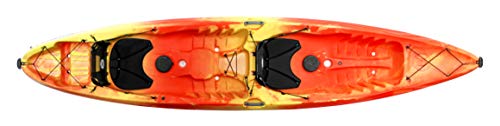
Perception Tribe 13.5 Tandem Kayak
Built for two paddlers, this stable 13.5-foot sit-on-top kayak supports up to 500 pounds and features generous front and rear bungee storage. Adjustable framed seatbacks and molded foot positions make it a solid choice for recreational duos.
Pros
- Generous 500-pound total load capacity
- Comfortable adjustable framed seatbacks
- Ample open and enclosed storage options
- Integrated footrests accommodate multiple rider heights
Cons
- Heavy 79-pound build can complicate solo transport
- Scupper plugs are not included with the hull
The Mechanics of Boarding and Launching a Tandem Kayak Safely
Entering a two-person kayak differs dramatically from boarding a solo craft because every weight shift affects your partner immediately. Mastering how to get in a tandem kayak requires strict division of labor, steady physical balance, and deliberate pacing before leaving solid ground. Rushing into the cockpit or shifting positions simultaneously almost always creates severe lateral tilt, leading to swamped footwells or accidental capsizes right at the water line. By understanding how tandem hulls react to shifting weight, paddlers can eliminate wobbles and step aboard with complete confidence.
The Division of Roles: Bow Paddler vs Stern Paddler Responsibilities
A tandem kayak functions best under a unified system where each partner has specific boarding duties. The bow paddler always enters the kayak first while the craft is held steady in shallow water or beside a dock. Because the bow cockpit is positioned further forward where the hull narrows, it is naturally less stable during entry than the broader middle section. Having the stern partner firmly anchor the boat allows the front paddler to settle into their seat without the craft drifting or rolling.
The stern paddler serves as the stabilizer and launch captain. This paddler stands in ankle-deep water or holds the dock, gripping the gunwales firmly to neutralize hull sway while the front paddler gets situated. Once the bow paddler is fully seated with feet resting on the footpegs and paddle ready across the deck, the stern paddler pushes the boat slightly deeper to avoid bottom scraping. The stern paddler then climbs aboard last, quickly settling their center of gravity over the keel line to maintain equilibrium.
Shoreline and Shallow-Water Entry Step by Step
A shoreline launch on sand, gravel, or gentle mud represents the most common launching scenario for recreational paddlers. Begin by floating the kayak perpendicular or slightly angled to the shore in roughly calf-deep water so the hull clears the lakebed. The stern paddler straddles the kayak behind the rear seat, gripping the coaming or gunwales securely between their knees and hands. This physical anchor locks the boat in place, preventing wind or small waves from pivoting the stern away from the bank.
The bow paddler approaches the forward cockpit, straddling the hull directly over the seat pan. Next, the bow paddler places both hands firmly on the gunwales to distribute body weight evenly along the boat’s longitudinal axis. Lowering the hips directly into the seat pan first, rather than stepping in with full body weight, keeps the center of gravity low and avoids tipping. Once seated, the bow paddler swings both legs inside the footwells, secures their paddle across the cockpit, and informs their partner they are set.
The stern paddler now prepares to board by gently easing the kayak into slightly deeper water until the entire hull floats freely. While continuing to hold the stern gunwales, the rear paddler steps one foot into the centerline right in front of the seat. In one fluid, controlled movement, they lower their bottom onto the seat cushion while bringing their second foot aboard. Pushing off smoothly with a paddle stroke moves the craft into deeper water before any wave action can turn the kayak broadside to the beach.
Boarding a Tandem Kayak from a Low Dock or Pier
Boarding from a wooden dock or floating pier requires a parallel approach rather than a perpendicular shoreline stance. Position the tandem kayak parallel to the dock edge, keeping the boat as close to the pilings or dock surface as possible. The stern partner kneels or sits on the dock edge, holding the kayak firmly by the cockpit rim or deck lines to eliminate lateral drift. Holding the craft flush against the dock prevents the hull from kicking outward when downward pressure is applied.
The bow paddler sits on the dock edge directly adjacent to the front seat, extending their legs into the cockpit footwell. By placing one hand on the dock edge and the other hand flat on the kayak centerline, the bow paddler transfers their weight smoothly onto the seat pan. Stepping directly onto the kayak floor from a standing position on the dock is dangerous because it creates a high pivot point that can flip the boat instantly. Once the bow paddler is settled, they can brace their paddle against the dock to assist with hull stabilization.
The stern paddler executes the same seated transfer technique from the dock edge directly into the rear seat. Keeping one hand anchored to the dock surface until the hips are planted on the seat pan prevents the boat from separating from the pier. After both paddlers are seated with low centers of gravity, a light push against the dock bumper sends the kayak cleanly into open water. Maintaining calm communication throughout this transfer ensures neither partner shifts weight unexpectedly.
Sit-on-Top vs Sit-Inside Tandem Entry Dynamics
Hull style plays a massive role in how paddlers physically enter a two-person craft. Sit-on-top tandems, such as the Perception Rambler 13.5 or Perception Tribe, feature wide open decks, molded foot braces, and self-bailing scupper holes. These open platforms allow paddlers to straddle the hull easily in shallow water without squeezing through a restricted opening. If a paddler loses balance on a sit-on-top during boarding, they simply slide off into shallow water without the risk of entrapment.
Sit-inside tandems, like the Pelican Argo 136XP with its multi-chine flat-bottom hull and cockpit rim, require more deliberate leg positioning. Unlike traditional single sit-in kayak setups, tandem cockpits demand extra care so feet do not catch on the cockpit coaming during entry. Paddlers must slide their feet deep toward the front bulkheads before lowering their torso into the molded Ergofit seating. The enclosed design provides superior splash protection and wind deflection, but it demands better hip flexibility during the initial step-in phase.
Self-bailing scuppers on sit-on-top models handle incidental boarding splashes automatically by draining water through the hull floor. In contrast, sit-inside designs hold any water tracked aboard by wet paddling shoes, making a small bilge sponge or hand pump useful near shore. Knowing whether your tandem possesses an open self-draining deck or an enclosed dry cockpit dictates how carefully you must rinse mud and sand from your footwear before sliding into position.
Managing Inflatable Tandem Hulls and Drop-Stitch Floors
Inflatable tandem kayaks present unique boarding characteristics due to their buoyant, oversized side air tubes. Models such as the Brone Inflatable Tandem Kayak Set with Seats or the VEVOR 2-Person Inflatable Kayak offer high weight capacities and forgiving buoyancy on calm lakes. However, the thick side chambers require paddlers to take wider strides when straddling the hull from shallow water. Stepping directly onto the curved side bladders can cause a foot to slip, so weight must always land squarely on the reinforced floor.
High-pressure drop-stitch floors provide remarkable rigidity, allowing paddlers to stand briefly during smooth transitions. Even so, the lightweight nature of inflatable PVC materials means these boats draft very little water and can blow across the surface in light breezes. The stern partner must maintain a firmer grip on the shoreline or sandbar while the bow partner climbs aboard. Once both paddlers sit down, their combined weight presses the hull down, engaging the removable tracking fin for directional stability.
Transporting rigid kayaks often requires specialized heavy-duty kayak roof racks with padded cradles to safely carry 13-foot plastic hulls. Inflatable kayaks bypass roof-rack hoisting because they pack down into trunk bags, but they require careful inflation checks before boarding. Ensuring side tubes and floors reach recommended working pressures prevents the hull from flexing or tacoing when paddlers step into the center cockpit area.
Trim, Ballast, and Safe Payload Distribution
Proper trim refers to how level a kayak rests in the water from bow to stern. In a tandem setup, the heavier paddler should almost always sit in the stern position to keep the bow slightly elevated. If the heavier person sits in the front seat, the bow will dig into the water, causing sluggish turning and severe weathercocking in crosswinds. Placing the heavier weight aft allows the hull to track predictably and keeps the rudder or skeg properly submerged.
Payload capacity is another vital safety metric that affects how the boat handles during boarding. The reinforced BKC Brooklyn 13.0 Pro supports up to 800 pounds across two adults, gear, or even an extra center passenger. However, paddlers should always observe the practical guideline of staying within 70 to 75 percent of the manufacturer maximum rating. Maintaining a 25 to 30 percent reserve buoyancy buffer ensures adequate freeboard, preventing water from slopping over the gunwales during boarding maneuvers.
Distribute heavy coolers, dry bags, and tackle crates evenly between the center console and stern cargo wells before climbing into the boat. Loose gear rolling around the floorboards can disrupt balance during the critical moments of entry. Securing cargo with bungee tie-downs prevents equipment from sliding toward one gunwale, which could cause a sudden list right as a paddler sits down.
Deep-Water Re-Entry Techniques for Two Paddlers
An accidental capsize in deep water far from shore requires a coordinated self-rescue strategy known as the tandem scramble. The first step involves flipping the overturned kayak upright together, pushing up on one gunwale while pulling down on the other. Both paddlers must stay on opposite sides of the craft to provide counter-balancing ballast during re-entry. Trying to climb aboard from the same side will immediately flip the kayak back over onto both swimmers.
One partner acts as the primary stabilizer by reaching across the deck and bearing down on the far gunwale with their chest and arms. This downward counter-pressure allows the second partner to execute a strong flutter kick, thrusting their belly horizontally across the cockpit opening. The boarding partner stays low against the deck, slides their hips across the seat, and swings their legs inside the cockpit. Once stable, the seated partner drops their center of gravity and firmly grips both sides of the boat.
Now the seated paddler uses their body weight and paddle brace to stabilize the kayak while the second swimmer climbs aboard. The second paddler repeats the horizontal belly slide over the opposite gunwale, avoiding any sudden vertical standing motions. Practicing this assisted re-entry technique in warm, calm shallows builds muscle memory and removes panic if an unexpected deep-water flip occurs during open-water touring.
Stabilizers, Outriggers, and Boarding Confidence
Paddlers seeking maximum stability during launches often benefit from aftermarket outrigger floats. Inflatable pontoon kits, such as the METER STAR 2Pcs Kayak Inflatable Outrigger, attach via universal mounting arms across the rear deck. These dual PVC floats extend lateral leverage, creating a wide secondary footprint that dramatically resists side-to-side rocking. For beginners, anglers who cast from standing positions, or paddlers with limited joint mobility, outriggers eliminate the initial wobble of stepping aboard.
Adjustable float arms allow users to raise or lower the pontoons depending on the water environment. Setting the floats slightly above the flat waterline allows the kayak to paddle without unnecessary hydrodynamic drag while still catching the surface if the hull tilts past a few degrees. When entering from a rocky bank or steep drop-off, having that external buoyancy buffer prevents tipping even if a paddler steps off-center.
Common Boarding Errors and How to Prevent Wet Exits
Stepping onto the raised plastic gunwales rather than the recessed floor centerline is the single most common cause of tandem capsizes. Kayak hulls are engineered with primary stability centered directly above the keel line. Placing full body weight on the outer rim acts as a lever arm that quickly rolls the boat upside down. Paddlers should always plant their feet squarely along the middle stringer, keeping their hands resting lightly on both sides for balance.
Another frequent mistake is attempting to board simultaneously without verbal cues. When both partners move at the same moment, neither person can anticipate or absorb the resulting hull roll. Simple verbal calls such as holding, stepping, or seated establish clear coordination. The boat should remain completely static until the boarding partner confirms they have their weight safely resting on the seat cushion.
Launching in water that is too shallow also leads to frustrating boarding failures. If the center hull rests firmly against submerged boulders or packed sand, the boat cannot settle naturally under load. As soon as the stern paddler sits down, the hull can stick or pivot awkwardly, catching an edge when hit by a wake. Ensuring the entire keel floats freely before the final paddler sits down guarantees a clean, unobstructed departure.
Safety Checklists, PFDs, and Waterway Readiness
Every safe paddle begins before either boater steps into the craft. Under United States Coast Guard regulations outlined in Title 33 of the Code of Federal Regulations, all paddlecraft must carry a properly fitted, USCG-approved Type III or Type V wearable personal flotation device for each occupant. Kayak-specific life jackets feature high-back foam cutouts that clear tall framed seats, such as those found on the Perception Tribe or BKC Brooklyn, ensuring comfort and freedom of movement.
Federal rules also mandate an accessible, pea-less sound-producing whistle on board to signal other vessels in low visibility. Inspect hatch gaskets, scupper plugs, and paddle leash clips before shoving off from the bank. Taking thirty seconds to complete a final physical check ensures your tandem kayak is watertight, properly trimmed, and ready for a secure, enjoyable voyage across the water.
About the author
Marius Fox brings extensive hands-on experience from both above and below the water. A PADI Master Scuba Diver Trainer and AIDA freediver, she has worked as a scuba instructor, managed diving operations, participated in shark research, and contributed to marine conservation projects. His expertise provides a practical perspective on diving, snorkeling, water safety, and adventure gear.