
Is a 10 Foot Kayak Too Small? Sizing and Safety Guide for 2026
Learn whether is a 10 foot kayak too small for your height, weight, and gear in this October 2026 sizing breakdown covering safe payload thresholds.
 By Marius Fox
Updated October 5, 2026
By Marius Fox
Updated October 5, 2026

Maneuvering a short recreational paddlecraft through winding creeks and quiet cove waters offers an immediate sense of responsive agility. Many paddlers searching for their ideal craft frequently wonder is a 10 foot kayak too small for adult recreation, fishing, or extended afternoon touring. While a compact ten-foot hull delivers exceptional turning ability and effortless loading onto vehicle roof racks, hull length directly influences displacement, maximum safe payload, and straight-line tracking. Understanding how a shorter waterline behaves under real paddling loads ensures you avoid sluggish forward speed, poor deck clearance, or dangerous cockpit swamping.
Finding the right balance between compact storage and on-water performance depends heavily on paddler height, total gear weight, and your intended paddling environment. Choosing between enclosed recreational hulls and open self-bailing decks introduces different cockpit dimensions, seat heights, and flotation properties. Reviewing dedicated single sit-in kayak options provides a helpful benchmark for how interior volume and legroom function in shorter designs. By examining displacement thresholds and hull geometries, you can easily determine whether a ten-foot platform matches your personal paddling goals or if a longer hull is necessary.
| Award | Product | WSG Score About WSG ScoreThe WSG Score is our own rating from 0 to 10, based on performance, design and build, ease of use, and value. It reflects independent research and is never influenced by manufacturers, retailers, or affiliate commissions. Learn more › | |
|---|---|---|---|
| Best Overall |
Tucktec 10-Foot PRO Foldable Kayak
|
9.1/10 | Buy |
| Best Budget |
 Lifetime Guster 10-Foot Sit-in Kayak
|
8.9/10 | Buy |
| Best Value |
 Pelican Sentinel 100X Angler Fishing Kayak
|
8.9/10 | Buy |
| Best Premium |
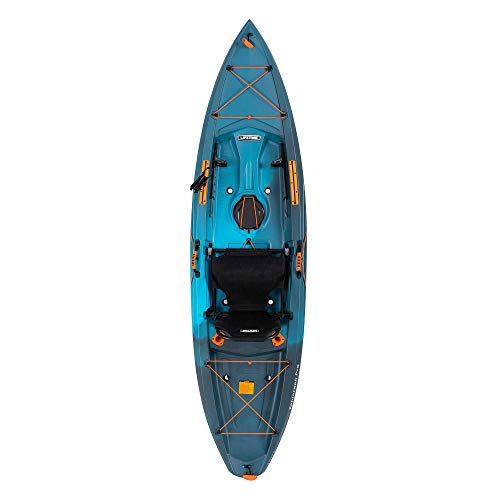 Lifetime Tamarack Pro 103 Fishing Kayak
|
8.6/10 | Buy |
 Perception Joyride 10 Sit-Inside Recreational
|
7.8/10 | Buy |
Tucktec 10-Foot PRO Foldable Kayak
The Tucktec 10-Foot PRO is an innovative American-made folding kayak that assembles in about two minutes using six locking levers. Weighing just over twenty pounds and packing down to 48x15x8 inches, it provides rigid flatwater gliding performance with an included tracking fin, making it an outstanding choice for apartment dwellers and solo paddlers.
Pros
- Sets up in roughly two minutes using six straightforward clamp levers without tools or loose frame parts
- Compact 48-inch folded profile eliminates the need for vehicle roof racks, trailers, or garage ceiling hoists
- Lightweight build around 21 to 24 pounds makes solo transport and muddy launch portages simple
- Solid polymer sheet avoids the drying routines, valve failures, and puncture risks of standard inflatables
- Included tracking fin significantly improves straight-line tracking on open flatwater
Cons
- Minimalist cockpit outfitting lacks integrated gear tracks, flush rod holders, or sealed dry bulkheads
- Kayak paddle and life jacket are not included in the base package and must be purchased separately
- Folding sheet material requires firm initial lever tensioning during your first few assembly sessions
Lifetime Guster 10-Foot Sit-in Kayak
Built for recreational paddling, this 10-foot sit-in kayak pairs a stable tracking hull with high-density polyethylene construction. An adjustable padded seat and under-deck hatch make it a practical option for day trips on calm waters.
Pros
- Adjustable padded seat back and bottom cushion
- Dedicated oval hatch for enclosed under-deck storage
- Integrated paddle keeper holds gear securely
- Built-in foam blocks provide extra flotation safety
Cons
- At 48 pounds, it can be heavy to carry alone
- Compact 10-foot cockpit limits legroom for taller paddlers
Pelican Sentinel 100X Angler Fishing Kayak
Anglers seeking a manageable solo craft will appreciate this compact sit-on-top kayak. Weighing under 45 pounds at nine and a half feet, it combines easy transportation with four rod holders and an Ergolounge padded seat.
Pros
- Lightweight 44.6-pound frame makes solo handling simple
- Ergolounge seat offers thick cushioning and high back support
- Removable ExoPak crate holds two vertical fishing rods
- Two built-in flush-mount rod holders keep gear ready
- Molded-in side handles provide secure lifting points
Lifetime Tamarack Pro 103 Fishing Kayak
Tailored for recreational anglers, this 10-foot-3 sit-on-top platform pairs three rod holders and tackle storage with an adjustable framed seat. Deep hull channels and chine rails promote steady tracking and reliable stability on the water.
Pros
- Three integrated rod holders accommodate multiple rod setups
- Adjustable framed seat enhances on-water paddling comfort
- Hull chine rails deliver solid primary and secondary stability
- Generous storage options include center hatch and deep well
Cons
- At 57.5 pounds, it can be heavy for solo transport
- Compact 10-foot hull limits top cruising speed
Perception Joyride 10 Sit-Inside Recreational
The Perception Joyride 10 is a nimble, 42-pound sit-inside recreational kayak built with a reassuring 29-inch beam, convenient front hatch, rear tankwell, and integrated selfie slot. It is an ideal pick for beginners, casual weekend paddlers, and solo car-toppers seeking easy transport and dependable calm-water stability.
Pros
- Lightweight 42-pound bare hull weight makes solo car-topping and launch-ramp portage effortless.
- Stable 29-inch beam provides high initial flatwater confidence for novice paddlers and family use.
- Front hatch and rear tankwell provide balanced gear storage for day trips and afternoon outings.
- Integrated console selfie slot offers convenient hands-free phone and camera staging on the water.
Cons
- Manufacturer data does not specify an exact maximum weight capacity rating.
- Paddle, spray skirt, and personal flotation device (PFD) are not included in the package.
- Short 10-foot recreational hull is prone to wind drift and slower tracking in open crosswinds compared to longer touring designs.
Evaluating 10-Foot Kayaks: Sizing, Weight Limits, and Hull Performance
Direct Assessment: When a Ten-Foot Kayak Is the Right Fit
A ten-foot kayak is not inherently too small for an adult, but it carries distinct design limitations that paddlers must evaluate before buying. For individuals under six feet tall and weighing under two hundred pounds, a ten-foot hull offers a responsive and enjoyable platform for calm lakes, slow rivers, and sheltered coves. Models like the Perception Kayaks Joyride 10 highlight how recreational builders engineer compact platforms with wide cockpits and stable handling for casual day trips. However, taller adults or paddlers hauling heavy gear will quickly find that ten feet restricts legroom, reduces deck clearance, and slows forward speed.
Suitability depends heavily on balancing your personal physical frame against hull displacement and your typical paddling waters. In tight, winding creeks, a ten-foot boat provides agile turning performance that longer touring hulls cannot easily match. Conversely, paddling across expansive open bays against strong crosswinds quickly exposes the limitations of a short waterline. Deciding whether ten feet is sufficient requires looking beyond boat length to examine weight capacity, cockpit dimensions, and hull geometry.
Calculating Safe Weight Limits: The 70 to 75 Percent Threshold
Every kayak manufacturer publishes a maximum weight capacity rating, but treating this certified number as a realistic operating limit creates serious safety hazards on the water. Operating a boat at maximum capacity dramatically reduces freeboard, which is the vertical distance between the water surface and the lowest deck entry point. Experienced paddlers rely on the 70 to 75 percent safe payload threshold to maintain proper buoyancy and prevent swamping. If a ten-foot kayak lists a manufacturer capacity of three hundred pounds, your total weight including body, clothing, life vest, paddle, and dry gear should remain under 225 pounds.
Overloading a compact hull causes it to settle deep into the water column, altering its intended hydrodynamics and creating severe paddling drag. A submerged hull plows through the water rather than gliding smoothly across the surface, requiring double the paddling effort to travel modest distances. Also, compromised reserve buoyancy leaves the craft vulnerable to swamping when motorized boat wakes or sudden surface chop roll across the gunwales. Maintaining a healthy thirty percent buoyancy buffer preserves primary stability and ensures the kayak responds predictably when shifting your weight.
Paddler Height, Inseam Length, and Cockpit Ergonomics
Paddler height influences cockpit comfort just as dramatically as overall body weight when evaluating a ten-foot platform. Taller paddlers with long inseams often discover that compact sit-inside cockpits force their legs into an uncomfortably cramped, splayed position. When interior legroom is insufficient, the tops of your knees press firmly against the cockpit coaming rim, restricting circulation and causing lower back stiffness. Taller adults who want to paddle comfortably must verify that the cockpit opening and footwell length accommodate their leg extension without joint strain.
Adjustable foot braces are critical for establishing proper posture and efficient stroke mechanics inside a compact recreational hull. The Lifetime Guster Sit-in Kayak, 10′ incorporates heavy-duty adjustable foot braces that allow paddlers to calibrate foot placement for solid leg engagement and core rotation. If foot pegs cannot slide far enough forward, paddlers must sit with excessively bent knees, reducing paddling leverage and accelerating fatigue. Open sit-on-top decks provide more forgiving legroom for tall individuals because there is no enclosed deck restricting knee elevation or movement.
Waterline Dynamics: Tracking, Glide Efficiency, and Hull Speed
Naval hydrodynamics dictates that a hull’s maximum theoretical displacement speed depends directly on its waterline length. Because a ten-foot kayak has a short waterline, it reaches its top cruising speed quickly and cannot match the forward glide of longer boats. Paddlers attempting to sprint forward in a short hull experience diminishing returns as added paddling effort merely creates a larger bow wave. For leisurely floats, bird watching, and short shoreline exploration, this lower cruising speed rarely poses a problem for recreational boaters.
Straight-line tracking is another performance trade-off that paddlers must manage in compact hulls. While a ten-foot craft pivots effortlessly around tight river bends, it is naturally prone to yaw, which is the tendency of the bow to swing side to side with alternating strokes. Hull designers counter this tracking wander by incorporating molded keel channels, pontoon chines, and skegs into the bottom profile. The Lifetime Tamarack Pro 103 Sit-On-Top Kayak utilizes deep hull channels and chine rails to bite into the water, helping paddlers maintain directional momentum with fewer corrective strokes.
Sit-Inside Versus Sit-On-Top Cockpit Architectures
Choosing between a sit-inside cockpit and an open sit-on-top deck significantly influences how spacious a ten-foot kayak feels on the water. Sit-inside designs place the paddler’s seat deep in the hull bottom, creating an inherently stable, low center of gravity. This enclosed cockpit shields your lower body from wind, cool water, and paddle drip, making it an excellent choice for shoulder-season outings. Also, sit-inside models like the Lifetime Guster include built-in foam flotation blocks beneath the deck to ensure secondary flotation if water enters the cockpit.
Sit-on-top hulls feature an open, self-bailing double hull equipped with scupper holes that allow water to drain instantly out of the deck. This open architecture eliminates the risk of an enclosed cockpit filling with water, providing extra peace of mind for beginners and warm-weather paddlers. Entering and exiting an open deck from a dock or sandy shoreline is straightforward and avoids the confined feeling of a traditional cockpit rim. However, sit-on-top designs position the paddler slightly higher above the waterline, requiring wider hull beams to deliver equivalent primary stability.
Deck Rigging, Cargo Capacity, and Gear Balance
Packing gear onto a ten-foot platform demands careful discipline because deck space and internal dry storage are naturally constrained. Anglers and day paddlers cannot simply pile crates, coolers, and tackle bags onto a short boat without compromising trim balance. Storing excessive weight in the stern causes the bow to rise into the air, making the kayak vulnerable to crosswinds and weathercocking. Conversely, placing too much heavy gear forward forces the bow downward into waves, creating a wet and sluggish ride.
Modern compact hulls use smart modular storage compartments to maximize utility without encroaching on essential paddler foot room. The Pelican Sentinel 100X – Angler Sit on top Fishing solves storage challenges with an ExoPak removable compartment that drops cleanly into the rear tankwell. Front and rear bungee tie-downs allow you to secure dry bags, safety throw ropes, and hydration bladders within easy arm reach. When comparing specialized options like heavy-duty inflatable kayaks, verifying accessible deck rigging ensures your essential gear stays secure during active maneuvers.
Solo Transport, Car-Topping, and Storage Feasibility
The logistical convenience of transporting and storing a ten-foot kayak represents its single greatest advantage over heavier, longer touring models. Most rotomolded plastic ten-foot hulls weigh between forty and fifty pounds, allowing an individual adult to lift, car-top, and carry them solo. Longer twelve- to fourteen-foot fishing kayaks frequently exceed seventy or eighty pounds, requiring loading rollers, mechanical cart systems, or a second person just to launch. For solo boaters and apartment dwellers, a compact hull removes the physical strain that keeps larger boats parked at home.
Securing a compact boat to your vehicle roof is straightforward due to its minimal overhang and manageable handling weight. Transporting your craft safely on standard crossbars or heavy-duty kayak rack setups requires quality cam buckle straps tightened securely across the hull. Always avoid ratcheting tie-downs, as overtightening mechanical ratchet systems can permanently crush or oil-can plastic kayak hulls. Highly portable folding designs like the Tucktec 10′ PRO Foldable Kayaks weigh just twenty-one pounds and pack down into a compact trunk-sized bundle, eliminating roof transport entirely.
Navigating Environmental Limits: Inland Waters Versus Coastal Chop
Understanding the geographic boundaries of a ten-foot craft is essential for ensuring your personal safety on every outing. Compact recreational kayaks are built specifically for sheltered flatwater environments, including small lakes, calm reservoirs, slow rivers, and protected marsh channels. In these quiet waters, their shallow draft and short length allow paddlers to glide over submerged obstacles and explore narrow passages. The responsive handling of a ten-foot hull makes navigating winding creeks an absolute joy compared to paddling a long, stiff touring boat.
Challenging open-water conditions like coastal chop, swift tidal currents, and sustained high winds quickly expose the limitations of short hulls. In winds exceeding twelve knots, a ten-foot kayak experiences noticeable weathercocking, forcing the paddler to exert constant physical effort on one side to hold a straight line. In addition, crossing motorboat wakes requires deliberate technique to prevent oncoming waves from washing across low gunwales. Always steer the bow directly into oncoming wake waves at a perpendicular angle to maintain hull balance and avoid taking waves broadside.
Safety Protocols, USCG Rules, and Paddle Selection
Operating a compact recreational kayak safely requires strict adherence to federal boating safety standards and responsible equipment preparation. Under United States Coast Guard regulations codified in Title 33 of the Code of Federal Regulations Part 175, paddlecraft operators must carry a wearable, approved personal flotation device. Modern kayak-specific life vests feature high-back foam articulation and generous armholes that align smoothly with elevated seat backs without riding up. Wearing your life vest at all times provides immediate protection against accidental capsizes and cold-water shock.
Federal navigation rules also mandate carrying an efficient sound-producing device, such as a pea-less marine whistle attached directly to your life jacket. When paddling during dusk, dawn, or low-visibility conditions, carrying an operable white navigation light or waterproof flashlight is legally required to signal motorized boat traffic. In addition, matching your paddle length to your kayak’s beam width prevents shoulder strain. Compact ten-foot kayaks generally feature wide beam profiles around thirty inches, requiring a paddle length between 220 and 240 centimeters to ensure clean blade entry without striking the gunwales.
Final Verdict: Determining If Ten Feet Fits Your Paddling Style
A ten-foot kayak is an exceptional choice for solo recreational paddlers who prioritize manageable transport, easy home storage, and nimble flatwater maneuvering. If you fall within standard height and weight parameters and plan to paddle on calm lakes and sheltered streams, ten feet provides everything you need for fun afternoons on the water. It eliminates the heavy lifting and transport headaches associated with larger vessels while offering plenty of stability for casual fishing and floating.
However, if you are a taller paddler over six feet two inches, weigh close to 220 pounds, or intend to venture into wind-swept coastal bays, a longer hull is a far wiser investment. Stepping up to an eleven- or twelve-foot kayak provides the extra displacement, legroom, and straight-line tracking required for heavier loads and challenging weather. Respecting the 70 to 75 percent capacity guideline and honest appraisal of your local waters will guide you to the perfect boat length for safe and enjoyable adventures.
About the author
Marius Fox brings extensive hands-on experience from both above and below the water. A PADI Master Scuba Diver Trainer and AIDA freediver, she has worked as a scuba instructor, managed diving operations, participated in shark research, and contributed to marine conservation projects. His expertise provides a practical perspective on diving, snorkeling, water safety, and adventure gear.