
How Much Does a Single Person Kayak Weigh: Practical Guide for 2026
How Much Does A Single Person Kayak Weigh varies by hull build. Compare bare weights, rigged gear, solo car-topping, and safe payload limits for October 2026.
 By Marius Fox
Updated October 5, 2026
By Marius Fox
Updated October 5, 2026

Dragging a kayak across a gravel launch or hoisting it onto an automotive roof rack brings physical weight to the forefront of any paddling trip. Solo paddlers often ask how much does a single person kayak weigh before making a purchase because hull mass directly affects transport feasibility, on-water handling, and off-water storage. An awkward plastic boat can turn a quick afternoon paddle into a grueling chore if the bare hull exceeds your physical lifting capacity. Understanding how hull materials, deck profiles, and outfitting influence overall bulk ensures you select a craft that matches your fitness, vehicle setup, and storage space.
Weight specifications vary dramatically between minimalist sit-inside recreational craft, heavy-duty angling platforms, and portable inflatables. While compact single sit-in kayaks frequently prioritize manageable hull weights for casual flatwater excursions, wide sit-on-top fishing rigs demand heavier plastic layups to maintain structural rigidity and primary stability. In addition, bare hull weight tells only half the story once seats, tackle, safety equipment, and paddling gear enter the equation. Evaluating manufacturer displacement figures against your realistic payload requirements helps maintain critical reserve buoyancy and keeps your time on the water both safe and enjoyable.
| Award | Product | WSG Score About WSG ScoreThe WSG Score is our own rating from 0 to 10, based on performance, design and build, ease of use, and value. It reflects independent research and is never influenced by manufacturers, retailers, or affiliate commissions. Learn more › | |
|---|---|---|---|
| Best Overall |
Perception Sound 10.5 Sit-Inside Kayak
|
8.9/10 | Buy |
| Best Value |
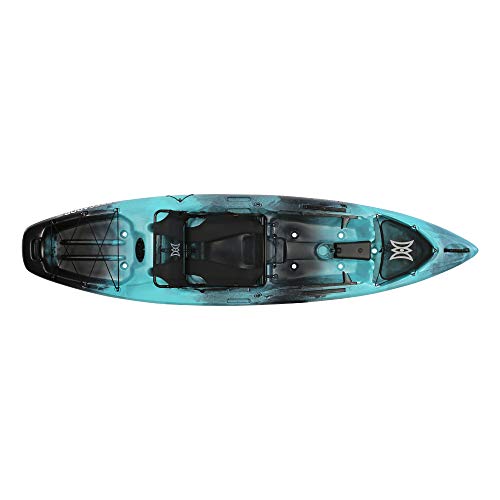 Perception Pescador Pro 10 Fishing Kayak
|
8.0/10 | Buy |
Perception Sound 10.5 Sit-Inside Kayak
The Perception Sound 10.5 is a versatile 10-foot-6-inch sit-inside recreational and fishing kayak featuring a stable tri-keel hull, spacious 56-inch cockpit, and a manageable 46-pound hull weight. With a 335-pound maximum capacity and comfortable Zone seating, it is well suited for beginners, lake paddlers, and kayak anglers seeking hassle-free solo transport.
Pros
- Manageable 46-pound hull weight allows straightforward solo lifting and loading onto roof racks or truck beds
- Tri-keel hull design provides dependable flatwater primary stability and smooth steering in calm lakes and slow rivers
- Generous 56-inch long cockpit opening ensures effortless entry and exit for paddlers of varying body sizes
- Built-in fishing convenience with dual molded-in rod holders and dashboard accessory mounting recesses
Cons
- Does not include a paddle or Solo Mount hardware, requiring separate purchases before launching
- Open rear storage well lacks a watertight sealed bulkhead, leaving gear exposed to rain, splash, and spray
- Sit-inside hull is not self-bailing, meaning accumulated water must be removed manually with a sponge or pump
Perception Pescador Pro 10 Fishing Kayak
Built for recreational anglers, this sit-on-top kayak pairs an upright lawn chair seat with expansive front and rear gear wells. Its 32-inch wide profile supports up to 325 pounds across calm lakes, bays, and slow-moving rivers.
Pros
- Comfortable and adjustable lawn chair seating
- Generous front and rear gear storage capacity
- Solid 325-pound maximum weight rating
- Stable 32-inch wide hull design
Cons
- At 57 pounds, solo vehicle loading requires effort
- Designed strictly for calm and slow-moving waters
Everything You Need to Know About Single Person Kayak Weight
A single-person kayak typically weighs between 35 and 75 pounds in standard recreational and fishing configurations. Ultra-light pack craft and modular inflatables may register as low as 20 to 30 pounds, while fully rigged pedal-drive platforms frequently exceed 90 pounds. This broad spectrum means that choosing the right boat requires balancing your off-water lifting tolerance against your on-water performance needs. Understanding how hull materials, deck architectures, and outfitting influence static heft allows you to make an informed choice.
Average Weight Benchmarks Across Kayak Categories
Recreational sit-inside kayaks represent some of the lightest rigid paddlecraft available. A standard 10-foot sit-inside hull designed for calm lakes and sheltered streams usually weighs between 38 and 48 pounds. For instance, the Perception Kayaks Sound Sit Inside for Recreation utilizes a streamlined tri-keel hull that keeps material density manageable while offering dependable tracking and stability. The enclosed cockpit architecture eliminates the need for thick structural scupper columns, keeping bare hull mass low enough for manageable solo portage.
Open-deck sit-on-top kayaks generally weigh 10 to 20 percent more than comparable sit-inside models. Because sit-on-top hulls feature double-walled construction and molded-in scupper drain holes, manufacturers must inject additional high-density polyethylene to ensure structural rigidity. A bare 10-foot recreational sit-on-top typically registers between 45 and 60 pounds before outfitting. This added mass yields a self-bailing deck that handles splash without swamping, though it noticeably increases the physical effort needed to lift the boat onto roof cradles.
Angling-specific kayaks occupy the heaviest tier of solo paddlecraft. A platform like the perception Pescador Pro 10 carries a published hull weight of 57 pounds across its 10-foot-6 frame, reflecting its reinforced standing deck, accessory gear tracks, and expansive storage wells. Dedicated fishing kayaks require broader beam widths and thicker rotomolded walls to support standing anglers and heavy tackle crates. When pedal drives or electric motor brackets enter the build, fully rigged fishing setups frequently cross 85 pounds, making dedicated transport carts essential.
Bare Hull Weight Versus Fully Rigged Operational Weight
One frequent surprise for new paddlers is the sharp difference between bare hull weight and rigged operational weight. Manufacturer specification charts almost universally cite bare hull weight, which accounts only for the stripped plastic shell and permanent factory fittings. Removable items like framed stadium seats, foot braces, gear tracks, and rod holders add substantial pounds before you pack personal equipment. Overlooking these outfitting accessories often leads paddlers to underestimate the physical strain of transporting their boat.
Ergonomic stadium seats clearly illustrate how outfitting influences the scale. The adjustable lawn chair seat on the perception Pescador Pro 10 provides outstanding lumbar support during long hours on the water, but its metal frame and dual-level brackets contribute noticeable weight over basic foam pads. Adding paddles, life jackets, dry bags, tackle boxes, and anchors quickly adds another 15 to 30 pounds to your launch load. Stripping these modular components before hoisting the kayak onto a vehicle roof saves your back considerable fatigue.
How Hull Construction Materials Shape Total Mass
Hull material is the primary determinant of both physical weight and long-term abuse tolerance. Rotomolded high-density polyethylene remains the industry standard for recreational and angling paddlecraft due to its remarkable impact resistance against submerged rocks, gravel, and concrete ramps. However, polyethylene is relatively heavy and requires thick hull walls to prevent flexing across wide flat surfaces. A rotomolded kayak delivers worry-free durability along rugged shorelines, but paddlers must accept higher static weight during transport and storage.
Thermoformed ABS and composite layups such as fiberglass or carbon fiber offer a noticeably lighter alternative to rotomolded plastic. Thermoformed hulls join two sheets of premium plastic under heat and vacuum pressure, cutting total boat weight by roughly 20 to 30 percent while maintaining excellent rigidity. Composite layups reduce weight even further, producing stiff, fast day-touring craft that weigh as little as 32 to 40 pounds for a 12-foot hull. The primary trade-off rests in impact vulnerability, as composites require careful handling around sharp rocks and oyster beds.
Inflatable paddlecraft built with high-pressure drop-stitch PVC have emerged as an exceptional lightweight solution for space-conscious paddlers. Quality durable inflatable kayaks utilize thousands of internal polyester threads that allow inflation pressures between 10 and 15 PSI, producing near-rigid performance at bare weights between 25 and 35 pounds. These craft pack into duffel bags, eliminating the need for roof racks and allowing effortless storage in compact apartments. While they perform admirably on flatwater, their lower overall mass makes them more susceptible to drifting in stiff crosswinds.
Kayak Weight Versus Payload Capacity and Safe Freeboard
Every kayak hull displaces a specific volume of water, creating an upward buoyant force that determines its maximum weight capacity. Manufacturer payload ratings indicate the absolute limit before the kayak sinks to an unsafe waterline, but this certified maximum should never represent your target operating load. Loading a kayak to its absolute ceiling eliminates freeboard, which is the vertical distance between the waterline and the lowest opening of the cockpit or gunwale. Without adequate freeboard, minor wind chop or passing boat wakes can easily swamp the craft.
Paddlers should always follow the 70 to 75 percent safe operating payload threshold, also known as maintaining a one-third reserve buoyancy buffer. If a kayak features a 325-pound maximum capacity, like the perception Pescador Pro 10, your total load should not exceed roughly 240 pounds. This combined total must include your body weight, clothing, PFD, paddle, fishing tackle, cooler, and stored dry goods. Adhering to this conservative buffer preserves the boat’s primary stability and prevents sluggish, wallowing behavior in choppy conditions.
Solo Transport Logistics and Safe Vehicle Loading
Transporting a kayak safely starts with understanding how much weight you can comfortably hoist overhead. Lifting a 45-pound recreational sit-inside onto crossbars requires modest effort, but maneuvering a 57-pound or 70-pound fishing hull onto a tall SUV roof presents a genuine physical challenge. Utilizing proper lifting mechanics, such as bending at your knees and keeping the kayak close to your torso, prevents back strain. Many solo paddlers rely on rear loading rollers or side-extension bars to pivot the kayak up one end at a time.
Securing heavier hulls requires reliable hardware and vehicle-specific planning. Investing in heavy-duty kayak rack options ensures that crossbars and cradles can manage the dynamic loads generated by wind resistance at highway speeds. Always secure the kayak using heavy-duty, non-stretch cam buckle straps rather than mechanical ratchet straps. Overtightened ratchet straps exert tremendous mechanical leverage that can easily crack composite seams or permanently crush rotomolded polyethylene gunwales on warm summer afternoons.
Bow and stern safety tie-downs serve as critical secondary retention lines during highway transit. While belly straps around the crossbars hold the hull down against the rack, front and rear lines anchored to structural vehicle recovery points prevent lift and rotational twisting. Even a mid-weight 50-pound kayak acts like a windfoil when buffeted by highway gusts or oncoming semi-truck turbulence. Taking the extra three minutes to secure bow and stern lines provides invaluable protection against catastrophic roof rack failures.
On-Water Hydrodynamics and Maneuvering Trade-Offs
A kayak’s overall mass plays a central role in its hydrodynamic efficiency and paddling dynamics. Lighter kayaks accelerate instantly with minimal forward stroke effort, making them nimble in confined creeks and responsive when navigating tight shoreline bends. However, they lack dynamic momentum, meaning the boat slows down quickly as soon as you stop paddling. They are also prone to weathercocking, which is the tendency of wind to blow the bow or stern off course on open water.
Heavier kayaks require several authoritative strokes to build momentum, but once moving, their inertia carries them smoothly through chop and sustained headwinds. The tri-keel hull geometry found on models like the Perception Sound utilizes this momentum to maintain steady tracking across slow-moving rivers and lakes. Furthermore, the additional mass and broad beam width provide formidable primary stability, which is the initial resistance to tipping when you shift your weight or cast a lure. Anglers benefit greatly from this planted feel, even though it costs extra effort during transport.
Safety Equipment Weight and USCG Compliance Factors
Paddlers must comply with maritime navigation rules and safety mandates that add small but necessary weight to the setup. Under United States Coast Guard regulations codified in Title 33 CFR Part 175, paddlecraft operating on federal and shared navigable waterways must carry a properly fitted, USCG-approved personal flotation device for each person aboard. Choosing a modern Type III or Type V kayak-specific life vest with a high-back foam design ensures comfortable clearance above elevated kayak seats. These vests typically weigh under two pounds while providing vital life-saving buoyancy.
Federal rules also mandate an efficient sound-producing device, such as a pea-less whistle attached directly to your life jacket zipper pull. In low-light conditions between sunset and sunrise, paddlecraft must display a 360-degree white navigation light or have an electric torch ready to prevent collisions with motorized traffic. Stowing these compact emergency items alongside a manual bilge pump adds minimal heft to your gear bag. Their presence ensures regulatory compliance and provides vital self-rescue capability during an unexpected capsize.
Storage Techniques to Prevent Weight-Induced Hull Oil-Canning
Improper off-season storage can lead to permanent hull distortion, commonly known as oil-canning. Polyethylene plastics possess memory and will slowly deform under continuous pressure, particularly in warm garages or outdoor sheds. Storing a 50-pound or 60-pound kayak flat on hard floorboards concentrates all its static weight along narrow keel sections. Over several months, this concentrated pressure causes the hull bottom to dimple inward, which severely damages tracking efficiency and creates sluggish drag on the water.
Distributing boat weight across wide webbing straps or padded suspension cradles prevents localized pressure points. Positioning support straps approximately one-third of the way in from the bow and stern aligns the load with the strongest structural curves of the hull. Alternatively, storing rotomolded kayaks on their sides along wall racks keeps the bottom hull free from continuous stress. Applying a UV protectant spray twice a year also shields the plastic from sun embrittlement and surface chalking.
Selecting the Right Kayak Weight for Your Paddling Lifestyle
Choosing an optimal kayak weight comes down to an honest assessment of your personal transport routine. If you must carry your craft down steep apartment stairs or lift it onto a tall vehicle roof unassisted, keeping bare hull weight under 50 pounds should remain a primary priority. A lighter boat gets used far more frequently because the pre-trip loading and post-trip cleanup do not drain your enthusiasm. Sit-inside models and compact recreational craft deliver rewarding water access without demanding intense athletic lifting.
If specialized angling features, standing primary stability, and extensive gear capacities are non-negotiable for your waterways, investing in a heavier rotomolded platform is well worth the extra heft. Equipping your setup with a rugged cart featuring puncture-proof wheels transforms an awkward 60-pound boat into a manageable, rolling assembly from parking space to water. Balancing realistic physical ergonomics with your on-water performance goals guarantees that your kayak serves as a reliable vehicle for outdoor recreation for seasons to come.
About the author
Marius Fox brings extensive hands-on experience from both above and below the water. A PADI Master Scuba Diver Trainer and AIDA freediver, she has worked as a scuba instructor, managed diving operations, participated in shark research, and contributed to marine conservation projects. His expertise provides a practical perspective on diving, snorkeling, water safety, and adventure gear.