
How to Choose a Sit on Top Kayak: A Practical Guide for 2026
Learn how to choose a sit on top kayak safely with essential insights on hull stability, weight limits, and seating outfitting in October 2026.
 By Sara James
Updated October 5, 2026
By Sara James
Updated October 5, 2026
Selecting an open-deck paddlecraft requires balancing on-water stability with practical transport logistics. Unlike traditional enclosed designs, an open cockpit platform features built-in scupper drainage holes that simplify entry and eliminate the fear of swamping in deep water. Learning how to choose a sit on top kayak begins with identifying your primary paddling environment, whether you plan to navigate calm recreational lakes, tidal estuaries, or slow-moving rivers. Many paddlers who compare open decks with single sit-inside kayaks find that sit-on-top hulls provide significantly greater freedom of movement and far simpler self-rescue options.
The selection process also demands an honest assessment of physical ergonomics, hull displacement, and vehicle loading capabilities. A stable sit-on-top kayak provides confidence for anglers and casual boaters alike, but bare hull weight and beam width heavily influence your paddling cadence and off-water storage. Evaluating key construction details like high-density polyethylene durability, elevated stadium seating, and accessory gear tracks ensures that your purchase matches your body size and adventure goals. Matching your personal payload requirements with the appropriate hull dimensions prevents sluggish handling and creates a safe, comfortable platform on the water.
| Award | Product | WSG Score About WSG ScoreThe WSG Score is our own rating from 0 to 10, based on performance, design and build, ease of use, and value. It reflects independent research and is never influenced by manufacturers, retailers, or affiliate commissions. Learn more › | |
|---|---|---|---|
| Best Overall |
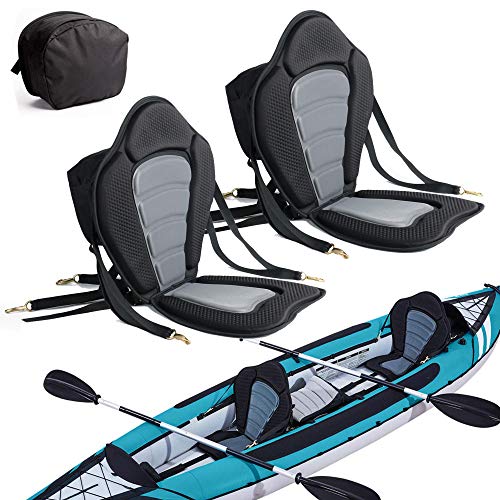
RELIANCER 2-Pack Deluxe Padded Kayak Seats
|
9.2/10 | Buy |
| Best Budget |
 AMURS Large Kayak Scupper Plugs (8-Pack)
|
9.1/10 | Buy |
| Best Premium |
 Lifetime Muskie Angler 10-Foot Sit-On-Top Fishing
|
9.1/10 | Buy |
| Best Value |
 VEVOR Foldable 1.3-Inch Kayak Seat
|
8.9/10 | Buy |
 Pelican Sentinel 100X Angler Fishing Kayak
|
8.9/10 | Buy | |
 Lewtemi 2-Pack Universal Kayak Seats
|
8.6/10 | Buy | |
 BENEHIKE Aluminum Frame Kayak Seat
|
8.4/10 | Buy | |
 Lifetime Lockport 94 Modular Sit-on-Top Fishing
|
8.3/10 | Buy | |
 CLIO Deluxe Padded Kayak Seat
|
8.0/10 | Buy | |
 DUNDOO Aluminum Frame Kayak Seat
|
7.8/10 | Buy |
RELIANCER 2-Pack Deluxe Padded Kayak Seats
The RELIANCER 2-Pack Deluxe Padded Kayak Seats deliver reinforced lumbar support and thick EVA foam cushioning for sit-on-top kayaks, canoes, and paddle boards. Equipped with marine-grade brass clips and detachable zipper storage bags, this dual set provides an accessible comfort upgrade for tandem setups and solo paddlers alike.
Pros
- Includes two fully equipped padded seats, making it an excellent value for tandem owners or outfitting a pair of kayaks
- Tall 18-inch backrest with internal PE stiffener plate offers noticeably firmer support than flimsy fabric backbands
- Corrosion-resistant marine brass clips provide durable fastening in coastal saltwater bays and freshwater lakes
- Removable rear storage packs add practical zippered organization directly behind the paddler
Cons
- Requires existing deck D-rings or pad eye attachment points on your kayak, canoe, or paddle board
- Seat cushion rests directly on the kayak floor rather than elevating the paddler like a rigid metal stadium frame
- Detachable storage bags use water-resistant fabric coating but are not submersible dry bags for sensitive electronics
AMURS Large Kayak Scupper Plugs (8-Pack)
Designed for scupper holes between 1.35 and 1.55 inches, these AMURS silicone plugs keep sit-on-top kayak decks dry. The integrated silicone pull tabs eliminate rot-prone cord lanyards while the triple-ridge profile maintains a snug, watertight seal.
Pros
- Molded silicone handles resist water rot
- Triple-ridge design creates a tight seal
- Eight-pack easily equips large sit-on-top kayaks
- Reinforced pull tabs simplify removal
Cons
- Only fits holes between 1.35 and 1.55 inches
- Requires precise scupper hole measurement before purchase
Lifetime Muskie Angler 10-Foot Sit-On-Top Fishing
The Lifetime Muskie Angler is an accessible 10-foot sit-on-top fishing kayak featuring a stable 31-inch beam, UV-protected polyethylene hull, and an integrated tracking skeg. Weighing an easily car-topped 51 pounds and supplied with an included paddle and multiple rod holders, it is an ideal entry-level craft for calm lakes, ponds, and slow rivers.
Pros
- Manageable 51-pound bare hull weight simplifies solo loading onto rooftop crossbars or into pickup beds
- Built-in tracking skeg and deep hull channels assist with straight-line paddling on flatwater
- Includes essential outfitting out of the box: paddle, padded seating, and three rod holders
- Durable high-density polyethylene construction resists standard launch-ramp abrasions and UV degradation
Cons
- Basic sit-on-top seat pad sits directly on the deck and offers less elevation than stadium-style kayak frames
- Compact 6-inch storage compartments are sized for small gear rather than bulky dry bags or tackle boxes
- Flat-bottom recreational hull is engineered for calm waters and may feel sluggish in choppy coastal conditions
VEVOR Foldable 1.3-Inch Kayak Seat
Built with a reinforced aluminum frame and breathable Stirling fabric, this seat provides a 1.3-inch raised cushion and rigid back support for canoes and sit-on-top kayaks. Its collapsible design makes it a practical upgrade for anglers and casual paddlers who need stable posture on the water.
Pros
- Rigid aluminum frame delivers firm back support
- Folds flat for compact transport and storage
- Splash-resistant, breathable fabric handles wet conditions
- Adjustable straps provide flexible mounting across watercraft
Cons
- 1.3-inch cushion padding may feel thin on extended trips
- At 5.16 pounds, it is heavier than frameless pads
Pelican Sentinel 100X Angler Fishing Kayak
Anglers seeking a manageable solo craft will appreciate this compact sit-on-top kayak. Weighing under 45 pounds at nine and a half feet, it combines easy transportation with four rod holders and an Ergolounge padded seat.
Pros
- Lightweight 44.6-pound frame makes solo handling simple
- Ergolounge seat offers thick cushioning and high back support
- Removable ExoPak crate holds two vertical fishing rods
- Two built-in flush-mount rod holders keep gear ready
- Molded-in side handles provide secure lifting points
Lewtemi 2-Pack Universal Kayak Seats
Outfitting a tandem setup or two separate watercraft is straightforward with this pair of supportive padded seats. Contoured waterproof cushions and four adjustable mounting straps deliver stable back support across various sit-on-top kayaks, canoes, and paddleboards.
Pros
- Complete two-pack with mounting screws and buckles included
- Integrated rear storage bags keep small gear accessible
- Waterproof padding resists water absorption during outings
- Four-point strap system provides reliable sitting stability
- Universal fit across multiple types of watercraft
Cons
- Requires screw installation if hull lacks anchor points
- Non-collapsible backrest takes up extra storage space
BENEHIKE Aluminum Frame Kayak Seat
The BENEHIKE Aluminum Frame Kayak Seat provides elevated back support and versatile mounting for sit-on-top fishing kayaks, inflatable craft, and SUPs. It is an ideal comfort upgrade for anglers and recreational paddlers tired of soggy, unsupportive foam seats.
Pros
- Versatile installation paths accommodate both grooved gear tracks and tie-down D-rings
- Rigid aluminum frame delivers vastly superior upright posture support compared to standard thin foam backrests
- Elevated seat positioning helps keep your lower body dry from pooled deck water
- Fold-flat profile simplifies packing into car trunks, truck beds, or gear closets
- Integrated rear waterproof pocket and included cup holder offer practical on-water organization
Cons
- Substantial 23-inch width requires a wide cockpit well and will not fit narrow sit-inside kayaks
- Elevated stadium seating raises the paddler center of gravity, which may feel slightly less stable on narrow hulls
- Requires existing D-rings or track rails on your watercraft for secure installation
Lifetime Lockport 94 Modular Sit-on-Top Fishing
The Lifetime Lockport 94 is a 9-foot-4-inch modular sit-on-top kayak that splits into two nesting sections for effortless transport and compact storage. Weighing just 40 pounds and equipped with rod holders and an included paddle, it is a practical hard-shell craft for apartment dwellers and solo lake anglers.
Pros
- Two-piece modular construction nests together neatly for transport in small vehicle trunks without a roof rack
- Rigid high-density polyethylene shell offers dependable abrasion resistance without the risk of punctures associated with inflatables
- Ready to launch right out of the box with an included paddle, two flush-mount rod holders, and an adjustable seat back
- Weighs only 40 pounds total, allowing solo paddlers to handle and assemble individual lightweight sections easily
Cons
- Compact 9-foot-4-inch hull length favors turning agility over rapid forward cruising speed or extended coastal touring glide
- Stock seat is an adjustable padded backrest on the deck floor rather than an elevated, quick-drying stadium-style frame
- SlideLock connecting channels require regular rinsing to keep sand, mud, and grit from fouling the locking mechanism
CLIO Deluxe Padded Kayak Seat
Built with contoured EVA foam and an elevated backrest, this CLIO seat supports long paddling outings on kayaks, canoes, or rafts. Four-way adjustable straps and brass clips keep the cushion firmly anchored, while a detachable rear bag adds dry storage for small essentials.
Pros
- Thick EVA foam provides solid lumbar support
- Corrosion-resistant brass snaps withstand marine environments
- Detachable waterproof rear bag adds extra utility
- Includes mounting hardware for versatile boat setups
Cons
- May require drilling into hulls lacking anchor points
- Weighs over 3.2 pounds, adding portage bulk
DUNDOO Aluminum Frame Kayak Seat
Built with an aluminum alloy frame and breathable mesh, this DUNDOO seat delivers upright ergonomic support for long paddling sessions. Its versatile mounting setup fastens quickly to accessory tracks or deck D-rings on compatible sit-on-top kayaks, SUP boards, and inflatables.
Pros
- Dual strap and rail mounting versatility
- Sturdy lightweight aluminum alloy frame
- Breathable mesh keeps paddlers cool and supported
- Fast installation on compatible tracks and D-rings
Cons
- Incompatible with narrow cockpit or enclosed kayaks
- Requires existing deck D-rings or gear tracks
- Wide 23-inch frame requires substantial deck space
A Practical Framework for Selecting a Sit-On-Top Kayak
Selecting an open-deck paddlecraft involves balancing hydrodynamic stability, safe payload margins, cockpit comfort, and transport logistics. A sit-on-top kayak provides an accessible platform with an open architecture and self-bailing scuppers, making it particularly appealing for recreational paddling and inshore angling. Understanding how specific hull contours, deck configurations, and material compositions interact on the water ensures you select a craft tailored to your local waterways. Evaluating these foundational elements will help you make an informed decision without falling for marketing hype or unverified claims.
Evaluating Hull Geometry and Stability Profiles
The cross-sectional contour of a kayak hull determines how it moves through flatwater and reacts to external wave action. A flat-bottom hull offers exceptional primary stability, providing a rock-solid, reassuring feel when boarding or paddling on glassy lakes and calm ponds. This geometry creates immediate confidence for beginners and anglers who need a stable base for casting or reaching into gear crates. The main disadvantage is that flat bottoms tend to slap against rough water and can tip abruptly when tilted past their tipping point.
In contrast, rounded and shallow-V hull profiles prioritize secondary stability by slicing through surface chop and resisting capsize when tilted at an angle. Deep tracking channels running along the hull centerline, like those found on models such as the Lifetime Muskie Angler, help keep the boat moving straight during crosswinds. Tunnel or pontoon hull shapes distribute buoyancy to the outer edges of the beam, providing a solid platform that supports standing while sight fishing. Selecting the right hull contour depends on whether you value flatwater steadiness or rough-water wave management.
Calculating Usable Payload Capacity and Buoyancy Margins
Every kayak manufacturer lists a certified maximum weight capacity, but treating that rating as an everyday operating target can lead to serious handling issues. Operating a sit-on-top hull near its certified limit lowers the boat deep into the water, drastically reducing available freeboard. When the deck sits too low, water enters through the scupper holes and pools constantly around your feet and seat. This unnecessary flooding ruins your comfort, slows the craft down, and degrades overall stability.
Paddlers should always follow the practical 70 to 75 percent capacity rule to preserve a healthy reserve buoyancy buffer. Under this guideline, your total load including your body, clothing, fishing gear, anchor systems, and packed coolers should not exceed three-quarters of the stated limit. For a craft rated at 300 pounds, your fully rigged operational weight should remain under 225 pounds. Maintaining this reserve buoyancy ensures the deck stays safely elevated above the waterline even when negotiating heavy boat wakes.
Weight distribution across the deck is just as vital as the total poundage you bring aboard. Placing too much heavy gear in the rear tankwell causes the stern to squat, lifting the bow and making the boat susceptible to wind drift. Conversely, overcrowding the front deck causes the bow to plow into chop, creating steering wander and excessive splash. Storing your heaviest items as close to the cockpit center as possible keeps the kayak trimmed level and gliding efficiently.
Cockpit Drainage Mechanics and Scupper Plug Management
The defining architectural feature of any sit-on-top kayak is its integrated self-bailing cockpit system. Open drain holes, known as scuppers, penetrate vertically through the hull to evacuate water that splashes over the side. Because the floor of the cockpit sits higher than the surrounding waterline, gravity pulls pooled water straight out through the bottom. This drainage mechanism eliminates the need to carry hand-operated bilge pumps or perform difficult inverted bailing routines.
Despite their self-bailing utility, open scupper holes can allow water to bubble upward under certain conditions. When carrying heavy gear or paddling into opposing chop, hydrostatic pressure forces water up into the footwells and seating basin. Installing specialized silicone drain stoppers, such as the 8-Pack Large Kayak Scupper Plug with Silicone pull handles, seals the openings to keep your deck dry during calm-water excursions. These plugs fit standard scupper holes ranging between 1.35 and 1.55 inches, creating a tight friction seal against water intrusion.
Managing your scupper plugs requires assessing the balance between cockpit dryness and emergency drainage. In cold spring weather or during quiet flatwater paddling, plugging the cockpit holes keeps your lower body warm and comfortable. If you venture into breaking surf, choppy coastal bays, or swift river rapids, removing the plugs allows the boat to shed incoming water immediately. Keeping the silicone pull handles accessible ensures you can pop the plugs out quickly whenever changing conditions demand active deck drainage.
Seating Ergonomics: Molded Backrests versus Raised Stadium Frames
Seating design has a direct impact on your comfort, paddling posture, and stamina during long outings. Traditional sit-on-top hulls feature molded plastic deck depressions paired with padded fabric backrests that attach via brass clips to deck eyelets. Upgraded replacement options, including the RELIANCER Deluxe Padded Canoe Backrest, incorporate dense EVA foam and rigid polyethylene support plates to reduce spinal fatigue. These low-profile seats keep your center of gravity firmly down in the hull, maximizing stability when paddling in choppy water.
Modern angling and touring kayaks frequently feature elevated stadium-style seats built around rigid aluminum alloy frames. Models like the VEVOR Kayak Seat and the BENEHIKE adjustable frame seat lift the paddler several inches off the floor, eliminating contact with pooled deck water. The elevated seating position opens your hip angle and reduces strain on your lower back and knees, allowing you to paddle or fish for hours without soreness. Furthermore, the raised viewpoint makes it easier to spot submerged structure and approaching obstacles along the shoreline.
While raised aluminum seats provide remarkable comfort, they shift your physical center of gravity upward. To accommodate this higher balance point safely, the kayak must feature a wider beam to prevent excessive side-to-side wobble. If you plan to install an aftermarket frame seat using strap or track mounts, verify that your cockpit floor has adequate flat clearance. Selecting breathable mesh materials ensures proper airflow on humid summer days while promoting rapid drying after rain showers.
Hull Length, Beam Width, and Matching Paddle Length
Kayak length and beam width govern the fundamental trade-off between forward speed, tracking, and agility. Compact hulls measuring under 10 feet, such as the Pelican Sentinel 100X, excel in tight creeks and winding shorelines where quick maneuvering is essential. These shorter boats turn effortlessly with a single sweep stroke, making them easy to guide around fallen timber and marsh grass. However, their shorter waterline length reduces forward glide, requiring more consistent paddle strokes to sustain speed over open water.
Longer hulls spanning 11 to 13 feet offer superior tracking and glide efficiency across open lakes and coastal bays. As overall length increases, the boat holds its course with minimal corrective strokes, allowing you to cover greater distances with less physical effort. Wider beams exceeding 31 inches provide outstanding initial stability, making the boat feel secure for casual paddlers and anglers. Beam width also directly dictates paddle length, requiring 230 to 250 centimeter shafts to reach the water without striking composite gunwales.
Hull Materials, Durability, and Oil-Canning Prevention
Hull materials determine how well your kayak withstands impacts, abrasive shorelines, and years of seasonal weather exposure. High-density polyethylene (HDPE) remains the industry benchmark for recreational sit-on-top hulls due to its remarkable impact resilience. Boats like the Lifetime Muskie Angler utilize UV-protected polyethylene that flexes over rocks and submerged logs without cracking or puncturing. This durability makes polyethylene the ideal choice for launching off rocky shorelines, gravel bars, and rough boat ramps.
Despite its toughness, polyethylene is vulnerable to plastic deformation, commonly referred to as oil-canning. Oil-canning occurs when constant localized pressure, such as resting on narrow storage bars or being overtightened with ratchet straps, dents the bottom of the hull. These indentations disrupt water flow, causing the kayak to pull noticeably to one side while paddling. Thermoformed ABS plastic provides a lighter, stiffer alternative, but all plastic hulls should be stored on wide webbing straps to prevent permanent heat deformation.
Preventing premature hull degradation requires proper off-season storage techniques and regular maintenance. Storing a plastic kayak outdoors in direct sunlight breaks down chemical polymer bonds, leading to brittleness and color fading over time. Applying an exterior marine UV-protectant spray shields the polyethylene deck from sun exposure during peak paddling months. Suspending the craft with wide nylon webbing straps rather than resting it on bare ground prevents flat spots from forming along the keel.
Transport Logistics, Solo Loading, and Modular Designs
Transportation logistics represent one of the most common hurdles for new kayak owners. A 10-foot rotomolded polyethylene boat often weighs between 50 and 70 pounds, which can make solo car-top loading awkward and physically demanding. Paddlers who lack a dedicated trailer typically transport their craft on roof crossbars using padded saddles or J-cradles. Checking out specialized heavy-duty kayak racks ensures your vehicle can safely handle both the physical weight and wind resistance during highway travel.
Lightweight hull designs, such as the 44-pound Pelican Sentinel 100X, significantly ease the burden of loading a vehicle solo. Molded-in side grab handles and bow T-handles provide secure grip points when lifting the kayak overhead or pulling it onto a load-assist bar. For paddlers facing strict storage limitations, modular kayaks like the Lifetime Lockport 94 separate into two interlocking pieces via a SlideLock mechanism. This modular architecture allows the segmented hull to be transported inside SUV cabins or stored neatly inside residential closets.
Deck Rigging, Tackle Storage, and Functional Outfitting
A well-organized deck layout keeps your essential gear secure and within easy reach while you are out on the water. Large rear tankwells with elastic bungee cords accommodate standard milk crates, insulated fish bags, or camping dry sacks. Specialized storage containers, like the removable ExoPak included with the Pelican Sentinel 100X, allow paddlers to pack tackle at home and drop the unit directly into the stern well. Recessed center storage hatches provide dry storage for smaller personal essentials like phones and vehicle keys.
Fishing enthusiasts should evaluate how rod holders and accessory tracks are positioned around the cockpit. Flush-mounted rod tubes set behind the seat hold trolling lines securely and keep spare rods clear of your paddle stroke. If you plan to expand your range, exploring pedal kayaks with trolling motors illustrates how advanced drive systems enhance boat control. Remember that installing an electric motor on any paddlecraft requires complying with state boat registration laws, including displaying registration numbers.
Water Safety Regulations and Deep-Water Re-Entry Techniques
Enjoying your time on the water requires respecting basic boating safety standards and emergency recovery protocols. Under US Coast Guard Title 33 CFR Part 175 regulations, all recreational paddlecraft must carry a wearable Type III or Type V life jacket for each person on board. Kayak-specific life jackets feature high-back foam panels designed to clear tall stadium seats without pushing your torso forward uncomfortably. Boaters must also carry an accessible sound-signaling device, such as a pea-less safety whistle, to alert nearby motorized vessels in poor visibility.
The open deck of a sit-on-top kayak provides a significant safety advantage during an accidental capsize in deep water. Unlike traditional sit-inside boats that can take on water and sink, an open-deck hull remains buoyant and cannot be swamped. Righting an overturned sit-on-top simply involves swimming to the side, reaching across the bottom, and pulling the hull upright before executing a belly-slide re-entry. Practicing this self-rescue procedure in calm, shallow water ensures you can recover quickly and safely during an unexpected spill.
Executing a deep-water re-entry requires using the belly-slide technique rather than attempting to hoist yourself straight over the side gunwale. Position your chest near the center of the cockpit, kick your feet to raise your legs horizontally to the water surface, and pull your torso across the deck. Once your stomach is securely balanced over the seating well, roll onto your backside and swing your legs into the cockpit footrests. Practicing this self-rescue routine in calm, shallow water builds the muscle memory necessary to recover quickly during unexpected deep-water emergencies.
Choosing the best sit-on-top kayak ultimately comes down to matching hull geometry, usable payload limits, and seat comfort to your personal paddling style. Focus on steady primary stability and supportive seating if you intend to spend quiet mornings fishing or exploring sheltered recreational lakes. Make sure your vehicle loading setup and home storage capacity align with the total bare-hull weight of your chosen model. When you balance physical ergonomics with compliant safety gear and proper payload margins, your sit-on-top kayak will deliver years of dependable, worry-free adventure on the water.
About the author
Sara James is an experienced paddler and outdoor gear reviewer with more than two decades of involvement in paddle sports. Her background spans touring kayaking, Class V whitewater, stand-up paddleboarding, and international kayaking events. She brings a practical, experience-driven perspective to evaluating kayaks, paddles, life jackets, dry bags, and other essential water gear.