
3 vs 5 4 Wetsuits of 2026 Guide
3 Vs 5 4 Wetsuits guidance for November 2026 breaks down core thermal warmth, paddle flex, and thickness needs for cold water.
 By Brooke Hess
Updated October 2, 2026

Shocking bursts of cold ocean spray can quickly turn an exciting surf session into an exhausting physical battle against fatigue. Paddle mobility suffers drastically when heavy rubber stiffens across your shoulders, yet thin neoprene leaves your core shivering in chilly ocean swells. Sorting through 3 vs 5 4 wetsuits is essential for balancing flexible arm movement against vital thermal insulation before stepping into cold surf or calm coastal bays. Modern neoprene engineering allows lighter suits to trap body heat effectively, while thicker winter armor prevents dangerous core temperature drops during prolonged immersion.
Careful analysis of neoprene grade details, seam sealing methods, and manufacturer size charts reveals clear boundaries between lightweight agility and heavy winter defense. A quality 3mm or 3/2mm suit excels during mild coastal outings and active watersports like prone paddle boarding, keeping fatigue low with unhindered shoulder flexibility. Heavier 5/4mm wetsuits rely on sealed seams and thick chest barriers to block biting wind and frigid winter water temperatures. Knowing exactly how these thickness ratings perform keeps you comfortable, safe, and ready for whatever conditions the ocean delivers.
| Award | Product | WSG Score About WSG ScoreThe WSG Score is our own rating from 0 to 10, based on performance, design and build, ease of use, and value. It reflects independent research and is never influenced by manufacturers, retailers, or affiliate commissions. Learn more › | |
|---|---|---|---|
| Best Overall |
Hevto Kids 3/2mm Neoprene Full Wetsuit
|
8.8/10 | Buy |
| Best Value |
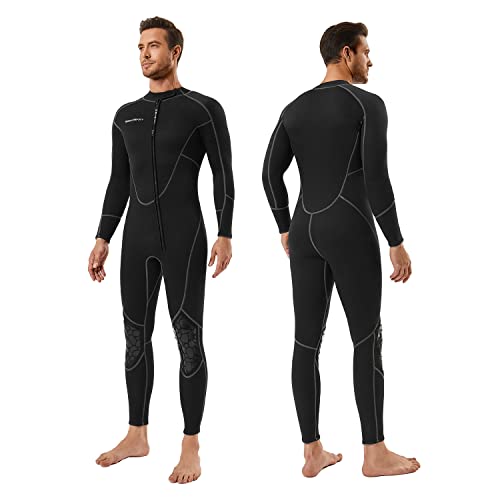 Seaskin Men's 3mm Neoprene Front Zip Wetsuit |
8.6/10 | Buy |
Hevto Kids 3/2mm Neoprene Full Wetsuit
The Hevto Kids 3/2mm Full Wetsuit provides essential core thermal insulation and light buoyancy with a flexible back-zip design built for boys, girls, and toddlers. It is a practical, protective choice for young aquatic enthusiasts swimming, snorkeling, or learning to surf in cooler ocean and lake conditions.
Pros
- 3/2mm neoprene provides a balanced blend of thermal warmth and flexible paddling mobility for young swimmers
- Full-body coverage protects against cold water, wind chill, accidental scrapes, and harsh sun
- Rear back zipper simplifies donning and doffing for toddlers and busy parents
- High-contrast visual accents improve spotting your child on crowded beaches or open water
- Natural neoprene buoyancy helps boost in-water confidence for beginners
Cons
- Back-zip configurations can allow slight water flushing down the spine during deeper duck dives or sudden submersions
- Neoprene is designed to feel compressive when dry on land, which young children may initially find unfamiliar
- Buoyancy assistance provides natural flotation support but does not substitute for a USCG-approved personal flotation device (PFD)
Seaskin Men's 3mm Neoprene Front Zip Wetsuit
Built with a 3mm three-layer neoprene composite, a heavy-duty YKK front zipper, and chafe-resistant flatlock stitching, this Seaskin suit delivers flexible thermal defense for temperate surface waters. It is an approachable option for kayakers, snorkelers, and recreational divers seeking straightforward independent entry.
Pros
- Front-zip layout with a heavy-duty YKK zipper makes solo donning and doffing quick and effortless
- Flatlock stitching creates smooth, flat interior seams that reduce rubbing and chafing during repetitive paddling
- 3mm three-layer composite build provides balanced core warmth and flexibility for surface water recreation
- Abrasion-resistant nylon exterior holds up well against kayak cockpits, paddle shafts, and snorkel gear
Cons
- Flatlock stitching naturally permits minor water seepage, making the suit less ideal for sustained cold-water immersion below 62 degrees Fahrenheit (17 degrees Celsius)
- Anatomical compression requires precise adherence to the manufacturer size chart, as dry fitting can feel uncomfortably tight before water entry
- Front zipper assembly can create minor bunching across the midsection when leaning forward in seated watercraft
Frequently Asked Questions
What water temperature range separates a 3mm suit from a 5/4mm suit?
Water temperatures between 60°F and 68°F call for a 3mm or 3/2mm suit, while waters dipping below 52°F demand a 5/4mm wetsuit. Lighter 3mm neoprene delivers moderate core warmth for brisk summer mornings and shoulder seasons. In contrast, 5/4mm suits feature dense rubber and thermal fleece linings to withstand severe cold and freezing winter currents.
How does paddle mobility compare in 3 Vs 5 4 Wetsuits?
A 3mm suit offers significantly greater shoulder mobility and reduced arm fatigue compared to a 5/4mm suit. Thinner neoprene flexes easily through repetitive swim strokes and high-intensity surf paddling. A 5/4mm suit prioritizes thermal protection over effortless flex, requiring more physical effort to paddle through long ocean sessions in 2026.
Why do seam constructions matter between these thickness ratings?
Seam construction dictates how much cold ocean water penetrates the suit during active movement. Flatlock stitching is common on warm-water 3mm options because it breathes, though it allows minor water leakage. High-performance 5/4mm cold-water suits rely exclusively on glued and blind-stitched (GBS) seams or external liquid seals to block cold flushing completely.
Can a 3mm wetsuit be worn safely in winter water?
No, standard 3mm neoprene does not provide sufficient insulation for true winter ocean temperatures. Prolonged exposure to sub-55°F water without adequate thermal barriers leads to rapid heat loss and muscle stiffness. Surviving harsh winter swells safely requires the heavy insulation and wind-chill resistance of a 5/4mm fullsuit with an integrated hood.
What neoprene thickness works best for youth water sports?
A flexible 3/2mm suit is generally ideal for active youngsters using paddle boards for kids or learning coastal sports. Children lose heat quickly, but excessively stiff rubber limits their movement and enjoyment. Options like the Hevto 3/2mm neoprene design balance necessary thermal insulation with the mobility needed for swimming and paddling in 2026.
How tight should a new wetsuit fit before entering the water?
A new wetsuit should feel snug like a second skin without cutting off circulation or restricting normal breathing. Dry neoprene feels slightly stiff initially and loosens subtly once submerged in water. Proper fit accuracy prevents cold water from pooling at the lower back or ankles, ensuring effective thermal insulation across all sessions.
About the author
Brooke Hess is an accomplished whitewater kayaker and outdoor writer with years of experience paddling rivers around the world. He has competed internationally in freestyle kayaking and extreme races and has represented the United States in competitive kayaking. His deep understanding of river conditions and paddling performance gives her valuable insight into technical kayaking gear.